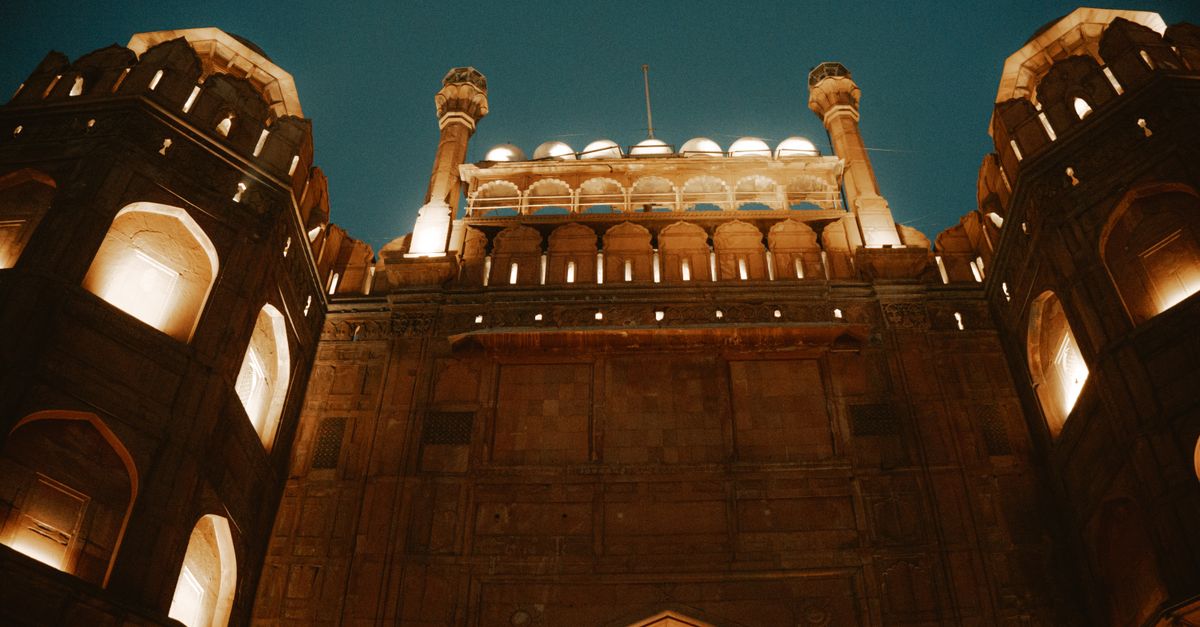
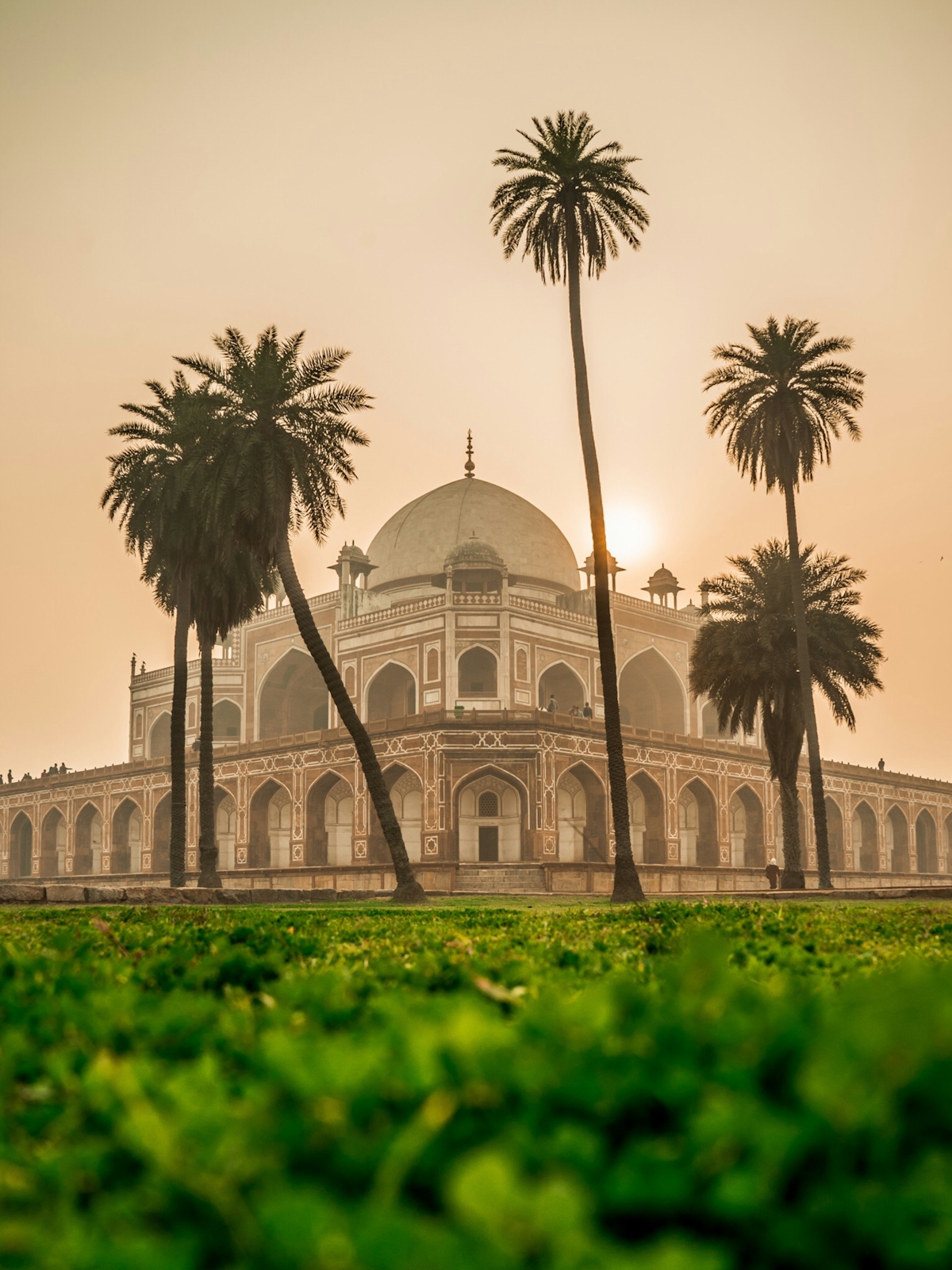
Delhi is the street food capital of India, and that title is not awarded lightly in a country of 1.4 billion people who take their food with the seriousness of a religious conviction. Every neighbourhood in this sprawling city has its own food identity, its own legendary stalls, its own fierce arguments about who makes the best chole bhature or whose butter chicken recipe is the original.
Old Delhi's lanes have been feeding people since the Mughal emperors built Shahjahanabad in the 17th century — the restaurants near Jama Masjid are sixth-generation family operations that have been cooking the same dishes over the same charcoal fires for 150 years, and they have no intention of changing a single ingredient. South Delhi's cafe culture is cosmopolitan and constantly evolving, fuelled by the city's enormous college-student population and a middle class that eats out with the frequency and enthusiasm of Parisians.
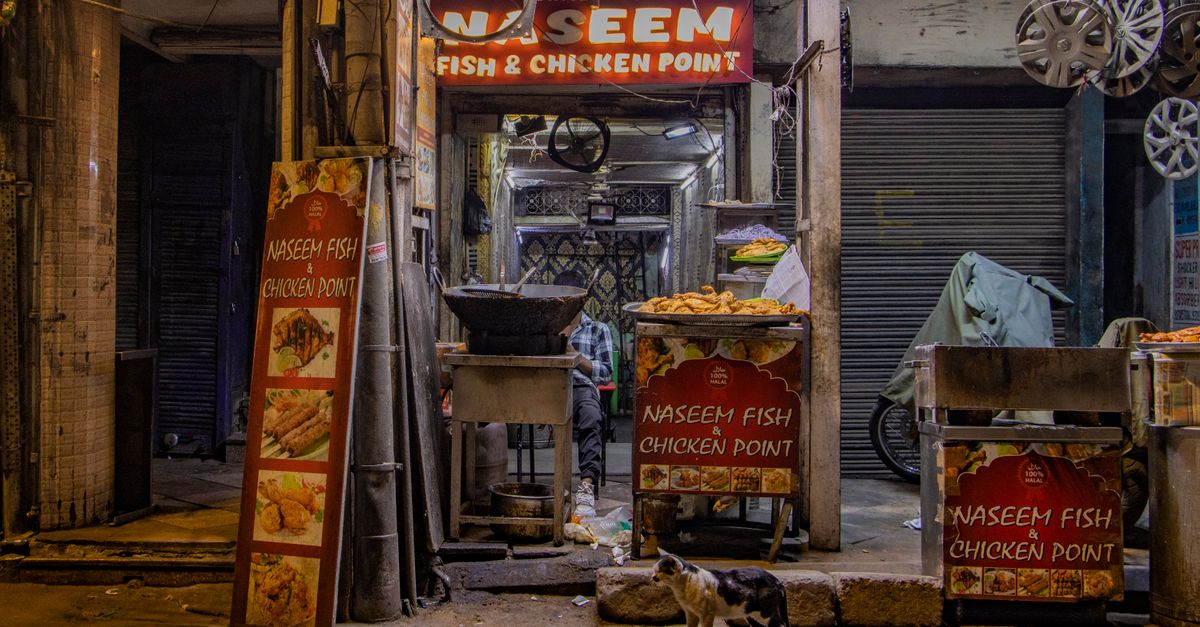
Connaught Place straddles both worlds — heritage restaurants from the 1920s serving butter chicken in the same dining rooms where independence leaders once plotted, alongside modern establishments that reinterpret Indian food through global lenses. And then there are the food carts, the stalls, the unnamed vendors who set up every morning on the same patch of pavement and serve food so good that people cross the city to eat it.
What makes Delhi's food culture unique among Indian cities is its historical depth. This is the city of the Mughals, and the Mughal culinary tradition — rich, aromatic, built on slow-cooking, ground spices, and the alchemy of transforming tough cuts of meat into silk — runs through Delhi's food DNA like a central nervous system.
But Delhi is also the city that received millions of Punjabi refugees after Partition in 1947, who brought with them the tandoor, the butter chicken, and a culinary assertiveness that redefined North Indian cooking. Layered on top are the flavours of every Indian state represented in the capital, plus Tibetan momos, Afghan kabuli pulao, and Bengali sweets.
This guide maps the essential dishes, the iconic restaurants, and the best strategies for eating your way through a city that considers three meals a day insufficient.

10 Must-Try Delhi Foods
1. Chole Bhature at Sita Ram Diwan Chand (₹80)
If Delhi has a breakfast of champions, this is it. Sita Ram Diwan Chand on Paharganj's main bazaar road has been serving chole bhature since 1955, and the queue that forms every morning before the shutters roll up at 8 AM is testament to a recipe that has achieved perfection and refuses to deviate from it.
The bhature — large, puffed, deep-fried bread made from maida (refined flour) dough — arrive at the table inflated like golden balloons, crispy on the outside and soft within. The chole — chickpeas in a dark, complex, spiced gravy coloured with tea and enriched with a masala blend that the family guards with genuine secrecy — are served in a steel bowl alongside raw onion rings, green chili, and a wedge of lime.
The combination is magnificent: you tear the bhatura, scoop the chole, bite the chili, and feel the entire city wake up in your mouth. At ₹80 for a plate, this is the greatest breakfast bargain in the capital.
The stall closes when the chole run out, typically by early afternoon. There's a second branch on Chuna Mandi, equally good. Accept no substitutes — the imitators that have sprung up nearby do not come close.
2. Butter Chicken at Moti Mahal (₹350)
Moti Mahal in Daryaganj claims — with considerable justification — to have invented butter chicken in the 1950s. The story: Kundan Lal Gujral, a Punjabi refugee who had run a dhaba in Peshawar before Partition, began marinating chicken in yoghurt and spices and cooking it in a tandoor at his new Delhi restaurant.
The leftover tandoori chicken pieces were then simmered in a gravy of tomatoes, butter, cream, and spices — and butter chicken was born. The version served today at the original Daryaganj branch (₹350) remains the benchmark against which all other butter chicken should be measured: the gravy is rich but not cloying, tomatoey but not acidic, spiced but not fiery, and the chicken retains a smoky char from the tandoor.
The dal makhani (₹250) was also allegedly invented here — black lentils slow-cooked for 18 hours with butter and cream until they achieve a velvety, almost meaty consistency. Order both, with tandoori roti (₹40) for scooping, and you will understand why this restaurant has survived for seven decades in a city that discards the mediocre without sentiment.

3. Paranthe at Paranthe Wali Gali (₹60-100)
Paranthe Wali Gali in Chandni Chowk is not just a food destination — it is a living monument to Delhi's street food heritage. This narrow lane, barely wide enough for two people to walk abreast, has been home to parantha shops since the 1870s, making it one of the oldest continuously operating food streets in India.
The paranthas here are not the flat, griddle-cooked versions you find elsewhere — they are deep-fried in ghee until golden and served with a battery of accompaniments: spiced potato, chutneys, curd, and pickles. The fillings range from the traditional — aloo (potato, ₹60), paneer (cottage cheese, ₹80), gobhi (cauliflower, ₹60) — to the eccentric — rabri (sweetened condensed milk, ₹100), papad (₹70), and even banana.
The three surviving shops — Pandit Gaya Prasad Shiv Charan, Pandit Kanhaiya Lal Durga Prasad, and Pandit Babu Ram Devi Dayal — are all run by related families who split from the original operation generations ago. The food is virtually identical across all three.
Order two paranthas with full accompaniments and a glass of sweet lassi (₹40) from the shop next door. Eat with your hands. Accept that the ghee will run down your wrists.
This is how Delhi has eaten for 150 years.

4. Chaat at Haldiram's and Beyond (₹50-100)
Delhi's chaat culture is a universe unto itself. Chaat — the collective term for savoury snacks built on combinations of fried dough, potato, chickpeas, yoghurt, and chutneys — is Delhi's greatest contribution to the vocabulary of snacking.
Haldiram's on Chandni Chowk (the flagship, not the chain outposts) serves textbook versions of every chaat variety: golgappa (hollow crispy shells filled with spiced water and chickpeas, ₹50 for a plate of 6), aloo tikki (fried potato patties topped with yoghurt, tamarind, and green chutney, ₹60), papdi chaat (crispy flour wafers with potato, chickpeas, and three chutneys, ₹70), and dahi bhalla (fried lentil dumplings soaked in spiced yoghurt, ₹80). For a more local experience, the chaat vendors outside Bengali Market near Connaught Place have been serving for decades — the Natraj Dahi Bhalla Wala is legendary, with a dahi bhalla (₹70) that achieves a textural perfection of soft, tangy, and crunchy that no chain can replicate.
The secret to great chaat is temperature contrast — warm tikkis under cold yoghurt, room-temperature chutneys on crispy papdi — and the best vendors manage this instinctively.
5. Kebabs at Karim's (₹200-400)
Karim's, tucked into a lane near Jama Masjid in Old Delhi, is the most famous Mughlai restaurant in India and a direct culinary descendant of the Mughal imperial kitchen. The founding family traces its lineage to the cooks who served the court of Shah Jahan, and while the restaurant itself dates only to 1913, the recipes go back centuries.
The seekh kebab (₹200 for a plate) — minced mutton seasoned with a spice blend that the family has never revealed, moulded onto skewers, and grilled over charcoal until charred and juicy — is the essential order. The mutton burra (₹350) — whole pieces of marinated lamb grilled on the bone — is magnificent: smoky, tender, and powerfully flavoured.
The chicken jahangiri (₹300) is a milder option for those less inclined toward red meat. The brain masala (₹250) — goat brain cooked with onions, tomatoes, and spices — is for the adventurous, and those who try it are invariably converted.
The dining room is basic — plastic chairs, shared tables, efficient service — but the food is transcendent. Go for lunch (they open at noon) to avoid the dinner crowds. Karim's also does an excellent biryani (₹250), though the Al Jawahar across the lane arguably edges it on rice texture.
6. Momos in Majnu Ka Tilla (₹60)
Majnu Ka Tilla, the Tibetan refugee colony on the banks of the Yamuna in north Delhi, is the momo capital of the city. The narrow lanes of this small settlement are lined with tiny restaurants and stalls serving Tibetan and Nepalese food, and the momos here are the standard against which all Delhi momos are measured.
Steamed or fried, filled with chicken, pork, or vegetables, and served with a fiery red chili dipping sauce, they cost ₹60 for a plate of eight. Dolma House is the most popular restaurant in the colony, with momos that are plump, juicy, and wrapped with the precision of origami.
Ama Cafe serves momos alongside excellent thukpa (Tibetan noodle soup, ₹100) in a cosy, backpacker-friendly setting. The fried momos — steamed first, then deep-fried until the wrapper blisters and crisps — are a Delhi innovation not found in Tibet and are possibly superior to the original.
The settlement also sells Tibetan handicrafts, Buddhist prayer beads, and winter clothing at good prices. Take the metro to Vidhan Sabha station and walk or take an e-rickshaw to the colony.
7. Daulat Ki Chaat (₹30, Winter Only)
This is perhaps Delhi's most magical food — and it exists for only three months of the year. Daulat ki chaat (sometimes called nimish or malaiyo) appears on the streets of Old Delhi from November to February, when the overnight temperatures drop low enough for milk to be set out in large, shallow pans on rooftops.
The cold night air causes a foam to rise on the milk's surface, which is collected at dawn, sweetened with saffron and sugar, and garnished with chopped pistachios and cardamom. The result is a cloud — literally, a gossamer-light, barely-there froth that dissolves on the tongue like sweet mist. Vendors carry it in trays balanced on their heads through the lanes of Chandni Chowk and near Jama Masjid, selling small bowls for ₹30.
It must be eaten immediately — within minutes, the foam collapses and the magic is gone. Finding it requires luck and early hours (it sells out by mid-morning), but if you are in Delhi between December and February, this is a food experience that exists nowhere else in the world.
Ask any local vendor or shopkeeper in Chandni Chowk and they will point you in the right direction.
8. Rajma Chawal (₹80-120)
Rajma chawal — red kidney beans cooked in a thick, spiced tomato gravy, served over steamed basmati rice — is Delhi's definitive comfort food. It is the lunch that office workers dream of, the Sunday meal that families gather around, and the dish that homesick Delhiites miss most when they leave the city.
The best rajma chawal is famously difficult to replicate at home — the secret lies in slow-cooking the beans until they begin to break down, thickening the gravy naturally, and using a masala that leans heavily on cumin, garam masala, and kasuri methi (dried fenugreek leaves). Rajma Chawal (yes, that's the restaurant's name) in Rajouri Garden is a popular dedicated spot.
The stalls in Pandara Road Market near India Gate serve excellent versions (₹100-120) along with other North Indian comfort foods. Even the hostel canteens of Delhi University and JNU serve rajma chawal that inspires fierce nostalgia in alumni decades later.
It is not glamorous. It is not photogenic. It is, quite simply, perfect food.
9. Biryani at Al Jawahar (₹200-300)
Al Jawahar, sitting directly opposite the steps of Jama Masjid, has been serving Mughlai cuisine since 1947 and is often overshadowed by its more famous neighbour Karim's. This is a mistake.
Al Jawahar's mutton biryani (₹250) is arguably the best in Old Delhi — the rice is perfectly separated, each grain infused with saffron and whole spices, the mutton is fall-off-the-bone tender, and the layering technique (dum pukht, where rice and meat are slow-cooked together in a sealed pot) produces a depth of flavour that quick-method biryanis cannot approach. The nihari (₹200) — slow-cooked beef stew traditionally eaten for breakfast — is rich, gelatinous, and garnished with fresh ginger, coriander, and a squeeze of lime.
The tandoori chicken (₹300 for a half) is excellent, with a smoky char and a marinade that penetrates deep into the meat. The restaurant has a certain gruff efficiency — orders are taken fast, food arrives fast, and the bill appears before you have quite finished — but the cooking is meticulous.
A full meal for two with biryani, kebabs, bread, and a drink costs ₹500-700, which for food of this quality in the shadow of a 17th-century mosque is extraordinary value.
10. Kulfi at Kuremal (₹50)
Kuremal Mohan Lal Kulfi Wale in Chawri Bazaar, Old Delhi, has been making kulfi since 1906 and has elevated this Indian ice cream to an art form. The specialty here is fruit kulfi — seasonal fruits (mango, sitaphal/custard apple, kiwi, pomegranate, litchi) are hollowed out and filled with kulfi flavoured to match the fruit, then frozen and served whole.
A mango kulfi served inside an actual mango shell (₹50) is an experience that delights every sense. The traditional matka kulfi (₹50) — plain cream kulfi frozen in a small clay pot that adds a subtle earthy flavour — is the purist's choice.
During summer (April-July), the mango varieties are extraordinary, with multiple cultivars used as both vessel and flavour base. The shop is small, the lane is narrow, and finding it requires either a determined Google Maps effort or asking locals (everyone in Chawri Bazaar knows Kuremal).
There is no seating — you stand in the lane, eat your kulfi, and hand back the stick. The queue during summer evenings can run thirty minutes or more. It is worth every minute.
Old Delhi Food Walk
The lanes around Jama Masjid and Chandni Chowk form the most concentrated food district in India, and a self-guided food walk is the best way to experience it. Here is a recommended route that covers the essentials without excessive backtracking.
Start at Jama Masjid Gate No. 1 and walk into the lane toward Karim's. Before you reach Karim's, stop at any of the kebab stalls grilling seekh kebabs on charcoal on the left side of the lane — a freshly grilled seekh kebab wrapped in roomali roti with green chutney (₹60-80) is the perfect opening bite.
Continue to Karim's or Al Jawahar for a small plate of nihari or a few kebabs. From there, navigate through the lanes to Chandni Chowk's main road. Turn left toward Paranthe Wali Gali for a parantha.
Continue west along Chandni Chowk to Old Famous Jalebi Wala for fresh jalebis. Walk further west to the Spice Market at Khari Baoli — not for eating, but for the aroma and the spectacle.
Double back to Natraj's at the Chandni Chowk metro station end for golgappa or dahi bhalla. If it is winter, hunt down a daulat ki chaat vendor. End at Haldiram's for a final round of chaat and a sweet lassi to cool your mouth.
The entire walk takes 2-3 hours at a comfortable pace with eating stops.
South Delhi Cafes
South Delhi's cafe scene is as different from Old Delhi's food lanes as champagne is from cutting chai — both excellent, but serving entirely different appetites. The neighbourhoods of Hauz Khas Village, Shahpur Jat, Greater Kailash, and Defence Colony are lined with cafes and restaurants that cater to Delhi's young professional and student population.
Hauz Khas Village is the most concentrated cafe district, with dozens of restaurants crammed into the medieval lanes surrounding the 13th-century reservoir. Naivedyam for South Indian, Coast Cafe for Goan, and Yeti for Nepalese-Tibetan are the standouts.
The rooftop cafes overlooking the reservoir and the ruins are atmospheric, particularly in the early evening. Shahpur Jat, a short walk south, is more understated — a village turned boutique fashion hub with excellent small cafes like Rose Cafe (all-day breakfast ₹300-400, the shakshuka is superb) and Jugmug Thela (chai-based cocktails and Indian comfort food).
Khan Market is Delhi's most upscale market and home to Big Chill (European comfort food, excellent pasta ₹350-500), Perch (Delhi's best specialty coffee, ₹200-300 for a pour-over), and Town Hall (modern Indian bar food with creative cocktails ₹500-600). These are not budget options — a meal with drinks in South Delhi's cafe belt runs ₹800-1,500 per person — but the quality, atmosphere, and people-watching justify the premium.
Connaught Place Restaurants
Connaught Place is Delhi's dining heritage district — many of the restaurants here have been operating since before Independence and carry the weight of history in their menus and their dining rooms.
United Coffee House (Block E) has been serving since 1942 in a grand dining room with crystal chandeliers, wooden panelling, and white-jacketed waiters who have been here for decades. The butter chicken (₹450) and mutton roganjosh (₹480) are reliable, and the chicken a la Kiev (₹500) is a throwback to the 1960s Continental menu that Delhi's elite once considered the height of sophistication.
Saravana Bhavan (P Block) serves South Indian vegetarian food of remarkable consistency — their mini thali (₹250) includes sambar, rasam, rice, three vegetables, papad, and dessert, and is one of the best-value meals in Connaught Place. Wenger's on A Block has been Delhi's favourite bakery since 1926 — the chicken patties (₹80), the chocolate truffle cake (₹120 per slice), and the cold coffee (₹120) are traditions that multiple generations of Delhi families share.
Kwality on Regal Building has served butter chicken and dal makhani since 1940, and while the decor has been modernised, the recipes remain unchanged. For a contemporary option, Farzi Cafe (Block E) does molecular gastronomy-inspired Indian food — dal chawal arancini (₹350), deconstructed pani puri (₹250), and nitrogen-cooled kulfi — that is playful, photogenic, and genuinely delicious.
Budget Eating in Delhi
Delhi may be the cheapest city in the world to eat well. A full day of spectacular food can cost under ₹400. Breakfast: chole bhature at Sita Ram (₹80).
Mid-morning: samosa from any halwai (₹15-20) and chai (₹15). Lunch: a thali at any of the small restaurants in Paharganj or Karol Bagh — unlimited dal, rice, roti, vegetables, and a sweet for ₹100-150.
Afternoon snack: golgappa from a street vendor (₹30-40). Evening: momos in Majnu Ka Tilla (₹60). Dinner: a plate of kebabs at one of the smaller stalls near Jama Masjid (₹100-150).
Total: approximately ₹350-450 for a day of eating that would cost ten times as much in any Western city, and the quality is not merely "good for the price" — it is genuinely, objectively outstanding.
For mid-range budgets (₹1,000-1,500 per day), you can eat at Delhi's iconic named restaurants — Karim's, Moti Mahal, United Coffee House — for every meal, with room for chai and snacks between. Only at the fine-dining level (₹3,000+ per day) do prices approach what you might expect in a major capital city, and even then, Delhi's top restaurants offer extraordinary value compared to London, New York, or Tokyo.

Practical Tips
Hygiene and Safety
Delhi street food is overwhelmingly safe if you follow the crowds. A stall with a queue is almost always a safe bet — high turnover means fresh oil, fresh ingredients, and food that hasn't been sitting.
Avoid raw salads from street vendors, drink only sealed water or freshly boiled chai, and start with milder foods before escalating to the spicier options. Carry wet wipes and hand sanitiser.
If your stomach does protest, ORS (oral rehydration salts, available at any pharmacy for ₹20) and a day of rest will resolve most issues.
Best Food Neighbourhoods
Old Delhi (Chandni Chowk, Jama Masjid area) for Mughlai and street food. Majnu Ka Tilla for Tibetan. Paharganj for budget North Indian.
Connaught Place for heritage restaurants. Khan Market and Hauz Khas Village for cafes and modern Indian. Pandara Road for late-night North Indian.
Defence Colony Market and Greater Kailash for neighbourhood restaurants. Karol Bagh for vegetarian and Punjabi food.
Timing Your Meals
Delhi eats late. Lunch service begins at noon but peaks at 1:30-2:30 PM. Dinner rarely starts before 8 PM and the best restaurants are busiest at 9-10 PM.
Street food stalls in Old Delhi peak from 7-10 PM. Breakfast stalls (chole bhature, paranthas) are morning operations — most close by 1-2 PM or when the food runs out. The late-night food scene at Pandara Road, around CP, and in Old Delhi runs until midnight or later on weekends.
Plan your trip with our Delhi 3-Day Itinerary →