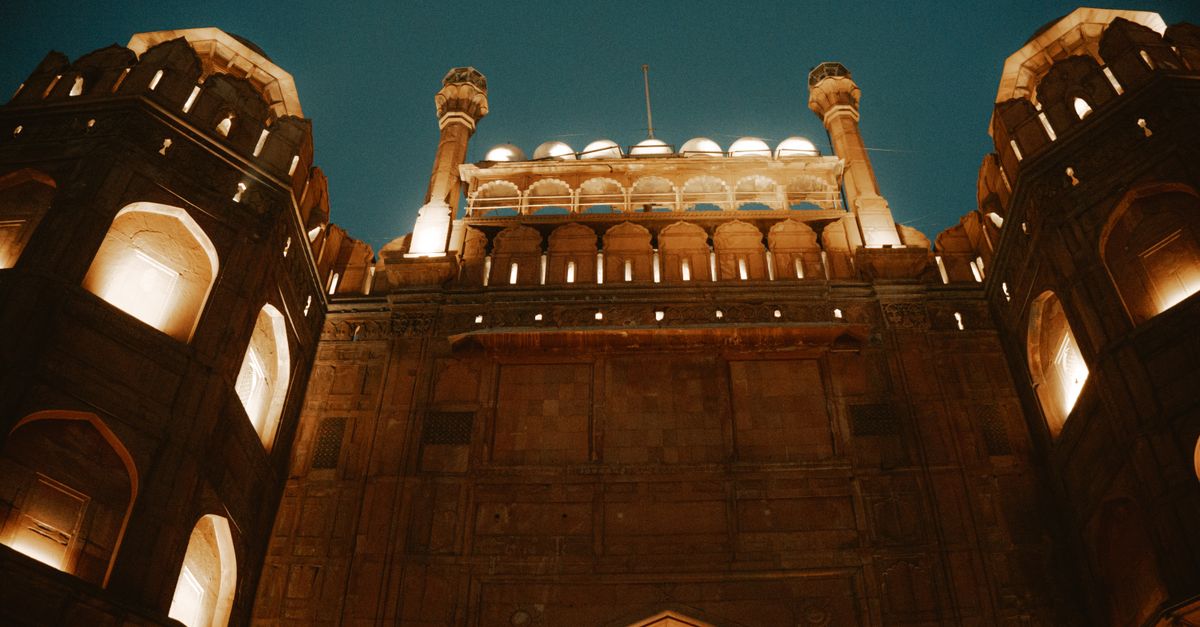
Delhi is not one city but many, layered on top of each other across three thousand years of continuous habitation. The Mughals built their red sandstone and white marble monuments here.
The British carved out a colonial capital of wide boulevards and neoclassical government buildings. And modern India has added shopping malls, metro lines, tech parks, and a street food culture that rivals any city on Earth.
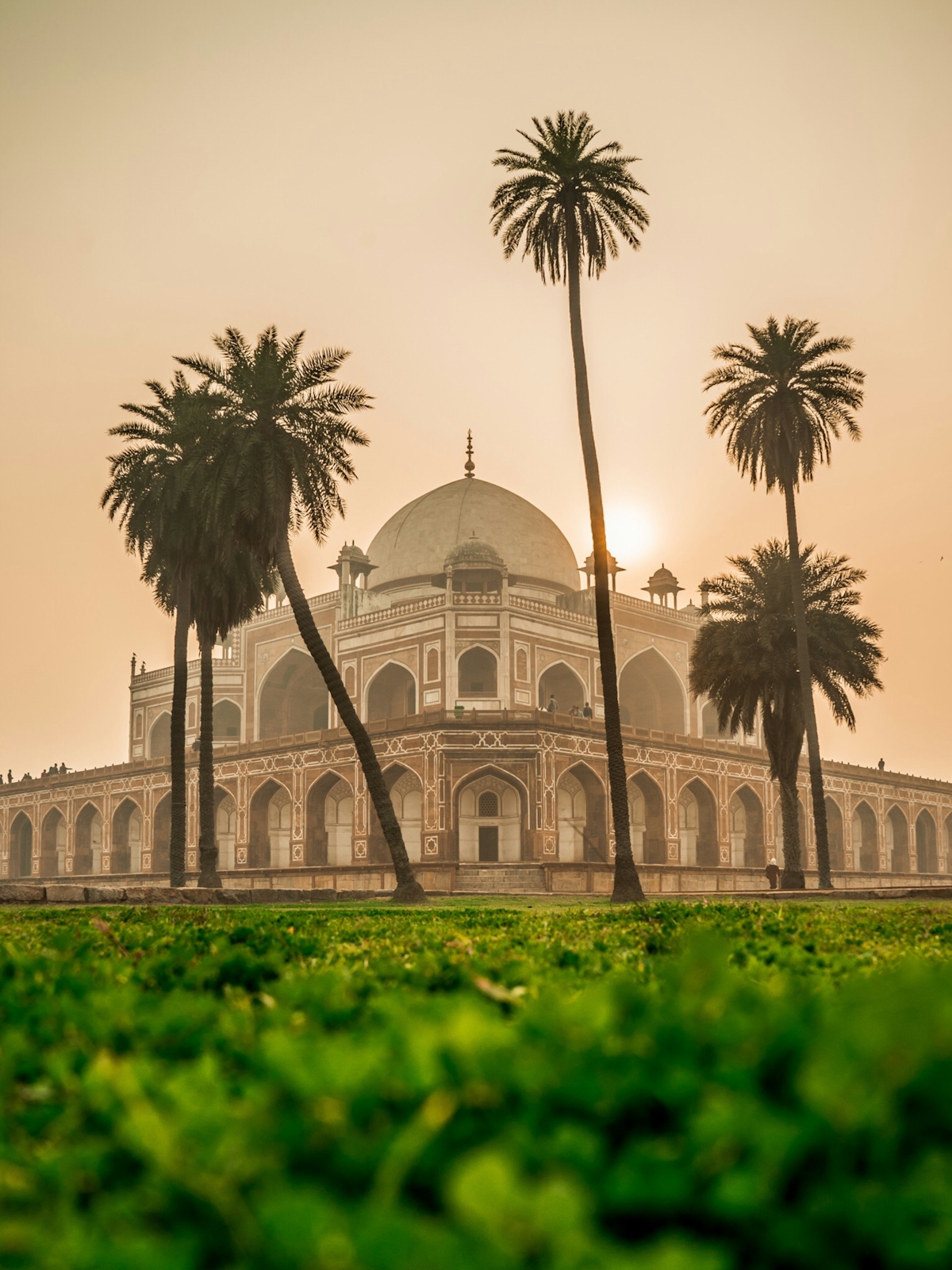
The result is a place of staggering contrasts: the serene perfection of the Taj Mahal's lesser-known cousin, Humayun's Tomb, standing minutes away from the sensory chaos of Chandni Chowk, one of the oldest and busiest markets in Asia. A gleaming metro station opens onto a medieval alleyway.
A five-star hotel overlooks a neighborhood where cycle-rickshaws navigate streets too narrow for cars. Delhi can be exhausting, overwhelming, and frustrating — the heat is brutal, the pollution is a genuine health concern during winter months, and the persistent touts and scam artists around major tourist sites require constant vigilance.
But Delhi also contains some of the most magnificent architecture in the world, food that will fundamentally change your understanding of Indian cuisine, and a depth of history that no other Indian city can match. This guide covers everything a first-time visitor needs: visa logistics, getting from the airport to your hotel without being taken for a ride (figuratively), choosing the right neighborhood, the ten sights you must not miss, the cultural rules that matter, the scams to watch for, and the apps that will make navigating this vast, complex, brilliant city significantly easier.

Before You Go — Visa, Currency, and Connectivity
Visa and Entry Requirements
India's e-Visa system makes entry straightforward for citizens of over 160 countries. The e-Tourist Visa is available in three variants: 30-day (USD 25, single or double entry), one-year (USD 40, multiple entry), and five-year (USD 80, multiple entry).
Apply online at indianvisaonline.gov.in at least four days before travel for the 30-day option or several weeks in advance for longer durations. The application requires a digital passport photo (white background, no glasses), a scan of your passport bio page, and payment by credit or debit card.
Approval is typically emailed within 24-72 hours. Print the approval letter and carry it with your passport (minimum six months validity, two blank pages required). On arrival at Indira Gandhi International Airport (DEL), proceed to the e-Visa immigration counters — these are separate from the regular visa queues and generally move faster.
Budget 20-40 minutes for immigration during peak arrival times (most international flights land between 11 PM and 4 AM). Citizens of some countries may also apply through the Indian embassy for traditional sticker visas, but the e-Visa is simpler, faster, and cheaper for tourist purposes.
Currency and Money
The Indian rupee (INR) trades at approximately 83-85 to 1 USD. Delhi operates on a mix of cash and digital payments, but cash remains essential for auto-rickshaws, cycle-rickshaws, street food, small shops, and the vast markets of Old Delhi. ATMs are ubiquitous — HDFC, ICICI, SBI, and Axis Bank machines are reliable and found in every neighborhood.
Most dispense INR 10,000-20,000 per transaction with a foreign card fee of INR 200-350. Credit cards (Visa and Mastercard) are accepted at hotels, upscale restaurants, and shopping malls, but many mid-range restaurants and shops prefer cash.
UPI payments via QR codes are everywhere in India, but require an Indian bank account and phone number, making them impractical for short-term visitors. Exchange money at the airport arrivals hall (Thomas Cook offers decent rates) or at authorized exchange offices in Connaught Place.
Avoid street money changers and hotel front desks, where rates are poor.
SIM Card and Connectivity
Purchase an Indian SIM card at the arrivals hall of Indira Gandhi International Airport. Jio offers a tourist SIM at approximately INR 349 that includes generous data (1.5-2 GB per day for 28 days) and calling minutes.
Airtel offers a similar package at INR 500-600. You will need your passport and a passport-sized photo for registration. As with all Indian SIM cards, activation can take 2-24 hours due to government verification requirements — plan accordingly with offline maps and your hotel address written down.
Mobile data is essential in Delhi for Google Maps navigation (the city is vast and confusing without GPS), ride-hailing apps (Ola and Uber), and real-time information. WiFi is available at most hotels and many restaurants but is often slow and unreliable.
Download offline Google Maps for Delhi before your flight.
Best Time to Visit
The best time to visit Delhi is October through March, with November through February being the ideal window. Autumn (October-November) brings pleasant temperatures of 20-30°C, clear skies, and the festive season including Diwali.
Winter (December-February) is cool and comfortable during the day (10-22°C) but cold at night (5-8°C, occasionally near freezing), and dense fog can disrupt flights and reduce visibility at monuments. The critical warning: avoid Delhi from April through June, when temperatures regularly reach 42-47°C and occasionally exceed 48°C.
This is not the kind of heat you can "push through" as a tourist — it is genuinely dangerous, and spending time outdoors at midday is a health risk. The monsoon (July-September) brings welcome rain and relief from the heat, but humidity is high and flooding disrupts traffic.
Delhi's other environmental issue is winter air pollution: from November to January, a combination of crop burning in neighboring states, vehicle emissions, and cold air trapping pollutants can push air quality to hazardous levels. If you visit during this period, check air quality indices daily, consider wearing an N95 mask outdoors on bad days, and be prepared for reduced visibility at outdoor attractions.
Getting from the Airport to Your Hotel
Indira Gandhi International Airport (DEL) is located in southwestern Delhi, approximately 15-25 kilometers from the major tourist and hotel areas. Delhi has excellent airport connectivity, and you have several strong options:
Delhi Metro Airport Express (Orange Line) — This is the best option for most travelers. The dedicated Airport Express metro line runs from Terminal 3 to New Delhi Railway Station in just 20 minutes, with a stop at Dhaula Kuan (for South Delhi connections).
The fare is approximately INR 60. Trains run every 10-15 minutes from 5 AM to 11 PM. The metro is clean, air-conditioned, punctual, and has luggage space.
From New Delhi station, you can connect to the Yellow, Blue, or other metro lines to reach most parts of the city, or take a short taxi or auto-rickshaw to nearby hotels (Connaught Place is a 5-minute ride from New Delhi station, Paharganj is walking distance). This is unequivocally the best value airport transfer in Delhi and recommended for all travelers unless you have excessive luggage or are arriving outside metro operating hours.
Prepaid Taxi — Official prepaid taxi counters are located in the arrivals hall of all terminals. You state your destination, pay a fixed fare (INR 350-500 to most central Delhi destinations, depending on distance), receive a receipt with the car registration number, and are directed to the taxi stand.
The fare is fixed and non-negotiable, eliminating overcharging. The journey takes 30-60 minutes depending on traffic and time of day. This is the recommended option for late-night arrivals (after 11 PM when the metro stops) and travelers with heavy luggage.
Uber and Ola — Both ride-hailing apps work at Delhi airport with designated pickup zones. Fares to central Delhi typically run INR 250-400, often cheaper than prepaid taxis, with the added benefit of GPS tracking and cashless payment.
Wait times can be longer during peak hours. Both are reliable options for all subsequent travel around Delhi during your stay.
Where to Stay — Neighborhood Guide
Connaught Place (CP) — Central and Connected
Connaught Place is Delhi's commercial and social heart: a circular colonial-era marketplace designed by Robert Tor Russell in the 1930s, now surrounded by shops, restaurants, bars, and offices. The area is well-connected by metro (Rajiv Chowk station, the intersection of the Yellow and Blue lines, is the busiest metro station in Delhi) and within easy reach of most major attractions.
Hotels range from INR 2,000-4,000 for budget and mid-range options to INR 8,000-20,000+ for luxury properties (The Imperial, The Park, Shangri-La). The inner and outer circles of CP have excellent restaurants, from Michelin-recognized fine dining (Indian Accent, Bukhara at ITC Maurya nearby) to beloved local institutions (Saravana Bhavan for South Indian, Wenger's bakery for colonial-era pastries).
The downsides: CP can feel corporate and commercial outside of dining hours, and aggressive touts outside the metro station can be overwhelming. Janpath market nearby offers reasonable shopping but requires firm bargaining.
Best for: first-time visitors who want a central base with maximum metro connectivity.
Paharganj — Budget Traveler Central
Paharganj is the street directly opposite New Delhi Railway Station and has been Delhi's primary budget traveler district for decades. The narrow main bazaar road is lined with budget guesthouses (INR 600-1,500 per night), backpacker hostels (INR 300-600 for dormitory beds), street food stalls, travel agencies, and shops.
The location is unbeatable for transit — New Delhi Railway Station and the Airport Express metro are walking distance. The downsides are considerable for anyone not on a tight budget: the area is dirty, noisy, chaotic, and the accommodation quality is generally poor compared to what the same money gets you elsewhere.
Touts, scam artists, and overcharging are common. The area has improved in recent years with some genuinely good hostels (Zostel, Moustache) operating among the older guesthouses, but the general atmosphere requires thick skin and low expectations regarding cleanliness and quiet.
Best for: hardcore budget travelers, backpackers, and those catching early trains.
Karol Bagh — Local Flavor, Good Value
Karol Bagh is a middle-class commercial neighborhood west of central Delhi that offers good-value accommodation in a more authentically Indian setting than Connaught Place or the touristy backpacker zones. The main market (Ajmal Khan Road and the surrounding streets) is one of Delhi's busiest shopping areas for clothing, electronics, and street food.
Hotels range from INR 1,500-3,000 for clean, reliable mid-range options to INR 4,000-6,000 for upper-mid-range properties. Karol Bagh metro station (Blue Line) provides good connectivity. The downsides: the area is crowded and noisy (this is authentic Delhi, not a tourist bubble), there are few attractions within walking distance, and the shopping district is oriented toward Indian consumers rather than tourists.
Best for: value-conscious travelers who want to experience a genuine Delhi neighborhood.
South Delhi — Upscale and Green
South Delhi encompasses several upscale neighborhoods — Hauz Khas, Defence Colony, Greater Kailash, Saket — that offer a more spacious, leafy, and affluent version of Delhi. Hauz Khas Village is particularly popular with travelers for its combination of a medieval Islamic complex (the ruins of a 14th-century madrasa and reservoir), trendy restaurants, art galleries, and boutique shops.
Hotels and serviced apartments in South Delhi range from INR 3,000-6,000 for mid-range to INR 8,000-15,000 for boutique luxury. The area is well-served by the Yellow and Magenta metro lines.
The downsides: South Delhi is large and spread out, meaning you will spend time on the metro to reach Old Delhi and the major historical attractions. The area can also feel like a pleasant but generic upscale neighborhood rather than distinctively Delhi.
Best for: travelers who prioritize comfort, dining, and a calmer atmosphere over proximity to historical sights.
Top 10 Must-See Experiences

1. Red Fort (Lal Qila) — The massive red sandstone fortress built by Mughal Emperor Shah Jahan in 1639 as the seat of Mughal power. The fort complex includes the Diwan-i-Am (Hall of Public Audience), Diwan-i-Khas (Hall of Private Audience), the Royal Baths, and beautifully landscaped gardens.
Entry: INR 35 for Indian nationals, INR 500 for foreign visitors. The evening sound-and-light show (INR 80) provides historical context but is only in Hindi and English. Metro: Chandni Chowk (Yellow Line), then a short walk.
Closed Mondays.
2. Humayun's Tomb — Built in 1570, this is the architectural prototype for the Taj Mahal and arguably just as beautiful, with the added advantage of far fewer crowds. The red sandstone and white marble tomb sits in geometric Mughal gardens (char bagh) that have been meticulously restored by the Aga Khan Trust for Culture.
Entry: INR 35/INR 500 (Indian/foreign). Budget at least 90 minutes to explore the complex, which includes several additional tombs and the elegant Isa Khan's tomb near the entrance. Metro: JLN Stadium (Violet Line), then auto-rickshaw or walk (15 minutes).
3. Qutub Minar — A 72.5-meter victory tower begun in 1193, making it one of the earliest examples of Indo-Islamic architecture in India. The red sandstone tower, covered in intricate carvings and Quranic inscriptions, leans slightly (like its more famous cousin in Pisa) and stands within a complex that includes the Quwwat-ul-Islam mosque (the first mosque built in India after the Islamic conquest) and the mysterious Iron Pillar, which has not rusted in over 1,600 years.
Entry: INR 35/INR 500. Metro: Qutub Minar (Yellow Line). A UNESCO World Heritage Site.

4. Chandni Chowk and Old Delhi — The walled city built by Shah Jahan in the 17th century is a sensory overload of narrow lanes, market stalls, street food vendors, historic mosques, havelis (traditional mansions), and millions of people going about daily life in what feels like a living medieval city.
Chandni Chowk itself is a wide boulevard (by Old Delhi standards) running from the Red Fort to Fatehpuri Mosque, lined with shops selling everything from wedding saris to electrical fittings. The real magic is in the lanes branching off each side — Paranthe Wali Gali (the lane of fried-bread shops), Dariba Kalan (the silver market), and Kinari Bazaar (the decoration market) each have distinct characters.
Free to explore. Budget at least half a day. Metro: Chandni Chowk (Yellow Line).
5. Jama Masjid — India's largest mosque, built by Shah Jahan between 1644 and 1656, dominating Old Delhi with its enormous courtyard capable of holding 25,000 worshippers. The red sandstone and white marble structure features three massive gates, four towers, and two 40-meter minarets that offer panoramic views of Old Delhi (INR 300 to climb a minaret).
Entry to the courtyard is free, but a camera fee of INR 300 applies. Dress modestly — robes are available to borrow at the entrance. Remove shoes at the gate.
Visit outside prayer times (avoid noon on Fridays). The mosque is directly opposite Old Delhi Railway Station and a 10-minute walk from the Red Fort.
6. Lotus Temple — A stunning Bahá'í House of Worship completed in 1986, designed in the shape of a lotus flower with 27 white marble petals. The building has won numerous architectural awards and is one of the most visited structures in the world.
Entry is free. The interior is a vast, silent prayer hall open to people of all faiths — no sermons, no rituals, just contemplative silence. The surrounding gardens are beautifully maintained.
The experience of approaching the building as it slowly reveals its full form is architecturally thrilling. Metro: Kalkaji Mandir (Violet Line). Closed Mondays.

7. India Gate and Rajpath — India Gate is a 42-meter war memorial arch designed by Edwin Lutyens, standing at the eastern end of the ceremonial Rajpath boulevard that runs westward to the Rashtrapati Bhavan (Presidential Palace).
The entire ensemble — the arch, the wide boulevard, the flanking government buildings, and the presidential palace on the hill — represents one of the most impressive pieces of imperial urban planning ever built. Free to visit.
India Gate is particularly atmospheric at night when it is illuminated. The surrounding lawns fill with families, ice cream vendors, and a carnival atmosphere on weekend evenings. Metro: Central Secretariat (Yellow/Violet Line), then a 15-minute walk or short rickshaw ride.
8. Gurudwara Bangla Sahib — One of Delhi's most prominent Sikh temples, recognizable by its golden dome and the large sarovar (holy pool) in the grounds. The gurudwara welcomes visitors of all faiths and operates a langar (community kitchen) that serves free vegetarian meals to anyone who comes — one of the most powerful experiences available in Delhi, seeing thousands of people from all walks of life eating together as equals.
Entry is free. Cover your head (scarves are available at the entrance), remove shoes, and wash your feet in the shallow pool at the entry. The calm, welcoming atmosphere is a powerful contrast to the chaos of nearby Connaught Place.
Metro: Patel Chowk (Yellow Line).
9. Hauz Khas Village — A unique combination of a 14th-century Islamic complex (the ruins of a madrasa, a tomb, and a large medieval reservoir built by Sultan Alauddin Khalji) and a trendy contemporary neighborhood of restaurants, bars, art galleries, and boutiques built among and around the ruins.
The deer park adjacent to the medieval complex is one of South Delhi's most pleasant green spaces. The combination of ancient ruins, contemporary dining, and a relaxed atmosphere makes Hauz Khas one of the most enjoyable areas in Delhi to spend an afternoon and evening.
Free to explore the ruins and park. Metro: Hauz Khas (Yellow/Magenta Line).
10. Street Food of Old Delhi — Delhi's street food is among the best in the world, and the lanes of Old Delhi are where to experience it at its finest. Essential dishes: chole bhature (spiced chickpea curry with enormous fried bread) at Sita Ram Diwan Chand (INR 70-90), paranthas at Paranthe Wali Gali (stuffed fried flatbreads with a dizzying variety of fillings, INR 60-120), butter chicken at the original Moti Mahal in Daryaganj (which claims to have invented the dish, INR 300-400), nihari (slow-cooked meat stew, a Mughlai breakfast dish) at Karim's near Jama Masjid (INR 200-300), and jalebi (crispy orange syrup-soaked spirals) freshly fried at Old Famous Jalebi Wala in Chandni Chowk (INR 40-60 per plate).
A food walk through Old Delhi is one of the great culinary experiences of Asia.

Etiquette — Cultural Awareness
Shoes Off Everywhere Religious
Remove your shoes before entering any religious site in Delhi — Hindu temples, mosques, gurudwaras, churches, and Bahá'í temples (the Lotus Temple). This is universal and non-negotiable. Most sites have shoe racks or attendants; at larger sites, numbered token systems allow you to retrieve your shoes afterward.
Wear shoes that are easy to slip on and off, as you may remove and replace them multiple times in a single day of sightseeing. Socks are generally acceptable inside religious sites if you prefer not to walk barefoot.
Photography Permission
Always ask before photographing people, especially in religious contexts, at markets, and in Old Delhi's residential lanes. Many historical monuments charge a separate camera fee (typically INR 25-300 for still cameras; significantly more for video cameras and professional equipment with tripods).
Drones are prohibited at virtually all historical sites and require special permits. Some museum galleries prohibit photography entirely. At religious sites, photography may be permitted in the grounds but prohibited inside the prayer hall or shrine area — always check for signs or ask.
Dietary Considerations
Delhi's food culture is predominantly vegetarian in many neighborhoods, and beef is not available in most restaurants due to the religious significance of cows in Hinduism. Many restaurants in Delhi are either entirely vegetarian or have separate vegetarian and non-vegetarian menus and kitchen sections.
Pork is similarly uncommon in Muslim-owned restaurants (which are concentrated in Old Delhi). This is not a restriction that will limit your eating options — Delhi's vegetarian food is some of the best in the world, and the range of non-vegetarian dishes (primarily chicken, lamb, and goat) is extensive.
Simply be aware that asking for beef in a Hindu-owned restaurant or pork in a Muslim-owned restaurant may cause offense. The simplest approach: eat what the restaurant is known for.
Safety — Scams and Practical Warnings
Auto-Rickshaw Pricing
Delhi's auto-rickshaws are a primary mode of transport and a primary source of tourist frustration. Autos are legally required to use meters, but in practice, most drivers refuse and quote a flat fare — typically 2-5 times the actual metered rate for tourists.
Your options: insist on the meter (which works occasionally), negotiate a fare before getting in (use Google Maps to estimate the distance and assume roughly INR 15 per kilometer as a baseline), or use Ola/Uber auto-rickshaw options through the app (which provide fixed fares and eliminate bargaining). The metro is often faster and always cheaper for longer distances.
For short hops, cycle-rickshaws in Old Delhi and Paharganj are cheap and atmospheric (INR 20-50 for short rides), but always agree on the fare before climbing in.
The New Delhi Railway Station Scam
This is Delhi's most elaborate and persistent tourist scam. It works like this: you arrive at New Delhi Railway Station (by metro, taxi, or on foot) intending to visit the International Tourist Bureau to book train tickets or get information.
Before you reach the actual office (which is on the first floor of the station building), a person approaches you — sometimes wearing an ID badge, sometimes claiming to be a "tourist information" officer — and tells you the tourist bureau is closed, has moved, or cannot help you today. They direct you to a nearby "government-approved" travel agency (which is not government-approved) where you are pressured into buying overpriced tours, hotel bookings, or train tickets at massive markups.
The real International Tourist Bureau is open normal business hours and is staffed by actual government tourism officials. Ignore anyone who approaches you outside the station offering "help" or "information," walk to the first floor, and find the office yourself.
Women's Safety
Delhi has a problematic reputation regarding women's safety that is partly but not entirely exaggerated. Sensible precautions apply: avoid walking alone in poorly lit or deserted areas at night, use ride-hailing apps rather than hailing random autos or taxis after dark, and sit in the women's coach on the Delhi Metro (clearly marked, available on all trains, located at one end of the train).
During the day in tourist areas, markets, and neighborhoods like Connaught Place and South Delhi, women travelers will generally feel safe. Unwanted attention (staring, comments, attempts to take selfies) is more common than physical threats, but it can be persistent and uncomfortable.
Dressing modestly (covering shoulders and knees) reduces unwanted attention but does not eliminate it. Trust your instincts — if a situation feels uncomfortable, leave immediately. The Delhi Police tourist helpline is 1800-111-363.
Essential Apps for Delhi
Delhi Metro Rail App — The official DMRC app provides route planning, fare calculation, nearest station finder, and real-time updates on service disruptions. It works offline for basic route planning and is essential for navigating the extensive Delhi Metro network, which now covers over 390 kilometers across 12 lines.
The app also shows the location of interchange stations and walking distances from metro exits to nearby attractions.
Ola — India's leading ride-hailing platform, essential for Delhi where auto-rickshaw bargaining is exhausting and taxi availability is limited. Ola Auto (auto-rickshaws through the app with fixed fares) is particularly useful — it provides the local auto-rickshaw experience without the pricing hassle.
Ola Micro and Mini provide budget cab options. Accepts cash, cards, and Ola Money.
Uber — Works well in Delhi alongside Ola. UberGo is the budget option, and Uber Auto provides the same auto-rickshaw booking functionality as Ola Auto. Having both apps maximizes your chances of finding a ride quickly, especially during peak hours or in less central areas.
Both apps provide Hindi-English driver communication features that help bridge language gaps.
Zomato — Indispensable for food discovery in Delhi, where the restaurant and street food scene is vast and constantly evolving. Zomato's user reviews, photos, and location-based recommendations help you find everything from the best butter chicken in Daryaganj to modern Indian fine dining in South Delhi.
The delivery feature is useful for hotel meals when Delhi's heat or air quality makes going out unappealing.
The complete Delhi food guide — Old Delhi street food, Mughlai cuisine, and modern dining Delhi hidden gems — 10 experiences beyond the tourist trail The perfect 4-day Delhi itinerary for first-time visitors Explore all Delhi travel guides and recommendations