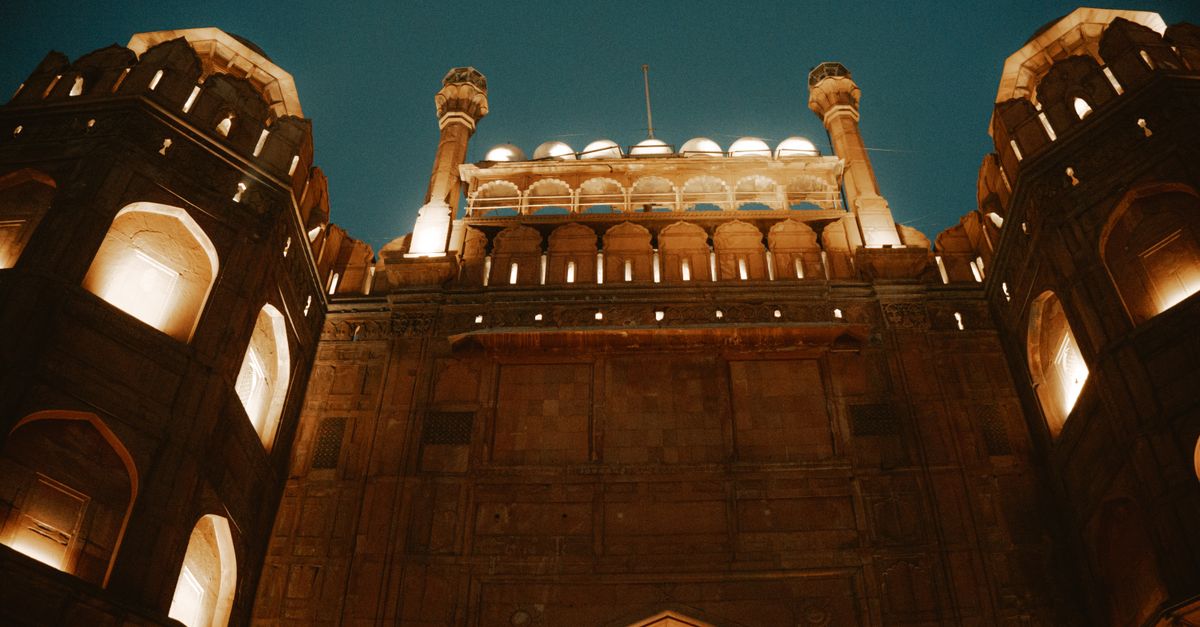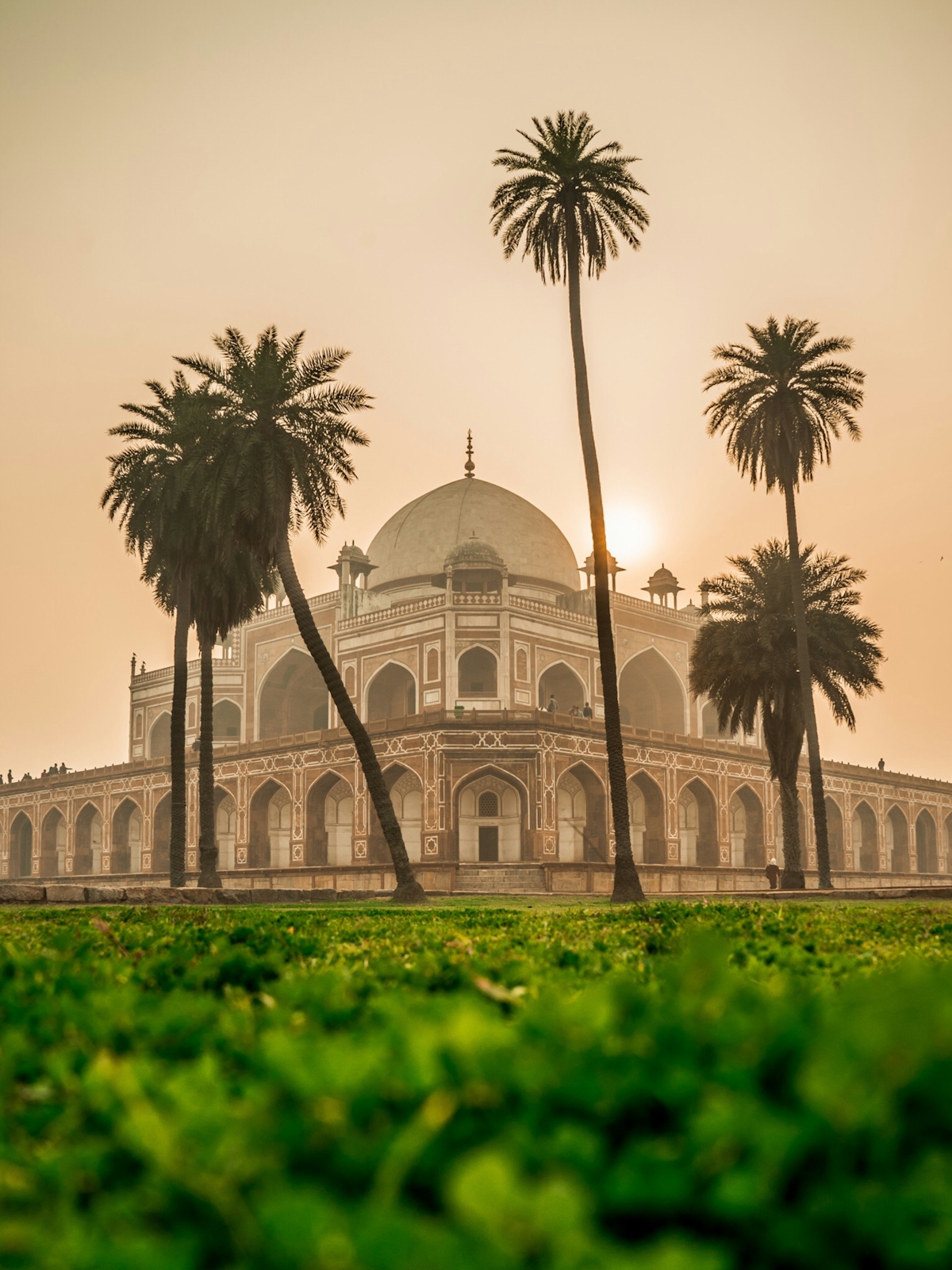
Delhi is a city that has been built, destroyed, and rebuilt at least eight times over three millennia, and the result is a landscape of ruins, monuments, gardens, and neighborhoods layered on top of each other with a density that no other city on Earth can match. Most visitors see the Mughal layer — Red Fort, Jama Masjid, Humayun's Tomb, Qutub Minar — and the British colonial layer — India Gate, Rashtrapati Bhawan, Connaught Place — and leave thinking they've seen Delhi.
They haven't. Between and beneath these famous landmarks lies a Delhi of forgotten stepwells, crumbling sultanate fortresses, hidden garden paradises, mystical Sufi shrines, Tibetan colonies, artisan markets, and secret cafe lanes that together form one of the richest urban exploration experiences in Asia.
These are not obscure academic sites. They are places that Delhiites know, love, and visit regularly, but that somehow never make it onto the tourist trail because the famous monuments consume all the guidebook space.
This guide covers ten hidden gems — each one accessible by the Delhi Metro or a short auto-rickshaw ride, each one free or nearly free to enter, and each one offering a side of Delhi that transforms the city from a checklist of monuments into a living, breathing, endlessly surprising place. Delhi has more history per square kilometer than almost anywhere on Earth.
The famous sights are famous for good reason. But the hidden gems are where the city reveals its soul.

1. Agrasen Ki Baoli — A Stepwell of Architectural Perfection
In the middle of Delhi's financial district, surrounded by glass-fronted office towers on Hailey Road near Connaught Place, a 60-meter-long, 15-meter-wide, 108-step stairway descends into the earth to a water level that once served the surrounding community. Agrasen Ki Baoli is one of Delhi's finest stepwells — a type of ancient water architecture unique to the Indian subcontinent — and it is also one of the most dramatically located heritage structures in any city.
The stepwell is believed to date to the Mahabharata era, though the current stone structure is likely from the 14th century Tughluq period. The architecture is striking: three levels of arched galleries line both sides of the descending stairway, creating a symmetrical perspective that draws the eye down to the dark water below.
The proportions are so satisfying that the baoli has become a favorite location for fashion photographers, filmmakers (it appeared in the Bollywood film PK), and architecture students. The site feels like a secret — the entrance is through a small gate on a busy street, and nothing about the exterior suggests the monumental space hidden behind the wall.
On quiet mornings, the baoli has an atmosphere that borders on the mystical: the stone corridors amplify sound strangely, birds nest in the upper galleries, and the play of light and shadow through the arches changes throughout the day. The baoli is maintained by the Archaeological Survey of India and is completely free to enter.
It's open from sunrise to sunset, and the best light for photography is in the early morning or late afternoon when sunlight penetrates the deeper levels. Nearest metro: Janpath or Barakhamba Road (Blue Line).
Allow 30-45 minutes for a visit, longer if you're interested in photography.
2. Mehrauli Archaeological Park — Ruins Spanning Eight Centuries
Everyone visits the Qutub Minar, but almost no one walks five minutes beyond it to the Mehrauli Archaeological Park, a sprawling complex of over 100 historically significant structures scattered through a wooded landscape that spans nearly eight centuries of Delhi's history. The park contains Mughal tombs, Sultanate-era mosques, Lodi-period domes, British-era follies, and one of Delhi's most haunting monuments: the Jamali Kamali mosque and tomb, a 16th-century Mughal structure containing the graves of the Sufi poet Jamali and his mysterious companion Kamali (whose identity has never been definitively established — historians debate whether Kamali was a friend, a lover, or a spiritual companion, and the ambiguity has given the site a romantic and slightly eerie reputation).
The mosque's interior is decorated with intricate painted plaster that has survived five centuries of Delhi weather, and the quality of the ornamentation rivals far more famous Mughal monuments. Beyond Jamali Kamali, the park contains Balban's tomb (one of the earliest structures in Delhi to use a true arch), the Rajon Ki Baoli (another beautiful stepwell, this one deeper and more atmospheric than Agrasen Ki Baoli), and the Metcalfe's Folly complex, where a British Resident converted a Mughal tomb into a country house in the 1830s.
The park is enormous and mostly unmarked — bring a map or guidebook, wear walking shoes, and expect to spend 2-3 hours exploring. The ASI charges ₹25 for Indian nationals and ₹300 for foreigners at the main Qutub Minar entrance (the archaeological park is accessible through the same complex or via free side entrances).
Nearest metro: Qutub Minar (Yellow Line).
3. Sunder Nursery — A Restored Mughal Heritage Garden
Adjacent to Humayun's Tomb, Sunder Nursery is a 90-acre heritage park that has been meticulously restored by the Aga Khan Trust for Culture into one of the most beautiful green spaces in any Indian city. The restoration, completed in 2018, has brought back to life a Mughal-era garden complex that includes 15 monuments (tombs, gateways, and garden pavilions from the 16th century), formal geometric gardens with water channels inspired by Mughal paradise garden design, a 200-species arboretum, themed botanical gardens, amphitheaters, and a lotus pond that blooms spectacularly in summer.
The park feels like a revelation — a vast, manicured, historically rich garden in the middle of Delhi's urban sprawl, yet virtually unknown to international tourists. The Sunderwala Burj, a 16th-century octagonal tower in the park, has been restored with its original blue tile decorations visible for the first time in centuries.
The walking paths are shaded by mature trees, the lawns are open for sitting, and the atmosphere is peaceful and contemplative. On weekday mornings, the park is almost empty — an extraordinary luxury in a city of 20 million people.
On weekends, it fills with families, joggers, and picnickers, but the space is vast enough to absorb the crowds. Entry: ₹30 on weekdays, ₹50 on weekends. The park is open from 7 AM to 5 PM (summer hours extend to 7 PM).
Nearest metro: JLN Stadium (Violet Line) or a short walk from Humayun's Tomb. Allow 1.5-2 hours for a thorough exploration.

4. Nizamuddin Dargah Qawwali Nights — Sufi Music Under the Stars
Every Thursday evening, as darkness falls over the Nizamuddin neighbourhood in south Delhi, the shrine of the great Sufi saint Hazrat Nizamuddin Auliya comes alive with the sound of qawwali — the devotional music of Sufism, with its driving rhythms, soaring vocals, and repetitive refrains designed to induce a state of spiritual ecstasy. The qawwali sessions at Nizamuddin Dargah are not performances for tourists.
They are acts of devotion that have continued at this shrine for over 700 years, since the saint himself lived and taught here in the 13th and 14th centuries. The great qawwali master Amir Khusrau, who invented much of the musical tradition, is buried in the same complex.
On Thursday evenings (and to a lesser extent, other evenings), groups of qawwali musicians (some of them descendants of families that have been performing at the dargah for generations) sit in the courtyard and sing for hours, the music building in intensity as the evening progresses. The experience is free, open to all faiths, and genuinely transformative — even if you have no particular spiritual inclination, the combination of the music, the atmosphere, the centuries of devotion embedded in the walls, and the rapt faces of the listeners creates an experience of emotional intensity that few tourist attractions anywhere in the world can match.
Visit etiquette: remove your shoes before entering the shrine complex, dress modestly (long clothes, women should carry a scarf to cover their head), sit on the ground with the other listeners, and do not photograph the musicians without permission. The area around the dargah has excellent street food — the kebabs and biryani at the restaurants lining the lane to the shrine are legendary.
Nearest metro: JLN Stadium (Violet Line), then a 10-minute walk. Free.
5. Champa Gali — Delhi's Hidden Cafe Lane
Behind an unassuming entrance in Saket's industrial area, past a narrow passage between workshops, lies one of Delhi's most charming recent discoveries: Champa Gali, a tiny lane of independent cafes, studios, and shops that has become a favorite gathering place for Delhi's creative community. The lane is barely 100 meters long, strung with fairy lights, lined with plants, and populated by a carefully curated collection of small businesses: Blue Tokai Coffee Roasters (one of Delhi's best third-wave coffee shops), Jugmug Thela (a cafe serving heritage Indian drinks like thandai and shikanji), a secondhand bookshop, a perfume studio, a pottery workshop, and a vinyl record store.
The atmosphere is intimate and unhurried — you come to Champa Gali to sit, talk, read, and drink good coffee, not to shop or sightsee. The lane is particularly magical at dusk when the fairy lights come on and the cafes glow against the industrial backdrop.
It's a place that feels like it belongs in Melbourne's laneways or Shoreditch rather than industrial Saket, and its existence speaks to a dimension of Delhi — creative, independent, globally aware — that most tourist guides ignore entirely. Visit on a weekday afternoon for the quietest experience, or on a weekend evening for the liveliest atmosphere.
Nearest metro: Saket (Yellow Line), then a 10-minute auto-rickshaw ride to the Champa Gali entrance near the Khirki area. Free to enter; budget ₹200-400 for coffee and snacks.
6. Majnu Ka Tilla — Delhi's Tibetan Colony
On the banks of the Yamuna River in north Delhi, a self-contained Tibetan settlement has existed since the 1960s, when Tibetan refugees first settled here after fleeing the Chinese occupation. Majnu Ka Tilla (named after a Sufi saint, not a Tibetan) is a dense, compact neighborhood of narrow lanes and multi-story buildings that functions as a complete Tibetan village within Delhi: monasteries, guesthouses, restaurants serving authentic Tibetan and Nepalese food, shops selling Tibetan handicrafts and Buddhist items, and a thriving community of Tibetan refugees and their descendants.
Walking into Majnu Ka Tilla from the surrounding Delhi streets is like teleporting to a Himalayan town — the signage is in Tibetan script, the smell of momos (Tibetan dumplings) and thukpa (noodle soup) fills the air, prayer flags flutter from rooftops, and the faces and dress of the residents are distinctly Tibetan. The momos here are among the best in Delhi (and Delhi has serious momo competition): Ama Restaurant and Dolma House are local favorites, with plates of steamed or fried momos costing ₹80-120.
The guesthouses in the colony offer some of the cheapest accommodation in Delhi (₹500-800 per night for a clean private room), making it a favorite with budget travelers. The Tibetan monastery at the center of the settlement is open to visitors and has a serene meditation hall.
Visit on a weekend morning when the lanes are busy with residents shopping and eating, and the atmosphere is at its most vivid. Nearest metro: Vidhan Sabha (Yellow Line), then a short auto-rickshaw ride.
Free to explore.

7. Hauz Khas Ruins at Sunset — Medieval Monuments in a Modern Nightlife District
Hauz Khas is known to most Delhi visitors as a nightlife and restaurant district, with its trendy bars, boutiques, and art galleries. But at the southern end of the Hauz Khas Village complex, beyond the restaurants and shops, lies a medieval monument complex that includes a 14th-century madrasa (Islamic school), the tomb of Sultan Firoz Shah Tughlaq, and the remains of a large reservoir (hauz) that was originally built in the 13th century to supply water to the inhabitants of Siri, the second city of Delhi.
The monument complex is free to enter and best visited in the late afternoon, when the low sun illuminates the sandstone ruins and the reservoir below reflects the sky. The madrasa is an L-shaped building with domed chambers that were once classrooms, and the tomb of Firoz Shah sits at the junction of the two wings, its dome still intact after 650 years.
From the terrace of the tomb, you have views across the reservoir (now a park with a popular deer enclosure) and, in the distance, the Qutub Minar. The contrast between the medieval ruins and the modern nightlife district just steps away is quintessential Delhi — a city where centuries coexist without apparent conflict.
The ruins are atmospheric at any time but achieve something close to perfection at sunset, when the warm light, the silhouettes of the domed chambers, and the call to prayer from a nearby mosque combine to create one of Delhi's most memorable moments. Nearest metro: Hauz Khas (Yellow Line/Magenta Line).
Free. Allow 45-60 minutes.
8. National Crafts Museum (Crafts Museum) — India's Most Underrated Museum
Tucked away on Bhairon Marg near Pragati Maidan, the National Crafts Museum is one of India's finest museums and one of its least visited by international tourists. The museum houses a collection of over 35,000 objects representing the craft traditions of every region of India: textiles, pottery, woodwork, metalwork, paintings, jewelry, and religious art spanning centuries.
But what makes the Crafts Museum truly special is its open-air village complex, where full-size traditional houses from across India have been reconstructed in the museum grounds. You walk through a Rajasthani haveli, a South Indian temple courtyard, a Bengali terracotta village, and a Nagaland tribal house, each built using traditional techniques and materials, each furnished with authentic objects.
The village complex gives you a compressed tour of Indian domestic architecture and village life that would otherwise require weeks of travel across the subcontinent. Inside the museum building, the textile gallery is outstanding — the collection of Indian fabrics, from Banarasi brocades to tribal embroidery to block-printed cottons, is one of the best in the world.
The museum shop sells high-quality handcrafted items at fair prices. Entry: ₹20 for Indian nationals, ₹200 for foreigners. Nearest metro: Pragati Maidan (Blue Line).
Open 9:30 AM to 5 PM, closed Mondays. Allow 2-3 hours to see the village complex and galleries properly.
9. Tughlaqabad Fort Ruins — Delhi's Most Dramatic Abandoned Fortress
In the far south of Delhi, rising from a rocky ridge like a scene from a fantasy film, the massive walls and bastions of Tughlaqabad Fort stretch across the landscape — one of the most dramatic and least visited monument sites in the city. Built in just four years (1321-1325) by the founder of the Tughlaq dynasty, Ghiyasuddin Tughlaq, the fort was intended to be an impregnable capital.
It was used for barely five years before being abandoned — legend says a curse by the Sufi saint Nizamuddin Auliya (whose laborers were diverted to the fort's construction against his wishes) rendered the city uninhabitable. The curse, according to tradition, was: "Hunuz Dilli dur ast" — "Delhi is still far away" — meaning the Tughlaq would never enjoy his city.
Whether the curse was real or the location was simply too exposed and waterless, the fort was abandoned and has been a ruin ever since. The scale is astonishing: the walls run for over 6 kilometers, with 52 gates and towers, enclosing an area that was designed to hold an entire city.
Today, the interior is mostly empty — scrubby vegetation, piles of rubble, and the occasional goat herder — but the walls themselves, built from massive blocks of local stone, are largely intact and provide the most atmospheric ruin walk in Delhi. The views from the bastions across the surrounding plains are commanding, and on clear days, the entire southern Delhi skyline is visible.
Across the road, the tomb of Ghiyasuddin Tughlaq sits on a former island in an artificial lake (now dry), connected by a causeway — the octagonal red sandstone tomb with its sloped walls and white marble dome is architecturally unique among Delhi's monuments. Entry: ₹25 for Indians, ₹300 for foreigners.
Nearest metro: Tughlaqabad (Violet Line), then a 10-minute auto-rickshaw ride. Allow 1.5-2 hours for the fort and tomb. Carry water — there are no facilities inside the fort.
10. Dilli Haat — India in One Market
Dilli Haat is not exactly hidden — it appears in some guidebooks — but it remains dramatically under-visited by international tourists relative to its quality, and it deserves a place on this list for what it offers: a permanent, open-air market where artisans from every Indian state sell traditional handicrafts, textiles, jewelry, pottery, metalwork, leather goods, and artwork at prices significantly lower than the tourist shops in Connaught Place or Khan Market. The market is operated by the Delhi Tourism and Transport Development Corporation, and the stalls rotate every 15 days, meaning the artisans and their products change regularly, and repeat visits always yield new discoveries.
The textiles are the standout — handwoven silks from Varanasi, block-printed fabrics from Rajasthan, tribal embroidery from Gujarat, pashmina shawls from Kashmir, and cotton weaves from Bengal, all sold by the artisans who made them. The prices are fair (the government subsidizes the stall rents to keep them reasonable), and while some bargaining is possible, the margins are already thin — don't push too hard.
Beyond the handicraft stalls, Dilli Haat has a food court with stalls representing regional Indian cuisines: Rajasthani dal baati churma, Nagaland smoked pork, Goan fish curry, Tamil Nadu dosas, Bengali mishti doi. It's one of the best places in Delhi to sample the breadth of Indian food in a single sitting, with dishes costing ₹80-200.
Entry: ₹30 (₹20 for children). The market at INA is the original and best; a second branch at Pitampura also exists. Open 10:30 AM to 10 PM daily.
Nearest metro: INA (Yellow Line), directly opposite the market entrance. Allow 1.5-2 hours for a thorough browse and meal.