First-time visitors to Naples tend to arrive with a tangle of contradictory expectations — warnings about chaos and crime on one hand, rhapsodic accounts of transcendent pizza and baroque magnificence on the other. Both are partially accurate. Naples is Italy's most misunderstood major city, a place that demands more from its visitors than Rome or Florence but rewards that effort with an authenticity and emotional intensity those more polished cities have long since lost. This guide covers everything you need to know before you arrive: the paperwork, the transport logistics, the neighbourhoods, the unspoken cultural codes, and the specific mistakes that trip up first-timers every single time.
Before You Arrive
Citizens of the European Union, USA, Canada, Australia, UK, and most developed nations do not require a visa to enter Italy for stays up to 90 days within any 180-day period under the Schengen Agreement. If you hold a passport from a country not on the Schengen visa-waiver list, apply for a Schengen short-stay visa (type C) through the Italian embassy or consulate in your home country at least 6-8 weeks before travel. The EUR 80 visa fee is non-refundable. From 2025, EU Entry/Exit System (EES) biometric registration applies to non-EU visitors at border crossings — allow extra time at the airport.

Italy's currency is the Euro (EUR). ATMs — called bancomat — are widely available throughout Naples and dispense euros at the mid-market exchange rate plus your bank's foreign transaction fee. Avoid airport currency exchange desks and the standalone exchange bureaux near major tourist sites, which charge commissions of 5-8%. Notify your bank before departure to prevent card blocking on foreign transactions. Naples operates primarily on cash in smaller establishments; many neighbourhood restaurants, bars, and street-food vendors don't accept cards, so carry EUR 50-100 in cash at all times.
For a SIM card, purchase on arrival at the airport or any tobacconist (tabaccheria) in the city. TIM, Vodafone, and Iliad offer prepaid tourist SIMs with 10-15GB data for EUR 10-15. Iliad's EUR 9.99 monthly plan is the best value for stays over a week. Alternatively, an international eSIM from providers like Airalo or Holafly can be purchased before departure and activated on arrival — convenient but slightly more expensive than local SIMs.
A frank note on safety: Naples has a higher petty crime rate than Rome or Milan, concentrated almost entirely around Piazza Garibaldi (the central station), the Forcella neighbourhood, and certain parts of the waterfront at night. Use a crossbody bag worn in front, keep phones in inner pockets on public transport, and avoid the east side of Piazza Garibaldi after dark. The Centro Storico, Chiaia, Vomero, and the waterfront promenade are safe for tourists at all hours. The city's reputation is significantly worse than the reality for aware, attentive travellers.
Getting from the Airport/Station
Naples Capodichino Airport (NAP) is compact and efficient. The single arrivals hall leads directly to the shuttle bus and taxi area.

The Alibus shuttle (EUR 5) is the standard budget transfer. It departs from outside arrivals every 20 minutes and follows a route through the city to Piazza Garibaldi (Naples Centrale railway station) and Molo Beverello (the port for Amalfi Coast ferries and island hydrofoils). Journey time is 25-40 minutes depending on traffic. Buy the ticket from the machine inside the terminal or from the driver with exact change.
The official airport taxi charges a fixed rate of EUR 25 to most central Naples addresses (EUR 19 to Piazza Garibaldi specifically). This is the official fare — if the driver attempts to negotiate a higher price, insist on the fixed rate or take the next taxi. The fixed rate makes taxis cost-effective for groups of three or four. Never accept offers from drivers who approach you inside the terminal; these are unlicensed and overcharge significantly.
Rideshare apps including Uber (X and Comfort tiers available) and the Italian app itTaxi operate in Naples and are often EUR 2-5 cheaper than metered taxis for airport transfers when surge pricing isn't active.
If arriving by train at Napoli Centrale, you're already in the city. The metro Line 1 and Line 2 stations are directly below the main hall. Piazza Garibaldi outside the station is hectic — be vigilant with bags from the moment you step off the train. The 10-15 minute walk west along Corso Umberto I into the Centro Storico is straightforward and well-lit.
Getting Around
Naples' public transport network is multi-layered and occasionally confusing, but once understood, it's both cheap and effective for navigating the city.

The Metro has two lines. Line 1 (the "Art Metro") is the more useful tourist line, running from Piscinola north of the city through Museo (for MANN), Dante, Toledo, and Università to the port. The stations at Toledo and Università are internationally acclaimed works of contemporary architecture — descend slowly and look at the art. Line 2 connects Napoli Centrale to Pozzuoli via the Mergellina waterfront.
The four funiculars (Centrale, Chiaia, Montesanto, Mergellina) connect the lower city to the Vomero hillside neighbourhood. All use the standard EUR 1.60 ticket valid for 90 minutes with unlimited transfers. The Centrale Funicular from Piazza Duca d'Aosta to Via Cimarosa is the most useful; rides take 4 minutes and run until 10pm (midnight on weekends).
City buses cover areas not reached by metro or funicular, particularly along the waterfront and into outer neighbourhoods. The R2 bus runs along Via Tolede and Corso Umberto. Buy tickets at tabacchi or newsstands before boarding — on-board purchases are technically possible but unreliable.
For day trips, the Circumvesuviana commuter railway departs from the lower level at Napoli Centrale for Herculaneum (EUR 2.40, 20 min), Pompeii (EUR 3.30, 35 min), and Sorrento (EUR 4.50, 65 min). Trains run every 30-40 minutes and are often crowded and slow — leave bags at your accommodation and travel light.
Where to Base Yourself
Naples divides naturally into distinct neighbourhoods with very different characters. Where you stay fundamentally shapes the city you experience.

Spaccanapoli / Centro Storico (accommodation EUR 55-150 per night) is the historic heart and the obvious base for first-time visitors. You're within walking distance of the best pizzerias, the major churches and museums, the street food of Via dei Tribunali, and the social chaos that makes Naples unique. The UNESCO-listed streetscape is extraordinary, and staying here means you're living inside the city rather than observing it from the outside. Downsides: noisy at night, limited parking, and the streets require constant situational awareness.
Chiaia (accommodation EUR 80-200 per night) is Naples' most elegant neighbourhood — wide streets, designer boutiques, seafront promenade, and a local population that skews young, affluent, and international. The aperitivo scene here is excellent. It's a 20-minute walk or short metro ride from the Centro Storico and feels considerably calmer. For first-timers who find the Centro Storico overwhelming, Chiaia offers a gentler entry point without sacrificing quality.
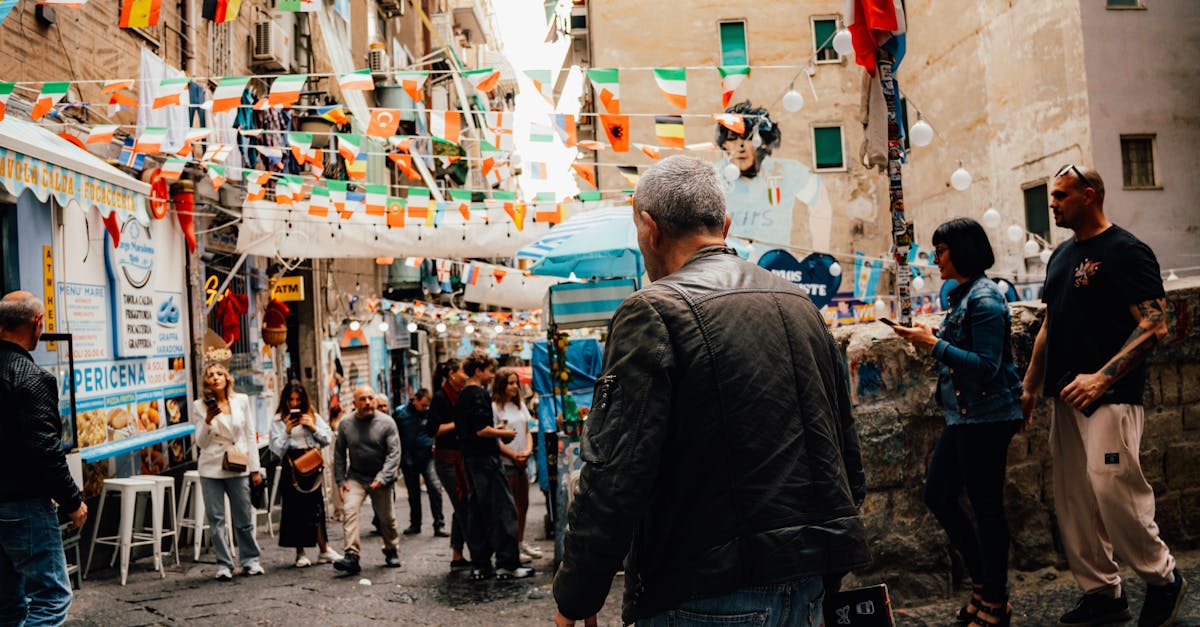
Quartieri Spagnoli (accommodation EUR 50-120 per night) is the working-class neighbourhood west of Via Toledo — a tight grid of alleyways festooned with drying laundry, shrines to Diego Maradona, and small restaurants where locals eat three times a day. It's lively, authentic, occasionally gritty, and exceptionally well-located for the funiculars to Vomero. The best hostel options in Naples are concentrated here.
Vomero (accommodation EUR 70-160 per night) sits on the hill above the city, accessible by funicular. Quieter, cleaner, and more residential than the lower neighbourhoods, it's a good choice for those prioritising sleep and personal space. The Castel Sant'Elmo panoramic views are extraordinary. The trade-off is the extra funicular step to reach the city's main attractions.
Local Culture & Etiquette
Naples has a distinct cultural identity that differs from northern Italy in ways that are sometimes surprising to first-time visitors expecting a uniform "Italian" experience. Understanding the social codes makes the city significantly more rewarding.

Neapolitans are loud, warm, physically expressive, and operate on a fundamentally different conception of personal space than northern Europeans. Conversations happen at volume; gestures are elaborate and meaningful; strangers make eye contact and comment on the world around them without hesitation. This is not aggression — it's communication. Reciprocate with eye contact and a smile and you'll be welcomed. Retreat into headphones and stares at your phone and the city will feel hostile.
Pizza culture in Naples is both genuine religion and serious civic identity. There are rules. Pizza is eaten at the table in a proper pizzeria, not walking down the street — that's for pizza fritta and street food, which are different categories. Do not add ketchup to pizza. Do not ask for modifications to a classic margherita or marinara at a traditional pizzeria — these recipes are centuries old and considered inviolable. If you want extras, order a pizza with toppings that exists on the menu. Appreciating pizza with appropriate seriousness will be noticed and appreciated.
Coffee follows similar protocols. Stand at the bar for espresso — sitting at a table for a single coffee costs 2-3 times more and marks you immediately as a tourist. Say "un caffè, per favore" at the bar and you'll receive a perfectly prepared espresso. Ask for "a coffee" while miming a large mug and you'll receive polite confusion followed by an Americano. Cappuccino is a morning drink — ordering one after noon or after a meal is considered mildly eccentric.
In churches — and there are dozens worth visiting in Naples — shoulders and knees must be covered. Carry a light scarf or use your jacket. Photography is generally permitted without flash, but check for signs at the entrance. During mass, sightseeing is not appropriate; many churches have visiting hours that close to tourists during services.
Common Mistakes to Avoid
Staying near Piazza Garibaldi because it's close to the station. The area around Naples Centrale is the least representative and least enjoyable part of the city. The 15-minute walk or one metro stop west into the Centro Storico puts you in an entirely different Naples — and accommodation quality per euro is actually better in the historic centre.
Dismissing Naples as unsafe after reading dated travel advice. Much of the safety information circulating online dates from the 1990s and early 2000s when the Camorra's territorial conflicts had a more visible street presence. Contemporary Naples is a major European tourist city. Exercise the same awareness you would in Rome, Paris, or Barcelona — no more, no less. The specific risks are pickpockets near the station and port, not violent crime against tourists.
Eating pizza at a restaurant with photos on the menu. The city that invented pizza has no shortage of places serving mediocre tourist-priced versions to people who don't know better. If the menu is laminated, there are photos, and the waiter is standing outside trying to attract customers, keep walking. The best pizzerias in Naples have paper menus, short queues at the door, and no one soliciting customers from the street.
Buying museum tickets at the door without checking first-Sunday-free dates. MANN is free on the first Sunday of every month. Capodimonte Museum runs regular free-entry periods. Check the calendar before planning museum days — the savings can be EUR 20-35 per visit.
Rushing through Pompeii in two hours. The archaeological site covers 66 hectares and contains well over 1,000 structures. Most first-timers allocate a morning visit and leave underwhelmed because they saw only the Villa dei Misteri and the Forum. Allocate a full day, wear comfortable shoes, and bring a map. The House of the Faun, the Terme Stabiane, and the Theatres district are all better than the most-photographed areas.
Taking unmarked or unofficial taxis from the airport or port. The drivers who approach arrivals inside the terminal and at the port exits are operating outside the official system and charge whatever the traffic will bear. The metered taxis at the official rank have fixed fares that are published and enforced. If a driver quotes a price significantly above EUR 25 for a central Naples destination, it's not the official rate.
Attempting to drive in central Naples without experience. The traffic in the Centro Storico and Quartieri Spagnoli operates on a social logic that is entirely opaque to first-time visitors. Traffic lights are treated as suggestions. Scooters emerge from impossible angles. Lane markings are decorative. If you've rented a car for use outside Naples, park it at a hotel garage on the outskirts and use public transport in the city. Driving in the Amalfi Coast is a separate and even more significant challenge addressed in the first-timer guide for that destination.