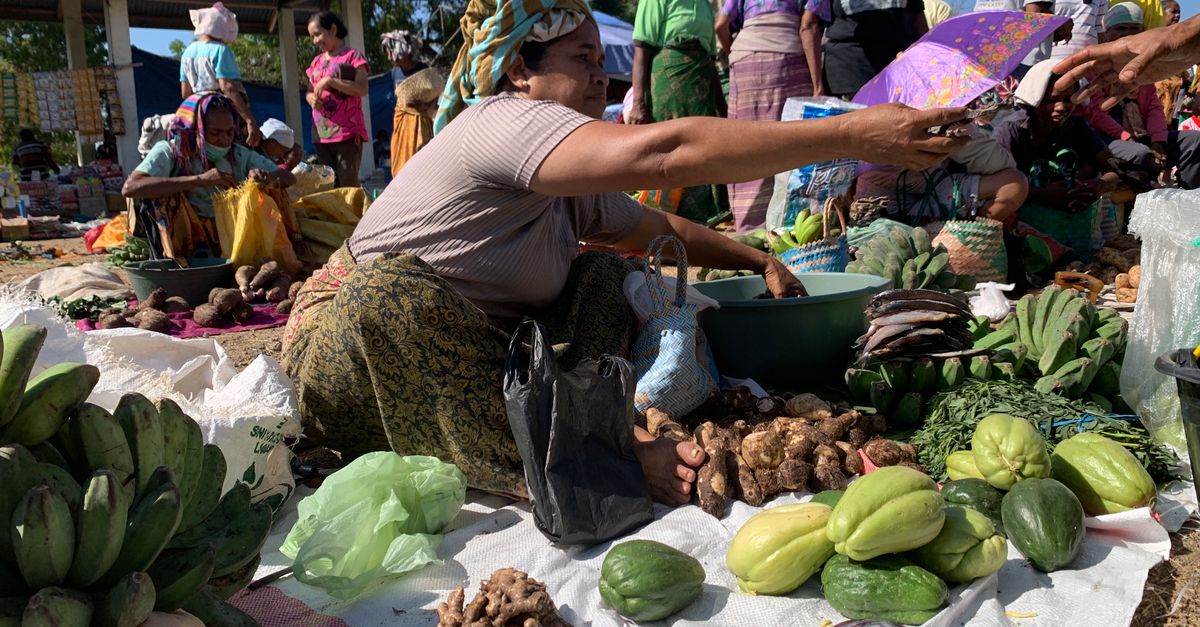
Madagascar is one of the most rewarding and most logistically demanding destinations a first-time visitor can attempt outside the easy-traveller circuit. The world's fourth-largest island sits 400 kilometres off the southeast African coast and contains an evolutionary inheritance — lemurs, baobabs, fossa, dozens of chameleon species — that exists nowhere else, paired with a culture that fuses Austronesian, Bantu, Arab, and French influences into something genuinely singular. None of this comes easily. Roads are slow, distances are long, French is more useful than English, and the country's tourism infrastructure thins to almost nothing outside Antananarivo and the major national parks. First-time visitors who arrive with the right expectations — flexibility on timing, patience for taxi-brousse logistics, willingness to slow down to a Malagasy pace — find Madagascar one of the most interesting countries they will ever visit. Those who arrive expecting Kenya-style safari smoothness leave frustrated. This guide is the briefing you should have before booking a flight.
Before You Arrive
The single most important pre-arrival decision is the visa. Madagascar offers visa-on-arrival for most nationalities at Ivato (Antananarivo) Airport: EUR 35 for stays up to 15 days, EUR 40 for up to 30 days, EUR 55-70 for 60 days. Pay in euros, US dollars, or by card at the immigration counter. The e-visa system at evisamada.gov.mg now operates reliably and is marginally cheaper; pre-applying online avoids airport queues that can run two hours when multiple international flights land simultaneously. Either route is straightforward; do not pay any third-party visa service.

Malaria is endemic across most of Madagascar outside the central highland plateau (which includes Antananarivo and Antsirabe). Chloroquine-resistant Plasmodium falciparum is present, so prophylaxis with atovaquone-proguanil (Malarone), doxycycline, or mefloquine is essential for travellers heading to the east coast, west coast, or any of the major lowland national parks. Consult a travel clinic four to six weeks before departure. Yellow fever vaccination is required only if arriving from a yellow fever country; routine vaccinations (hepatitis A, typhoid, tetanus) should be current.
Madagascar is a cash economy. The Malagasy Ariary (MGA) is non-convertible outside Madagascar — you cannot buy it before arrival and cannot convert leftover notes back at international airports. ATMs in Tana, Antsirabe, and major RN7 towns work but networks (Visa, less reliably Mastercard) are inconsistent. Withdraw a full week's spending money in Tana before heading south. Notes come in MGA 100, 200, 500, 1,000, 2,000, 5,000, 10,000, and 20,000 denominations — the smallest denominations are essentially worthless and will accumulate as change.
Pack layered clothing. The central highland (Tana, Antsirabe) sits at 1,300-1,500 metres altitude and can be genuinely cold in June-August (overnight lows of 5-10°C). The east coast and west coast are tropical and humid year-round. A fleece, a waterproof shell, sturdy walking shoes for park trails, modest clothing for visits to villages, and insect repellent with DEET are all essential. Bring a head torch — power cuts are routine in smaller towns.
The tourist season runs roughly April-November. December-March is the cyclone and rainy season on the east coast and many roads become impassable. The optimal window for first-time visitors is April-May or September-October — comfortable temperatures, dry roads, and lemurs active in the parks.
Getting from the Airport
Ivato International Airport (TNR) sits 16 kilometres north of central Antananarivo. The drive takes 40 minutes in light traffic, 90 minutes or more during the morning and evening rush hours that paralyse Tana on workdays. There is no formal public transport from the airport.

The standard option is the airport taxi. Official taxis at the rank outside the arrivals hall charge MGA 50,000-80,000 to most central districts (Antaninarenina, Isoraka, Tsaralalana, Avenue de l'Indépendance). The price is loosely fixed and not usually negotiable on arrival, but always confirm before getting in. Taxis are old Renault 4Ls, Citroën 2CVs, and increasingly Korean compacts — all functional but none luxurious.
Most mid-range and upmarket hotels offer airport transfers at MGA 80,000-150,000, slightly more expensive than a regular taxi but with a driver who is expecting you and a vehicle that will reliably reach the address. For first-time arrivals after dark or on a long-haul evening flight, the pre-booked transfer is worth the small premium.
For the genuinely budget-minded, the local taxi-be (large minibus) running on the main road outside the airport perimeter costs MGA 1,000-2,000 to central Tana but is impractical with luggage and not recommended for first-time arrivals.
If continuing onward immediately to Antsirabe (a sensible plan if Tana itself doesn't appeal), morning taxi-brousses to Antsirabe leave from the south station (Gare Routière Sud) — a separate journey across the city from the airport. Allow a full half-day for the airport-to-Antsirabe transition; a same-day arrival and onward journey is exhausting and not advised.
Getting Around the City
Antananarivo is built across a series of steep hills surrounding a lower commercial flatland — a topography that makes navigation initially confusing and walking exhausting in places. The upper town, around the Rova (Queen's Palace) and Antaninarenina, is the historical and political centre; the lower town, focused on Avenue de l'Indépendance and Tsaralalana, is the commercial and transport hub.

Standard urban taxis (no meters, prices negotiated before boarding) charge MGA 8,000-15,000 for short rides within central Tana, MGA 15,000-25,000 for longer cross-city journeys. Always agree the fare before getting in. Drivers speak French and basic English; carry a written address on paper for unfamiliar destinations.
The taxi-be minibuses run fixed urban routes for MGA 600-1,000 per ride. Useful if you want the local experience and can read the route boards in Malagasy or French; impractical for short visits and confusing for first-timers.
Walking is rewarding in the upper town — the climb up Rue Ramanantsoa from the lower town to the Rova passes colonial-era buildings, the Anglican cathedral, and gives you the city's best urban views. Walking the lower town along Avenue de l'Indépendance is straightforward by day; avoid walking after dark in any district.
Outside Tana, in Antsirabe the standard urban transport is the pousse-pousse (bicycle rickshaw, MGA 1,000-2,000 per ride), or the slightly more expensive cyclo-pousse (cycle-rickshaw). Antsirabe is small, flat, and walkable; pousse-pousse rides are charming but not essential.
For multi-city travel, taxi-brousse minibuses connect every town with a paved road. Cotisse shared sedan taxis on major routes (Tana-Antsirabe, Tana-Tamatave) cost slightly more (MGA 35,000 vs 25,000) but are faster and more comfortable.
Where to Base Yourself
Where you base yourself depends on whether you treat Antananarivo as a transit point or as a destination, and how much of the country you plan to see in your first trip.

Antaninarenina and Isoraka (Antananarivo upper town) are the most pleasant and walkable districts in Tana. Antaninarenina contains the historic central park, the post office, and several mid-range hotels (Hotel Colbert, Tana Hotel) at MGA 200,000-400,000. Isoraka, just below, is quieter and contains the Sakamanga Hotel — the unofficial backpacker headquarters of Madagascar — and several boutique guesthouses at MGA 150,000-300,000. These are the right base for first-time visitors.
Tsaralalana (lower town) is closer to Avenue de l'Indépendance, the markets, and the south taxi-brousse station. Madagascar Underground, the country's only proper backpacker hostel, sits here at MGA 35,000 dorm bed / MGA 70,000-90,000 private double. Functional but the area is less pleasant for evening walking.
Antsirabe, four hours south of Tana, is a more relaxed alternative for travellers who arrive jet-lagged and prefer to skip the capital's intensity. The highland climate is cool and pleasant, the streets are walkable, and the pousse-pousse rickshaws are charming. Hotel des Thermes (MGA 200,000-350,000) and Chez Billy (MGA 40,000-70,000) are the long-running options at opposite ends of the budget spectrum.
Andasibe, three hours east of Tana on the way to the rainforest, is the obvious base for first-time wildlife encounters — the indri lemur, found nowhere else on Earth, lives in Andasibe-Mantadia National Park here. Mikalo Hotel (MGA 50,000-90,000) and Vakôna Forest Lodge (mid-range, MGA 250,000+) are the two main options.
For first-time visitors with two weeks, the standard pattern is: two nights Tana, one night Antsirabe, three nights Ranomafana or Andasibe (lemur park stay), then onwards to Isalo and Tulear via RN7 if continuing south.
Local Culture & Etiquette
Malagasy culture is distinctive in ways that sometimes surprise first-time visitors who have prepared for an "African" experience. The Malagasy people trace their origins to Austronesian seafarers from Borneo who arrived 2,000 years ago, mixed with later Bantu arrivals from the African mainland and Arab traders along the coast. The language belongs to the Austronesian family, related more closely to Indonesian than to any African language. The culture is correspondingly hybrid.

The most important cultural concept for visitors to understand is fady — taboos that vary from village to village, family to family, and place to place. Some are food taboos (certain communities will not eat pork, others will not eat eel). Some govern behaviour at sacred sites (do not point at tombs with an extended finger; do not photograph certain rocks or trees). Some govern days of the week (in some areas, Tuesday is fady for working in the fields). Local guides will brief you on the relevant fady at any site you visit; respect them without question.
The famadihana ("turning of the bones") ceremony, in which families exhume the wrapped bodies of ancestors from family tombs, dance with them, and rewrap them in fresh shrouds, is a central element of Merina and Betsileo highland culture. It is not a tourist attraction; if invited to attend, treat it with the gravity it deserves and bring a contribution to the family.
French is the second language of educated urban Malagasy and is genuinely useful for travellers. English is increasingly common in the tourist industry but Malagasy and French dominate. Learning a handful of Malagasy phrases — manao ahoana (hello), misaotra (thank you), azafady (please / excuse me) — is appreciated.
Respect for elders is fundamental — defer to older people in any group interaction, accept offered tea or food when visiting homes, and dress modestly outside beach areas. Photography of people requires asking first; some Malagasy associate cameras with old colonial fady about capturing souls.
Common Mistakes to Avoid
Madagascar punishes a small number of recurring first-timer mistakes more severely than most destinations. Avoiding these makes the difference between a great trip and a frustrating one.
1. Underestimating drive times. The map of Madagascar suggests Tana to Tulear is a manageable 950 km drive — about 12 hours on a European motorway. The reality is 22-30 hours of taxi-brousse travel along RN7, with frequent stops, breakdowns, and slow climbs through the highlands. Plan three to four days for the full RN7 route, not one. Build slack into every itinerary.
2. Skipping malaria prophylaxis. Travellers who plan to spend their entire trip in highland Tana and Antsirabe sometimes skip the prophylaxis. Anyone heading to the east coast, west coast, or major lowland parks (Andasibe, Isalo, Ranomafana) needs prophylaxis, full stop. The prevalence of resistant falciparum makes this non-negotiable.
3. Trying to see everything in two weeks. Madagascar is enormous and slow. A first trip of two weeks can comfortably cover Tana, Antsirabe, and one major park (Andasibe in the east, or Ranomafana further south); three weeks adds Isalo and Tulear via the full RN7 route. Trying to combine the south, the north (Diego, Nosy Be), and the east in two weeks requires multiple internal flights and ends up rushed and expensive.
4. Booking accommodation through international tour agencies. Walk-in rates at family guesthouses are 20-30% below online listed prices. Major national park entries are not bookable in advance — you pay at the gate. The first-time visitor who arrives with a tightly packaged itinerary loses both flexibility and money compared to a more loosely structured trip.
5. Not carrying enough cash. ATMs are unreliable outside major towns. Carry MGA 500,000-1,000,000 in cash for any RN7 leg outside Tana and Antsirabe. Split the cash across multiple stashes (money belt, day pack, secondary bag).
6. Drinking tap water. Tap water across Madagascar is not safe to drink. Bottled water (eau Claire, Cristalline, Prestige) is sold everywhere at MGA 1,500-3,000 per 1.5 litre bottle. Reusable bottles with a Sawyer or LifeStraw filter are an environmentally and economically better option.
7. Disrespecting fady at sacred sites. Pointing at tombs, photographing forbidden rocks, swimming in fady pools — all routinely committed by tourists who haven't been briefed. Always ask your local guide what is fady before doing anything in or around a village or sacred site.