Madagascar is unlike anywhere else on Earth — an island the size of France that split from Africa 160 million years ago and has been evolving in isolation ever since. The result is a biodiversity explosion of extraordinary proportions: 5% of the world's plant and animal species occur here and nowhere else, including all 107 known lemur species, 50% of the world's chameleon species, half of the world's baobab species, and an ecological complexity that has made Madagascar one of the world's highest biodiversity priorities. Scientists call it "the eighth continent" and the description is earned.
Antananarivo (universally called Tana) is the sprawling highland capital where the journey begins, but Madagascar's hidden gems extend across an island that requires considerable logistical commitment to explore. The roads are among the worst in Africa; the RN7 south from Tana to Tulear is the exception — a paved road that allows the classic overland journey through the island's most spectacular landscapes. The northeastern coast and the Masoala Peninsula are accessible by light aircraft and long boat journeys. Commitment is rewarded: Madagascar is possibly the most extraordinary destination in Africa and genuinely among the most astonishing in the world.
Madagascar uses the ariary (MGA). The currency makes the country very affordable: a dala-dala (shared taxi-brousse) trip costs MGA 5,000–30,000 ($1–6 USD) depending on distance; a local restaurant meal costs MGA 10,000–25,000 ($2–5 USD); even some accommodation in national park gateway towns runs under $30 USD per night. The main tourism zone (Tana to Tulear corridor) has functional tourist infrastructure; the northeast and southwest are more demanding but extraordinary.

1. Antananarivo's Zoma Market Heritage
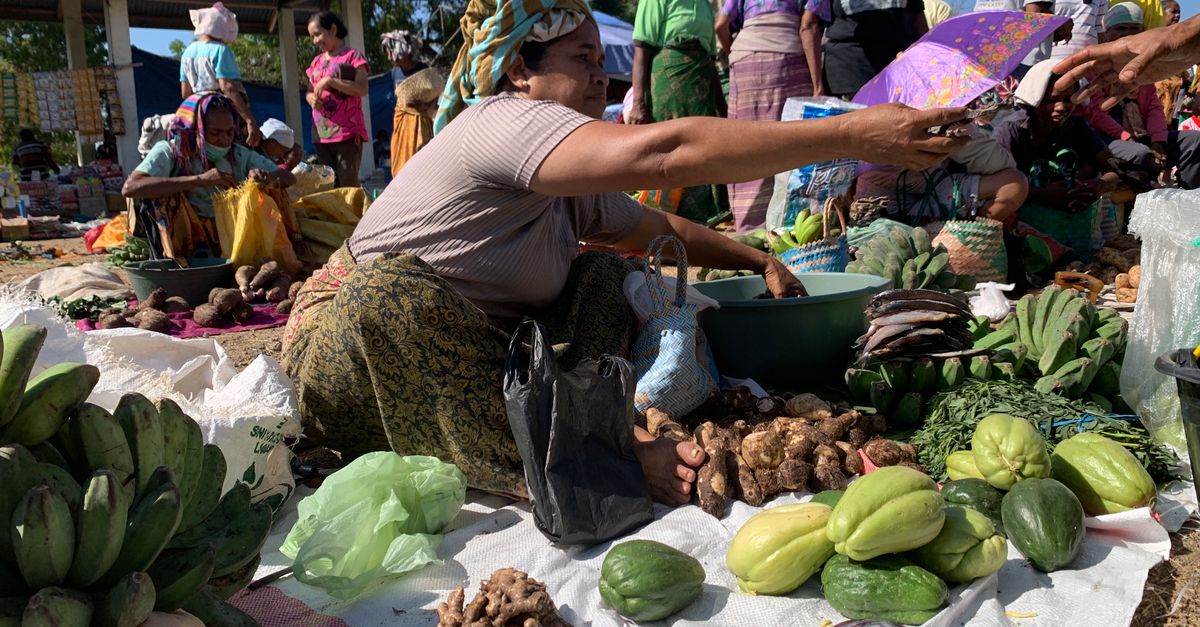
Antananarivo's historic Zoma market — once the largest open-air market in the world, a Friday institution that covered several city blocks with white parasols selling everything from live chickens to silver jewellery — was closed by President Ratsiraka in 1997 in a controversial urban renewal initiative. What replaced it was a smaller but still significant collection of market stalls around the Avenue de l'Indépendance, and the spirit of the Zoma lives on in the daily commerce of the capital's steep hillside streets.
The Marché Artisanal de la Digue, on the Route Circulaire above the presidential palace, is the best current craft market in Tana: a covered market of permanent stalls selling Malagasy handcraft of genuine quality — raffia and sisal baskets in the traditional merina geometric style, silk lambas (the traditional Malagasy wrap garment) in wild silk from the southeastern silk-producing communities, carved rosewood and ebony objects (the rosewood carving is ecologically controversial; most pieces sold today use sustainably certified wood), and the distinctive red clay pottery of the Sakalava people from the western coast.
The Marché de la Digue is on the Rue de la Digue in the Analakely neighbourhood, accessible by taxi from the city centre for MGA 5,000–8,000. Open daily from 8 a.m. to 5 p.m. Prices here are fixed for most items and represent the genuine Malagasy craft market value rather than tourist markup. A silk lamba (the traditional garment in hand-woven wild silk with natural-dyed colours) costs MGA 80,000–150,000 ($16–30 USD) depending on size and complexity — genuine fair-trade prices for a labour-intensive hand product.
The Avenue de l'Indépendance on Saturday mornings retains something of the old Zoma atmosphere: second-hand book stalls selling French and Malagasy-language titles, small-scale vendors of dried medicinal herbs and vanilla, and the general commercial energy of a highland city that has been trading on this avenue for 150 years. A paperback French novel costs MGA 2,000 ($0.40 USD); the selection includes 19th-century Hachette editions alongside contemporary Malagasy-language literature.
2. Isalo National Park's Canyon Trekking
In the arid south of Madagascar, 700 km from Tana on the RN7, the Isalo massif rises from the surrounding semi-desert like a ruined medieval city — a plateau of ancient Jurassic sandstone eroded into canyons, natural pools, rock arches, and fortress-like escarpments that has no visual equivalent anywhere in Africa. The national park protects the massif and the remarkable dry forest and canyon ecosystems it contains, including three lemur species (ring-tailed, Verreaux's sifaka, and brown lemur) that are regularly seen on the canyon trails.
The trekking in Isalo ranges from an easy 2-hour walk to the natural pools (Piscine Noire and Piscine Naturelle) to multi-day traversals of the massif's interior canyons. The Piscine Naturelle is Madagascar's most famous swimming hole — a natural rock pool deep in a shaded canyon fed by a cool freshwater stream, surrounded by palm trees, with ring-tailed lemurs occasionally visible on the canyon walls above. The 4-hour round trip to reach it is strenuous but entirely worth the effort.
The park entrance and guide booking is at Ranohira, accessible from Tana by taxi-brousse (MGA 80,000–100,000, 12–14 hours) or by local flights to Ihosy airport (40 km from Ranohira, $150–200 USD) with a local taxi connection. Park entry costs $10 USD; a mandatory guide costs MGA 40,000–80,000 ($8–16 USD) for a half or full day. Accommodation in Ranohira ranges from budget guesthouses (MGA 60,000/night) to the mid-range Jardin du Roy lodge ($120/night).
The sunset view from the Isalo massif's western escarpment — when the sandstone turns brilliant orange and the surrounding dry forest glows — is one of Madagascar's most extraordinary light shows. The Ring-tailed Lemur groups in the canyon below the viewing point are typically most active in the 2 hours before sunset, feeding on the canyon floor with the escarpment walls as a backdrop. The Verreaux's Sifaka (the "dancing" lemur, famous for its bipedal hopping across open ground) is also regularly encountered near the park's southern trails.
3. Avenue of the Baobabs at Dawn
Near Morondava on Madagascar's western coast, a 260-metre dirt track between two villages is lined on both sides with ancient Grandidier's baobabs (Adansonia grandidieri) — the largest of Madagascar's six endemic baobab species, with trunks up to 9 metres in diameter and heights reaching 30 metres. The baobabs are centuries old; some are estimated at 800 years, meaning they were ancient when the first Europeans arrived in Madagascar in the 16th century. The cleared track between them — all that survives of a formerly forested landscape — has become one of Africa's most photographed locations.
The Avenue of the Baobabs is at its most extraordinary at dawn and sunset, when the low-angle light turns the trunks the colour of copper and bronze and the sky behind them transitions through extraordinary colour sequences. The tourist infrastructure around the avenue is modest — a few food stalls and souvenir sellers — but the site is genuinely affecting regardless of how many photographers have stood here before you. These are among the oldest living things you will ever be near.
Morondava is accessible by light aircraft from Tana (Air Madagascar, $150–200 return, 90 minutes) or by the 800 km RN7/RN35 route which requires several days by taxi-brousse and is not recommended for time-limited visitors. The Avenue of the Baobabs is 10 km from Morondava town, accessible by taxi-brousse (MGA 10,000 one-way) or bicycle rental (MGA 15,000/day). Accommodation in Morondava ranges from budget guesthouses ($20/night) to the Palissandre Côte Ouest resort ($150/night).
The Kirindy Nature Reserve, 60 km north of Morondava, is Madagascar's most accessible dry deciduous forest and the best place in the world to see the Fossa — Madagascar's largest carnivore, a cat-like predator that is the island's ecological equivalent of a large cat but is actually most closely related to the mongoose family. Fossa sightings are not guaranteed but are frequent enough (particularly from October to December when they are most active) that most guided night walks produce an encounter. Park fees $10 USD; guide MGA 50,000. Combined with the baobabs, Kirindy makes 2 nights in Morondava well worthwhile.
4. Ranomafana National Park Lemur Trekking
Ranomafana National Park in the southern highlands — 400 km from Tana by road — is one of Madagascar's most important rainforest reserves and the best location for reliably sighting a wide variety of lemur species in their natural habitat. The park was established in 1991 following the discovery of the Golden Bamboo Lemur — an entirely new species found living on bamboo shoots that should contain fatal cyanide levels but which the lemurs have evolved to metabolise. The discovery represents one of the most dramatic examples of evolution's capacity for surprise.
Thirteen lemur species occur in Ranomafana, including the rare Greater Bamboo Lemur (Madagascar's most endangered primate), the Red-fronted Brown Lemur, the Milne-Edwards Sifaka, and the nocturnal Mouse Lemur — the world's smallest primate. Guided day and night walks are mandatory (guides hired at the park entrance); the night walk is particularly extraordinary, finding nocturnal lemurs, chameleons, and frogs with torchlight in forest that feels absolutely primeval in its biological richness.
Ranomafana is accessible by taxi-brousse from Fianarantsoa (70 km, MGA 10,000, 2 hours) or from Tana by the RN7 (approximately 8 hours by private vehicle). Park entry costs $15 USD; a guide for a half-day walk costs MGA 40,000–60,000. The Centre ValBio research station adjacent to the park hosts visiting biologists and occasionally accommodates general visitors; contact in advance. Hotel Setam Lodge (200 metres from the park entrance) offers comfortable rooms from $70/night and excellent Malagasy food.
The Ranomafana hot springs (thermal baths, MGA 5,000 entry) at the edge of the park town are a practical and deeply appreciated post-trekking experience. The pools are fed by naturally heated water at 38°C — perfect for tired muscles after 4–6 hours of forest trekking. The springs are used by local residents and visiting tourists equally, in a shared social setting that is characteristic of Madagascar's generally welcoming culture toward respectful visitors. Open daily from 7 a.m. to 6 p.m.
5. Andasibe-Mantadia National Park and the Indri
Andasibe-Mantadia National Park, 140 km east of Tana by the RN2, is the most accessible primary rainforest in Madagascar and the best location for hearing — and often seeing — the Indri (Indri indri), Madagascar's largest living lemur. The Indri's call is one of the most extraordinary animal sounds in the world: a haunting, wailing duet between mated pairs that carries 3 km through the forest and has been described as resembling humpback whale song crossed with a gibbon call. Groups announce their territorial boundaries at dawn with 20–30-minute calling sessions that transform the rainforest into something from another world.
The park is divided into two sections: the smaller Analamazoatra Special Reserve (nearest the entrance village of Andasibe, easily hikeable in 3 hours) and the larger Mantadia National Park (wilder, more species-rich, requiring a full day). The Indri is found in Analamazoatra; Mantadia adds the possibility of rarer species including the Diademed Sifaka. Day entry to Analamazoatra costs $12 USD; Mantadia $20 USD. Mandatory guides cost MGA 30,000–50,000 per person per park section.
The RN2 from Tana to Andasibe passes through one of the few remaining sections of eastern rainforest outside the national parks and is lined with species endemic to the eastern escarpment: Madagascar's endemic rainfall pattern (the east coast receives 2,000–3,000 mm annually) supports a continuous wall of rainforest between the highland plateau and the Indian Ocean coast. A bus from Tana's Fasan-Kebeny station to Andasibe costs MGA 10,000–15,000 ($2–3 USD) and takes 3 hours.
The Analamazoatra village adjacent to the park has several guesthouses ranging from MGA 60,000 ($12 USD) per night for basic accommodation to the Feon'ny Ala lodge ($65/night) which has comfortable rooms and excellent Malagasy food. The village's guide community — among the most professional in Madagascar — organises both day and night walks with extraordinary naturalist skill. The night walk in Analamazoatra, finding chameleons and nocturnal lemurs with headlamps in the village edge forest (not the national park interior), costs MGA 20,000 per person and is frequently more productive for sightings than the official park trails.
6. Nosy Be Island's Ylang-Ylang Plantations
Madagascar's premier beach destination, Nosy Be (literally "Big Island") in the northwest, is known for its white sand beaches and clear Indian Ocean water — but the island's most distinctive feature is olfactory rather than visual. Nosy Be is one of the world's leading producers of ylang-ylang (Cananga odorata), the essential oil whose sweet, heady floral scent is the base note of Chanel N°5 and hundreds of other perfumes. The island's air is permanently fragrant with it; the yellow flowers cover the plantation trees from October to May and the distilleries that process them run continuously.
Visiting a ylang-ylang distillery is one of Nosy Be's most distinctive experiences. The traditional copper-still distilleries near Nosy Be's main town (Hell-Ville, officially Andoany) produce several quality grades of oil — the "extra" grade distilled from the first pressing, highly fragrant and expensive; the "premiere" and "deuxième" grades from subsequent pressings. A factory visit and tasting of the different grades costs MGA 10,000–20,000 ($2–4 USD) and reveals the extraordinary range of nuance within a single botanical source.
Nosy Be is accessible by daily Air Madagascar flights from Tana ($180–250 return). The island town of Hell-Ville has a functioning market, good seafood restaurants, and the infrastructure of a functioning small city rather than a resort enclave. The beaches on the island's northern coast (Andilana, Madirokely) are excellent; the less-visited western coast offers deserted bays accessible by pirogue (dugout canoe, MGA 15,000/day rental) that provide the isolation the northern beaches lack in peak season.
The Nosy Be Diving is considered some of the finest in the Indian Ocean — the depth profile around the island drops quickly to 30+ metres with excellent visibility (20–30 metres) and a diverse reef ecosystem. The Manta Resort at nearby Nosy Iranja (a sister island) has the finest diving infrastructure, but independent dive operators in Hell-Ville offer more affordable two-tank boat dives for $100–130 USD. Whale sharks are seasonally present (October–November) in the channel between Nosy Be and the mainland.
7. Tsingy de Bemaraha UNESCO Site
The Tsingy de Bemaraha Strict Nature Reserve — 600 km west of Tana in the remote Melaky region — contains the most extraordinary geological landscape in Madagascar and one of the most visually dramatic on earth: a plateau of ancient limestone eroded into a forest of razor-sharp pinnacles (tsingy in Malagasy means "where one cannot walk barefoot"), with some towers reaching 50 metres and the entire plateau extending for 72,000 hectares. The reserve is UNESCO-listed and contains endemic species that have evolved in the impossible environment of the limestone karst — plants that grip the vertical rock walls, birds that nest in the pinnacle caves, lemur species (including the endemic Decken's Sifaka and the Tsingy Brown Lemur) that have adapted to navigating the labyrinth.
Access to the Tsingy is genuinely remote — the nearest town of Bekopaka is accessible only by the terrible dirt road from Morondava (6–8 hours by 4WD, impassable in the rainy season November–March) or by light aircraft from Tana or Morondava. The effort required to reach the site is significant; so is the reward. Walking the via ferrata routes through the Grand Tsingy — equipped with helmets, harnesses, and fixed rope systems — involves traversing narrow limestone ridges with 50-metre drops on both sides and emerging at viewpoints over the karst plateau that have no equivalent anywhere in the world.
Permits for the Tsingy (MGA 75,000, $15 USD) and mandatory guides (MGA 100,000–200,000 depending on route and group size) are purchased at the park office in Bekopaka. The Grand Tsingy circuit takes a full day; the Petit Tsingy is a half-day easier option. Accommodation in Bekopaka: the Soleil des Tsingy lodge offers comfortable rooms from $80/night; several budget guesthouses charge $20–30. Food in Bekopaka is limited; bring supplementary supplies for multi-day visits.
The Tsingy is best visited at the beginning or end of the dry season (April–May or October) when the vegetation in the karst canyon floors is most varied and the temperature is not at its extreme. July–August is the most popular visiting period but also the most crowded (30–50 visitors per day at peak, which still qualifies as "quiet" by most standards). October produces the finest photographic conditions as the first rains bring new leaf growth to the canyon floor vegetation while the tracks are still passable.
8. Amber Mountain National Park
In Madagascar's far north, the Montagne d'Ambre National Park rises from the surrounding dry deciduous forest as a mountain of perpetual cloud — the northernmost rainforest in Madagascar, fed by orographic rainfall that the surrounding lowlands never receive. The park is 18,225 hectares of mountain rainforest with several spectacular waterfalls, extraordinary chameleon diversity (the Amber Mountain holds 13 endemic chameleon species — more than the entire continent of Africa), and reliable lemur sightings including the Crowned Lemur and the Sanford's Brown Lemur.
The park is accessible from Diego Suarez (Antsiranana) — Madagascar's northernmost major town, 32 km south of the park entrance. Diego Suarez is the most beautiful colonial town in Madagascar: a natural harbour considered one of the finest in the world (large enough to shelter the entire French naval fleet, it was the strategic prize fought over during World War II's Operation Ironclad), with French Art Deco architecture, excellent Indian Ocean seafood, and a population that blends French, Indian, Arab, and Malagasy heritage in the Creole style of the north coast.
Park entry costs $12 USD; guides MGA 40,000 per day. The 3 km walk to the Grande Cascade waterfall (30 metres high, set in a pool of extraordinary tranquillity deep in the park's interior) takes 2 hours each way and passes through forest where chameleons are visible from the path without special searching — the abundance of Amber Mountain chameleons in the understory is remarkable even by Madagascan standards. Night walks reveal nocturnal species including the Amber Mountain species of Mouse Lemur and several endemic gecko species unique to the park.
Diego Suarez itself deserves 2 nights: the Monday and Thursday markets at the waterfront are extraordinary, with tunas fresh from the Indian Ocean, local vanilla beans at producer prices, and the handicraft of the northern Malagasy peoples. The Emerald Sea (Mer d'Émeraude) day trip from Diego — a boat excursion to a tidal sandbar in the bay where the water is an extraordinary emerald-turquoise — is the best beach day available in the north. The trip costs MGA 80,000–100,000 per person from local operators on the Diego waterfront.

9. Fianarantsoa and the Southern Highland Railway
Fianarantsoa (abbreviated Fianar) is Madagascar's second-largest city and the cultural capital of the Betsileo people — the highland ethnic group renowned for their rice cultivation expertise, fine silk weaving, and the extraordinary irrigated terrace agriculture that transforms the hillsides around Fianar into a visual statement about the relationship between human ingenuity and landscape over centuries. The city's colonial Haute Ville (upper town) preserves French colonial architecture on steep hillside streets that feel like a tropical Montmartre.
The FCE railway — the Fianarantsoa-Côte Est line — descends 400 km from Fianar to the coast at Manakara through tropical rainforest, across 67 bridges, through 48 tunnels, and down an escarpment of extraordinary geological drama that the road beside it cannot match for scenery. The train runs twice weekly (theoretically — the FCE has reliability issues) and takes 12–15 hours to reach the coast. It is simultaneously one of Madagascar's most extraordinary scenic journeys and one of the most challenging for timeline-sensitive travellers: the train runs when it runs, and delays of several hours are routine.
The Fianar market on Wednesday and Saturday mornings is the best silk lamba market in Madagascar: weavers from the Betsileo villages outside town bring hand-woven lambas in wild silk (from the endemic Borocera madagascariensis silkworm) and plant-dyed cotton in colours that range from deep madder red to natural undyed cream. A hand-woven Betsileo lamba costs MGA 100,000–300,000 ($20–60 USD) depending on size and complexity. These are among the finest textiles made anywhere in Africa and the prices reflect skilled artisan labour rather than tourist markup.
The Catholic Mission of Marist Brothers on the Haute Ville plateau (founded 1869) maintains a wine cellar — astonishing in Madagascar — that produces red wine from hybrid grapes grown on the mission's own vineyard. The wine (available from the mission shop at MGA 20,000–30,000 per bottle) is not world-class but is startling in context: drinking Malagasy wine produced by a 150-year-old French Catholic mission in the highland capital of the Betsileo people while looking out over terrace rice paddies stretching to the horizon is an experience that defies easy categorisation but is entirely Malagasy in its improbability.
10. Ifaty and the Spiny Forest
On the southwestern coast near Tulear (Toliara), the spiny forest of the Mahafaly and Bara peoples is one of the most biodiverse and visually extraordinary dry forests in the world. The spiny forest is dominated by endemic succulent plants — Didierea, Alluaudia, and dozens of endemic Euphorbia species — that have evolved into cactus-like columnar forms to survive the extreme aridity of Madagascar's southwestern climate. The forest looks like nothing else in the world and feels like being on another planet.
The village of Ifaty, 25 km north of Tulear, is the base for exploring the spiny forest and the adjacent Indian Ocean coast. The coast here has fringing reef with excellent snorkelling and diving; the giant sea turtles are regularly encountered around the reef, and the offshore waters are seasonally visited by whale sharks (October–November) and humpback whales (August–September). The combination of extraordinary marine and terrestrial biodiversity in a single small area makes the Ifaty-Tulear region one of Madagascar's most rewarding destinations.
The Reniala Nature Reserve adjacent to Ifaty (MGA 15,000 entry) protects a representative sample of spiny forest with guided walks that identify the extraordinary diversity of endemic plants — baobabs (three of the six endemic species occur in the southwest), Pachypodium trees with their swollen trunks and crown of leaves, and the remarkable Didierea with its cactus-like stem columns and tiny leaves. The guided walk takes 90 minutes and the endemic bird species (Long-tailed Ground Roller, the Southern Banded Snake Eagle) are reliably encountered.
Tulear (Toliara) is accessible from Tana by Air Madagascar (1 hour, MGA 400,000–600,000 return) or by the RN7 (12–14 hours, the southern end of the classic road trip). The town itself has a functioning commercial market selling dried octopus, smoked fish from the Vezo fishing people of the coast, and the distinctive Mahafaly woven bags in pandanus palm leaf. Accommodation in Ifaty ranges from beach bungalows at MGA 50,000 ($10 USD) per night to the Bamboo Club resort at $80/night. The Ifaty beach is the best on the southwest coast for diving infrastructure; a two-tank dive costs $80–100 USD from the local operators.