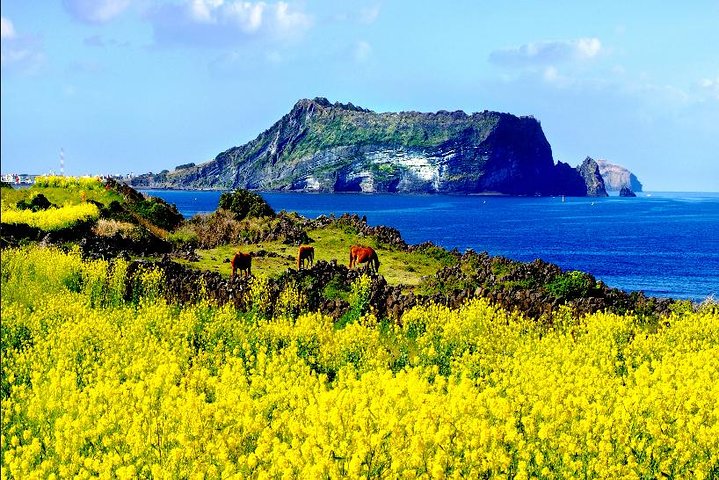
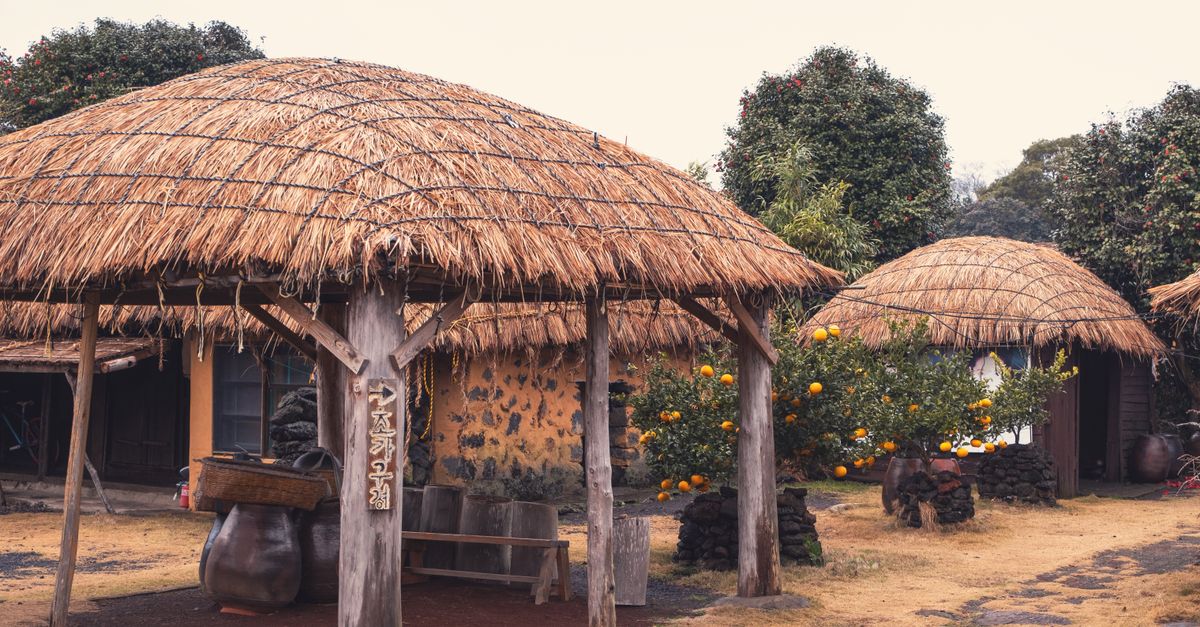
Jeju Island is South Korea's tropical escape — a volcanic island with UNESCO-listed lava tubes, dramatic sea cliffs, and a unique culture distinct from the mainland — and the food scene reflects this diversity.

Must-Try Dishes
1. Heuk Dwaeji (Black Pork) — ₩15,000-25,000
Jeju's famous black pigs produce a fattier, more flavorful pork than mainland Korean varieties. Grilled at your table with garlic, perilla leaves, and ssamjang dip. Dombe-dong Black Pork Street has dozens of restaurants (₩15,000-25,000/person).
2. Haemul Ttukbaegi (Seafood Stew) — ₩12,000-20,000
A bubbling stone pot of seafood — abalone, sea urchin, clams, and kelp in a clear broth. The haenyeo (diving women) supply the freshest catch. Available at coastal restaurants (₩12,000-20,000).
3. Abalone Rice Porridge (Jeonbok Juk) — ₩10,000-15,000
Slow-cooked rice porridge with fresh abalone — Jeju's most famous comfort dish. The abalone liver turns the porridge green. Served at dedicated juk restaurants (₩10,000-15,000).
4. Hallabong (Jeju Tangerine) — ₩3,000-5,000
Jeju's signature citrus fruit — sweeter and more aromatic than regular mandarin. Available everywhere (₩3,000-5,000/bag). Hallabong juice, chocolate, and ice cream are ubiquitous souvenirs.
5. Raw Fish (Hoe) — ₩20,000-40,000
Ultra-fresh sashimi from the morning catch — flatfish, sea bream, and abalone are Jeju specialties. Served with gochujang-vinegar dip. Jeju-si fish market (₩20,000-40,000 for a platter for 2).
6. Bingtteok (Buckwheat Crepe) — ₩3,000-5,000
Jeju-specific buckwheat crepe filled with radish and seasoned vegetables. A humble street food with a satisfying chewy texture. ₩3,000-5,000 at traditional markets.
Street Food & Markets
Jeju's market culture is inseparable from its food identity, and the island's two great traditional markets offer experiences that no restaurant can replicate. Dongmun Market in Jeju City is the oldest and most visited — a covered maze of stalls that has operated in some form since the Joseon period. Arrive before 9 AM when the produce vendors are at their freshest and the breakfast stalls are working at full pace. The front section facing Namseongnol-gil is devoted to hallabong and other citrus varieties: bags of four to six tangerines cost ₩3,000-5,000 and vendors will let you taste before you buy. Further inside, the haenyeo grandmothers sell the morning's abalone, sea urchin, and fresh seaweed directly from foam boxes — these are among the freshest seafood purchases available anywhere in South Korea.
The Dongmun covered market food stalls run along the interior eastern section and serve Jeju-specific dishes that rarely appear on restaurant menus. Gogi guksu (pork noodle soup, ₩6,000-8,000) — a local variation on the mainland's gukbap — is the quintessential Jeju breakfast, with a mild clear broth made from the island's black pork bones. Bindaetteok (mung bean pancakes, ₩2,000-3,000 per portion) are fried to order at the first stall on the right as you enter from the main entrance. The jeongpyeon rice cakes steamed with wheat makgeolli — unique to Jeju — cost ₩1,500 each and are worth tracking down among the tteok vendors in the inner market.
Seogwipo Maeil Olle Market on the island's southern coast serves a smaller but arguably more photogenic market experience. The name means "daily market" and it operates every day without exception, which is unusual in a country where most traditional markets follow a five-day rotation. The food hall on the second floor is the main event: haemul pajeon (seafood spring onion pancakes, ₩8,000), odeng fishcake skewers in hot broth (₩500-1,000 per skewer), and the market's famous grilled dakgalbi (spicy marinated chicken, ₩9,000) from the stalls along the east wall. Portions are designed for sharing; order two or three items between two people and graze rather than ordering a single dish.
Beyond the permanent markets, the Jeju Olle Market operates every Saturday at the Olle Tourist Centre near Jeju City, specifically targeting travellers and young Jeju food producers. Craft makgeolli brewers, small-batch hallabong jam makers, and artisan producers of ogokbap (five-grain rice) sell directly alongside food trucks serving creative takes on Jeju classics. Prices are higher than Dongmun Market but the quality and distinctiveness of the products justify the premium. The seating area outside is excellent for a late morning coffee alongside whatever you have just bought.
Street food is most vibrant around the Chilseong-ro night market strip in central Jeju City, which comes alive from 6 PM onwards. The best single item is tteokbokki prepared by the stall at the northern end — a Jeju variation using dried radish strips (musaengchae) in the sauce that gives it a slightly different texture and sweetness than the mainland version (₩4,000 per portion). Hotteok (sweet filled pancakes, ₩1,500) and egg bread (gyeran ppang, ₩2,000) round out the evening snacking circuit that most local university students follow on weekends.
Where to Eat
City Center — Tourist-Friendly
The main tourist area has the most accessible restaurants with English menus and familiar service styles. Prices are 20-30% higher than local neighborhoods but convenience is worth it for first-time visitors.
Local Neighborhoods — Authentic & Budget
Venture 10-15 minutes from the tourist center to find where locals eat. Prices drop significantly and authenticity rises. Language barriers exist but pointing at dishes and smiling works universally.
Markets & Street Food — Best Value
The city's markets and street food areas offer the cheapest and often the best eating experiences. Follow the queues, eat what locals eat, and budget for multiple small dishes rather than one large meal.
Dining Tips for Jeju
The best food in any city comes from specialists — restaurants and stalls that have perfected a single dish over years or decades. The cramped stall with the longest queue of locals invariably serves better food than the spacious restaurant with the bilingual menu and zero customers. Follow the crowds, eat what locals eat, and budget for multiple small meals rather than one large dinner.
Street food is safe when the vendor is busy — high customer turnover means food is cooked fresh and doesn't sit at dangerous temperatures. Avoid pre-cooked items that have been sitting under heat lamps for hours. Steaming, sizzling, and smoking are signs of freshly prepared food. Morning markets and evening food stalls typically offer the freshest options.
Local markets are the most affordable and authentic eating experience in any Asian city. Visit the main market early in the morning when vendors set up — the energy, the colors, and the breakfast food reveal the city's character more effectively than any museum or monument. Budget 60-90 minutes for a market visit including breakfast.
Dietary restrictions and allergies can be communicated with a few prepared phrases in the local language. Download Google Translate's offline language pack before your trip. Most Asian food cultures are accommodating of preferences when communicated clearly. Vegetarian options are available nearly everywhere, though the definition varies — fish sauce and shrimp paste appear in many 'vegetarian' Southeast Asian dishes.
Planning Your Food Exploration
The most rewarding food experiences come from planning meals around the local eating schedule rather than forcing your own rhythm onto a foreign city. Most Asian cities eat early — breakfast stalls open at dawn and close by 9 AM, lunch service peaks at noon and ends by 2 PM, and dinner starts at 5-6 PM. Night markets and street food stalls offer the best evening options, typically running from 6 PM until 10 PM or later.
Budget allocation matters. Spend 30-40% of your food budget on one memorable meal — a signature local restaurant, a cooking class, or a fresh seafood dinner. Allocate the rest to street food, markets, and casual local restaurants where the authentic flavors live. This strategy ensures you taste both the refined and the everyday versions of the local cuisine without breaking the bank.
Photography etiquette at food stalls and small restaurants varies by culture. In most of Asia, photographing your food is completely normal and even expected. Photographing the cook or the stall itself — ask first with a smile and gesture. Most vendors are flattered; a few prefer not to be photographed. In sit-down restaurants, photograph freely but be discreet about photographing other diners.
Food allergies and dietary restrictions require preparation. Write your restrictions in the local language (Google Translate helps) and show the note at each restaurant. Common allergens like peanuts, shellfish, and gluten appear in unexpected places — soy sauce contains wheat, fish sauce is in many Thai and Vietnamese dishes, and peanuts appear in Indonesian, Malaysian, and Chinese cooking. Communicate clearly and ask about ingredients rather than assuming from the menu description.
The single best food investment in any Asian city is a cooking class. For 5-50, you'll visit a local market, learn 4-6 dishes hands-on, and gain techniques that let you recreate the flavors at home. The market tour alone — learning to identify local herbs, spices, and produce — transforms your understanding of the cuisine for every subsequent meal during your trip.