
Most visitors to Taipei follow a predictable loop: Taipei 101, Shilin Night Market, Jiufen, Chiang Kai-shek Memorial Hall. These places are genuinely worth seeing, but they represent the most obvious layer of a city with extraordinary depth beneath the surface.
The Taipei that locals love lives in converted factory art districts, mountain-top tea villages, riverside heritage neighborhoods, and quiet hilltop settlements where artists have built something beautiful from nothing. Every place on this list is reachable by MRT or a short bus ride.

1. Treasure Hill Artist Village
Treasure Hill is one of the most extraordinary places in Taipei and barely any tourists visit. Perched on a hillside above the Xindian River near Gongguan, this former military settlement was built illegally by veterans in the 1940s-60s — a jumble of concrete houses, narrow stairways, and rooftop gardens that was nearly demolished before being saved and transformed into an artist village.
Today, artists-in-residence live and work in the converted houses. The narrow pathways weave between open studios, small galleries, and installations — a mural might cover an entire wall, a sculpture might emerge from a doorway. The rooftop views over the river and the city are stunning. The atmosphere is quiet, contemplative, and completely unlike anywhere else in Taipei.
Entry is free. Visit on a weekday afternoon when the studios are open but the crowds are absent. Take the MRT to Gongguan Station (Green Line) and walk 10 minutes south along the river. Open Tuesday-Sunday, 11 AM-10 PM.
2. Maokong Gondola & Tea Country
Maokong is a tea-growing village on the mountains above Taipei that feels impossibly rural for a place reachable by a 30-minute cable car ride from the city. The Maokong Gondola (NT$120 one-way with EasyCard) departs from the MRT Brown Line terminus at Taipei Zoo station and climbs over forested hills to the village at 300 meters elevation.
Choose the crystal cabin (glass-floor gondola) for vertigo-inducing views over the jungle canopy — there's no extra charge, just a longer queue. At the top, the village is a string of tea houses along a mountain road. Order a pot of locally grown Tieguanyin oolong tea (NT$200-400 per pot) and sit on a terrace overlooking the Taipei basin. Many tea houses offer meals — tea-infused noodles (NT$180) and tea oil chicken (NT$250) are local specialties.
The Zhangshu Trail (1 km loop) is an easy walk through tea plantations with panoramic views. Visit on a weekday or early morning for the peaceful experience the village deserves.
3. Dadaocheng
Dadaocheng is Taipei's oldest commercial district, where the city's modern history began with the tea trade in the 1850s. While the rest of Taipei has been rebuilt repeatedly, Dadaocheng's narrow streets still hold ornate Baroque and Art Deco facades from the Japanese colonial era, traditional Chinese medicine shops, fabric wholesalers, and tea merchants who have operated from the same buildings for generations.
Walk along Dihua Street, the district's main artery — a 800-meter stretch of restored heritage buildings now housing artisan shops, craft tea rooms, and design studios alongside the original dried goods merchants. ASW Tea House occupies a stunning third-floor space in a century-old building and serves excellent oolong with views over the heritage rooftops (pot from NT$350).
The Xiahai City God Temple on Dihua Street is one of Taipei's most active temples, particularly famous for its matchmaking deity — couples come to pray for romantic success, and the walls are covered in thank-you plaques from those who attribute their marriages to the temple's help. Visit during the Lunar New Year season (late January-February) when Dihua Street transforms into a massive outdoor market selling decorations, dried fruits, and traditional snacks.
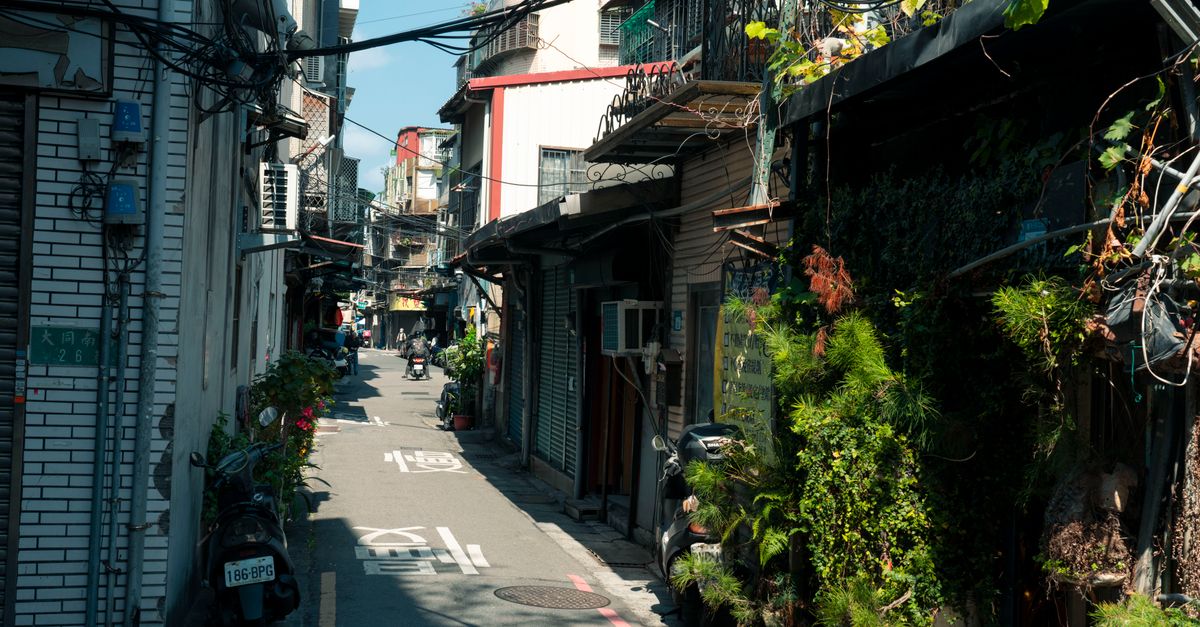
4. Huashan 1914 Creative Park
Huashan 1914 is a former wine factory that has been converted into Taipei's most atmospheric creative space. The cluster of industrial buildings — brick warehouses, wooden sheds, and concrete workshops dating from the Japanese colonial period — now houses rotating art exhibitions, independent bookshops, design studios, artisan craft markets, and some of the city's best cafes.
Unlike many "creative parks" that feel contrived, Huashan has genuine edge. The exhibitions rotate frequently and range from contemporary Taiwanese art to experimental installations. The outdoor spaces between buildings are filled with greenery and make for pleasant wandering. Alleycat's Pizza serves excellent wood-fired pizza (NT$280) in a converted warehouse, and Fong Da Coffee — one of Taipei's oldest coffee roasters — operates a branch here.
Entry to the park grounds is free; individual exhibitions charge NT$100-350. Located a 5-minute walk from Zhongxiao Xinsheng MRT Station. Best visited on weekend afternoons when the craft markets are in full swing.
5. Elephant Mountain at Sunrise
Elephant Mountain (Xiangshan) at sunset is well-known — it's the most popular viewpoint for photographing Taipei 101 against the golden sky, and by late afternoon the trail is crowded with photographers and tourists. But visit at sunrise and you'll have the mountain nearly to yourself.
The hike takes 20 minutes from the MRT station (Red Line, Xiangshan Station Exit 2) up a series of stone steps through subtropical forest. The main viewpoint — a series of large rock formations overlooking the city — faces east, making sunrise the optimal time for photography. The city emerges from morning mist with Taipei 101 glinting in the first light, and the only company you'll have is the local residents doing their morning exercises on the trail.
Arrive 30 minutes before sunrise. Bring water and a flashlight for the trail. The rocks can be slippery if wet. After your descent, reward yourself with a Taiwanese breakfast at one of the shops near the station — fresh soy milk and dan bing taste exceptional after a mountain sunrise.
More Hidden Spots
Songshan Cultural and Creative Park
Another Japanese-era factory conversion (former tobacco factory), with the excellent Taiwan Design Museum (NT$150) and rotating exhibitions. Less crowded than Huashan and home to eslite Spectrum — a bookstore-concept-store that's a destination in itself. Free entry to the grounds.
Zhongshan Underground Book Street
A 700-meter underground passage connecting Zhongshan and Shuanglian MRT stations, lined with secondhand bookshops, indie publishers, and small art galleries. It's free, air-conditioned, and one of the most civilized public spaces in the city. Perfect for rainy afternoons.
Bitan (Green Lake)
A scenic lake in Xindian (MRT Green Line terminus) with a dramatic suspension bridge, swan boats (NT$200 per hour), and clifftop walking trails. Locals come here for weekend picnics. The riverside restaurants serve grilled river shrimp and cold beer — an unexpectedly beautiful escape 30 minutes from the city center.

Taipei reveals itself in layers. The first layer is the guidebook Taipei — bright, delicious, and welcoming. The second layer, in these hidden corners, is where the city becomes truly unforgettable.
Local Neighbourhood Gems
Taipei's most rewarding neighbourhoods are the ones that appear on no top-ten list yet define the city's day-to-day character. While tourists cluster in Ximending, Da'an, and Zhongzheng, the real residential texture of the city lives elsewhere — in places where the bakeries open at 6 AM for commuters, the parks fill with elderly tai chi groups at dawn, and the evening barbecue stalls serve the same families they have served for thirty years.
Shida (師大) — the area around National Taiwan Normal University — built its reputation on the now-quieter Shida Night Market but retains its bohemian character in the streets surrounding the campus. Longquan Street and Shida Road are lined with independent bookshops, secondhand vinyl record stores, specialty coffee roasters (Rufous Coffee on Jinhua Street roasts on-site and serves single-origin pour-overs for NT$130), and tiny restaurants serving Taiwanese beef noodle soup (NT$160-200) to students who have been eating here since their first semester. The weekend antiquarian book market in the university lane near Gate 2 surfaces rare Japanese-language Taiwanese photography collections for NT$50-500.
Wenshan District (文山區), in the hilly southeastern corner of the city, contains Muzha — the administrative hub — and several temple-rich hillside neighbourhoods that most visitors never reach. The Zhinan Temple on the mountain above Maokong is one of Taiwan's largest and most architecturally dramatic Taoist complexes, spread across multiple terraced levels with views over the entire Taipei basin. Free to enter, and the 40-minute hike up from the Maokong Gondola terminal passes through dense bamboo forest. On a clear morning the temple courtyards fill with incense smoke and golden light in equal measure.
Beitou (北投), in the far north of the city (MRT Xinbeitou Branch Line, NT$20 from Xinbeitou station), is Taipei's hot spring district and an easy half-day escape. The Beitou Hot Spring Museum occupies a gorgeous 1913 Japanese-era public bathhouse (free entry), and the surrounding creek valley has a string of public hot spring parks where soaking pools cost NT$80-150 per person. The Geological Museum of Taiwan (free) displays the rare radioactive green sulphur stones — Hokutolite — found only in Beitou's springs worldwide.
Xinzhuang in New Taipei City (40 minutes from Taipei Main Station, NT$35 by MRT) is not technically Taipei but feels like the city's unglamorous authentic underbelly — dense, working-class, and home to Bao'an Temple, whose annual Baojian Festival (spring, dates vary by lunar calendar) involves elaborate processions, fire-walking ceremonies, and traditional opera performances that draw no foreign tourists whatsoever. Attending one of these neighbourhood festivals is as close as a visitor gets to Taiwanese religious and community life unmediated by tourism infrastructure.
Ready to explore? Find hotels across Taipei on JustCheckin.


