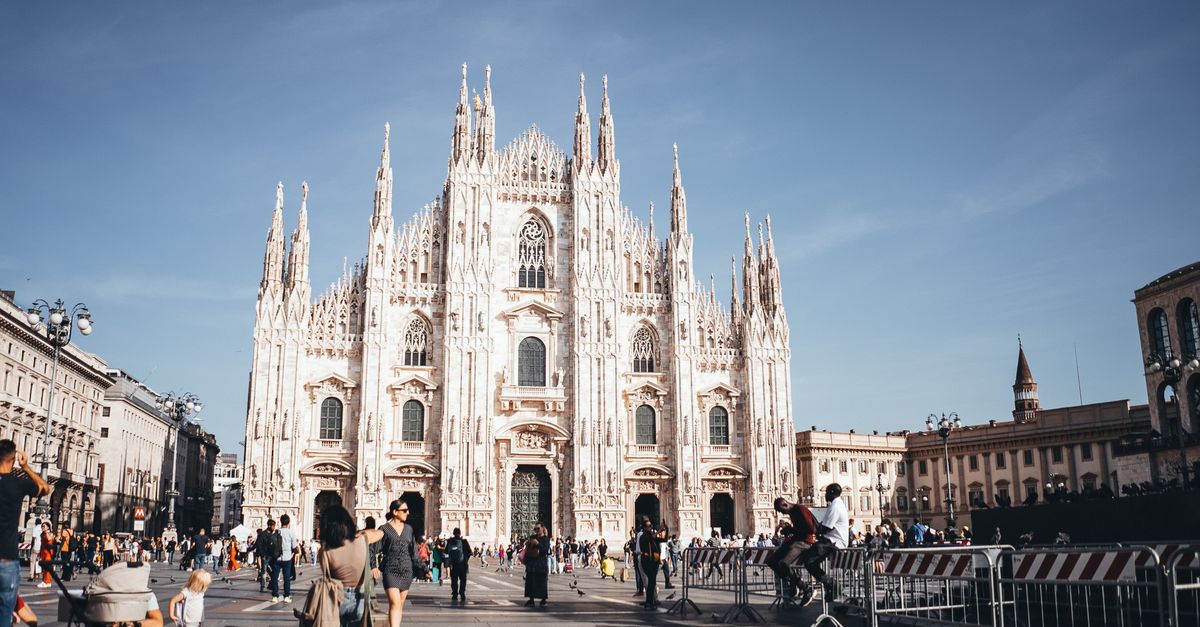
Milan is Italy's most misunderstood city. Visitors come for The Last Supper and the Duomo, find the city fast and expensive and efficient in a way that feels un-Italian, and leave slightly puzzled. What they missed: a canal district that is among the finest urban regeneration projects in southern Europe, a cluster of early 20th-century neighbourhoods with extraordinary Art Nouveau architecture, a food and wine scene that is both deeply Lombard and aggressively contemporary, and a museum of science and technology that puts London's to shame.
This guide is for the traveller who has done the Duomo and wants to understand what Milanese people actually do with their city. It's for someone who wants to take the tram through Porta Venezia, explore the Isola neighbourhood on a Saturday morning, and eat risotto alla milanese in a place that doesn't have a photograph of it on the menu.
Milan is a city that requires confidence to explore — it doesn't signpost its pleasures. But they're there, extraordinary, and mostly empty of tourists.

1. Navigli at Aperitivo Hour
The Navigli — Milan's surviving canal system — were Leonardo da Vinci's engineering playground, and they remain one of the most beautiful and least expected things about a city known primarily for its financial district and its fashion shows. Two main canals (Naviglio Grande and Naviglio Pavese) converge at the Darsena basin in the south of the city, surrounded by bars, restaurants, galleries, and antique dealers. The aperitivo hour here — roughly 6 to 9pm — is the finest free drinks arrangement in Italy: order one drink for €7–10 and you access a buffet of cold cuts, cheeses, bruschette, pasta salads, and olives that constitutes a full meal.
The canal system originally extended through much of central Milan; most was filled in during the 1930s to create roads. The surviving sections in Navigli were saved largely by the neighbourhood's working-class character — it wasn't worth the development cost to fill them. That accident of economics created one of Milan's finest assets. The canal-side buildings, mostly late 19th-century, have been colonised by creative businesses, and the towpath is a continuous string of bar terraces on summer evenings.
Take the metro (Line 2, green line) to Porta Genova station and walk south along the Naviglio Grande towpath. The best aperitivo bars are concentrated between the Vicolo dei Lavandai (an old communal laundry preserved beside the canal) and the Ponte di San Marco. Exploit the buffet philosophy: order the cheapest drink on the menu (usually a house white wine or a Spritz), then eat as comprehensively as the kitchen allows.
Aperitivo buffets are typically available 6–9pm. The best bars for buffet quality are Brel, Mag Café, and the various unnamed spots on Ripa di Porta Ticinese. Budget €8–12 per person including a drink and full access to the food. On the last Sunday of each month, the Naviglio Grande hosts a massive antique market stretching 400 stalls along the towpath — one of the largest in northern Italy.
2. Isola Neighbourhood
Isola is the neighbourhood that got cut off from the rest of Milan when they built the railway in the 19th century — surrounded on three sides by rail infrastructure, it developed its own self-contained identity. Today it's where Milan's designers, musicians, and writers live, eat, and drink; it's also where the best independent shops, coffee bars, and small restaurants are concentrated. The Porta Nuova skyscraper development immediately adjacent has brought it to wider attention, but the neighbourhood itself remains resolutely local.
The streets around Piazza Statuto and Via Pollaiuolo are the heart of the neighbourhood — tiny bars, vintage clothing, independent bookshops, a Saturday morning market on Piazza Lagosta that sells local produce and is the social event of the week for the people who live here. The Bar Lagosta on the square has been open since 1938 and serves the neighbourhood's finest brioche with your morning coffee (€1.80 for both, standing at the counter, as God intended).
Take the metro to Garibaldi FS (Line 2 or Line 5) and walk north across the railway through the pedestrian underpass. The neighbourhood is most alive on Saturday mornings (market) and Thursday–Saturday evenings (aperitivo and dinner scene). Ristorante Isola on Via Vigevano is excellent for Lombard cuisine; Dry Milano on Via Solferino is one of Italy's best pizza restaurants and deserves its reputation.
The Bosco Verticale (Vertical Forest) towers are immediately adjacent to Isola — two residential towers covered in 11,000 plants, designed by Boeri Studio and completed in 2014. They're a genuinely extraordinary piece of architecture, best seen from the Piazza Gae Aulenti below or from the Biblioteca degli Alberi park at their base. The park is open at all hours and is one of the best in central Milan.
3. Pinacoteca di Brera on Thursday Evening
The Brera art gallery is one of Italy's finest — Mantegna's Dead Christ, Raphael's Marriage of the Virgin, Caravaggio's Supper at Emmaus, and scores of other masterpieces — but it's crowded during the day with tour groups doing the circuit at pace. On Thursday evenings it stays open until 10:30pm, and by 7pm the tour groups have gone, the light in the gallery is lower and more beautiful, and you can stand in front of Mantegna's extraordinary foreshortened Christ for as long as you want without anyone pressing behind you.
The gallery occupies a 17th-century Jesuit palace in the Brera neighbourhood — the most beautiful district in central Milan, a web of cobbled lanes around the ancient church of Santa Maria del Carmine and a neighbourhood of art dealers, antiquarian book shops, and some of the finest restaurants in the city. The Pinacoteca shares the palace with the Accademia di Belle Arti (the art school) and the botanical garden — both of which can be visited separately.
Find the entrance at Via Brera 28. Open Tuesday to Sunday 8:30am–7:15pm; Thursday until 10:15pm. Closed Monday. Admission €15; €2 surcharge for temporary exhibitions. Thursday evening hours are underused by tourists and overused by Milanese art lovers — exactly the right balance. Take the tram to Fatebenefratelli stop or walk from Lanza metro station (Line 2, 5 minutes).
The Brera neighbourhood around the gallery is worth a full morning — the Saturday morning market on Via Fiori Chiari is small but good for vintage finds; the Pasticceria Marchesi on Via Santa Maria alla Porta is the finest traditional pastry shop in Milan and worth the €3.50 it charges for a cornetto. The garden of the Accademia, accessible through the same palazzo, has a collection of ancient stone fragments that few visitors know about.
4. Cimitero Monumentale
Milan's Monumental Cemetery is one of the most extraordinary outdoor sculpture collections in Europe — a 250,000-square-metre complex of mausoleums, monuments, and funerary art created between 1866 and the present day by the finest sculptors and architects of each era. The outdoor spaces contain art nouveau chapels, fascist-era monumental tombs, and some startlingly contemporary installations alongside traditional neoclassical monuments. Entry is free.
The cemetery was opened in 1866 as a prestige burial ground for Milan's bourgeoisie and aristocracy — the families who made the city rich during industrialisation competed to build the most impressive family mausoleum, resulting in an accidental museum of decorative arts from the late 19th century onward. The Famedio (Hall of Fame) at the entrance contains the tombs of distinguished Milanese citizens, including Alessandro Manzoni. The mausoleum of the Bernocchi family (ca. 1910) is one of the finest pieces of Art Nouveau funerary architecture in Italy.
Find it on Piazzale Cimitero Monumentale, in the north of the city. Take tram 12 or 14 from the city centre to the dedicated stop. Open Tuesday to Sunday 8am–6pm. Free admission. The main entrance on Piazzale Cimitero Monumentale leads directly into the central Famedio building; the mausoleum avenues radiate from there. Pick up a free map at the entrance — the major monuments are numbered and described.
Set aside two hours. The most visited tombs are those of major historical figures (Manzoni, Luca Beltrami); the most interesting are often the smaller family tombs in the outer sections, where individual sculptors were given creative freedom by families with more money than restraint. The cemetery is quietest on weekday mornings — by Sunday afternoon it attracts a contemplative crowd of Milanese who treat it as a public garden.
5. Porta Venezia and the Liberty Quarter
The streets around Porta Venezia in the east of Milan's centre contain the finest concentration of Liberty (Italian Art Nouveau) architecture outside of Turin. The Casa Galimberti on Via Malpighi, the Casa Donzelli on Corso Buenos Aires, and the facades along Via Malpighi itself are an extraordinary document of the early 20th-century moment when Milan's middle class wanted their homes to look like fairy tales. Most visitors walk past without looking up.
The Liberty movement in Italy ran roughly 1890–1915 and reached its peak expression in Milan — the city was wealthy enough to build extensively and socially ambitious enough to embrace the style's associations with modernity and European sophistication. Many of the finest examples are private apartment buildings that you can only see from the street; some have open courtyard entrances that allow access to the decorated interior staircases.
Walk northeast from the Duomo along Corso Venezia — the street itself is lined with neoclassical palaces — until you reach Porta Venezia (the gate). Turn right into Via Malpighi. The most dramatic Liberty buildings are within a 500-metre radius of this point. Casa Galimberti (1903) at Via Malpighi 3 is the showstopper: the entire facade is a riot of maidens, garlands, and animals in terracotta and ironwork.
The neighbourhood has a significant LGBTQ+ community — Porta Venezia is the centre of Milan's gay district — and a correspondingly good bar scene on Via Lecco and Via Sammartini. The Saturday morning market on Piazza Oberdan is one of the city's better neighbourhood markets. The Giardini Pubblici (public gardens) behind the gate are the finest urban park in central Milan, with a small natural history museum and a permanent carousel that has been running since 1888.
6. Museo Nazionale della Scienza e della Tecnologia Leonardo da Vinci
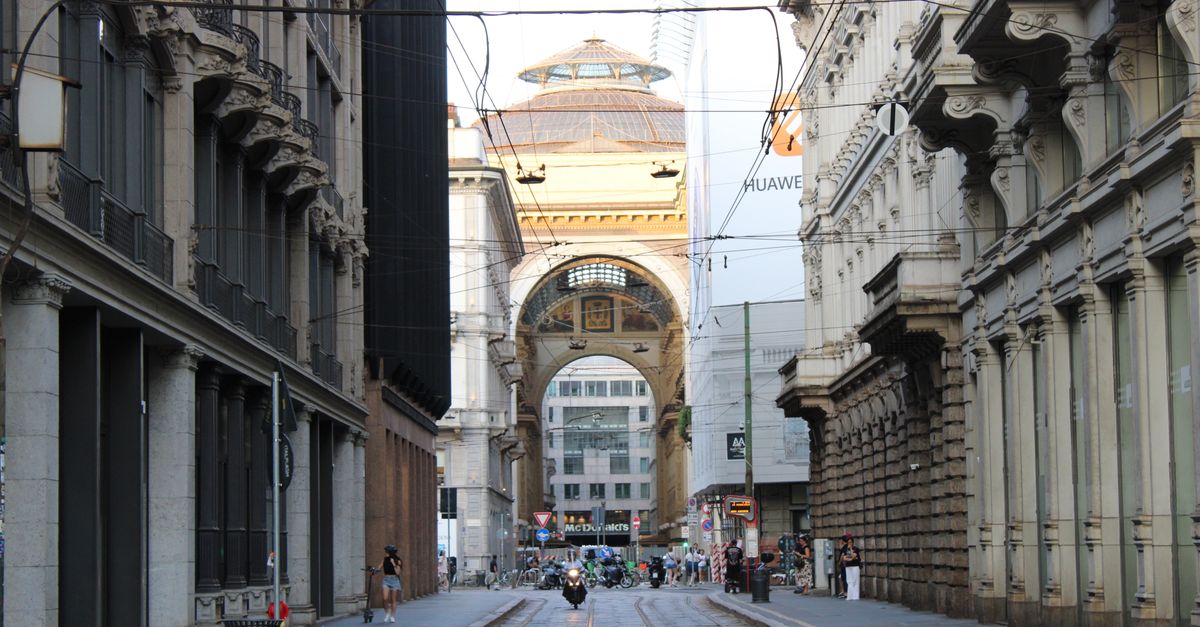
This is the finest science and technology museum in Italy and one of the best in Europe — a converted 16th-century monastery in Porta Genova that holds Leonardo da Vinci's original engineering drawings alongside working reconstructions of his machines, the full hull of a Second World War submarine, an extraordinary railway hall, and a ship's bridge from the 1950s. It's also consistently undervisited, with none of the queues or crowd pressure that afflict comparable institutions in London or Paris.
The museum opened in 1953 and covers 50,000 square metres across the historic monastery and modern extensions. The Leonardo Gallery is the core: the Codex Atlanticus and other manuscripts are displayed alongside reconstructed versions of his flying machines, military engineering, and hydraulic systems. The result is the most accessible presentation of Leonardo's practical intelligence available anywhere. The submarine (Enrico Toti, 1960s) moored in the outdoor section is extraordinary — you can walk through it.
Find it at Via San Vittore 21, in the Sant'Ambrogio neighbourhood. Take the metro to Sant'Ambrogio (Line 2) or walk from the Navigli in 10 minutes. Open Tuesday to Friday 9am–5pm, Saturday and Sunday 9am–6:30pm. Closed Monday. Admission €10 standard; €15 including the submarine (worth it). The museum café is in the original monastery refectory and serves decent lunch.
Allow at least three hours. The railway hall — a separate glass-and-iron building housing historic locomotives, carriages, and a full steam engine you can stand beside — is one of the finest industrial heritage spaces in Italy. The maritime section with its ship models and navigational instruments is also excellent. The children's science lab in the modern wing has interactive exhibits that are genuinely engaging for adults too. Buy tickets online to avoid the (modest) queue at the entrance desk.
7. Santa Croce in the Porta Ticinese Morning
The Porta Ticinese neighbourhood — between the Navigli and the old Roman quarter of Sant'Ambrogio — has the most authentic everyday character of any central Milan neighbourhood. On a Saturday morning, the outdoor market on Viale Papiniano (open until 2pm) fills six blocks with clothing, fabric, shoes, fresh produce, and secondhand goods at prices that reflect the working-class families who actually live here rather than the tourist economies of Brera or Corso Como.
The ancient Colonne di San Lorenzo — sixteen Roman columns standing outside the early Christian basilica of San Lorenzo — are the visual centrepiece of the neighbourhood. The columns date from the 2nd century AD and are the most substantial Roman remains in Milan. At night they're illuminated and surrounded by young Milanese drinking cans of beer on the steps — an informal outdoor social scene that has been running since at least the 1970s and shows no signs of stopping.
Walk south from the Duomo along Corso di Porta Ticinese — about 1.5 kilometres. The Saturday market is on both sides of the road from the Porta Ticinese gate southward. The Colonne di San Lorenzo are at the top of the corso. The basilica behind them (San Lorenzo Maggiore) has an extraordinary octagonal 4th-century interior — one of the oldest Christian buildings in northern Italy, admission free, open daily.
The coffee at the bar beside the columns is €1.20 and the cornetto is excellent — this is where the neighbourhood comes for breakfast before the market. For lunch, Trattoria Madonnina on Via Gentilino (two minutes from the columns) serves Milanese classics — ossobuco, cassoeula (pork and cabbage stew), risotto alla milanese — at honest prices: primo from €9, secondo from €13. Reserve in advance on weekends; it's small and popular with locals.
8. Fondazione Prada
The Fondazione Prada — the contemporary art foundation funded by Miuccia Prada and Patrizio Bertelli — is one of the most ambitious art institutions in Europe, housed in a former gin distillery in the Lodi neighbourhood south of the city centre. The complex includes seven historic buildings and three new structures, designed by Rem Koolhaas's OMA studio, and the permanent and temporary exhibitions consistently represent some of the most serious contemporary art in Italy. The gold-leaf-covered building called the Haunted House is unmissable.
The foundation opened in its current location in 2015 after decades of operating in smaller spaces. The choice of the Lodi neighbourhood — off the tourist map, accessible primarily by tram — was deliberate: Prada wanted to contribute to a neighbourhood rather than colonise an already-prestigious address. The conversion of the distillery preserves much of the industrial infrastructure (including a large brick kiln) while inserting new spaces that are among the finest gallery environments in Italy.
Find it at Largo Isarco 2. Take tram 24 from the Duomo to the Morivione stop (about 20 minutes). Open Monday, Wednesday, Thursday 10am–7pm; Friday to Sunday 10am–9pm. Closed Tuesday. Admission €15. The Bar Luce inside, designed by Wes Anderson, is a period recreation of a 1950s Milanese bar — beautiful and slightly surreal, with an excellent espresso and a pinball machine that guests are encouraged to use.
The programme changes regularly — check the foundation website for current shows. The permanent outdoor installation by Louise Bourgeois (four large bronze spider sculptures) is a permanent highlight. The Haunted House, a 1910s villa covered entirely in gold leaf, is used for site-specific installations that are consistently extraordinary. The cinema tower screens an ongoing programme of film art and retrospectives. Plan two to three hours minimum.
9. Via Tortona and the Fuorisalone
Via Tortona, in the Navigli area, is the epicentre of Milan's design industry — a street of converted factories and warehouses that house design studios, showrooms, and during Milan Design Week (typically April), the Fuorisalone installations that are the design world's most important annual gathering. Outside Design Week it's a quiet industrial neighbourhood with excellent restaurants and coffee shops; during Design Week it becomes the most concentrated creative spectacle in the world.
The neighbourhood developed as a design district from the 1990s onward, when studios priced out of Brera and the old city colonised the cheap industrial spaces south of the Navigli. Today it's home to Armani/Silos (Giorgio Armani's fashion archive museum), BASE Milano (a cultural centre in a former railway maintenance shed), and dozens of smaller studios and galleries. The Mudec (Museum of Cultures) on the same street is an excellent ethnographic museum with ambitious temporary shows.
Walk south from the Naviglio Grande along Via Tortona — the street begins at the Navigli and continues for about 600 metres. Armani/Silos at number 77 is open Thursday to Sunday 11am–7pm (€12 admission); the fashion archive covers 40 years of Armani's work and is beautifully installed. BASE Milano at number 54 has a free-to-enter ground floor with a bookshop and café; the upper floors host paid events and shows.
The Mudec at Via Tortona 56 (€12, Tuesday to Sunday 9:30am–7:30pm) has a genuinely world-class ethnographic collection built from Milan's colonial-era acquisitions, displayed with careful contemporary interpretation. The restaurant on the ground floor (managed by Carlo Cracco, Milan's most famous chef) is expensive; the café is reasonable. The design bookshop on the ground floor is one of the best in the city for architecture and design publications.
10. Mercato Metropolitano in Porta Romana
The Mercato Metropolitano is a large indoor food market in a converted factory in Porta Romana — a market run on the principle that every vendor should be sourcing from sustainable, local, or ethical producers. The result is a genuinely excellent market where you can buy sourdough bread, natural wine, handmade pasta, aged Parmigiano Reggiano, and a dozen other excellent things, then eat lunch at the market bar using ingredients assembled from the surrounding stalls. It's also a community space, with a regular programme of music, film screenings, and cooking demonstrations.
The concept was pioneered in London and the Milan version, which opened in 2018, has been one of the most successful food market openings of the decade. The factory building — a 10,000-square-metre space on Via Valenza — is beautifully converted, with enough room for the market, a restaurant, a bakery, a brewery, and event spaces without feeling cramped. The Saturday and Sunday brunch hours are the most lively; weekday lunches are quieter and often better value.
Find it at Via Valenza 2 (metro Porta Romana, Line 3, yellow). Open Tuesday to Friday noon–10pm; Saturday and Sunday from 10am. Free entry. The market concept means prices are slightly above supermarket but significantly below comparable restaurant quality. Budget €15–25 for a full meal assembled from the stalls. The fresh pasta counter makes pasta al torchio in front of you; the cheese counter does excellent Lombard selections; the craft beer bar has 20 taps of Italian microbrew.
The market runs a regular programme of events — check the website. Cooking classes in Italian and English run on weekend mornings (€35–55 per person, book ahead). The pizza station in the back corner makes excellent Neapolitan-style pies for €10–14 and is a reliable option when the market stall assembly approach feels like too much work. The Saturday morning is the best time to visit for a full experience of the market at its most alive.