Tokyo intimidates first-time visitors in a way that few cities do. The world's largest metropolitan area — 37 million people across a sprawl that takes three hours to cross by train — operates with a precision and complexity that can feel overwhelming before you even clear customs.
The rail map alone looks like a plate of color-coded spaghetti. Signs alternate between three Japanese writing systems. The cultural rules are invisible until you break one.
And yet, paradoxically, Tokyo is one of the safest, most navigable, and most welcoming cities on the planet for foreign travelers. Violent crime is nearly nonexistent. Trains run on time to the second.
English signage covers every major station and tourist area. And the Japanese instinct for hospitality means that strangers will literally walk you to your destination if you look lost.
This guide covers everything you need to know before your first trip: the practical logistics of getting there, the transport system that will become your lifeline, the neighborhoods worth staying in, the sights that justify the long flight, and the unwritten rules that will help you move through the city with confidence rather than anxiety. Tokyo is not difficult.
It is merely different. And once you crack the code, it becomes the most rewarding city you will ever visit.
Before You Go
Visa Requirements
Japan offers visa-free entry for citizens of 69 countries, including the US, UK, Canada, Australia, and most of the EU, for stays up to 90 days. You will receive a "temporary visitor" stamp at immigration.
You need a passport valid for the duration of your stay (Japan does not require six months' validity like some countries), a return or onward ticket, and proof of sufficient funds if asked — though immigration officers rarely request this. The process at Narita and Haneda is efficient: expect 20 to 45 minutes from plane to exit, including the biometric scan (fingerprints and photo) required of all foreign visitors.
Currency
Japan's currency is the yen (¥). As of 2026, ¥1,000 is approximately $6.80 USD. Japan remains more cash-dependent than most developed nations, though this is changing. Major department stores, chain restaurants, convenience stores, and hotels accept credit cards.
Small ramen shops, market stalls, shrines (for entry fees), and many traditional restaurants are cash-only. Carry ¥10,000 to ¥20,000 in cash at all times. The best place to withdraw cash is at 7-Eleven ATMs, which accept all major international cards and display English instructions.
Post office ATMs also work reliably. Avoid exchanging money at the airport — the rates are poor. If you must exchange cash, Sakura Currency Exchange in Shinjuku or World Currency Shop in major train stations offer competitive rates.
SIM Card & Connectivity
You have three options. First, an eSIM — the simplest solution if your phone supports it. Ubigi and Airalo offer Japan eSIM plans starting at $5 for 1GB or $15 for 10GB over 30 days.
Activate before you land. Second, a physical SIM card available at the airport from vendors like IIJmio and Mobal — a 15-day unlimited data SIM costs about ¥3,500. Third, a pocket WiFi device rented at the airport (¥500 to ¥900 per day) that provides a portable hotspot for multiple devices — good for families or groups.
Free WiFi exists in convenience stores, train stations, and Starbucks, but it is unreliable and slow. Do not depend on it. Data is essential for Google Maps navigation, translation apps, and restaurant searches.
Best Time to Visit
Late March to mid-April is the most magical window — cherry blossom season transforms the city into a pink-and-white dreamscape, and the Japanese tradition of hanami (flower viewing) means parks fill with picnickers under blooming trees. However, this is also peak tourist season with higher prices and crowded trains.
October to November brings autumn foliage, comfortable temperatures (15 to 22 degrees Celsius), and thinner crowds — arguably the best overall time for a first visit. May to mid-June is pleasant before the rainy season hits.
Avoid July and August unless you enjoy 35-degree heat with 80 percent humidity. Winter (December to February) is cold but dry, with fewer tourists and excellent clear-sky views of Mount Fuji from the city.
What to Pack
Comfortable walking shoes are non-negotiable — you will walk 15,000 to 25,000 steps per day. Shoes you can easily slip on and off are ideal because you will remove footwear frequently (temples, some restaurants, fitting rooms, traditional accommodations).
Pack a small towel — most Japanese restrooms do not have paper towels or hand dryers, and locals carry a personal hand towel. Bring a reusable shopping bag — plastic bags cost ¥3 to ¥5 at stores since Japan's 2020 bag charge.
A portable phone charger is essential for a full day of navigation and photography. Leave the bulky luggage at home — Tokyo hotel rooms are small, train station lockers are limited to suitcases under 25 inches, and navigating stairs with heavy bags is a recurring Tokyo nightmare.
Airport to City

From Narita International Airport (NRT)
Narita is 60 to 90 minutes from central Tokyo, depending on your transport choice and destination. It handles most international flights.
Narita Express (N'EX) — The most comfortable option. A reserved-seat train running directly to Tokyo Station (53 minutes, ¥3,250), Shinagawa (70 minutes), Shibuya (75 minutes), and Shinjuku (80 minutes). Trains depart every 30 to 60 minutes.
Buy a round-trip ticket for ¥4,070 — a significant discount over two singles. The N'EX is clean, quiet, has luggage storage, and offers guaranteed seating. This is what we recommend for first-time visitors.
Skyliner by Keisei — The fastest option to the Ueno and Nippori areas. Reaches Ueno in 41 minutes for ¥2,520. Less useful if your hotel is in Shinjuku, Shibuya, or Roppongi, as you would need to transfer.
Access Express by Keisei — A slower but cheaper alternative to the Skyliner on the same rail line. Reaches Asakusa in about 60 minutes for ¥1,270. Good value if you are staying in eastern Tokyo.
Airport Limousine Bus — Direct buses to major hotels and stations. Takes 85 to 120 minutes depending on traffic but costs ¥3,200 and drops you right at your hotel door — no navigating the train system with luggage.
A strong option for late arrivals when you are tired and just want to get to your room.
Shared Shuttle (Airport Shuttle TYO) — Door-to-door shared van service for about ¥3,000 per person. Book online in advance. Takes longer due to multiple drop-offs but eliminates all navigation stress.
From Haneda Airport (HND)
Haneda is much closer to central Tokyo — only 15 to 30 minutes — and increasingly handles international flights. If you have a choice, fly into Haneda.
Tokyo Monorail — Connects to Hamamatsucho Station (the JR Yamanote Line) in 13 minutes for ¥500. From Hamamatsucho you can reach any major station within 20 minutes. Fast, cheap, and efficient.
Keikyu Line — Direct trains to Shinagawa (11 minutes, ¥300) with connections to all major lines. Slightly cheaper than the monorail and connects to different stations.
Taxi — A taxi from Haneda to central Tokyo costs ¥5,000 to ¥8,000 and takes 20 to 40 minutes depending on traffic and destination. Not unreasonable for two or more travelers splitting the fare, especially late at night when trains have stopped.
Where to Stay
Shinjuku
Best for: First-time visitors, nightlife, food, transport access.
Pros: Shinjuku Station is the world's busiest rail hub with access to every major line. The neighborhood has everything — department stores, Memory Lane yakitori, Golden Gai bars, Kabukicho entertainment, and Shinjuku Gyoen park.
Hotels range from ¥4,000/night capsule hotels to luxury towers.
Cons: Overwhelming and noisy, especially around Kabukicho. The station itself is a labyrinth — even locals get lost. East Shinjuku can feel seedy after dark (though it is safe).
Budget: ¥5,000 to ¥8,000/night.
Mid-range: ¥12,000 to ¥20,000/night.
Shibuya
Best for: Younger travelers, shopping, trendy dining, nightlife.
Pros: The famous Shibuya Crossing, vibrant youth culture, excellent restaurants and cafes, good train connections via the Yamanote, Ginza, and Hanzomon lines. The recently redeveloped Shibuya Stream and Scramble Square areas are architecturally impressive.
Walking distance to Harajuku and Omotesando.
Cons: Extremely crowded around the station, especially on weekends. Hotels near the crossing are noisy. Fewer traditional Japanese experiences — this is modern Tokyo at its most intense.
Budget: ¥5,500 to ¥9,000/night.
Mid-range: ¥14,000 to ¥25,000/night.
Asakusa
Best for: Traditional atmosphere, budget travelers, temple proximity.
Pros: Home to Senso-ji (Tokyo's oldest temple), traditional shopping streets, ryokan (Japanese inn) options, river views, and a neighborhood atmosphere that feels like old Tokyo. Direct Skyliner access to Narita Airport.
Budget accommodation is plentiful and some of the best value in the city — ¥3,500/night hostels are clean and well-run.
Cons: Far from Shinjuku and Shibuya (30 to 40 minutes by train). Limited nightlife.
The tourist-facing streets around Senso-ji close early and feel empty after 6 PM. You will need to travel to reach most of Tokyo's highlights.
Budget: ¥3,500 to ¥6,000/night. Mid-range: ¥10,000 to ¥18,000/night.
Roppongi
Best for: Art lovers, upscale dining, expat culture.
Pros: Three major art museums (Mori Art Museum, National Art Center, Suntory Museum), excellent international dining, Roppongi Hills and Tokyo Midtown complexes. Central location with good subway access.
A cosmopolitan feel — more English is spoken here than almost anywhere else in Tokyo.
Cons: The most expensive neighborhood on this list. The nightclub district around Roppongi crossing is loud, occasionally pushy (touts are more aggressive here than elsewhere), and not representative of Japanese culture. Limited traditional character.
Budget: ¥7,000 to ¥10,000/night.
Mid-range: ¥18,000 to ¥35,000/night.
Top 10 Must-See Sights
1. Senso-ji Temple, Asakusa — Tokyo's oldest temple, founded in 645 AD. The approach through Kaminarimon Gate and along Nakamise shopping street is iconic. Free entry. Open 24 hours (main hall 6 AM to 5 PM).
2. Meiji Jingu Shrine, Harajuku — A Shinto shrine set in 170 acres of forest that feels impossible in the middle of a megacity. Walk the gravel path through towering torii gates. Free entry. Open sunrise to sunset.
3. Shibuya Crossing — The world's busiest pedestrian intersection. Stand on the second floor of the Starbucks in the TSUTAYA building for the best view, or cross it yourself during a green light when up to 3,000 people move in every direction simultaneously. Free. Always accessible.
4. TeamLab Borderless (Azabudai Hills) — An immersive digital art museum where rooms of light, color, and projection blur the boundaries between artwork and viewer. Relocated from Odaiba to Azabudai Hills in 2024 with all-new installations. ¥3,800. Book online at least 2 weeks ahead — it sells out.
5. Tsukiji Outer Market — The legendary fish market's public-facing section with 400 stalls of sushi, seafood, wagashi, and kitchenware. Go before 9 AM. Free entry. Individual stall prices vary.
6. Tokyo Skytree — The world's tallest tower at 634 meters. The Tembo Deck at 350 meters offers panoramic city views that stretch to Mount Fuji on clear days. ¥2,100 for Tembo Deck; ¥3,400 for Deck + Galleria (450 meters).
7. Shinjuku Gyoen National Garden — A 144-acre park combining Japanese, English, and French garden styles. The single best cherry blossom viewing spot in Tokyo. ¥500 entry. Closed Mondays.
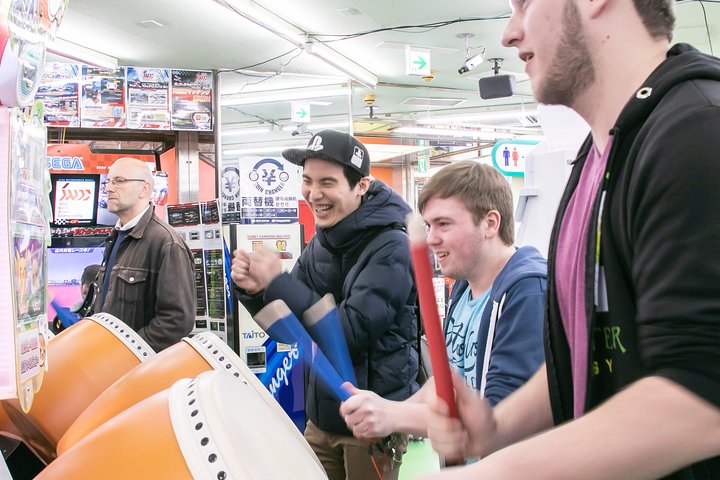
8. Akihabara — Electric Town: the global capital of anime, manga, electronics, and gaming culture. Multi-story arcades, maid cafes, figurine shops stacked floor to ceiling. Even if you are not into otaku culture, the sensory overload is an experience. Free to walk around. Budget ¥2,000 to ¥5,000 for arcades and shopping.
9. Imperial Palace East Gardens — The accessible portion of the Emperor's grounds: Edo-period stone walls, manicured gardens, and the remains of the castle keep. A pocket of serene quiet surrounded by skyscrapers. Free entry. Closed Mondays and Fridays.

10. Harajuku & Takeshita Street — The epicenter of Japanese youth fashion and street culture. Takeshita Street is a narrow lane of crepe stands, vintage shops, and fashion that ranges from cute to avant-garde.
Walk through to Omotesando for the high-end contrast — Tokyo's Champs-Elysees lined with flagship architecture by Tadao Ando, Toyo Ito, and SANAA. Free.

Japanese Etiquette: 8 Rules That Matter
1. Remove your shoes. Always. At temples, traditional restaurants, ryokan, some museums, fitting rooms, and any home you enter.
Look for a genkan (a recessed entryway) and a row of slippers — that is your cue. Point your shoes outward when you remove them. Wear the toilet slippers in the bathroom and absolutely do not wear them back into the main room — this is the single most common foreigner mistake and it genuinely horrifies Japanese hosts.
2. Do not eat or drink while walking. Consuming food on the go is considered impolite. The exception is at festivals and market areas (Tsukiji, Nakamise) where street food is expected.
If you buy a drink from a vending machine, stand beside it and finish before moving on. You will notice that Japanese people do this instinctively.
3. Queue properly. Japanese queuing is an art form. Lines are single-file, orderly, and often marked with painted footprints or signs on the ground.
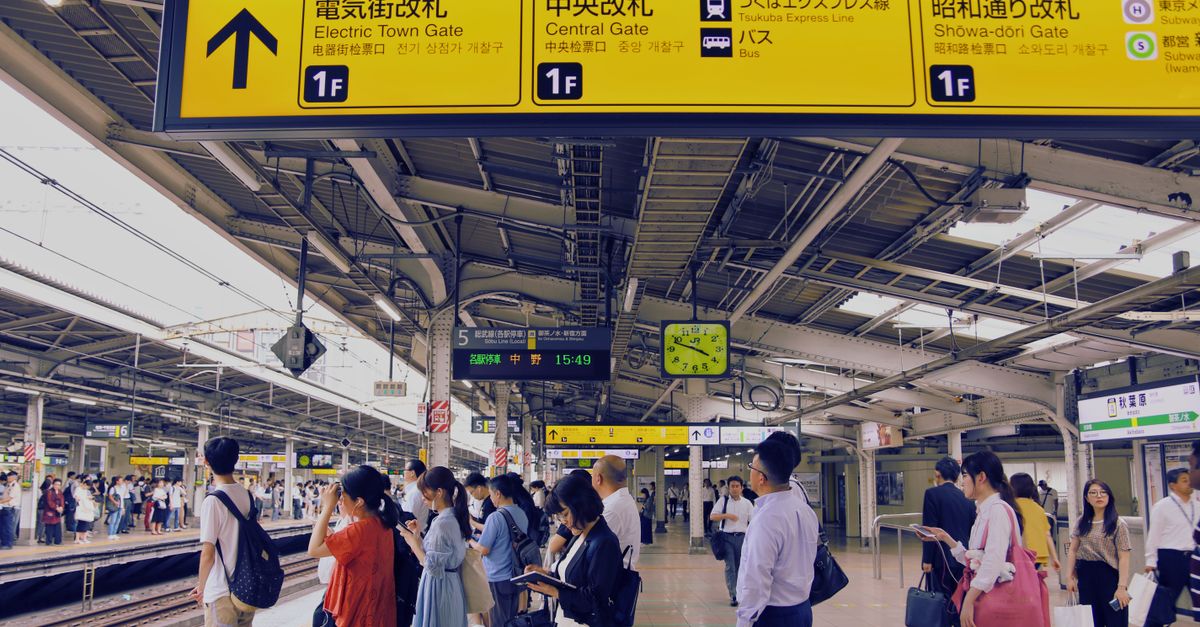
On escalators, stand on the left (in Tokyo) and walk on the right. On train platforms, queue behind the markers painted on the floor indicating where doors will open. Cutting a line — even accidentally — causes visible distress.
4. Be quiet on trains. Set your phone to silent (manner mode). Do not take phone calls.
Speak to companions in low voices. The priority seats near doors are for elderly, pregnant, injured, or disabled passengers — do not sit in them unless the car is empty, and yield immediately when someone who needs them boards.
5. Do not tip. Tipping does not exist in Japan. It is not expected, not appreciated, and in some cases actively refused.
If you leave money on a restaurant table, the staff may chase you down the street to return it. The price on the menu is the price you pay. Service is included because excellent service is considered a professional standard, not a favor that warrants a bonus.
6. Use both hands. When giving or receiving anything — a business card, money, a gift, your credit card — use both hands. This applies to receiving change at a shop, taking a receipt, or being handed a menu. It signals respect. At minimum, support your right hand with your left.
7. Do not blow your nose in public. Sniffling is acceptable; blowing your nose is not. If you must, excuse yourself to a restroom. Carrying tissues is expected (and convenient, since many restrooms lack paper).
8. Bow when appropriate. You do not need to master the bowing hierarchy. A slight incline of the head — 15 degrees — when greeting someone, thanking a shopkeeper, or entering and leaving a restaurant covers 95 percent of situations. Japanese people do not expect foreigners to bow perfectly. They appreciate the effort.
Pronunciation: "sue-me-mah-sen."
Safety
Tokyo is one of the safest major cities in the world by virtually every metric. The violent crime rate is a fraction of comparable Western cities. Theft is so rare that locals leave laptops unattended in cafes to hold their seat and place wallets in back pockets without a thought.
Lost property is almost always returned — the Tokyo Metropolitan Police return rate for lost wallets is above 75 percent, cash included.
That said, common sense still applies. The biggest risks for tourists are not criminal but logistical: missing the last train (around midnight, with no service until 5 AM — taxis are expensive for long distances), getting dehydrated in summer heat (Japan's humidity is brutal; carry water and use the ubiquitous vending machines), and natural disasters.
Japan is earthquake-prone, and you may experience a minor tremor during your visit. Buildings are engineered to withstand significant quakes. If one occurs: drop, cover, hold.
Do not run outside. Follow instructions — many are broadcast in English in tourist areas. Your hotel will have emergency procedures posted in the room.
One genuine concern in nightlife districts, particularly Roppongi and Kabukicho, is the occasional overcharging scam at bars. Avoid any establishment where a tout on the street aggressively invites you in, especially if they promise "free drinks." The bill may arrive with mysterious charges totaling ¥50,000 or more.
Stick to places you have researched or that were recommended by your hotel, and you will have zero problems.
Essential Apps
1. Google Maps — Indispensable for Tokyo navigation. It integrates real-time train schedules, walking directions, and fare information. Enter your destination and it will tell you exactly which platform to stand on, which train to take, and where to transfer. Download the Tokyo area for offline use before arriving.
2. Suica (Apple Wallet) or PASMO — If you have an iPhone 8 or later, you can add a Suica card directly to your Apple Wallet without a physical card. Load it with a credit card and tap your phone at any gate.
Android users can use the Suica app or buy a physical card at the airport.
3. Google Translate — The camera feature is transformative: point your phone at any Japanese text — menus, signs, train schedules — and it overlays the English translation in real time. Download the Japanese language pack for offline use. Not always perfectly accurate, but it turns incomprehensible kanji into something workable.
4. Tabelog — Japan's dominant restaurant review platform, far more trusted locally than Google Reviews or TripAdvisor. Scoring is harsh — 3.5 means excellent, 4.0 means exceptional. The app is in Japanese but navigable with Google Translate's camera. Search by location, cuisine type, and budget range.
5. Navitime or Japan Travel by NAVITIME — A transit app built specifically for Japan's rail network. Some travelers find it more intuitive than Google Maps for complex train journeys, especially those involving multiple transfers. It shows platform numbers, transfer walking times, and alternative routes.

6. PayPay — Japan's most popular mobile payment app. Accepted at many restaurants, shops, and vending machines where international credit cards are not. You can link an international credit card to PayPay and use it for QR code payments. Particularly useful at small, cash-only places that happen to accept PayPay.
Practical Budget Overview
| Category | Budget (per day) | Mid-Range | Comfortable |
|---|---|---|---|
| Accommodation | ¥3,500 (hostel) | ¥12,000 (business hotel) | ¥25,000 (boutique hotel) |
| Food | ¥2,500 | ¥5,500 | ¥12,000 |
| Transport | ¥800 (IC card) | ¥1,500 | ¥3,000 (incl. taxis) |
| Activities | ¥1,000 | ¥3,000 | ¥6,000 |
| Daily Total | ¥7,800 (~$53) | ¥22,000 (~$150) | ¥46,000 (~$313) |
Tokyo's reputation as an expensive city is outdated. At the budget level, a traveler eating at convenience stores, standing noodle bars, and gyudon chains, sleeping in a clean capsule hotel or hostel, and relying on a Suica card for transport can get by comfortably on ¥8,000 per day — about $55 USD. This is cheaper than budget travel in London, Paris, or New York.
The mid-range sweet spot of ¥20,000 to ¥25,000 per day unlocks excellent restaurants, comfortable hotels, and all the major sights. Only at the luxury tier — kaiseki dinners, five-star hotels, private tours — does Tokyo become genuinely expensive, and even then, it offers better value than equivalent experiences in most Western capitals.
The key insight is that quality in Tokyo does not correlate with price the way it does in Western cities. A ¥500 bowl of standing soba made by a craftsman who has been cutting noodles for 40 years can be a more meaningful culinary experience than a ¥15,000 restaurant meal.
The ¥200 temple garden may move you more than the ¥3,800 digital art museum. Tokyo rewards attention, not spending. Go with open eyes and a willingness to wander, and the city will give you more than you expected, regardless of your budget.
Planning your Tokyo meals? Read our Complete Tokyo Food Guide for specific restaurants, dishes, and budget strategies for eating your way through the city.