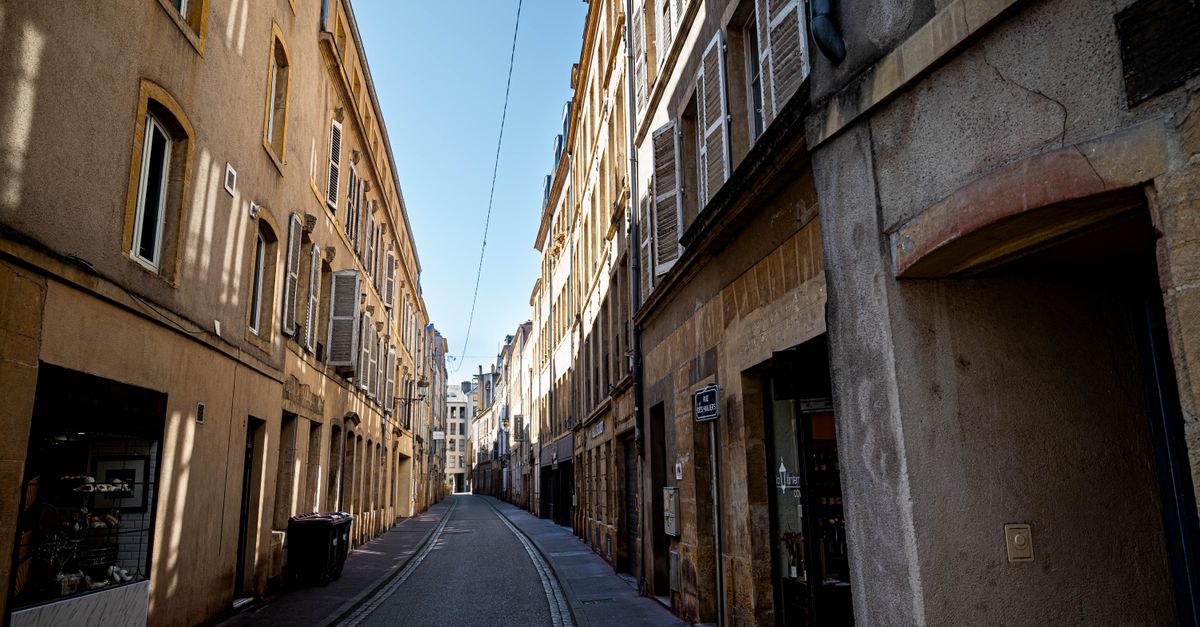
Coming to Bordeaux for the first time is an exercise in recalibrating expectations. You arrive expecting a stately wine-trade city — all oak barrels and serious négociants — and find instead a university town of 270,000 students, a regenerated post-industrial waterfront where skateboarders weave past street art, and a city so architecturally cohesive that UNESCO designated the entire historic core a World Heritage Site in 2007. The wine is everywhere, yes, but Bordeaux is also a city where you eat oysters for breakfast at a street market, take a tram to a right-bank neighborhood full of street murals, and end the day watching your reflection dissolve in the largest reflecting pool on earth. This guide gives you the practical foundation for your first visit: visas, money, transport from the airport, how to get around, where to base yourself, and the cultural codes that will make locals warm to you immediately.
Before You Arrive
France is a member of the Schengen Area, the passport-free zone of 27 European countries. Citizens of the EU, EEA, Switzerland, the United Kingdom, United States, Canada, Australia, and many other nations can enter France visa-free for stays of up to 90 days within any 180-day period. Travelers from India, China, South Africa, the Philippines, and most of Southeast Asia, South Asia, and sub-Saharan Africa require a Schengen visa before travel. Apply at the French consulate or visa application center in your home country at least four to six weeks before your intended travel date — processing times can exceed three weeks during busy periods. A Schengen visa issued by France is valid for all 27 Schengen member states, so a single application covers a multi-country trip.

From January 2025, travelers from visa-exempt non-EU countries are required to obtain an ETIAS (European Travel Information and Authorisation System) travel authorisation before entering Schengen. This is a simple online application, not a full visa, and costs EUR 7. Check the official ETIAS website for the most current implementation timeline, as the rollout date has been postponed several times.
France's currency is the euro (EUR). ATMs (distributeurs automatiques) are widely available throughout Bordeaux, including at the airport arrivals hall. Credit and debit cards (Visa and Mastercard) are accepted at virtually all restaurants, hotels, transport ticket machines, and shops. A few market stallholders and small bakeries prefer cash — carry EUR 20-30 for these situations. Notify your bank before travel to avoid cards being flagged for foreign transactions.
The climate in Bordeaux is oceanic, heavily influenced by proximity to the Atlantic. Summers (June–August) are warm and sunny — highs of 25-30°C — with occasional Atlantic storms. Autumn is mild, famously golden, and the season when the wine harvest happens. Winters are mild by European standards (rarely below 5°C) but rainy. Spring brings flowers, rising temperatures, and the first terrasse café season. Bring layers and a light waterproof jacket regardless of season.
For mobile connectivity, a French SIM card from Orange, SFR, or Bouygues (available at their shops in Bordeaux's centre and at the airport) gives you data and calls for EUR 15-30 per month. Alternatively, an eSIM from providers like Airalo or Holafly (from EUR 8 for 7 days) works if your phone supports eSIM and is unlocked. Free WiFi is available at Gare Saint-Jean, major hotels, and many cafés.
Getting from the Airport
Bordeaux-Mérignac Airport (IATA code: BOD) is 11 km west of the city center, a straightforward journey in either direction. The airport has a single main terminal building handling all departures and arrivals.

The Liane 1 bus is the standard arrival transport for sensible travelers. Operated by TBM, Bordeaux's urban transport authority, the Liane 1 runs from the airport bus stop (directly outside arrivals, well-signposted) to the city center, with key stops at Gare Saint-Jean (the main railway station), Hôtel de Ville (town hall, center of the old town), and Quinconces. A single ticket costs EUR 1.70, purchased from the driver or the ticket machine at the stop. The journey takes 45-50 minutes in normal traffic. Services run every 10-15 minutes from 5 AM to midnight, with reduced frequency on Sundays. At midnight, night bus lines take over — check the TBM app for exact night routes.
A taxi from the airport to central Bordeaux costs EUR 35-45 in daytime and EUR 45-55 in the evening or on weekends. The taxi rank is immediately outside arrivals. Taxis are metered and legitimate — no need to negotiate or pre-book unless you're arriving late at night. For solo travelers, there is no budget case for a taxi from the airport. For groups of three or four splitting the fare, the gap narrows significantly.
Uber and Bolt both operate pickup from Bordeaux airport. App-based rides typically price EUR 30-45 to the city center, occasionally less during off-peak hours. The pickup point is signposted at the airport — follow signs for ride-hailing or VTC (voiture de transport avec chauffeur).
There is no train connection between the airport and the city. The Liane 1 bus is the rail equivalent here, and it performs the job reliably.
Getting Around the City
Bordeaux is compact enough that the historic core is almost entirely walkable. The distance from Gare Saint-Jean to the Place de la Bourse waterfront is about 1.5 km — 20 minutes at a comfortable pace. The city's designers, working on 18th-century neoclassical principles, laid out broad allées and cours (wide avenues) that are a pleasure to walk even on warm summer days, especially in the early morning when they're quiet.

The TBM tram network has three lines: A (running north–south through the historic core), B (running east–west, serving the station and the central boulevards), and C (connecting the right bank Bastide district across the Pont de Pierre). A single ticket costs EUR 1.70 and is valid for 60 minutes including transfers. A 1-day unlimited pass costs EUR 5 and is the best value for active sightseeing days. The TBM app handles journey planning, real-time tram locations, and ticket purchasing from your phone.
The V3 bike-share scheme has over 1,800 bikes at 174 stations throughout the city. A 1-day subscription costs EUR 1.70 with the first 30 minutes of each journey free. For distances under 3 km across Bordeaux's largely flat terrain, a V3 bike is often faster than a tram. Download the V3 app to locate stations and check availability before you walk to one.
The BAT3 river bus crosses the Garonne between Quinconces on the left bank and the Bastide on the right bank. It runs using standard TBM tickets (EUR 1.70) and is the practical way to reach the Bastide and Darwin Ecosystem. It also happens to give you a spectacular view of the 18th-century waterfront facade — one of Bordeaux's great sights, best seen from the river.
Taxis and Uber are available throughout the city but are expensive relative to TBM for intra-city travel. Use them for late nights when trams have stopped or for reaching suburban wine châteaux beyond the TBM network.
Where to Base Yourself
Bordeaux divides naturally into three areas of interest for first-time visitors, each with a distinct character and a different price point for accommodation.

Saint-Pierre and Saint-Michel form the historic heart of the UNESCO zone. Saint-Pierre is the most polished and tourist-facing quarter — the area around Place du Parlement has gorgeous restaurant terraces under golden stone arcades, the Cathédrale Saint-André dominates the skyline, and the Palais Rohan houses the city hall and a fine arts museum. Saint-Michel, immediately south, is more authentic: a North African and Portuguese immigrant neighborhood centered on the extraordinary Gothic Basilique Saint-Michel with its freestanding tower. The Sunday flea market here is one of France's best. Budget hotels start at EUR 65-80 per night in this area; mid-range options run EUR 90-130.
Chartrons is Bordeaux's wine merchant district, directly north of the old town along the quays. In the 18th and 19th centuries, Dutch, Irish, and German wine merchants built their warehouses and townhouses here, and the neighborhood retains an elegant, slightly antique atmosphere — independent galleries, antique dealers, wine négociants, and excellent Sunday brunches. It's one of the most pleasant areas to walk on Sunday morning when the quay-side market runs. Hotels and apartments here typically cost EUR 80-120 per night. It's a 15-minute walk or two tram stops from the centre.
Bastide (right bank) is Bordeaux's most rapidly changing neighborhood — the former industrial left bank, now home to the Darwin Ecosystem, street art, organic restaurants, skate parks, and a wave of new apartment buildings. It has a different energy from the left bank historic core: younger, less formal, more experimental. The tram C line connects it to the city center in 10 minutes. Accommodation is generally EUR 70-110 per night for hotels; apartments are particularly good value. First-timers focused primarily on the UNESCO sights may find the right bank a step too far from the main action.
Local Culture & Etiquette
Bordeaux is a French city, and France is a country where social rituals carry real weight. Getting these right will transform the quality of your interactions with locals — not because the French are unfriendly, but because they appreciate visitors who make the effort to meet them on their own cultural terms.

The single most important thing: always say bonjour (good morning/afternoon) when entering any shop, café, restaurant, or public space where staff are present, and au revoir (goodbye) when leaving. This is not optional politeness — it is the baseline minimum that French people extend to one another and expect from visitors. Launching directly into your order or request without a greeting reads as rude, not efficient. A simple "Bonjour, je voudrais..." (Good morning, I would like...) accompanied by a smile opens almost every door in France.
Restaurant and café etiquette differs from many countries. In France, you are not expected to rush. A server will not bring the bill until you ask for it (l'addition, s'il vous plaît) — lingering over coffee after a meal is normal and expected, not an imposition. Similarly, table service in cafés means your waiter owns your table and will approach you; don't go to the bar to order unless the establishment clearly operates counter service. Lunch is serious: many restaurants serve a plat du jour only at lunchtime and are closed for kitchen service from 2:30 to 7 PM.
Bordeaux specifically is proud of its wine heritage but not precious about it. Locals are delighted when visitors show genuine curiosity about regional appellations, grape varieties, and vintages. Asking a café or wine bar owner to recommend a local bottle under EUR 12 is treated as an excellent question, not a budget embarrassment. The city's wine education scene — including the introductory courses at La Cité du Vin — is genuinely excellent and worth an afternoon.
Tipping is not obligatory in France. Service is included (service compris) in all restaurant and bar bills by law. Leaving a few euros on the table after a good meal is a gesture appreciated but never expected. Rounding up a taxi fare to the nearest euro is standard. You will not cause offence by not tipping.
Common Mistakes to Avoid
Assuming bouillabaisse is a Bordeaux dish. Bouillabaisse, the famous Provençal fish stew, is from Marseille — not Bordeaux. Ordering it here will get you either a confused look or a tourist-trap version. Bordeaux's regional specialties are entirely different: entrecôte bordelaise (rib-eye steak with shallot and red wine sauce), lamprey cooked in its own blood (lamproie à la Bordelaise — an acquired taste), and cannelés, the small caramelized rum-and-vanilla pastries that are the city's iconic pastry. Seek these out rather than generic French standards.
Skipping the right bank. Most first-time visitors stay on the left bank historic core and never cross the Garonne. The Bastide and Darwin Ecosystem represent a completely different and equally compelling face of the city. Take the tram C or the BAT3 river bus — it takes 10 minutes and costs EUR 1.70.
Booking wine tours without research. Bordeaux is surrounded by eight major wine appellations and dozens of châteaux offer tours. However, the most famous estates — Mouton Rothschild, Pichon Baron, Lynch-Bages — require booking months in advance and charge EUR 40-80 per person. Arriving and expecting walk-in access to a Grand Cru château is one of the most common Bordeaux disappointments. Book your wine tour before you leave home, or join an organised day tour from Bordeaux that handles the château access logistics.
Travelling without a validated TBM ticket. TBM inspectors regularly patrol trams and buses, and fines for travelling without a valid, stamped ticket start at EUR 55 — substantially more than any bus pass. Tickets must be validated (stamped) at the validator machines on the tram platform or bus, even if you've already paid. Forgetting to stamp is not accepted as an excuse.
Eating dinner before 7:30 PM. French dinner service starts late by Northern European and American standards. Most Bordeaux restaurants begin dinner service at 7:30 PM and the majority of locals eat between 8 and 9:30 PM. Arriving at 6 PM, you may find kitchens closed. Plan accordingly — a late afternoon snack (goûter) from a boulangerie will carry you comfortably to a proper dinner at 8 PM.
Ignoring Arcachon for a day trip. The Arcachon Bay and the famous Dune du Pilat (the highest sand dune in Europe) sit just 50 minutes from Bordeaux by direct train from Gare Saint-Jean (EUR 8-14 return, depending on advance booking). First-timers sometimes miss this entirely while spending a whole day in central Bordeaux. Climbing the Dune du Pilat at dawn or dusk, with Atlantic views in both directions, is among the most memorable experiences in southwest France.
Buying wine only at tourist wine shops on the quays. The wine boutiques lining the Quai des Chartrons are atmospheric and the staff are knowledgeable — but prices reflect their premium location. The same bottles are sold at Carrefour, Monoprix, or wine cooperative shops in surrounding villages for 20-40% less. For serious wine shopping, the wine cooperatives of the Entre-deux-Mers region, reachable by car or organised day tour, sell direct from the producer at cellar-door prices.