
Yogyakarta's cuisine is distinctly Javanese — sweeter, milder, and more refined than the fiery cooking of Sumatra or Bali. The city's royal heritage shaped its food culture: court dishes like gudeg and ayam goreng kraton were developed to please sultans, and the precision of their preparation reflects a culinary tradition where patience and balance matter more than heat. Street food here is among Indonesia's cheapest and most satisfying.
Prices: Street food IDR 5,000-20,000/dish, warungs IDR 15,000-40,000, restaurants IDR 30,000-80,000. A full day of eating rarely exceeds IDR 80,000 ($5.30).

Must-Try Dishes in Yogyakarta
1. Gudeg — IDR 15,000-30,000
Jogja's signature dish — young jackfruit slow-cooked for hours in coconut milk, palm sugar, and teak leaf (which gives it a distinctive brown color). Served with rice, krecek (spicy buffalo skin), areh (thick coconut cream), sambal, and opor ayam (chicken in coconut gravy). Yu Djum and Gudeg Pawon near the Kraton are the legendary spots.
2. Ayam Goreng Kalasan — IDR 20,000-35,000
Fried chicken Javanese-style — the chicken is first braised in coconut water with coriander and galangal until tender, then deep-fried until the skin crackles. Served with sambal and fresh vegetables. The town of Kalasan (near Prambanan) is the origin. Ayam Goreng Mbah Cemplung in Kalasan is the original.
3. Bakpia Pathok — IDR 15,000-25,000/box
Small flaky pastries filled with sweetened mung bean paste — Jogja's most famous souvenir snack. The Pathok neighborhood near the Kraton has dozens of bakeries. Number 25 (Bakpia 25) and Number 75 are the most popular. Modern variations include chocolate, cheese, and green tea fillings.
4. Sate Klathak — IDR 25,000-40,000
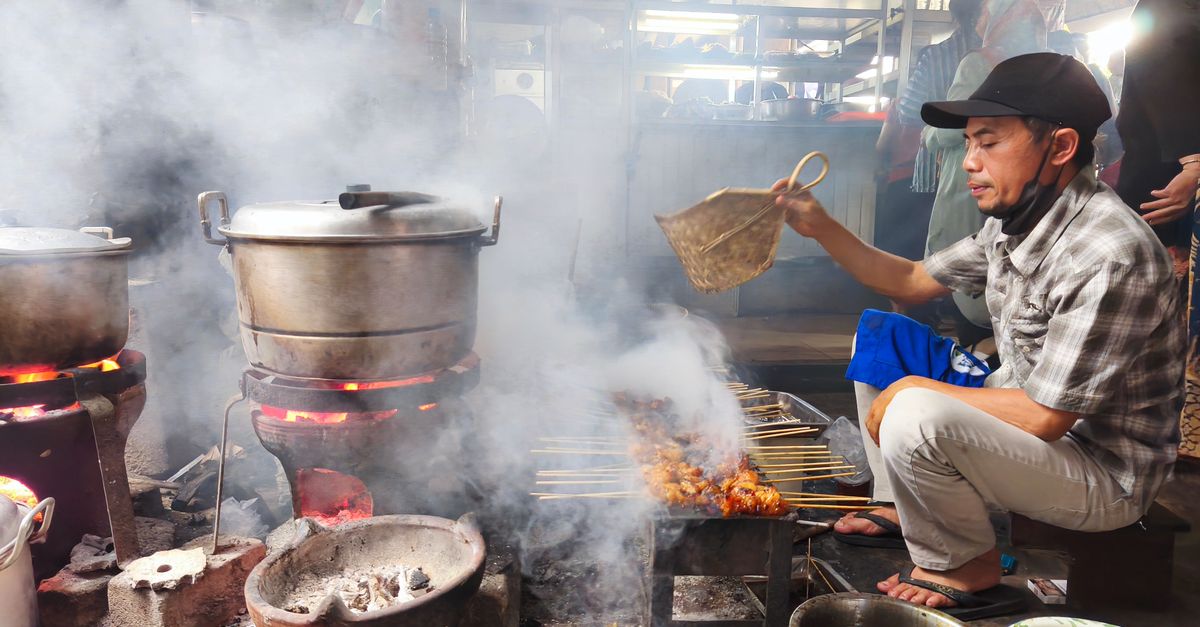
Lamb or goat satay from the Bantul area south of Jogja — skewered on metal bicycle spokes (not bamboo sticks) and grilled over charcoal. The metal conducts heat into the meat, creating a unique texture. Served with sambal kecap and rice. Night vendors along Jalan Imogiri serve the best versions.
5. Nasi Kucing (Cat Rice) — IDR 3,000-5,000
Tiny banana-leaf-wrapped parcels of rice with a small amount of sambal, fried tempeh, or shredded chicken — named "cat rice" because the portion is supposedly cat-sized. The idea is to buy several varieties from different vendors. The angkringan carts along Malioboro sell them from 6 PM nightly. The cheapest meal in Indonesia.
6. Wedang Ronde — IDR 5,000-10,000
A warm ginger drink with glutinous rice balls filled with peanut paste — Jogja's comfort drink, especially warming on cool Javanese evenings. Available from the angkringan carts and dedicated wedang ronde vendors near the Kraton.
Where to Eat in Yogyakarta
Malioboro Lesehan — Street-Level Budget
After the souvenir stalls close, the sidewalk transforms into lesehan dining — mats on the ground with warung-style food. Gudeg, nasi goreng, and ayam penyet for IDR 10,000-25,000. Eating cross-legged on the Malioboro sidewalk at midnight is a quintessential Jogja experience.
Jalan Prawirotaman — Backpacker Mid-Range
The traveler street has cafes and restaurants with English menus. Via Via Cafe does excellent Javanese and international food (IDR 25,000-60,000). Mediterranea is a reliable Italian option when you need a break from rice. The street has a relaxed, social atmosphere.
Near the Kraton — Traditional Javanese
Bale Raos, inside the Kraton complex, serves royal court recipes (IDR 30,000-60,000) — dishes developed for the Sultan's table. The gudeg and ayam goreng are refined versions of street food, served in a palatial setting. Reservations recommended.
Dining Tips for Yogyakarta
The best food in any city comes from specialists — restaurants and stalls that have perfected a single dish over years or decades. The cramped stall with the longest queue of locals invariably serves better food than the spacious restaurant with the bilingual menu and zero customers. Follow the crowds, eat what locals eat, and budget for multiple small meals rather than one large dinner.
Street food is safe when the vendor is busy — high customer turnover means food is cooked fresh and doesn't sit at dangerous temperatures. Avoid pre-cooked items that have been sitting under heat lamps for hours. Steaming, sizzling, and smoking are signs of freshly prepared food. Morning markets and evening food stalls typically offer the freshest options.
Local markets are the most affordable and authentic eating experience in any Asian city. Visit the main market early in the morning when vendors set up — the energy, the colors, and the breakfast food reveal the city's character more effectively than any museum or monument. Budget 60-90 minutes for a market visit including breakfast.
Dietary restrictions and allergies can be communicated with a few prepared phrases in the local language. Download Google Translate's offline language pack before your trip. Most Asian food cultures are accommodating of preferences when communicated clearly. Vegetarian options are available nearly everywhere, though the definition varies — fish sauce and shrimp paste appear in many 'vegetarian' Southeast Asian dishes.
Sweet Treats & Desserts
Javanese desserts are built on three core flavours: coconut milk, palm sugar (gula jawa), and pandan leaf. The combination appears in dozens of forms, from warm drinks to cold shaved ice, and defines the sweetness that runs through Yogyakarta's entire food culture. Es dawet is the essential dessert drink — chilled coconut milk poured over green rice-flour jelly noodles (cendol) and shaved ice, sweetened with palm sugar syrup. Vendors with push carts sell it throughout the day near Malioboro and the Kraton for IDR 5,000-8,000 a glass. It is cooling, deeply satisfying, and completely unlike anything sold under the "dessert" label elsewhere.
Klepon are small green glutinous rice balls — the green comes from pandan juice mixed into the dough — filled with molten palm sugar and rolled in grated coconut. One bite releases the liquid palm sugar in a warm, fragrant rush. Market vendors near Pasar Beringharjo sell them fresh by the portion (IDR 5,000 for five pieces) every morning until they sell out, usually by 10 AM. Pasar Beringharjo itself, Jogja's central market on Jalan Malioboro, is the single best destination for traditional Javanese sweets: wedang uwuh (spiced warm drink, IDR 5,000), jenang (thick sticky rice porridge in palm sugar syrup, IDR 8,000), and getuk (steamed cassava pounded with coconut and palm sugar, IDR 3,000-5,000) are all available from the ground-floor stalls.
Es teler — chilled coconut flesh, avocado, young jackfruit, and coconut jelly in sweetened condensed milk — is Indonesia's most popular dessert and sold at warungs citywide for IDR 10,000-18,000. The version at Es Teler 77 on Jalan Malioboro is reliable and consistent. For a more refined sweet finish to a meal, Kafe Batan Waru on Jalan Dagen serves traditional Javanese dessert platters (IDR 20,000-35,000) with a rotating selection of market sweets, making it an efficient way to try six different traditional preparations in one sitting. The coffee served alongside — kopi tubruk, coarsely ground beans in hot water — is made with Javanese robusta and pairs well with the sweetness of the sweets.
Planning Your Food Exploration
The most rewarding food experiences come from planning meals around the local eating schedule rather than forcing your own rhythm onto a foreign city. Most Asian cities eat early — breakfast stalls open at dawn and close by 9 AM, lunch service peaks at noon and ends by 2 PM, and dinner starts at 5-6 PM. Night markets and street food stalls offer the best evening options, typically running from 6 PM until 10 PM or later.
Budget allocation matters. Spend 30-40% of your food budget on one memorable meal — a signature local restaurant, a cooking class, or a fresh seafood dinner. Allocate the rest to street food, markets, and casual local restaurants where the authentic flavors live. This strategy ensures you taste both the refined and the everyday versions of the local cuisine without breaking the bank.
Photography etiquette at food stalls and small restaurants varies by culture. In most of Asia, photographing your food is completely normal and even expected. Photographing the cook or the stall itself — ask first with a smile and gesture. Most vendors are flattered; a few prefer not to be photographed. In sit-down restaurants, photograph freely but be discreet about photographing other diners.
Food allergies and dietary restrictions require preparation. Write your restrictions in the local language (Google Translate helps) and show the note at each restaurant. Common allergens like peanuts, shellfish, and gluten appear in unexpected places — soy sauce contains wheat, fish sauce is in many Thai and Vietnamese dishes, and peanuts appear in Indonesian, Malaysian, and Chinese cooking. Communicate clearly and ask about ingredients rather than assuming from the menu description.
The single best food investment in any Asian city is a cooking class. For 5-50, you'll visit a local market, learn 4-6 dishes hands-on, and gain techniques that let you recreate the flavors at home. The market tour alone — learning to identify local herbs, spices, and produce — transforms your understanding of the cuisine for every subsequent meal during your trip.


