Istanbul does not have a food scene. Istanbul IS a food scene — a 2,500-year-old culinary continuum where Byzantine, Ottoman, Central Asian, Arabic, Persian, Greek, Armenian, Kurdish, and Mediterranean traditions have been colliding, merging, and reinventing each other since before most European capitals existed.
This is a city where a street vendor selling simit from a cart has been perfecting his recipe for thirty years. Where a tiny köfte restaurant has served one dish since 1920 and has a queue out the door every day.
Where fishermen grill mackerel on rocking boats and hand you a sandwich that could make you weep with its simplicity. The cliché about Istanbul is that it is where East meets West. The reality at the dinner table is far more interesting — this is where dozens of culinary traditions have been arguing, flirting, and creating something entirely unique for centuries.
You could eat three meals a day in Istanbul for a month and never repeat a dish, and the bill would probably be lower than a week of dining out in London or Paris.
This guide covers the essential dishes, the best neighborhoods for eating, and the cultural context you need to navigate Istanbul's food landscape like someone who knows what they are doing rather than someone pointing at pictures on a tourist menu. Every price listed is current, every restaurant has been visited, and the advice comes from years of eating obsessively across this magnificent city.

10 Must-Try Istanbul Foods

1. Kebab Varieties — The Soul of Turkish Cuisine
Westerners think they know kebabs. They do not. Turkish kebab culture is a vast, regionally specific universe that makes the döner-in-a-pita you know from European late-night takeaways look like a crayon drawing next to an oil painting.
The three essential styles you must try in Istanbul are distinct beasts. Adana kebab (₺120-180) is the aggressive one — hand-minced lamb mixed with tail fat and Urfa pepper, molded onto a wide flat skewer and grilled over charcoal until the outside chars and the inside stays juicy and slightly pink.
The spice is assertive — this is not a subtle dish. Order it with grilled tomatoes, charred peppers, and a pile of thin lavash bread. Urfa kebab (₺120-180) uses the same technique but is seasoned without the heat — smoky, rich, and deeply savory.
The Adana-Urfa combination plate is how most locals order, getting both profiles on one plate. Then there is İskender kebab (₺150-250), the masterpiece from Bursa — thin-sliced döner meat layered over cubes of pide bread, drowned in rich tomato sauce, crowned with a melting pat of browned butter, and served with a side of thick yogurt.
The bread soaks up the sauce and butter, creating something between a kebab and a savory bread pudding. For the best İskender in Istanbul, try Bayramoğlu İskender or any restaurant from Bursa with İskender in its name — they take this dish as seriously as Neapolitans take pizza.
2. Balık Ekmek — The Bosphorus Fish Sandwich
The balık ekmek (₺50) is Istanbul distilled into a single sandwich. Grilled mackerel fillet on a half-loaf of crusty white bread with raw onion, lettuce, and lemon juice, assembled on boats that bob on the Golden Horn at the Eminönü waterfront.
That is the entire recipe. The genius is in the context — the salt air, the seagulls, the ferry horns, the fishermen, the chaos of Istanbul's busiest transport hub swirling around you as you eat the freshest fish of your life standing up on a curb.
Buy it from the boats near the Galata Bridge. Squeeze the lemon generously, add salt from the shaker they hand you, and eat it immediately while the fish is still hot and the bread still crisp.
This is a ₺50 lunch that will rank among the best meals of your trip. The copycat restaurants on the Galata Bridge lower deck charge three times more and are not as good — always go to the boats.
3. Lahmacun — Turkish Flatbread Pizza
Lahmacun (₺30-50) is a paper-thin crispy flatbread topped with a mixture of minced meat, tomatoes, onions, peppers, and herbs, baked in a screaming-hot stone oven for about 90 seconds. It arrives at your table still sizzling, and the proper way to eat it is to squeeze fresh lemon juice over the surface, pile on flat-leaf parsley and raw onion, roll it up, and eat it with your hands.
Do not call it Turkish pizza — it is thinner, crispier, and more aromatic than any pizza, and the comparison annoys Turkish cooks. Lahmacun is often eaten as a starter before kebabs or as a quick standalone meal.
Two lahmacun and an ayran (salted yogurt drink, ₺15-20) make one of the best cheap meals in the city. Look for restaurants with stone ovens — the best lahmacun has a charred, blistered base that is impossible to replicate in conventional ovens.
4. Pide — The Real Turkish Pizza
If anything deserves the "Turkish pizza" label, it is pide (₺60-100) — a boat-shaped flatbread with raised edges, filled with various toppings and baked in a wood-fired oven. The classic varieties are kuşbaşılı (diced lamb with tomato and pepper), kaşarlı (melted aged cheese), sucuklu yumurtalı (spiced sausage with egg cracked on top), and kıymalı (ground meat with egg).
The bread itself should be chewy, slightly charred on the bottom, and substantial enough to stand up to the filling. Pide comes from the Black Sea region of Turkey, and the best pide restaurants in Istanbul are often run by Black Sea families.
Fatih Karadeniz Pidecisi near the Grand Bazaar is outstanding — their kuşbaşılı pide is a masterclass in balance, with tender lamb, sharp pepper, and bread that shatters where it is charred and yields where it is soft. The sucuklu yumurtalı version, where a runny egg is cracked onto spiced Turkish sausage moments before the pide leaves the oven, is devastatingly good eaten immediately.
5. Mantı — Turkish Dumplings
Mantı (₺80-120) are tiny Turkish dumplings, typically filled with seasoned ground lamb or beef, boiled or baked, and served with three sauces simultaneously: a thick garlicky yogurt, a drizzle of melted butter infused with red pepper flakes (Aleppo pepper), and a splash of sumac or tomato-based sauce. The result is a complex harmony of tangy, spicy, and rich flavors in every bite.
Traditional Kayseri mantı are astonishingly small — the saying goes that forty should fit on one spoon, and some grandmothers take this as a competitive target. The smaller the dumpling, the greater the skill.
Each tiny parcel has a perfect pinch of seasoned meat inside, and the combination of textures — soft dough, tender filling, cold yogurt, hot butter — is remarkable. Kayseri Mantıcısı restaurants serve the authentic central Anatolian style, and portions are generous.
This is a dish that rewards patience — eat slowly, making sure each bite gets all three sauces.
6. Simit — The Istanbul Ring
The simit (₺5) is Istanbul's most ubiquitous food — a circular bread ring encrusted in toasted sesame seeds, sold from glass-sided carts on virtually every street corner in the city. The best simit has a thin, crisp crust that gives way to a slightly chewy interior, with the sesame seeds toasted to a deep gold.
It is the breakfast of taxi drivers, office workers, and students — torn apart and eaten plain, or with a chunk of white cheese (beyaz peynir) and a glass of tea. The simit cart is the one food vendor that never disappears from Istanbul's streets regardless of economic conditions or global pandemics.
Fresh simit — still warm from the oven — is genuinely excellent. Stale simit, more than a few hours old, is merely acceptable. Buy it early in the morning when the bakers are still loading the carts, and the difference is dramatic.
For the ultimate simit experience, get a simit sandwich from a dedicated simit cafe — sliced open and filled with cream cheese, tomatoes, olives, and greens for ₺30-50.

7. Turkish Breakfast (Kahvaltı) — The Morning Feast
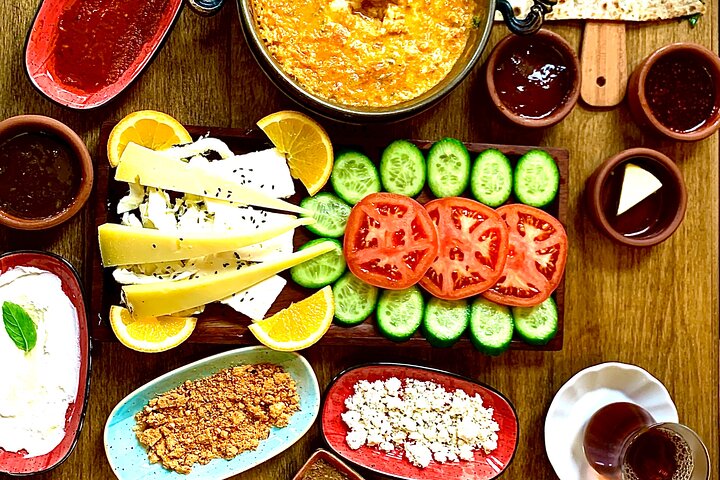
Turkish breakfast (₺150-300 per person at a proper breakfast restaurant) is not a meal — it is a ceremony. A full kahvaltı spread arrives in a constellation of small plates covering the entire table: several varieties of cheese (beyaz peynir, kaşar, tulum, lor), olives (green and black, from different regions), tomatoes, cucumbers, honey from the comb with thick kaymak (clotted cream), several jams (sour cherry, rose petal, fig, quince), butter, eggs prepared various ways (menemen — scrambled with tomatoes and peppers — is essential), sucuk (spiced sausage, fried), börek (flaky pastry with cheese or meat filling), and unlimited bread and tea.
This spread is meant to be shared, lingered over, and argued about — which cheese is better, whether the honey or the jam pairs better with the kaymak. Weekend breakfast in Istanbul can last three hours, and nobody finds this unusual.
The best breakfast neighborhoods are Beşiktaş (try Van Kahvaltı Evi, named for the eastern city famous for its breakfast culture, ₺200-280 per person) and Kadıköy, where several breakfast cafes along the market streets serve extraordinary spreads.

8. Baklava — The King of Sweets
Baklava (₺60-80 per 100g at quality shops) at its best is a revelation — thirty to forty tissue-thin layers of hand-stretched filo dough, each brushed with clarified butter, filled with ground pistachios, baked until deeply golden, and soaked in a light sugar syrup that is sweet without being cloying. The texture should be crisp on top, yielding in the middle, and slightly sticky on the bottom where the syrup pools.
The pistachio filling should be vivid green — a sign of quality Gaziantep pistachios, the only acceptable variety for serious baklava makers. The definitive baklava experience in Istanbul is at Karaköy Güllüoğlu, a family operation from Gaziantep that has been making baklava since 1820.
Their pistachio baklava is the standard against which all others are measured — buttery, nutty, and perfectly balanced in its sweetness. Order a mixed plate (₺120-160) to try the classic pistachio, the walnut variety, and the şöbiyet (a cream-filled version).
Eat it fresh — baklava is best within hours of baking, when the layers still shatter audibly.
9. Künefe — The Hot Cheese Dessert
Künefe (₺80) is a dish that sounds improbable and tastes miraculous. Shredded kadayıf dough (angel hair pastry) is layered around unsalted melting cheese, pressed into a copper pan, soaked in butter, and baked until the outside is crackling gold and the inside is molten.
It is served immediately, drizzled with light sugar syrup and dusted with ground pistachios. The first bite is a textural shock — the shattering crunch of the pastry gives way to a long, elastic stretch of hot cheese that is salty against the sweetness of the syrup.
It must be eaten immediately and hot — cold künefe is a different and lesser thing. The best künefe in Istanbul comes from restaurants specializing in southeastern Turkish cuisine (Hatay, Antakya), where the dish originates.
Hatay Medeniyetler Sofrası near the Grand Bazaar serves an outstanding version, cooked to order in individual copper pans.
10. Döner — The Original
Döner (₺40-60 for a portion or wrap) in Istanbul bears little resemblance to the late-night kebab you know from Berlin or London. Authentic Turkish döner is thin-sliced marinated meat (lamb, beef, or chicken) stacked on a vertical rotisserie and shaved to order as the outer layer crisps.
The best döner has crispy caramelized edges and tender, juicy interiors. Order it as a dürüm (wrap in thin lavash bread with tomato, onion, and herbs) or as a porsiyon (plate with rice, salad, and bread).
The quality varies enormously — avoid the massive tourist-oriented döner cones near Sultanahmet and seek out neighborhood shops where locals queue. Beşiktaş has several excellent döner shops where office workers line up at lunch — follow the crowd.
The chicken döner (tavuk döner) is lighter and cheaper (₺40-50) and makes an excellent quick lunch.
Best Neighborhoods for Eating
Kadıköy — The Foodie Capital
If you only have time for one food neighborhood, make it Kadıköy on the Asian side. The Kadıköy Market is a sprawling network of fishmongers, cheese shops, olive vendors, pickle stalls, butchers, and small restaurants that cater to locals, not tourists.
Prices are 20-40% lower than the European side for equivalent quality. Çiya Sofrası is the standout — Chef Musa Dağdeviren's restaurant serves endangered regional recipes from across Anatolia. The market streets around it are excellent for grazing: midye dolma (stuffed mussels, ₺5-10 each), kokoreç (seasoned lamb intestines in bread, ₺40-60 — divisive but loved by locals), and fresh-squeezed juices.
The ferry ride to Kadıköy from Eminönü (₺7.67 with Istanbulkart, 25 minutes) is itself worth the trip.
Beyoğlu — The Cosmopolitan Table
Beyoğlu, centered on İstiklal Avenue and its side streets, is where Istanbul's meyhane culture thrives. Nevizade Street is the epicenter — a narrow alley packed with taverns where raki flows freely and meze plates arrive in waves.
The meyhane experience (detailed below) is essential Istanbul dining. Beyond the taverns, Beyoğlu offers excellent international dining, rooftop bars with Bosphorus views, and the city's best specialty coffee scene.
Karaköy, at the base of the Galata Bridge, has emerged as a culinary hotspot with innovative restaurants and the legendary Güllüoğlu baklava shop.
Sultanahmet — Tourist Territory with Gems
Sultanahmet is the most touristic food neighborhood, and many restaurants here are mediocre and overpriced. However, genuine institutions survive. Sultanahmet Köftecisi (since 1920) serves outstanding köfte.
Matbah Ottoman Palace Cuisine in the Ottoman Hotel Imperial recreates historical Ottoman recipes with scholarly precision — dishes you literally cannot find elsewhere. The rooftop restaurants offer stunning views with reasonable food.
The rule in Sultanahmet: avoid any restaurant with a tout standing outside aggressively recruiting customers. The good ones do not need to beg for business.
Balat — The Creative Quarter
Balat's food scene reflects its artistic reinvention — specialty coffee roasters, brunch spots, and small independent restaurants serving creative Turkish cuisine. Forno Balat does excellent wood-fired pizza and Turkish breakfast. The neighborhood's old-school lokanta restaurants (home-style Turkish cooking served from steam tables) are cheap and authentic — a full lunch of soup, a meat or vegetable stew, rice, and bread costs ₺60-100.
Look for the ones with steamy windows and a crowd of locals.
Beşiktaş — Where Locals Eat
Beşiktaş is an Istanbul neighborhood that tourists rarely visit, which is exactly why the food is excellent and affordable. The morning fish market sells the freshest catch, the döner shops serve office workers who demand quality at speed, and the breakfast restaurants (particularly Van Kahvaltı Evi) serve the most generous spreads in the city.
The waterfront walk from Beşiktaş to Ortaköy passes the Çırağan Palace and ends at the Ortaköy Mosque, where kumpir (massive baked potatoes with dozens of toppings, ₺60-80) vendors line the square.
Follow the basic rule: eat where the locals eat. A stall with a queue of Turkish customers is far safer than an empty tourist restaurant. The one exception — midye dolma (stuffed mussels) from street vendors can occasionally cause stomach issues for visitors not accustomed to the bacteria. Start with a few to test your tolerance rather than eating a dozen on your first day.
Meyhane Culture — Raki, Meze & the Art of the Turkish Table
The meyhane (traditional Turkish tavern) is not just a restaurant — it is a philosophy of dining that prioritizes conversation, abundance, and the slow accumulation of pleasure over the course of an evening. A proper meyhane dinner lasts 3-4 hours and follows a specific rhythm.
First comes raki, the anise-flavored spirit that is Turkey's national drink. It is served in tall thin glasses, poured neat, and diluted with cold water to taste — the clear liquid turns milky white, which is why it is called aslan sütü (lion's milk).
Raki is always drunk with food, never alone, and never in a hurry.
With the raki comes the meze — a procession of small cold dishes that the waiter presents on a large tray for you to choose from. Point at what looks good.
Essential cold meze include haydari (thick strained yogurt with herbs and garlic), atom (spicy tomato and walnut paste), acılı ezme (fiery pepper paste), patlıcan salatası (smoky eggplant puree), deniz börülcesi (samphire in olive oil and lemon), and enginar (artichoke hearts in olive oil). After the cold meze, hot dishes arrive — karides güveç (shrimp baked in tomato sauce with cheese), arnavut ciğeri (Albanian-style fried liver with onions), midye tava (fried mussels with tarator sauce).
The main course is usually grilled fish — the waiter will recommend what is fresh that day. The entire experience costs ₺400-800 per person depending on how much raki flows and which fish you choose.
Split between a group, it is extraordinary value for an evening of food, drink, and atmosphere. Nevizade Street in Beyoğlu has the highest concentration of meyhanes, and the energy on a weekend night — every table full, raki glasses raised, animated conversation filling the narrow street — is one of Istanbul's greatest spectacles.
Turkish Tea & Coffee Culture
Tea (çay) is the lubricant of all social interaction in Istanbul. It is served in small tulip-shaped glasses, brewed extremely strong from a double-stacked teapot (çaydanlık), and offered in virtually every social situation — in shops, at the barber, during business meetings, after meals, between meals, and for no reason at all other than that you exist and it would be inhospitable not to offer you tea.
Accepting tea is a gesture of goodwill and does not obligate you to buy anything. A glass costs ₺10-15 in a cafe and is often free when offered by shopkeepers.
Sugar is available; milk is not — asking for milk in your Turkish tea marks you as a foreigner more effectively than any accent. Drink it slowly, holding the glass by the rim to avoid burning your fingers (there is no handle for a reason — the heat tells you it is fresh).
Turkish coffee (Türk kahvesi) is different from every other coffee preparation in the world. Finely ground coffee is simmered with water and sugar in a small copper pot (cezve) over low heat until it foams, then poured unfiltered into a small cup.
The grounds settle at the bottom — do not drink them (though fortune-telling from the grounds, or tasseography, is a popular tradition — flip the cup onto the saucer, let it cool, and ask someone to read your future in the patterns). The coffee is ordered by sweetness level: sade (no sugar), az şekerli (a little sugar), orta (medium), or çok şekerli (very sweet).
Orta is a safe starting point. A cup costs ₺30-50 and comes with a small Turkish delight or a glass of water. Drink the water first to cleanse your palate.
Turkish coffee is a UNESCO Intangible Cultural Heritage — it is meant to be sipped slowly, contemplated, and shared with conversation. Do not rush it.

Budget Tips for Eating in Istanbul
Where to Save
Istanbul is one of the best cities in the world for eating well on a budget, thanks to the favorable exchange rate and a deep culture of affordable street food. A simit for breakfast (₺5), a lahmacun and ayran for lunch (₺50-70), and a döner dürüm for dinner (₺40-60) means you can eat three meals a day for under ₺120 — roughly $4 at current exchange rates.
That is absurdly cheap for a city of this caliber. Lokanta restaurants — cafeteria-style places serving home-cooked Turkish food from steam tables — are found in every neighborhood and serve a full plate (soup, main course, rice, bread) for ₺60-100.
They cater to local workers and the food is honest, generous, and satisfying. Kadıköy is 20-40% cheaper than the European side for comparable quality.
Where to Splurge
If you are going to spend more on one meal, make it a meyhane dinner with raki and full meze service (₺400-800 per person), or a hammam followed by dinner at a rooftop restaurant with Bosphorus views. The meyhane experience cannot be replicated elsewhere — it is uniquely Istanbul, deeply social, and worth every lira.
Alternatively, a meal at Mikla (Mehmet Gürs' modern Anatolian restaurant with panoramic city views) or Neolokal (in the SALT Galata building) offers world-class cuisine for a fraction of what equivalent restaurants charge in London, Paris, or New York.