
The thunder of Iguazu Falls echoes through every meal eaten in this remote corner of northeastern Argentina. You are at the junction of three countries — Argentina, Brazil, and Paraguay — in a subtropical rainforest where the food is as wild and abundant as the landscape. This is not Buenos Aires cuisine transplanted to the jungle. It is something rawer, more provincial, and in many ways more interesting: the food of the Guaraní people, the gauchos of the Missions region, and the immigrant families who settled this frontier over the last century.
What makes Iguazu's food distinct is the collision of traditions. The Guaraní people introduced cassava, maize, and the yerba maté plant that Argentina is famous for. Spanish and Italian immigrants brought slow-cooking traditions and a European sensibility about meat. Paraguay sits just across the river, and its influence is felt in the corn-based breads and thick stews that appear on menus throughout Puerto Iguazú. The result is a cuisine that feels both deeply South American and unlike anything you will eat in any of the continent's major cities.
Most travelers rush through Puerto Iguazú on their way to the falls and back, eating whatever the hotel puts in front of them. That is a mistake. The town has a genuine local food scene, the surrounding Missions province produces some of Argentina's most interesting artisan products, and a proper asado — fire-cooked meat in the gaucho tradition — eaten in this subtropical heat is one of the most memorable meals South America offers. Slow down. Eat. The falls will still be there tomorrow.
10 Must-Try Dishes Near Iguazu Falls
1. Asado (Argentine Wood-Fire Grill)
Asado is not just a cooking method in Argentina — it is a social institution, a philosophical position, and the closest thing the country has to a sacred ritual. A proper asado takes three to four hours minimum: the fire must be built with hard wood (never lighter fluid, never briquettes), the coals must be distributed evenly beneath a parrilla grill, and the meat must cook at a distance that allows slow, even heat penetration without flaming. Rushing an asado is considered a moral failure.
In the Iguazu region, the asado tradition has its own character. The subtropical heat means the fires burn hotter and the meat cooks faster than on the Pampas, and the regional cattle — raised on tropical grasses rather than the cool Pampas pasture — have a slightly different fat profile and texture. You will typically find asado de tira (cross-cut short ribs), vacío (flank steak), entraña (skirt steak), and chorizo on a regional parrilla, along with offal cuts like mollejas (sweetbreads) and chinchulines (small intestine) for the committed.
La Rueda restaurant in Puerto Iguazú is the town's most respected parrilla and has been serving proper asado to locals and travelers for decades. The parrillada completa for two — a full mixed grill with all the cuts — arrives on a brazier of its own and can feed two people generously without a starter. La Estancia del Tío Querido on Avenida Brasil is a more local alternative with lower prices and a more authentic atmosphere.
A full parrillada for two costs approximately ARS 8,000–15,000 depending on the cut selection and current inflation. Bring bread (pan) to eat with the meat — Argentines always have bread at asado. Order chimichurri (herb and vinegar sauce) on the side and use it generously. The local Malbec, even at a modest price point, pairs beautifully with the fat-rich cuts.
2. Empanadas Misioneras (Missions-Style Empanadas)
Empanadas are Argentina's most universal food, but the Missions province version has its own distinct character shaped by local ingredients and the region's mestizo culinary heritage. Misionera empanadas use a corn-flour dough (rather than wheat) in some preparations — an influence from Guaraní corn culture — and the fillings frequently include regional ingredients like palmito (heart of palm), yerba maté-cured beef, and local soft cheeses mixed with herbs.
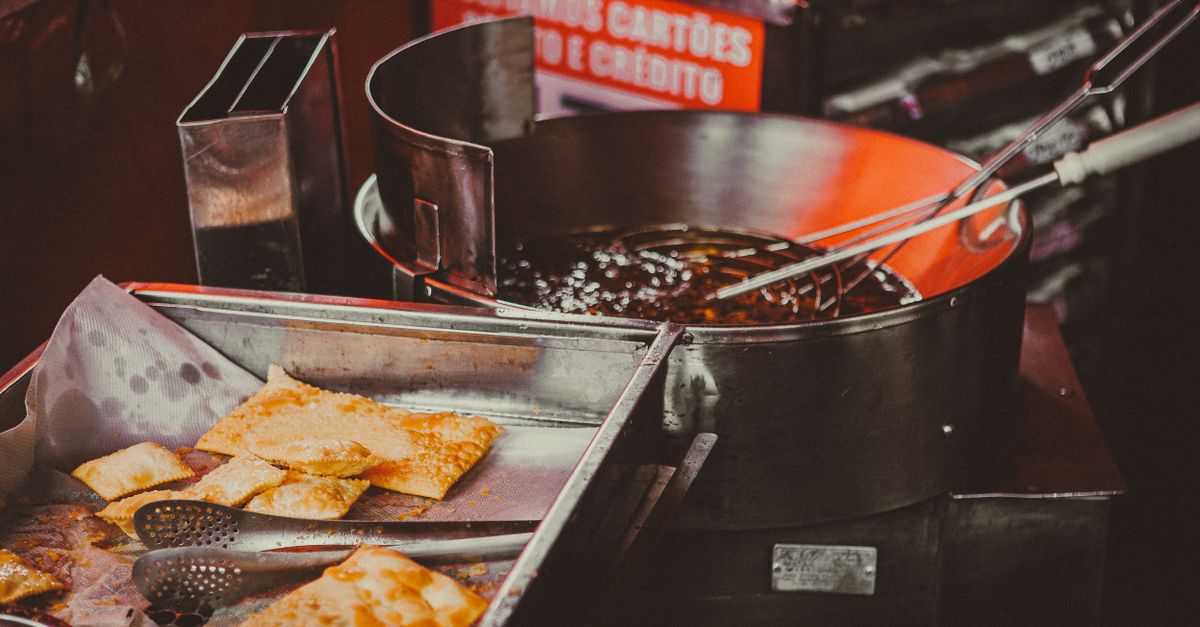
The most common filling is still the classic beef picadillo — ground beef with hard-boiled egg, olives, onion, and spices — but the regional variations are worth seeking out. The corn dough empanadas are slightly sweeter and denser than the wheat version, and they handle the moist tropical fillings better. Baked empanadas are more common than fried here, though the fried version (empanadas fritas) found at roadside stands is crispier and more satisfying as street food.
El Quincho del Tío Querido on Avenida Córdoba makes the best empanadas in town — they bake in batches throughout the day and sell them hot by the dozen. At the Mercado Municipal on Avenida Brazil, local vendors sell empanadas from traditional family recipes, and you can try three or four varieties for next to nothing. The corn-dough version is the one to prioritize.
Empanadas cost ARS 400–800 each depending on size and filling. Order a minimum of four per person as a main course, or two as a starter. The classic pairing is a cold Quilmes beer or fresh limonada. If you are buying from a market stall, point at what looks freshest and take whatever they recommend — the vendors know which batch just came out of the oven.
3. Locro (Thick Hearty Stew)
Locro is one of Argentina's oldest and most substantial dishes — a thick, slow-cooked stew of white corn, beans, squash, pork, beef, and sausage that originated with the indigenous peoples of the Andean northwest but spread across the country as a winter staple. In the humid subtropical climate of Iguazu, it feels almost incongruously warming, but locals eat it with conviction on rainy season evenings and during the Fiestas Patrias (national holidays) when tradition demands it.
The base is always white corn (mote) that has been nixtamalized — soaked in an alkaline solution to unlock its nutritional potential, a technique the Guaraní used long before Spanish contact. The corn breaks down over hours of cooking, thickening the broth into something almost porridge-like. The sausage adds fat and spice, the squash adds sweetness, and the beans add body. A properly made locro should be thick enough that a spoon stands up in it.
Locro appears most consistently at traditional restaurants during winter months (June–August) and around national holidays (May 25 and July 9). El Ñandu restaurant in Puerto Iguazú's commercial center maintains it year-round as a menu staple. Many home cooks also sell it from their windows on weekends — watch for hand-written signs saying "Locro Hoy" (locro today) in residential neighborhoods.
A bowl of locro costs ARS 2,500–5,000 at a sit-down restaurant. It comes with toasted bread and a small pot of chimichurri. Order it with a glass of red wine, not beer — this is a serious dish that deserves a serious drink. Do not plan vigorous activity after eating locro; it is not that kind of meal.
4. Chipa (Paraguayan Cheese Bread)
Chipa crosses the Paraguayan border into the Iguazu region with a frequency that tells you everything about how permeable these cultural borders really are. These small, dense cheese rolls made from cassava starch (tapioca flour), eggs, anise seeds, and fresh cheese are baked until the outside is golden and slightly cracked and the inside is chewy, stretchy, and intensely savory. They are the quintessential breakfast and bus station snack of the tri-border region.
The texture of chipa is unlike any other bread — the cassava starch gives it a chewiness that is almost mochi-like, and the cheese bakes into a dense, salty core that contrasts perfectly with the slightly sweet, anise-scented exterior. They are at their best when eaten within minutes of coming out of the oven, when the cheese is still stringy and the exterior still crackles under your fingers. Cold chipa is a lesser thing entirely.
The best chipa in Puerto Iguazú comes from the Paraguayan-owned bakeries on the streets nearest the international bridge crossing. Several women sell fresh chipa from baskets lined with cloth near the bus terminal early in the morning (5–8am) when they are hottest and freshest. Panadería Misiones on Avenida Aguirre bakes a reliable version throughout the day.
Chipa costs ARS 300–600 each. Buy a bag of five or six for breakfast and eat them with a thermos of maté — the combination is the unofficial breakfast of the Iguazu region. Do not refrigerate leftover chipa; it becomes dense and rubbery. Either eat them fresh or toast them lightly in a pan the next morning to restore some of their texture.
5. Surubí (Freshwater Catfish)
The Iguazu and Paraná rivers are among South America's most biodiverse waterways, and the surubí — a large, spotted freshwater catfish that can grow to extraordinary sizes — is their most celebrated food fish. Surubí flesh is white, firm, and mild with a clean, non-muddy flavor that surprises people who associate catfish with murky taste. It grills beautifully, stews well, and fries into crispy cutlets that rival the finest coastal fish.
The most common preparation in the region is surubí a la parrilla — grilled whole or in thick fillets over wood coals with chimichurri and a simple salad. The skin crisps perfectly on the grill, protecting the delicate flesh underneath. A second popular preparation is surubí a la cazuela — a shallow stew with tomatoes, onions, local herbs, and white wine that recalls the Dalmatian brodetto tradition brought by European immigrants. Both preparations celebrate the fish rather than overwhelming it.
El Puerto restaurant on the waterfront in Puerto Iguazú is the definitive place for river fish, including surubí, pacú, and the smaller sábalo. The restaurant sits above the Iguazu River and serves fish caught locally — the menu reflects what was caught, not a fixed list. Arriving at lunch rather than dinner means the fish is fresher and the prices are 15–20% lower.
Surubí costs ARS 5,000–10,000 for a full portion at a proper restaurant. Order it with a simple salad and fried yuca (cassava) as a side rather than French fries — the yuca is local, the potatoes probably are not. Ask the waiter which preparation the kitchen does best that day; the answer will tell you about the freshness and cut of the fish that arrived that morning.
6. Pacú (Fruit-Eating River Fish)
Pacú is a fascinating river fish — a large, round-bodied species related to the piranha that feeds almost exclusively on fruits and seeds that fall from overhanging trees into the Paraná River. The fruit diet gives the flesh a unique sweetness and richness, with a fat content closer to a salmon than a typical freshwater white fish. The fat distributes through the flesh rather than concentrating in the belly, which makes every bite equally flavorful.
The traditional local preparation is pacú a las brasas — the whole fish grilled over wood coals until the skin blackens and the flesh steams in its own fat. The skin is not typically eaten; it serves as a container for the cooking. When peeled back at the table, the flesh beneath is white, moist, and subtly sweet with a richness that needs nothing more than lemon and salt. Some restaurants offer a more elaborate preparation with tomatoes, garlic, and herbs, but the purists are right that simplicity serves this fish best.
El Puerto and La Cantina del Puerto both serve excellent pacú, and both source from local fishermen who work the Paraná. In the high season (summer, December–February), the fish is so abundant that it appears on practically every restaurant menu in town. In low season, ask specifically if the pacú is fresh-caught or frozen — the difference in quality is significant.
Pacú runs ARS 4,500–9,000 for a full portion. The fish is large enough that a half-portion is often sufficient for one person — ask the waiter before ordering a full fish alone. Pair with white wine or a light lager. The sweetness of the flesh also pairs surprisingly well with a chimichurri-style herb sauce, which balances the richness with acidity.
7. Mate and Yerba Culture
Maté is not food in the conventional sense — it is a preparation of dried yerba maté leaves steeped in a gourd (the maté vessel) and sipped through a metal filter straw (bombilla) — but it is so central to the food culture of the Missions region that ignoring it would be like writing about Hvar without mentioning wine. The Missions province is the primary yerba maté growing region in Argentina, and the terroir of the red subtropical soil here is considered the finest for the plant.
The flavor of fresh Missions yerba is grassy, slightly bitter, and deeply herbaceous — nothing like the tea bags sold in health food shops elsewhere. Drinking maté is a social ritual: the gourd is passed around a circle, refilled with hot water (never boiling — 80°C is correct) from a thermos, and shared without the social distancing you might expect from a shared vessel. Refusing a maté is a mild but noticeable social slight.
To experience this properly, visit the Las Marías or Amanda yerba maté plantations outside Puerto Iguazú — both offer tours that include a tasting and explanation of the drying and curing process. In town, every café and restaurant keeps a thermos of hot water for maté, and locals bring their own gourds everywhere. The local style is bitter and without sugar (amargo); sweetened maté (con azúcar) exists but the locals will judge you, at least a little.
A bag of premium Missions yerba costs ARS 1,500–4,000 at local markets. A maté gourd and bombilla set costs ARS 2,000–5,000 and makes an excellent, functional souvenir. If you want to try maté without committing to your own kit, many restaurants in town will prepare a tereré (cold maté with iced water or juice) for you — a concession to the subtropical heat that the more traditional yerba drinkers consider slightly heretical but perfectly refreshing.
8. Mbejú (Cassava Starch and Cheese Cake)
Mbejú (pronounced em-beh-WHO) is a Guaraní flatbread made from cassava starch, fresh cheese, and occasionally egg — cooked in a dry pan until the starch forms a cohesive, slightly golden cake with a dense, chewy texture and a savory, milky interior. It is one of the oldest preparations in the region, predating European contact, and it represents the Guaraní culinary legacy in its purest form.
The name comes from the Guaraní language and means something close to "tender thing." The texture is between a thick pancake and a very dense flatbread — not crispy, not fluffy, but firmly chewy with pockets of melted cheese distributed throughout. It is eaten for breakfast or as an afternoon snack, typically with maté or a glass of fresh juice. It does not keep well and deteriorates significantly after cooling, so eating it fresh from the pan is essential.
Mbejú is rarely found in tourist restaurants — it lives in local homes, market stalls, and the small comedores (home-cooking restaurants) in residential neighborhoods. The Mercado Municipal on weekend mornings has vendors who make it fresh. Several women near the bus terminal sell mbejú from flat pans balanced on portable gas burners from dawn until mid-morning.
Mbejú costs ARS 500–1,200 per piece and is usually sold with a small packet of fresh cheese on the side. Eat it immediately. The experience of watching it come together in a dry pan — the loose starch suddenly binding into a solid cake as the heat works through it — is part of the pleasure. Try to visit a vendor early in the morning before they sell out.
9. Chipá Guasú (Fresh Corn Cake)
Chipá guasú (the "big chipa") is a baked corn cake made with fresh corn kernels, eggs, cheese, onion, and fat — a loftier, more custardy version of the dense cheese rolls described earlier. It is technically a Paraguayan dish but so prevalent in the Missions region that it functions as a local staple. The interior is moist and slightly custard-like, the exterior golden and gently crisped, and the entire thing smells of fresh corn and melted cheese in a way that is irresistible at any time of day.
The key to a great chipá guasú is using fresh corn rather than frozen or canned — the natural milk in fresh corn kernels contributes to the moist texture and corn-forward flavor that defines the dish. Good versions are dense enough to hold their shape when sliced but moist enough to feel almost creamy on the tongue. They are typically served in rectangular wedges, either as a side dish or as a standalone snack.
During the summer corn harvest (December–March), chipá guasú appears on menus throughout the Iguazu region as a seasonal side dish alongside grilled meats. El Quincho del Tío Querido serves it regularly; the market vendors who make mbejú often sell chipá guasú as well. Look for it at the Sunday market at Parque República on the edge of town.
Chipá guasú costs ARS 600–1,500 per portion depending on size. Order it alongside a parrillada as a starchy side in place of french fries — it handles the fat and smoke of the grilled meat far better than potato, and it is the regional choice. The corn and cheese combination also makes it excellent with chimichurri as a snack at any time of day.
10. Helado Artesanal (Artisan Ice Cream)
The subtropical heat of Iguazu makes artisan ice cream a serious necessity rather than a luxury. The town has a genuine tradition of heladería culture brought by Italian immigrants in the early 20th century, and several shops produce ice cream using local tropical fruits — maracuyá (passion fruit), guayaba (guava), mamón (papaya), and the extraordinary maracujá from the surrounding jungle — in techniques borrowed from the Italian gelato tradition.
The local fruit flavors are the reason to visit. Passion fruit ice cream made with fresh-pressed juice has an intensity that the imported concentrates used elsewhere cannot approach. Guava ice cream is floral, dense, and slightly tangy. The mamón flavor tastes like the tropics distilled into a scoop. These flavors are available at dedicated heladerías year-round, but the tropical fruits are most intensely flavored in the wet season (October–March).
Heladería Délice on Avenida Aguirre is the most respected artisan ice cream shop in Puerto Iguazú, with rotating seasonal flavors that always include several local tropical fruits. El Faro on the main commercial street is a close second with a slightly wider variety. Both shops use Italian-style machinery and follow proper gelato ratios of less air and more flavor concentration than commercial ice cream.
A two-scoop cone costs ARS 1,500–3,000. Order at least one tropical fruit flavor alongside whatever familiar flavor you choose — the contrast in intensity will permanently recalibrate your expectations for fruit ice cream. The shops are open until 11pm even on weeknights; the heat drives the late-night trade.

Iguazu's Essential Food Neighborhoods
Puerto Iguazú Town Center: The commercial heart of the Argentine side has the town's best restaurants concentrated along Avenida Córdoba, Avenida Brasil, and the streets radiating from the central plaza. La Rueda and El Puerto are the anchors of the upper end; the comedores and market stalls provide the best cheap eating. The Friday and Saturday night street food vendors who set up along Avenida Aguirre between 7–11pm offer the best casual eating experience in town — chorizo sandwiches, empanadas, and chipa hot from portable ovens.
Foz do Iguaçu (Brazilian Side): Cross the Puente Tancredo Neves into Brazil and the food culture shifts immediately — Portuguese-influenced churrascaria (all-you-can-eat grilled meat) restaurants replace Argentine parrillas, and açaí bowls and fresh tropical fruit juices compete with maté. The Brazilian side has better lunch deals (the churrascaria rodízio at a fixed price for unlimited meat) but fewer of the indigenous culinary traditions that make the Argentine side interesting. Worth one lunch for the experience of the contrast.
Ciudad del Este (Paraguayan Side): The Paraguayan border city is primarily a shopping destination rather than a food one, but the Guaraní food traditions are most intact here. Street vendors sell sopa paraguaya (corn bread with cheese and onion, despite the name), chipa by the bagful, and freshly pressed sugar cane juice. The main market has dried herbs, yerba maté from small producers, and the best selection of artisan food products in the tri-border region. Cross over for lunch rather than dinner — the energy drops significantly in the evening.
Practical Eating Tips for Iguazu Falls
Budget guidance: Puerto Iguazú has a wide range from backpacker to upscale. Street empanadas and chipa cost next to nothing; a full parrillada at a proper restaurant is a significant expense by Argentine regional standards. A budget traveler eating primarily at comedores, market stalls, and local bakeries can eat extraordinarily well for USD 10–15 per day (adjusted equivalent — use blue-rate exchange where legal). A mid-range traveler eating one proper restaurant meal per day should budget USD 25–40 per day for food.
Timing: The falls are most dramatic and photogenic after the wet season (January–March) when the water volume is maximum. Conversely, the jungle heat in these months is intense and affects appetite — locals eat lighter during the wet season and heavier through the cooler dry months (June–August). Asado season peaks in the cooler months; fruit ice cream and cold tereré peak in summer. Time your big meals for the evening when temperatures drop slightly.
Currency and exchange: Argentina's currency situation requires attention. The official rate, informal "blue" rate, and digital wallet rates can differ by 50–100%. Restaurants legally accept card at official rate; paying cash at the informal rate in shops and markets is common practice. This is a genuinely complex situation that changes frequently — research the current state before traveling. The food budget implications are substantial.

