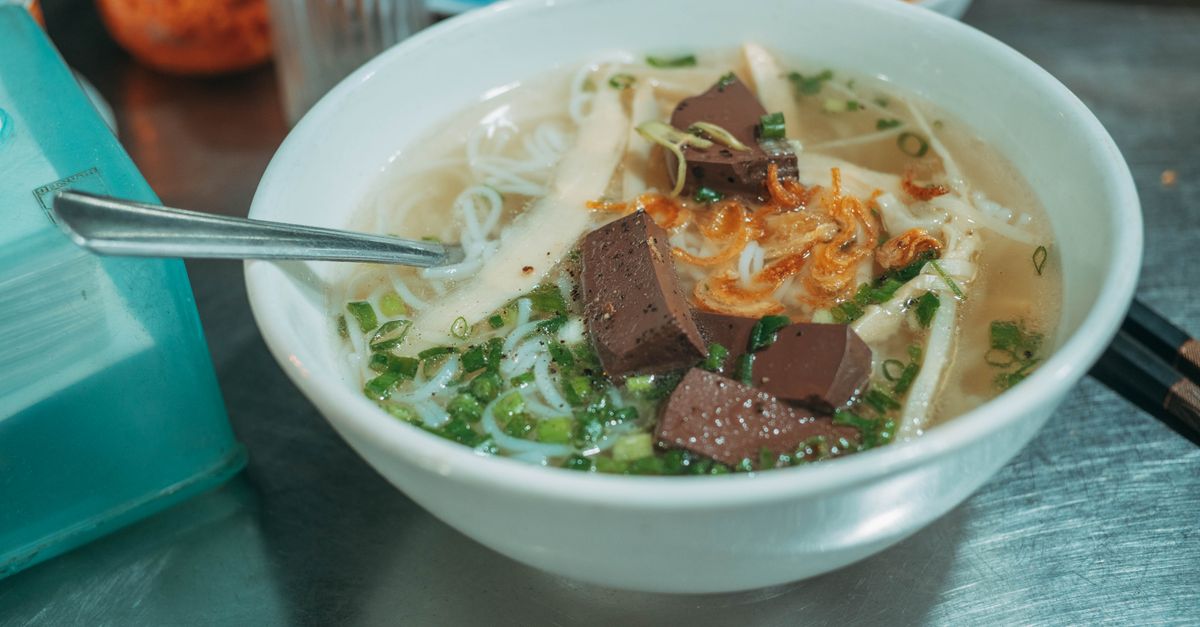
Da Nang's food scene is defined by central Vietnamese cuisine — a tradition distinct from both Hanoi's northern cooking and Ho Chi Minh City's southern flavors. Central Vietnamese food tends toward bolder spice, more complex preparations, and a love of turmeric, lemongrass, and fresh herbs that makes every dish aromatic and vibrant. The city's coastal location means seafood is exceptional and absurdly cheap.
Prices: Street food VND 15,000-40,000/dish, restaurants VND 50,000-150,000/person, seafood restaurants VND 100,000-300,000/person. A full day of excellent eating costs under $15.

Must-Try Dishes in Da Nang
1. Mi Quang (Turmeric Noodles) — VND 30,000-50,000
Da Nang's signature dish — wide rice noodles in a small amount of rich, turmeric-colored broth with shrimp, pork, quail egg, peanuts, and herbs, topped with crispy sesame rice crackers. Unlike pho, mi quang is about the noodles and toppings rather than the soup. Mi Quang Ba Mua near Han Market is a local institution.
2. Banh Xeo (Crispy Pancakes) — VND 20,000-40,000
Turmeric-tinted rice flour crepes stuffed with shrimp, pork, bean sprouts, and mung beans, fried until crispy. In central Vietnam, they're larger and crispier than the southern version. Wrap pieces in rice paper with lettuce, herbs, and green banana, then dip in nuoc cham sauce. Banh Xeo Ba Duong is the famous spot.
3. Bun Cha Ca (Fish Cake Noodle Soup) — VND 25,000-35,000
A Da Nang-only specialty — rice vermicelli in a light fish broth with fried fish cakes, fish paste, tomatoes, and pineapple. The fish cakes are the highlight — firm, springy, and subtly sweet. Street stalls near Con Market serve the best versions. Available from 6 AM.
4. Nem Lui (Grilled Pork Sausage) — VND 30,000-50,000
Seasoned pork paste grilled on lemongrass stalks, served with rice paper, fresh herbs, green banana, star fruit, and fermented shrimp paste dip. You wrap everything into small rolls — the DIY assembly is part of the fun. Bep Cuon in downtown Da Nang specializes in this.
5. Banh Trang Cuon Thit Heo — VND 25,000-40,000
Fresh rice paper rolled with sliced boiled pork, herbs, cucumbers, and served with a fermented soybean dipping sauce. Simple, refreshing, and uniquely central Vietnamese. Available at most local restaurants — look for the pork and herb display on the table.
6. Seafood (Beach Road) — VND 100,000-200,000/person
Da Nang's beach road seafood restaurants let you pick live fish, crab, prawns, and clams from tanks. Specify your cooking method — garlic butter, tamarind sauce, grilled, or steamed. Prices are by weight. A generous seafood dinner with beer costs VND 200,000-400,000 for two.
Where to Eat in Da Nang
Con Market Area — Budget Street Food
The streets surrounding Con Market have the highest concentration of local food stalls. Mi quang, bun cha ca, and banh xeo stalls operate from 6 AM to 2 PM. Evening brings grilled seafood and barbecue. Budget VND 30,000-50,000 per meal.
Han River Area — Mid-Range
The streets between the river and My Khe Beach have modern restaurants with English menus. Fatfish serves excellent seafood (VND 100,000-200,000/person). Madam Lan does refined Vietnamese classics (VND 60,000-120,000). Both have air conditioning and riverside views.
My Khe Beach Road — Seafood Restaurants
The beach road south of My Khe is lined with open-air seafood restaurants. Be Anh and Hai San Phuoc My are local favorites with tank-to-table freshness. Prices are by weight — ask before ordering to avoid surprises. Best from 5 PM onward.
Dining Tips for Da Nang
The best food in any city comes from specialists — restaurants and stalls that have perfected a single dish over years or decades. The cramped stall with the longest queue of locals invariably serves better food than the spacious restaurant with the bilingual menu and zero customers. Follow the crowds, eat what locals eat, and budget for multiple small meals rather than one large dinner.
Street food is safe when the vendor is busy — high customer turnover means food is cooked fresh and doesn't sit at dangerous temperatures. Avoid pre-cooked items that have been sitting under heat lamps for hours. Steaming, sizzling, and smoking are signs of freshly prepared food. Morning markets and evening food stalls typically offer the freshest options.
Local markets are the most affordable and authentic eating experience in any Asian city. Visit the main market early in the morning when vendors set up — the energy, the colors, and the breakfast food reveal the city's character more effectively than any museum or monument. Budget 60-90 minutes for a market visit including breakfast.
Dietary restrictions and allergies can be communicated with a few prepared phrases in the local language. Download Google Translate's offline language pack before your trip. Most Asian food cultures are accommodating of preferences when communicated clearly. Vegetarian options are available nearly everywhere, though the definition varies — fish sauce and shrimp paste appear in many 'vegetarian' Southeast Asian dishes.
Planning Your Food Exploration
The most rewarding food experiences come from planning meals around the local eating schedule rather than forcing your own rhythm onto a foreign city. Most Asian cities eat early — breakfast stalls open at dawn and close by 9 AM, lunch service peaks at noon and ends by 2 PM, and dinner starts at 5-6 PM. Night markets and street food stalls offer the best evening options, typically running from 6 PM until 10 PM or later.
Budget allocation matters. Spend 30-40% of your food budget on one memorable meal — a signature local restaurant, a cooking class, or a fresh seafood dinner. Allocate the rest to street food, markets, and casual local restaurants where the authentic flavors live. This strategy ensures you taste both the refined and the everyday versions of the local cuisine without breaking the bank.
Photography etiquette at food stalls and small restaurants varies by culture. In most of Asia, photographing your food is completely normal and even expected. Photographing the cook or the stall itself — ask first with a smile and gesture. Most vendors are flattered; a few prefer not to be photographed. In sit-down restaurants, photograph freely but be discreet about photographing other diners.
Food allergies and dietary restrictions require preparation. Write your restrictions in the local language (Google Translate helps) and show the note at each restaurant. Common allergens like peanuts, shellfish, and gluten appear in unexpected places — soy sauce contains wheat, fish sauce is in many Thai and Vietnamese dishes, and peanuts appear in Indonesian, Malaysian, and Chinese cooking. Communicate clearly and ask about ingredients rather than assuming from the menu description.
The single best food investment in any Asian city is a cooking class. For 5-50, you'll visit a local market, learn 4-6 dishes hands-on, and gain techniques that let you recreate the flavors at home. The market tour alone — learning to identify local herbs, spices, and produce — transforms your understanding of the cuisine for every subsequent meal during your trip.
Sweet Treats & Desserts
Da Nang's dessert culture is built around che — a broad category of Vietnamese sweet soups and puddings served warm or cold that functions as street-side snacking, post-meal treat, and afternoon refresh simultaneously. Che ba mau (three-colour dessert) is the most famous version: layers of mung bean paste, red kidney beans, and pandan jelly in coconut milk, served over crushed ice in a glass for VND 15,000-25,000. Stalls on Nguyen Chi Thanh Street near Con Market specialize in this — look for the large glass jars of coloured ingredients displayed on the counter. A single glass is rarely enough.
Banh tráng nuong — grilled rice paper — occupies the space between savoury snack and sweet treat. Vendors spread a rice paper sheet over a charcoal grill, top it with egg, dried shrimp, spring onions, and a sweet chili sauce, fold it in half, and serve it hot and crispy for VND 15,000-30,000. Street vendors cluster along the Dragon Bridge on the Han River every evening from around 5 PM, and along Tran Phu Street near the beach. The folded paper shatters satisfyingly at first bite and the combination of sweet, salty, and smoky is immediately addictive — locals call it "Vietnamese pizza" which undersells how good it actually is.
Kem Bo (avocado ice cream) is a Da Nang-specific dessert that catches many visitors off guard. Creamy avocado blended with condensed milk, poured over shaved ice or scooped into a cup, costs VND 20,000-35,000 at dedicated kem stalls. Kem Bo Ba Dong on Nguyen Chi Thanh is the most established address for this. The flavour is mild and surprisingly light — not the heavy guacamole note you might expect, but a delicate sweetness that works perfectly as a late-afternoon cool-down. Kem dua (coconut ice cream served in the shell) and kem trái cây (fresh fruit ice cream) are available from the same stalls at similar prices.
Bánh pía — flaky pastry filled with mung bean, durian, or taro — comes from the Mekong Delta but is sold at specialist bakeries across Da Nang for VND 15,000-25,000 per piece. Bảnh Pía Ngoc Lam near An Thuong tourist street stocks a reliable range. For something more local, cupcakes of banh bo nuong (honeycomb sponge cake) made from coconut milk and rice flour cost VND 5,000-10,000 each from market vendors and have a texture — spongy, slightly chewy, fragrant with pandan — that has no direct Western equivalent. Bakeries in the Con Market area sell them warm in the morning alongside the savoury breakfast options, and they represent some of the best value eating in the city.


