Chiang Mai Food Guide: Khao Soi, Sai Ua & the Best Street Eats in Northern Thailand
Northern Thai cuisine (called "Lanna food") is a distinct culinary tradition that most visitors encounter for the first time in Chiang Mai. It's earthier and more herbaceous than central Thai cooking, built on fermented ingredients, charcoal grilling, and sticky rice eaten with your hands.
Chiang Mai is also Thailand's cheapest major city for eating out. A full day of street food and market meals costs ฿120-250, making it possible to eat extraordinarily well on a backpacker budget.
The Essential Dishes
Khao Soi
Chiang Mai's signature dish is a coconut curry noodle soup topped with crispy fried noodles. The curry base is rich with turmeric, coriander, and dried chilies, served over egg noodles with pickled mustard greens, shallots, and lime on the side. A bowl costs ฿40-60 at local shops.
The best khao soi in the city is debated endlessly, but three names consistently top the list: Khao Soi Khun Yai (Charoen Rat Road, ฿40), Khao Soi Lam Duan Fah Ham (Charoen Rat Road, ฿50), and Khao Soi Mae Sai (Ratchaphuek Road, ฿45). All serve chicken leg (gai) as the standard protein — beef (neua) is also available for ฿10 more.

Sai Ua (Northern Thai Sausage)
Sai ua is a coarse pork sausage packed with lemongrass, galangal, kaffir lime leaves, and red curry paste. It's grilled over charcoal until the casing is crispy and the interior stays juicy and aromatic. A single link costs ฿30-50 and is typically served sliced with sticky rice and raw vegetables.
The flavor is intense — simultaneously herbal, spicy, and savory. Find it at every market and street corner, but the sai ua at Warorot Market's outdoor food section and the Saturday Walking Street Market is consistently excellent.
Nam Prik (Chili Dips)
Nam prik is a category of chili-based dips that form the heart of Lanna cuisine. The most common is nam prik ong — a mild tomato and minced pork dip served with pork rinds, steamed vegetables, and sticky rice. Nam prik noom is a smoky roasted green chili version that hits harder.
A nam prik set at local restaurants costs ฿50-80 and comes with an array of vegetables and sticky rice — it's a complete meal and one of the most satisfying cheap eats in the city.
Larb
Northern-style larb is different from the Isan version served in Bangkok. Chiang Mai larb uses toasted rice powder, dried spices (including long pepper and makhwen, a Sichuan pepper relative), and is often served raw (larb dip) or cooked (larb suk). The cooked version with minced pork (larb moo) is the safest starting point for newcomers at ฿40-50.
Eat larb with sticky rice — tear off a small ball, press it flat, and use it to scoop up the meat. This is the traditional Lanna way to eat, and it's more satisfying than using a fork.
Sticky Rice (Khao Niao)
Sticky rice replaces jasmine rice as the staple starch in northern Thailand. It comes in a small woven basket (kratip) and is meant to be eaten with your hands alongside grilled meats, dips, and salads. An extra basket of sticky rice costs ฿5-10 at any local restaurant.

Where to Eat
Warorot Market (Kad Luang)
Chiang Mai's largest and oldest market sprawls along the Mae Ping River east of the Old City. The ground floor sells fresh produce, dried goods, and northern Thai ingredients. The real eating happens at the outdoor food stalls on the market's perimeter and the second-floor food court.
Must-try items: sai ua sausage (฿30), kanom jeen nam ngiao (rice noodles in tomato-pork broth, ฿35), and khanom buang (crispy Thai crepes with coconut cream, ฿20 for three). The market opens at 6 AM and the food stalls are busiest at breakfast and lunch.
The Cowboy Hat Lady (Chang Puak Gate)
Khun Lert — known internationally as the "Cowboy Hat Lady" — has served grilled pork leg over rice from her stall outside Chang Puak Gate for decades. She wears a cowboy hat, grills with theatrical flair, and charges ฿30 for a plate that would cost ฿150 at a restaurant.
The stall opens around 5 PM and the queue forms immediately. There are plastic tables set up along the sidewalk. Order the pork leg with rice and a boiled egg — it's the only thing on the menu and it's perfect. Arrive by 5:30 PM or risk waiting 30+ minutes.
Saturday and Sunday Walking Street Markets
Saturday night market (Wua Lai Road, 4-11 PM) and Sunday night market (Ratchadamnoen Road, 4-11 PM) are Chiang Mai's premier food experiences. Both close their respective roads to traffic and fill them with hundreds of vendors.
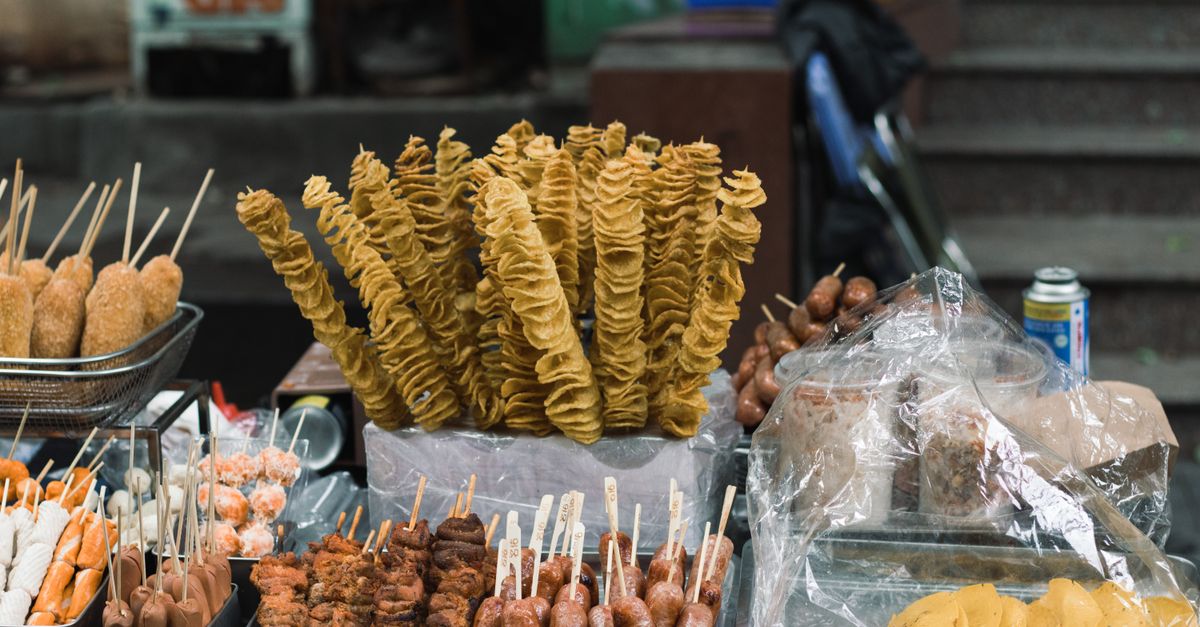
Graze your way through: grilled pork skewers (฿10 each), coconut pancakes (฿20 for a bag), Thai sausage (฿30), mango sticky rice (฿50), and fresh fruit smoothies (฿25). A full dinner of market grazing costs ฿100-150 and covers more ground than any single restaurant could.

Price Guide
| Dish | Street/Market | Restaurant |
|---|---|---|
| Khao Soi | ฿40-60 | ฿100-150 |
| Sai Ua (1 link) | ฿30-50 | ฿80-120 |
| Larb + Sticky Rice | ฿40-50 | ฿80-120 |
| Nam Prik Set | ฿50-80 | ฿120-180 |
| Rice + 2 Curries | ฿40-50 | — |
| Mango Sticky Rice | ฿40-50 | ฿80-100 |
Food Tips for Chiang Mai
Chiang Mai's food scene revolves around lunch. Many of the best local restaurants and stalls operate from 10 AM to 2 PM only. Dinner options shift to night markets and the Night Bazaar food courts. Plan your eating schedule accordingly.
Vegetarian food is easier to find here than anywhere else in Thailand. Many restaurants near temples serve "jay" food (vegan Buddhist cuisine) marked with a yellow flag. The Pun Pun vegetarian restaurant at Wat Suan Dok is excellent and incredibly cheap at ฿30-40 per dish.
Sweet Treats & Desserts
Northern Thailand's dessert tradition is less well-known than Bangkok's mango sticky rice tourist circuit, and that obscurity is largely the point. Chiang Mai's sweets are seasonal, neighbourhood-specific, and tied to temple ceremonies and market rhythms that give them a context no restaurant menu can replicate. Finding them requires wandering, but the search is its own reward.
The most important sweet in Chiang Mai is khao niao mamuang — mango sticky rice — but the northern version differs from the Bangkok original. Here, the sticky rice is cooked with coconut cream until it is dense and slightly salty, then served with Nam Dok Mai mangoes (thin-skinned, intensely sweet, in season March to June) and a drizzle of thickened coconut sauce. The best version in the city comes from a vendor near the east gate of Warorot Market who sets up at 8 AM and sells out by noon. A generous portion costs ฿50. Eating it during mango season, when the fruit is at peak sweetness, is one of Chiang Mai's defining food experiences.
Look for khanom krok — coconut rice pancakes cooked in a dimpled iron pan over a small charcoal fire — at morning markets throughout the Old City. The batter is split into two consistencies: the bottom half is a savory coconut rice base, the top half a sweetened coconut cream that sets into a wobbly custard. The two are married in the pan and served in pairs for ฿20-30 for eight pieces. The vendor near Tha Phae Gate on the Sunday Walking Street market is consistent, but the best khanom krok in the city is made by a woman who sets up at the junction of Ratchadamnoen and Phra Poklao Roads on Tuesday and Saturday mornings — she uses a higher ratio of coconut cream and charges ฿25 for ten.
For something uniquely northern, seek out khao lam — sticky rice stuffed into fresh bamboo tubes with black beans and coconut sugar, then roasted over charcoal until the bamboo chars and the interior steams into a fragrant, slightly smoky cylinder. The bamboo is split open at the table. It costs ฿20-30 per tube and is sold primarily at the Saturday and Sunday walking street markets and at vendors near Doi Suthep temple. The sweetness is restrained — this is a dessert calibrated for people who find Bangkok's sweets overwhelming.
Tab tim grob — water chestnuts coated in red tapioca flour, served in sweetened coconut milk over crushed ice — appears at market dessert stalls from late afternoon onward. The water chestnuts provide a satisfying crunch, the red coating adds color and a slight chewiness, and the coconut milk is cold enough to function as relief from the afternoon heat. At ฿25-35 for a large cup, it is the most popular dessert after sunset at the Night Bazaar's food court. Order it with extra ice.
On the restaurant end, Ginger & Kafe on the Nimman strip serves warm sticky toffee made with palm sugar alongside northern Thai dishes — a sophisticated Thai-Western hybrid that works better than it should at ฿120. For a sit-down traditional dessert experience, Huen Muan Jai on Wualai Road (the silver street) serves a northern dessert set with five small preparations for ฿85, including a warm pandan custard and a cold black sesame soup that both require a second order.


