Singapore carries the heaviest "expensive" reputation in Southeast Asia, and unlike most travel myths, this one has a kernel of truth — if you're drinking at Clarke Quay rooftop bars, dining at Marina Bay Sands, and staying in Orchard Road hotels, Singapore will drain your wallet faster than almost any city in the world. A cocktail at a Clarke Quay club costs S$25-30.
A night at the iconic Marina Bay Sands runs S$600+. Singapore consistently ranks among the world's most expensive cities in cost-of-living surveys that measure executive lifestyles and luxury goods.
But here's what those surveys miss entirely: Singapore has a parallel economy built for its 5.5 million residents, and that economy is astonishingly affordable. The same city that charges S$28 for a craft cocktail also serves a complete, delicious, freshly cooked chicken rice meal for S$3.50 at a hawker center two blocks away.
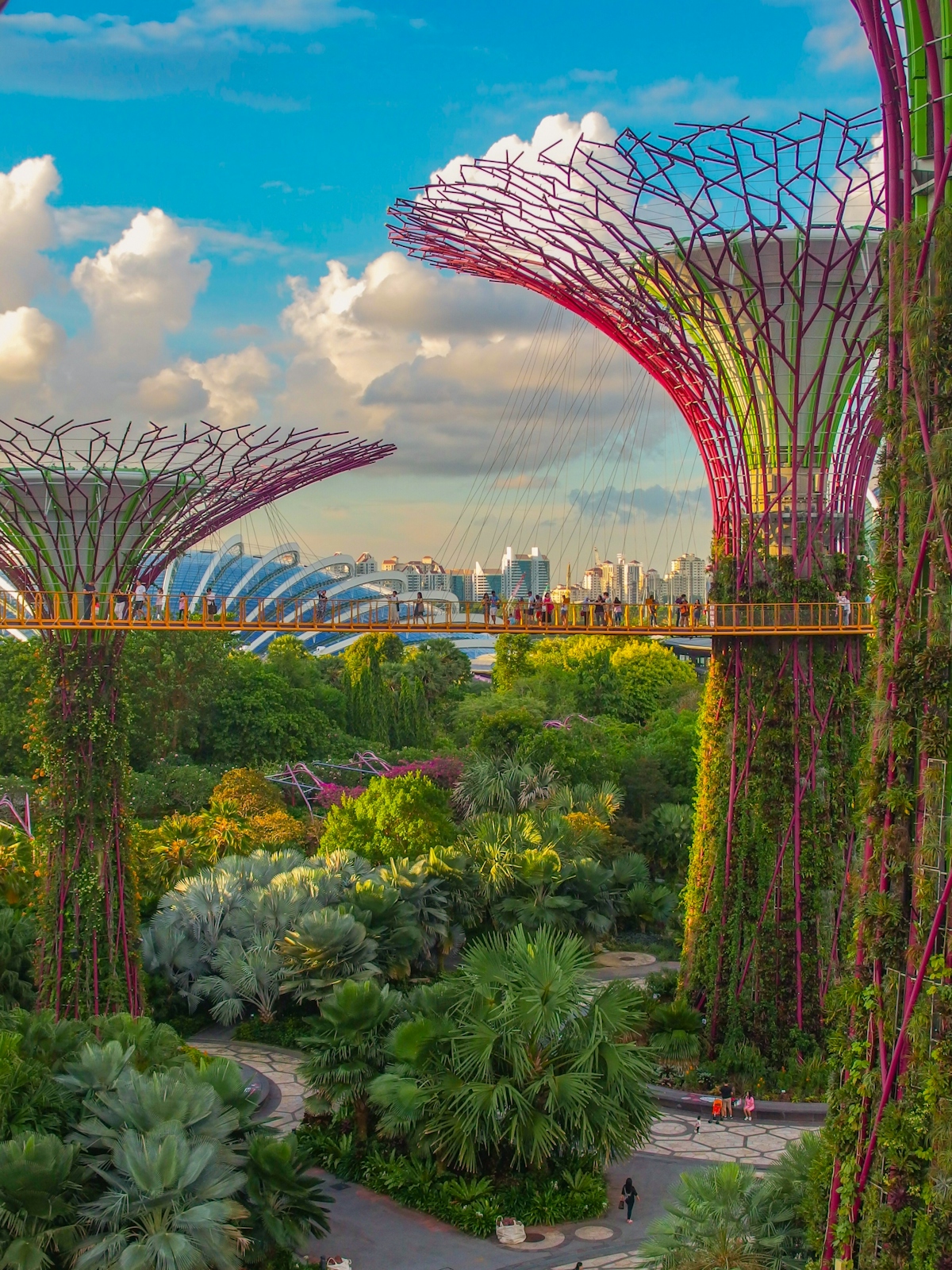
The country invested billions in a world-class public transit system where rides cost S$1-3. Gardens by the Bay's outdoor areas — one of the most spectacular public gardens on earth — are completely free.
Singapore's "expensive" reputation applies to its luxury layer; the layer beneath it is Southeast Asian in pricing and world-class in quality.
I've tested Singapore's budget floor thoroughly, and the numbers are encouraging: a solo traveler can experience the city well on S$60-100 per day. A backpacker willing to share a dorm and eat exclusively at hawker centers can push that to S$40-60.
This guide maps the affordable Singapore in detail — the hawker stalls, the budget neighborhoods, the free attractions, and the strategies that let you experience one of the world's most impressive cities without the price tag it's famous for.

Budget Accommodation: Hostels, Budget Hotels, and Where to Stay
Accommodation is the largest budget line item in Singapore, but the range of options is wider than most visitors expect. The key is accepting that you won't stay on Orchard Road or at Marina Bay — and recognizing that Singapore's efficient MRT system makes location far less important than in spread-out cities.
Hostels (S$20-35 per night)
Singapore's hostel market is competitive, well-maintained, and concentrated in areas that are interesting to explore in their own right. Beary Best Hostel in Chinatown offers clean dorms from S$22 with lockers, curtain-enclosed bunks, and a location directly above some of the best hawker food in the city.
InnCrowd Backpackers in Little India provides dorms from S$20 with a communal kitchen and rooftop terrace — one of the cheapest beds in central Singapore. Dream Lodge near Bugis has capsule-style pods from S$25 with privacy screens, personal lights, and power outlets.
Wink Hostel in Chinatown offers premium capsule pods with hotel-quality bedding from S$30 — these are a step above standard dorms and worth the extra S$5-10 for light sleepers. COO Bistro & Boutique Hotel (formerly a hostel) in Tiong Bahru provides dorms from S$28 in one of Singapore's most charming heritage neighborhoods.
All of these hostels include WiFi, air conditioning, and clean shared bathrooms — non-negotiable standards in Singapore's climate.
Budget Hotels — Geylang and Little India (S$60-90 per night)
Geylang is Singapore's open secret for budget accommodation. Yes, certain streets (the even-numbered lorongs) are the city's red-light district, but Geylang is primarily a residential and food neighborhood — and it has some of the best eating in all of Singapore.
Budget hotels here charge S$55-80 per night for clean, air-conditioned rooms with private bathrooms. Hotel 81 (multiple Geylang locations) is the reliable chain option from S$60, offering compact, functional rooms that are clean and well-maintained.
Fragrance Hotel (multiple locations) runs S$65-85 for slightly more polished rooms. Value Hotel Thomson (from S$60) is a solid budget choice. The Geylang area is connected by multiple bus routes and is a 10-minute ride from the city center — and the late-night food scene alone (durian stalls, frog porridge, claypot rice) makes it a worthy base.
Little India is the other prime budget hotel zone, centered around Serangoon Road and the Farrer Park MRT area. Hotel Venue (from S$65), The Inn at Temple Street (from S$70 in Chinatown), and Ibis Budget Singapore Clarke Quay (from S$80) offer reliable rooms in neighborhoods with their own distinct character and excellent food.
Little India itself is one of Singapore's most vibrant neighborhoods — the colors, smells, and energy of Tekka Centre, the flower garland sellers, the South Indian restaurants, and the Sunday bustle of migrant workers enjoying their day off create an atmosphere that's worth experiencing even if you're not staying there.
Alternative Budget Strategies
For groups of 2-4, serviced apartments in areas like Lavender, Kallang, or Toa Payoh can be S$80-120 per night, making them S$25-40 per person with kitchen facilities that eliminate restaurant costs for breakfast and some meals. Singapore's Airbnb regulations have tightened (short-term rentals under 3 months are technically illegal in private apartments), so stick to licensed serviced apartments and hotels to avoid potential issues.
Eating in Singapore: Hawker Meals for S$3-6
Singapore's hawker centers are the single strongest argument for budget travel in the city. These are open-air or covered food courts with dozens of independent stalls, each specializing in one or two dishes that the owner has often been perfecting for decades.
Hawker food isn't "cheap food" — it's the heart of Singaporean culinary culture, recognized by UNESCO as an Intangible Cultural Heritage. Two Singaporean hawker stalls have earned Michelin stars. The food at a good hawker center is better than most restaurants in most cities, and it costs S$3-6 per meal.
Essential Hawker Dishes
Chicken rice (S$3.50-5): Singapore's national dish — poached or roasted chicken served over rice cooked in chicken fat and pandan leaf, with chili sauce, dark soy, and ginger paste on the side. Simple, perfect, and available at virtually every hawker center.
Tian Tian at Maxwell Food Centre is the most famous stall, but nearly every hawker center has a quality chicken rice vendor. Hainanese delicatessen at Whampoa Hawker Centre serves an excellent version with thick, flavorful broth on the side.
Char kway teow (S$3-5): Flat rice noodles stir-fried over intense heat with soy sauce, chili, Chinese sausage, cockles, bean sprouts, and egg. The smoky wok flavor (wok hei) is the defining characteristic — a good plate has a charred, complex flavor that no Western cooking technique replicates.
Hill Street Char Kway Teow at Bedok South is legendary, and Outram Park Fried Kway Teow at Hong Lim Food Centre is excellent.
Laksa (S$3-5): A rich, spicy coconut curry broth with thick rice noodles (or thin vermicelli), shrimp, fish cake, cockles, and a swirl of sambal. 328 Katong Laksa in the Katong neighborhood serves a version so thick you eat it with a spoon — a cult classic.
Sungei Road Laksa at Jalan Berseh Food Centre is another institution.
Roti prata (S$1.50-3): Flaky, layered Indian flatbread served with fish or mutton curry for dipping. Order plain (S$1.50), egg (S$2), or cheese (S$2.50). Available at Indian Muslim stalls throughout the city.
Mr and Mrs Mohgan's Super Crispy Roti Prata at Killiney Road is widely considered the best — the prata is shatteringly crisp on the outside and soft within.
Nasi lemak (S$3-4): Coconut rice with sambal, fried chicken wing, egg, anchovies, and peanuts — a complete meal for S$3-4 that's simultaneously rich, spicy, savory, and satisfying. Available at Malay stalls in virtually every hawker center.
Wonton mee (S$3-5): Thin egg noodles tossed in dark sauce with char siu (barbecue pork), dumplings, and sometimes leafy greens, served with a bowl of soup. Kok Kee Wanton Noodle at Lavender Food Square and Eng's Char Siew Wantan Mee at Dunman Road are top picks.
Best Hawker Centers
Maxwell Food Centre in Chinatown is the most tourist-friendly, with famous stalls for chicken rice, char kway teow, and Fuzhou oyster cake. Lau Pa Sat (Telok Ayer) is a stunning Victorian cast-iron structure near the business district — the satay stalls on the adjacent Boon Tat Street fire up every evening.
Old Airport Road Food Centre is one of the largest, with over 150 stalls and a more local crowd. Chinatown Complex Food Centre is the biggest hawker center in Singapore with over 260 stalls — overwhelming but rewarding.
Tiong Bahru Market is a beautiful Art Deco market building with excellent chwee kueh (steamed rice cakes) and bao. Tekka Centre in Little India has the best Indian hawker food — biryani, roti prata, and thosai at rock-bottom prices.
Kopitiam Coffee (S$1-1.50)
Kopitiams (traditional coffee shops) serve Singapore's distinctive kopi — a strong, dark brew using beans roasted with butter and sugar, pulled through a cotton sock filter, and served with sweetened condensed milk. A cup of kopi costs S$1.20-1.80.
Order "kopi-o" for black coffee with sugar, "kopi-c" for coffee with evaporated milk, or "kopi-o-kosong" for black coffee without sugar. The kopitiam is also where you'll find toast sets — kaya toast (coconut jam with butter on charcoal-grilled bread) with soft-boiled eggs and kopi for S$4-5.
Ya Kun Kaya Toast is the chain version, but independent kopitiams throughout the city serve the same thing, often better and cheaper.
7-Eleven and Convenience Store Meals
When hawker centers are closed or you need a quick grab, Singapore's 7-Eleven stores stock rice meals, sandwiches, and onigiri from S$2-5. The quality is decent — not hawker-level, but functional for a budget breakfast or late-night snack.
FairPrice Finest supermarkets also have prepared food sections with sushi, rice bowls, and salads from S$3-6.
Breakfast: kaya toast set at a kopitiam (S$3-4).
Lunch: chicken rice at a hawker center (S$3.50-4.50).
Dinner: char kway teow or laksa at a hawker center (S$3.50-5). Add a kopi (S$1.20) and you're at S$11-15 for three meals and a coffee. This isn't deprivation eating — this is eating the food that Singaporeans are proudest of, at the places where the food is best.
Free Things to Do in Singapore
Singapore has invested heavily in public spaces, parks, and free entertainment, making it one of the best cities in the world for free activities. The catch is knowing which parts of paid attractions are actually free — many of Singapore's headline attractions have substantial free components that most visitors don't realize they can access without a ticket.
Gardens by the Bay — Outdoor Areas (Free)
The ticketed attractions at Gardens by the Bay — the Flower Dome and Cloud Forest conservatories — cost S$32 per adult. But the outdoor gardens, which cover 101 hectares of waterfront land, are entirely free and arguably more impressive.
The Supertree Grove is free to walk among at ground level, and the trees are illuminated during the free Garden Rhapsody light and sound show every evening at 7:45 PM and 8:45 PM — a 15-minute spectacle of lights synchronized to music that rivals any paid show in the city. The Heritage Gardens, Sun Pavilion (with a cactus garden), and the Dragonfly Lake pathway are all free to explore.
You could easily spend 2-3 hours in the free outdoor areas without entering the paid conservatories and still have a world-class garden experience.
Singapore Botanic Gardens (Free, UNESCO World Heritage Site)
Singapore's oldest park, established in 1859 and designated a UNESCO World Heritage Site in 2015, is entirely free to enter (only the National Orchid Garden section costs S$5). The 82-hectare grounds include a rainforest fragment, a swan lake, a ginger garden, an evolution garden tracing plant development over millions of years, and beautifully maintained lawns where families picnic on weekends.
The Jacob Ballas Children's Garden is free and excellent for families. Early morning visits (before 8 AM) let you see locals practicing tai chi among century-old trees — one of Singapore's most peaceful experiences.

Henderson Waves and the Southern Ridges Walk
The Southern Ridges is a 10-kilometer walking trail connecting Mount Faber Park, Telok Blangah Hill Park, HortPark, Kent Ridge Park, and Labrador Nature Reserve through elevated walkways and forest paths. The highlight is Henderson Waves — a stunning undulating pedestrian bridge that rises 36 meters above the road, creating wave-shaped alcoves that frame views of the harbor and city skyline.
The entire trail is free, well-maintained, and rarely crowded. Walk the full route in 3-4 hours or just do the Henderson Waves section (accessible from Telok Blangah MRT) in 30-40 minutes.
This is one of the most impressive pieces of public infrastructure in any city, and almost no tourists know about it.
Merlion Park and Marina Bay Waterfront
The Merlion statue (Singapore's mascot — half lion, half fish) sits in a free waterfront park with spectacular views of Marina Bay Sands, the ArtScience Museum, and the financial district skyline. The entire Marina Bay waterfront promenade is free to walk — a circuit from the Merlion through the Esplanade, past the Helix Bridge (a striking DNA-shaped pedestrian bridge), and along the bayfront takes about 45-60 minutes and is especially beautiful after dark when the buildings are illuminated.
The free Spectra light and water show at Marina Bay Sands plays nightly at 8:00 PM and 9:00 PM (with a 10:00 PM show on Fridays and Saturdays) — a 15-minute display of fountains, lasers, and projections viewed from the Event Plaza.
Temples, Mosques, and Churches
Singapore's religious diversity means you can visit Hindu temples, Buddhist temples, mosques, and churches within a few blocks of each other — all free. Sri Mariamman Temple in Chinatown is the oldest Hindu temple in Singapore, with a spectacular gopuram (entrance tower) covered in colorful Hindu deities.
Buddha Tooth Relic Temple in Chinatown is a magnificent five-story temple with a museum, rooftop garden, and the relic chamber — all free. Sultan Mosque in Kampong Glam has a golden dome visible for blocks and welcomes visitors outside prayer times.
Thian Hock Keng Temple, the oldest Hokkien temple in Singapore, has exquisitely detailed woodwork and ceramic friezes. Armenian Church in the Civic District is the oldest church in Singapore. Visiting all of these takes a full morning and provides a profound understanding of Singapore's multicultural identity.
Neighbourhood Walking: Chinatown, Little India, Kampong Glam
Singapore's ethnic neighborhoods are free open-air museums of architecture, food culture, and living heritage. Chinatown spreads across several streets of restored shophouses painted in bright pastels — walk down Pagoda Street, Temple Street, and Smith Street for traditional shops, medicinal halls, and the Smith Street food stalls.
Little India explodes with color and energy — flower garland shops, gold jewelry stores, spice merchants, and the stunning Tan Teng Niah house (a multicolored Chinese villa that's one of Singapore's most photographed buildings). Kampong Glam is the Malay-Arab quarter with the Sultan Mosque, Haji Lane (a narrow street of boutiques, street art, and cafes), and Arab Street with its textile and perfume shops.
All three neighborhoods are within MRT reach of each other and form a perfect free day of exploration.
Light Shows
Singapore offers multiple free nightly light shows. The Garden Rhapsody at Supertree Grove (7:45 PM and 8:45 PM), the Spectra show at Marina Bay Sands (8:00 PM and 9:00 PM), and the Crane Dance at Resorts World Sentosa (8:00 PM, selected nights) are all free.
Timing your evening walk around Marina Bay to catch one or two shows turns a free activity into a genuinely memorable experience.

Transport: S$2-3 MRT Rides and Tourist Passes
MRT (Mass Rapid Transit)
Singapore's MRT is clean, efficient, air-conditioned, and cheap. Single rides cost S$1-3 depending on distance, with most journeys within the city falling in the S$1.50-2.50 range. Trains run from approximately 5:30 AM to midnight, with frequencies of 2-5 minutes during peak hours.
The network covers virtually every area a tourist would visit — Chinatown, Little India, Orchard Road, Marina Bay, Botanic Gardens, Sentosa approach, and the airport all have MRT stations. Use a stored-value EZ-Link card (S$5 deposit + S$7 stored value = S$12) or a contactless bank card (Visa/Mastercard) for seamless tap-in/tap-out payments.
Singapore Tourist Pass (S$22 for 3 days)
The Singapore Tourist Pass offers unlimited rides on MRT, buses, and LRT for S$22 (1 day: S$10, 2 days: S$16, 3 days: S$22), plus a S$10 refundable deposit. The 3-day pass is worth it if you're taking 8+ rides per day — roughly S$2.75 per ride makes the break-even point about 8 rides across 3 days.
If you're combining MRT rides with a lot of walking, the individual-ride approach on an EZ-Link card might be cheaper. Calculate based on your itinerary: the pass is best for visitors who plan to use transport intensively across multiple neighborhoods daily.

Buses
Singapore's bus network is extensive, clean, and air-conditioned, with fares from S$1-2.50. Buses are particularly useful for reaching areas not directly on MRT lines and for scenic routes — the number 36 bus from Orchard Road to Changi Village passes through the city's east side, and buses along the East Coast are the only way to reach East Coast Park without a taxi.
Use the Google Maps transit function or the Citymapper app for bus route planning — Singapore's data integration is excellent.
Walking
Singapore is more walkable than its equatorial climate suggests, especially early morning and after sunset. The Civic District, Chinatown, Little India, and Kampong Glam are all connected by covered walkways (five-foot ways) that provide shade and rain protection.
The Marina Bay waterfront loop, the Singapore River walk from Clarke Quay to Marina Bay, and the Botanic Gardens are all excellent walking routes. Carry water (refill at drinking fountains in MRT stations and malls) and time outdoor walks for before 10 AM or after 4 PM to avoid the worst heat.
More Money-Saving Strategies
1. Eat Hawker, Not Restaurant
This is the golden rule of budget Singapore. A chicken rice at a hawker center costs S$3.50. The same dish at a restaurant costs S$12-18.
The hawker version is almost always better because the stall specializes in that one dish. Apply this to every meal and you'll save S$20-40 per day.
2. Free Walking Tours
Several organizations run free (tip-based) walking tours of Chinatown, Little India, Kampong Glam, and the Civic District. Free Walking Tours Singapore and Indie Singapore both offer daily departures with knowledgeable local guides. A S$5-10 tip gets you a 2-3 hour guided experience that's better than most paid tours.
3. Sentosa on the Cheap
Sentosa Island is home to Universal Studios (S$81) and other expensive attractions, but entry to the island itself is free via the Sentosa Boardwalk (a pleasant 10-minute walk from VivoCity). Once on the island, Palawan Beach, Siloso Beach, and Tanjong Beach are all free.
The island's free tram connects all areas. Skip the paid attractions and treat Sentosa as a free beach day.

4. Supermarket Savings
FairPrice and Sheng Siong supermarkets sell prepared meals, fruit, snacks, and drinks at prices well below convenience stores. A prepared bento from FairPrice costs S$3-5. Fresh tropical fruit — mangosteen, rambutan, dragonfruit — costs S$2-4 per portion. Stock up for snacks and breakfast items to supplement hawker meals.
5. Free Cultural Events
The Esplanade — Theatres on the Bay hosts free performances almost daily — concerts, dance shows, and cultural performances in its outdoor theater and concourse areas. Check their website for the "Free Performances" schedule.
The National Gallery Singapore has free public areas and a stunning rooftop with city views. Many festivals — Thaipusam, Hari Raya Puasa light-up, Chinese New Year celebrations, and Mid-Autumn Festival lantern displays — feature free public events and performances in the ethnic neighbourhoods.
Daily Budget Breakdown
| Category | Backpacker (S$/day) | Budget Traveler (S$/day) |
|---|---|---|
| Accommodation | S$20-30 (hostel dorm) | S$60-85 (budget hotel) |
| Breakfast | S$3-4 (kaya toast set/kopitiam) | S$4-6 (kopitiam/café) |
| Lunch | S$3-5 (hawker center) | S$5-8 (hawker/food court) |
| Dinner | S$4-6 (hawker center) | S$6-12 (hawker/casual restaurant) |
| Snacks & Drinks | S$2-4 (kopi, fruit, 7-Eleven) | S$4-8 (drinks, snacks, dessert) |
| Transport | S$3-6 (MRT + walking) | S$5-10 (MRT + occasional bus) |
| Activities | S$0-5 (free attractions, walking tours) | S$5-20 (one paid attraction) |
| Daily Total | S$35-60 | S$89-149 |
At current exchange rates (approximately S$1.35 to $1 USD), the backpacker budget translates to $26-44 USD per day, and the budget traveler to $66-110 USD. For a city-state that looks and feels like it was designed by a team of architects with an unlimited budget — the immaculate public spaces, the futuristic architecture, the tropical gardens threaded between glass towers — these are remarkably achievable numbers.
Singapore's genius, for the budget traveler, is that the city's most authentically Singaporean experiences are also its cheapest. The hawker center meal that costs S$4 isn't a budget substitute for "real" Singapore dining — it is real Singapore dining, the culinary tradition that defines the nation's identity. The free walk through Little India on a Sunday evening, with the energy of tens of thousands of people enjoying their day off, tells you more about Singapore's multicultural reality than any museum.
The MRT ride to a neighborhood you hadn't planned to visit, ending in an unexpected hawker center discovery, is the kind of travel experience that no amount of money can buy deliberately — it happens when you're exploring on foot, eating where the locals eat, and letting the city reveal its layers on its own terms.
Singapore isn't cheap — but it's far more affordable than its reputation suggests, and the budget version of the city is, in many ways, the most interesting version. The expensive Singapore of rooftop bars and infinity pools is impressive, but it's the Singapore of hawker uncles perfecting their craft over decades, of free light shows illuminating robotic trees, and of temples and mosques standing shoulder to shoulder in perfect multicultural harmony that makes the city genuinely extraordinary.
That Singapore costs very little to experience. It just requires the willingness to look past the luxury marketing and into the streets where the city actually lives.
Read our Complete Singapore Food Guide See our 3-Day Singapore Itinerary