
Seoul defies the assumption that East Asian capitals are expensive. South Korea's megacity of 10 million people — a place of high-speed internet, subway systems that run like clockwork, K-pop culture, Michelin-starred restaurants, and technology that feels five years ahead of anywhere else — operates on a budget travel scale that consistently surprises first-time visitors.
For ₩50,000-80,000 per day ($37-60 USD), you can sleep in a goshiwon or jjimjilbang, eat three meals of Korean food that ranges from good to extraordinary, ride one of the world's best subway systems, visit ancient palaces for free on Tuesdays, hike mountains within city limits, and immerse yourself in neighborhoods that span from Joseon-dynasty hanok villages to neon-lit K-pop shopping districts. Seoul's budget infrastructure isn't a compromise — it's a reflection of a culture that values efficiency, public space, and affordable access to quality food in ways that make budget travel here feel less like scrimping and more like traveling smart.
The key to budget Seoul is understanding the systems: the T-money transit card, the goshiwon housing network, the kimbap restaurants, the free palace days, and the hiking culture that turns the mountains surrounding the city into free weekend destinations. Once you understand how Seoul's everyday affordability works, keeping spending at ₩50,000-80,000 per day feels natural rather than restrictive.
This guide covers every element — accommodation, food, transport, free activities, and money-saving strategies — with specific prices, locations, and the practical details you need to execute a budget trip without missing anything important.

Budget Accommodation: Goshiwon, Jjimjilbang, and Hostels
Seoul's accommodation landscape includes options that don't exist in most other countries — particularly the goshiwon and jjimjilbang, which are uniquely Korean solutions to affordable urban living and sleeping that budget travelers can leverage for significant savings.
Goshiwon: ₩15,000-25,000 per Night
A goshiwon is a tiny private room — typically 3-5 square meters — originally designed for students preparing for exams (goshi means exam) who needed cheap, quiet accommodation near their study locations. The rooms are small by any standard: a single bed, a small desk, sometimes a window, shared bathrooms and kitchens, and often free rice, kimchi, and ramen in the communal kitchen.
What goshiwon lack in space they make up in price and privacy — for ₩15,000-25,000 per night (less for weekly or monthly stays), you get a lockable private room in central Seoul, which is difficult to match at any hostel. The experience is not for everyone — claustrophobic travelers and those who need space will struggle.
But for solo budget travelers who treat their room as a place to sleep and store bags, a goshiwon delivers extraordinary value.
Goshiwon are found near universities and in busy commercial areas. The neighborhoods around Hongdae (Hongik University area), Sinchon, Hyehwa, and Noryangjin have high concentrations. Walk-in booking is standard — look for signs reading 고시원 (goshiwon) or 고시텔 (gositel, a slightly upgraded version with private bathrooms).
Check the room before committing: test the air conditioning/heating, look at the mattress condition, and check the shared facilities. Quality varies significantly, and the ₩5,000 difference between a ₩15,000 and ₩20,000 room can mean a meaningful upgrade.
Jjimjilbang: ₩10,000-15,000 per Night
A jjimjilbang is a Korean bathhouse and sauna that also functions as an overnight sleeping venue — a uniquely Korean institution that combines hot baths, saunas at various temperatures, communal sleeping rooms, snack bars, and entertainment facilities under one roof. For ₩10,000-15,000 (the standard entry fee), you get access to the bathing facilities (gender-separated), saunas, a communal sleeping room with floor mats and blankets, and often a snack area selling eggs, drinks, and Korean snacks.
Some jjimjilbang have entertainment rooms with TV, gaming areas, and even outdoor pools.
The experience is as cultural as it is practical. Korean bath culture involves thorough scrubbing, soaking in pools at multiple temperatures, and then relaxing in various saunas (charcoal, jade, salt rooms) before retiring to the sleeping hall in the provided pajamas (given at entry).
Dragon Hill Spa near Yongsan station is Seoul's most famous jjimjilbang — a massive complex with outdoor pools, rooftop gardens, cinema room, and multiple floors of bathing and sauna facilities (₩12,000-15,000). Siloam Sauna near Seoul Station is popular with budget travelers for its central location and solid facilities (₩10,000-12,000).
Sleeping in a jjimjilbang is communal (large rooms with mats, separated by gender), so bring earplugs and an eye mask. It's not luxury, but it's comfortable, warm, clean, and authentically Korean — and it saves you a night's accommodation cost while giving you a cultural experience that most travelers list among their Seoul highlights.
Hostels: ₩20,000-35,000
Seoul's hostel scene offers excellent quality at East Asian prices. Dorm beds in central locations run ₩20,000-35,000, with properties in Hongdae, Myeongdong, and Insadong offering the best combination of price and location.
Zzzip Guesthouse Hongdae (from ₩22,000) is clean, social, and steps from the Hongdae nightlife strip. Kimchee Guesthouse Myeongdong (from ₩25,000) puts you in the shopping district with easy Metro access. Seoul Dalbit DDP (from ₩20,000) near Dongdaemun Design Plaza offers modern facilities at competitive prices.
Most hostels include breakfast (usually toast, eggs, coffee, and sometimes rice and kimchi), WiFi, lockers, and laundry facilities.
Eating in Seoul: ₩3,000-10,000 per Meal
Korean cuisine is one of the world's great food traditions, and Seoul delivers it at prices that make eating out cheaper than cooking for most budget travelers. The meal structure — a main dish accompanied by multiple banchan (side dishes) that are unlimited and free — means that even the cheapest restaurant meal comes with variety and volume.
A ₩5,000 plate of kimchi jjigae (kimchi stew) arrives with rice, kimchi, pickled radish, seasoned vegetables, and sometimes fish cake or other banchan — all included in the price, all refillable.
Budget Korean Meals: ₩3,000-8,000
Kimbap (rice rolled with vegetables, egg, and sometimes meat in seaweed) is Korea's most portable, affordable meal — ₩2,500-4,000 per roll from kimbap restaurants (kimbap cheonguk/kimbap nara chains), which are found on virtually every commercial block in Seoul. A full meal of kimbap plus a bowl of ramyeon (Korean ramen, ₩3,000-4,500) costs under ₩8,000 and fills you for hours.
Kimchi jjigae (kimchi stew, ₩5,000-7,000) is a staple — spicy, warming, served bubbling in a stone pot with rice and banchan. Doenjang jjigae (fermented soybean stew, ₩5,000-7,000) is the milder equivalent.
Bibimbap (mixed rice with vegetables, egg, and gochujang chili paste, ₩5,000-8,000) is available at every Korean restaurant and is one of the most satisfying budget meals in the world — nutritious, colorful, and infinitely customizable.
Jajangmyeon (Chinese-Korean black bean noodles, ₩5,000-7,000) is an affordable comfort food staple served at Chinese-Korean restaurants throughout the city. Tteokbokki (spicy rice cakes, ₩3,000-5,000) from street stalls and snack shops delivers chewy, fiery satisfaction for pocket change.
Sundae (Korean blood sausage, ₩3,000-4,000) is often sold alongside tteokbokki and is surprisingly mild and savory. Mandoo (Korean dumplings, ₩3,000-5,000) come steamed, fried, or in soup (mandoo guk) and are a perfect snack or light meal.
Street Food: ₩1,000-5,000
Seoul's street food stalls (pojangmacha) are concentrated in areas like Myeongdong, Hongdae, Dongdaemun, and Gwangjang Market. Hotteok (sweet filled pancake, ₩1,500-2,000) — crispy outside, gooey with brown sugar and nuts inside — is the definitive Korean winter street snack.
Odeng (fish cake skewers in hot broth, ₩1,000-2,000) are sold from carts, and you drink the leftover broth for free. Eomuk and twigim (Korean tempura, ₩1,000-3,000 per piece) are deep-fried snacks available at most street food areas.
Gwangjang Market near Jongno is Seoul's most famous traditional market, with stalls serving bindaetteok (mung bean pancake, ₩4,000-5,000), mayak kimbap (addictive mini rolls, ₩3,000), and yukhoe (Korean beef tartare, ₩10,000-15,000).


Convenience Store Meals: ₩2,000-5,000
Korean convenience stores (CU, GS25, 7-Eleven) are budget travelers' secret weapon. They sell triangle kimbap (₩1,000-1,500), cup ramyeon with hot water dispensers (₩1,500-2,500), ready-made bento boxes (dosirak, ₩3,000-5,000), and a rotating selection of hot foods.
Many have seating areas where you can eat comfortably. A convenience store breakfast of triangle kimbap, a banana, and a coffee costs under ₩4,000.
Free Things to Do in Seoul
Free Palaces on Tuesdays
Seoul's five grand palaces — Gyeongbokgung, Changdeokgung, Changgyeonggung, Deoksugung, and Gyeonghuigung — are the architectural heart of the Joseon dynasty that ruled Korea for over 500 years. Regular admission is ₩1,000-3,000 per palace (already cheap), but on Tuesdays, entry to all palaces is free.
Additionally, wearing a hanbok (traditional Korean clothing) grants free entry to the palaces on any day — hanbok rental shops near Gyeongbokgung charge ₩10,000-20,000 for a 2-4 hour rental, which pays for itself if you visit 2-3 palaces and is itself a cultural experience that makes for memorable photos. The Changing of the Guard ceremony at Gyeongbokgung (10 AM and 2 PM, except Tuesdays) is free and colorful — Joseon-era soldiers in traditional dress perform a formal guard-changing ritual at the palace gates.
Bukchon Hanok Village
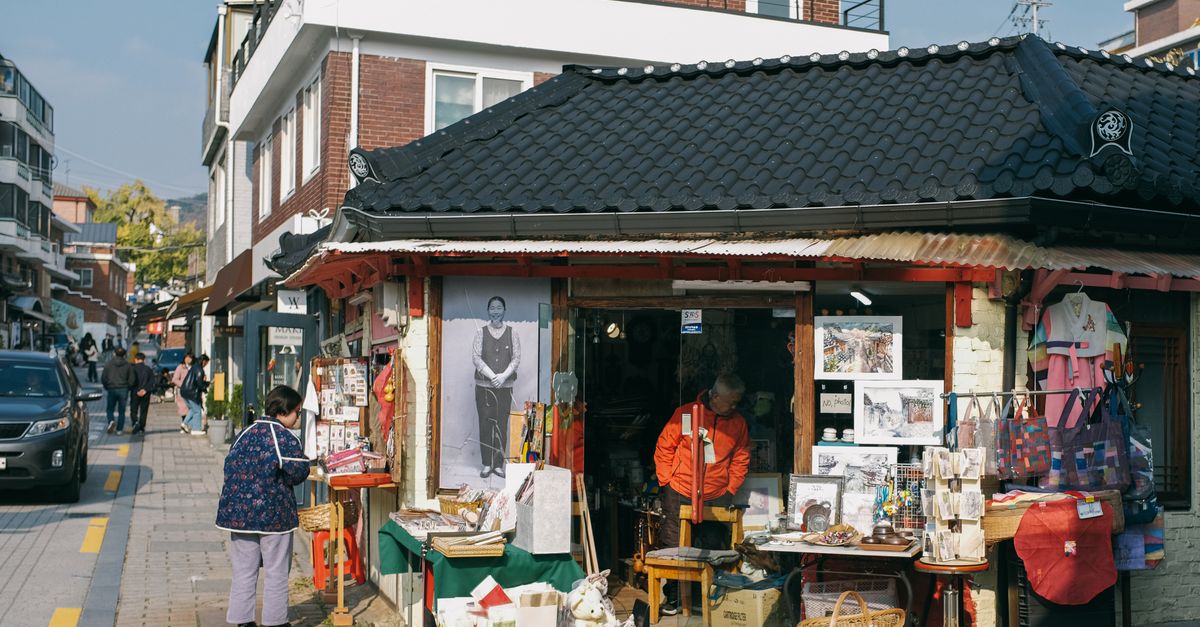
Bukchon is a neighborhood of traditional Korean hanok houses (wooden and stone structures with distinctive curved tile roofs) nestled between Gyeongbokgung and Changdeokgung palaces. The narrow lanes and alleys contain over 900 hanok, many of which are private residences, tea houses, galleries, and craft workshops.
Walking through Bukchon is free and atmospheric — the streets are hilly, the views of the palace and city skyline through gaps in the traditional rooflines are extraordinary, and the contrast between the quiet lanes and the modern city surrounding them is quintessential Seoul. Visit early morning (before 10 AM) to avoid crowds and be respectful of residents — this is a living neighborhood, not a museum.
Insadong Art Walk
Insadong is Seoul's traditional art and antique district — a long street and network of side alleys (insadong-gil) lined with galleries, tea houses, craft shops, and street vendors selling traditional Korean art, calligraphy supplies, pottery, and souvenirs. Walking through Insadong is free, and many galleries have free exhibitions.
Ssamziegil is a spiraling open-air shopping complex with an ascending walkway that winds past small independent shops and workshops — architecturally interesting and free to explore. The tea houses of Insadong serve traditional Korean teas (ginseng, citron, jujube) in ceramic cups in hanok settings — ₩5,000-8,000 per cup, but the atmosphere is worth the price for a rest stop.
Han River Parks
The Han River runs through the center of Seoul, and its banks have been developed into a continuous network of parks, cycling paths, and recreation areas that stretch for over 40 km. Yeouido Hangang Park is the most popular section — a wide green space where Seoulites picnic, jog, cycle, rollerblade, and order chicken and beer (chimaek) from delivery services that bring food directly to the riverbank.
Banpo Hangang Park features the Banpo Bridge Rainbow Fountain (the world's longest bridge fountain, performing April-October at set times, free to watch). The parks are free, open 24 hours, and equipped with convenience stores and rental stations for bikes (₩3,000-5,000 per hour).
Spending a summer evening on the Han River with a group of friends, delivery chicken, and cold beer is the quintessential Seoul leisure experience.
N Seoul Tower Hike
N Seoul Tower (Namsan Tower) sits atop Namsan Mountain in the center of Seoul, and while the observation deck charges ₩16,000, the hike up the mountain is free and rewards you with panoramic views of the entire city. Multiple trails wind up Namsan from various starting points — the route from Myeongdong via the Namsan Cable Car station stairs takes 30-40 minutes, passing through forested paths with periodic viewpoints.
At the top, the plaza around the tower is free to access, and the views from the base of the tower are nearly as good as from the paid observation deck. It's one of Seoul's most popular after-work activities — join the stream of Seoulites hiking up for sunset.

Ihwa Mural Village
Ihwa Mural Village (Ihwa-dong) is a hillside neighborhood near Hyehwa station where artists have transformed the walls, stairs, and buildings into a massive open-air gallery. Murals range from whimsical (painted fish swimming up a staircase) to political (commentary on gentrification) to purely decorative (floral patterns covering entire building facades).
The village sits on a steep hillside, and the views of Seoul's northern skyline from the upper paths are excellent. Walking through is free — allow 1-2 hours to explore the lanes, photograph the murals, and discover hidden art installations in unexpected corners.
Transport: T-money Card and ₩1,400 Subway Rides
T-money Card
The T-money card is Seoul's rechargeable transit card, usable on the subway, buses, and even taxis. Buy one at any convenience store for ₩2,500 and recharge as needed. Subway rides cost ₩1,400 (up to 10 km) with the T-money card, with small increases for longer distances.
Bus rides are ₩1,300-1,400. Free transfers between subway and bus within 30 minutes make the system even more economical. The T-money card also works in other Korean cities (Busan, Daegu, etc.), making it a single-purchase solution for the entire trip.
Seoul's Subway
Seoul's subway is one of the best in the world — clean, punctual, air-conditioned, with platform screen doors, free WiFi, and signage in Korean, English, Chinese, and Japanese. With 23 lines and over 700 stations, it reaches every corner of the metropolitan area.
Trains run from approximately 5:30 AM to midnight, with frequencies of 2-5 minutes during peak hours. Key tourist stations: Gyeongbokgung (Line 3, palaces), Anguk (Line 3, Bukchon/Insadong), Myeongdong (Line 4, shopping), Hongik University (Line 2, nightlife), Jongno 3-ga (Lines 1/3/5, Gwangjang Market), and Yeouido (Line 5/9, Han River park).
Daily Budget Breakdown
| Category | Shoestring (₩50,000/day) | Budget (₩65,000/day) | Comfortable (₩80,000/day) |
|---|---|---|---|
| Accommodation | ₩12,000 (jjimjilbang) | ₩20,000 (goshiwon) | ₩28,000 (hostel dorm) |
| Breakfast | ₩3,000 (convenience store) | ₩4,000 (kimbap roll) | ₩0 (hostel included) |
| Lunch | ₩5,000 (kimbap + ramyeon) | ₩6,000 (kimchi jjigae) | ₩8,000 (bibimbap) |
| Dinner | ₩5,000 (tteokbokki + sundae) | ₩7,000 (jajangmyeon) | ₩12,000 (BBQ set at budget restaurant) |
| Snacks/Drinks | ₩3,000 (hotteok + water) | ₩4,000 (street food + coffee) | ₩5,000 (café + street snack) |
| Transport | ₩4,200 (3 subway rides) | ₩5,600 (4 rides) | ₩7,000 (5 rides) |
| Activities | ₩0 (free palaces + hiking) | ₩3,000 (one palace entry) | ₩10,000 (palace + hanbok rental portion) |
| Daily Total | ₩42,200-52,200 | ₩59,600-69,600 | ₩70,000-80,000 |
When to Visit Seoul on a Budget
Seoul's four distinct seasons each offer different budget considerations. Spring (April-May) brings cherry blossom season — thousands of trees bloom along the Yeouido Han River path, at Gyeongbokgung, and along the Seoul Fortress Wall, all free to enjoy.
Accommodation prices rise 10-20% during peak cherry blossom weeks. Autumn (September-November) is considered Seoul's most beautiful season — the city's mountains and palace gardens turn red and gold, and the weather is crisp and clear.
Prices are moderate. Summer (June-August) is hot and humid (30-35°C) with a monsoon period (July-August) — accommodation prices drop slightly, and indoor activities (museums, shopping malls, jjimjilbang) become appealing refuges from the heat.
Winter (December-February) is cold (-10 to 5°C) but dramatic — the palaces under snow are stunning, the jjimjilbang culture is at its most appealing, and accommodation prices are at their lowest.
Seoul on ₩50,000-80,000 per day is a revelation for travelers accustomed to expensive East Asian capitals. The city's public infrastructure, food culture, and free attractions create a travel experience where the budget version doesn't feel budget — it feels Korean.
Sleeping in a jjimjilbang isn't a hostel alternative; it's a cultural experience. Eating kimbap from a chain restaurant isn't settling; it's eating what Koreans eat every day. Hiking Bukhansan on a Saturday morning isn't a free activity to avoid spending money; it's participating in one of Korea's defining cultural practices.
Seoul's affordability isn't a workaround — it's an invitation to live like a local in one of the world's most fascinating cities.
Seoul Food Guide: Korean Cuisine from Street Food to BBQ Seoul 5-Day Itinerary: Palaces, Markets, and Modern Culture Tokyo Budget Travel Guide: Affordable Japan


