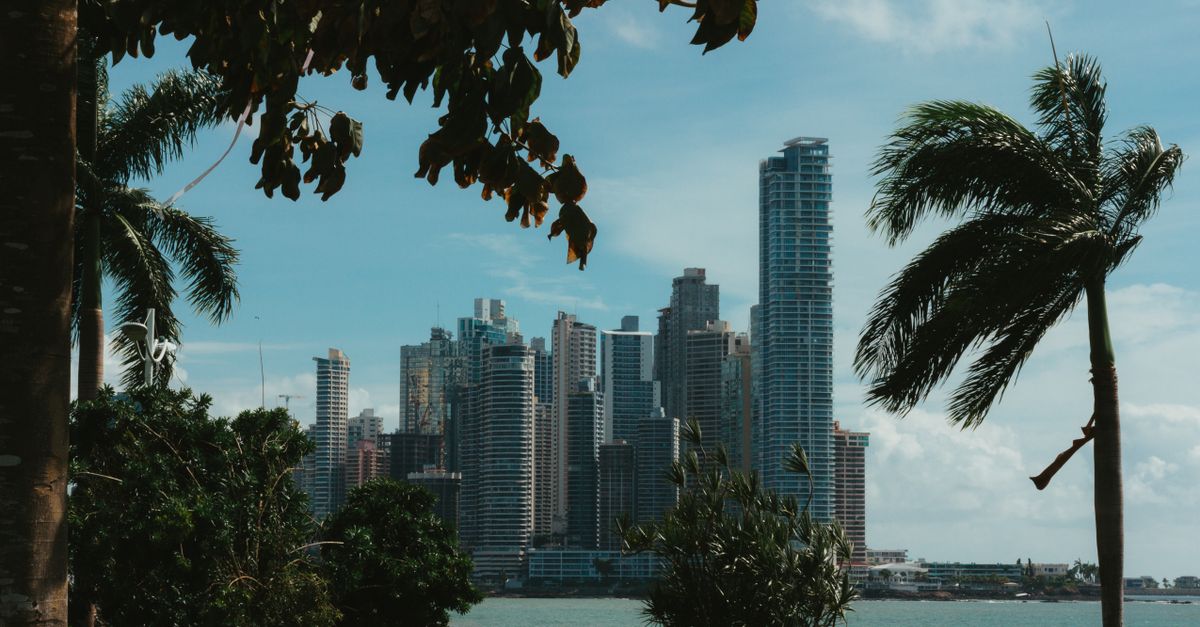
Panama City defies easy categorisation. It is simultaneously one of Latin America's most modern skylines and one of its best-preserved colonial urban landscapes — a city where glass-and-steel towers reflect the ruins of a 16th-century settlement, and where container ships from every ocean queue up in the bay waiting their turn through history's most famous shortcut.
Most visitors to Panama City spend a morning at the Canal and an afternoon in Casco Viejo, check both boxes, and leave. That's a shame. The city's hidden layers — its Indigenous craft markets, its Caribbean-influenced food culture, its undersung modern art scene, its beaches within 30 minutes of downtown — reward the curious traveller enormously.
Panama uses the US dollar alongside the Balboa (they are interchangeable), making it the most straightforward Central American country for budget tracking. What surprises visitors is how much character exists outside the tourist trail, and how little of it costs anything at all.

1. Casco Viejo's Back Streets
Everyone visits Casco Viejo, but almost everyone sticks to the renovated squares and boutique-hotel blocks facing the water. The real Casco is two blocks inland: crumbling but inhabited colonial mansions draped in bougainvillea, corner tiendas selling cold Balboa beer, and plazas where old men play dominoes under shade trees with the concentration of chess grandmasters. This is a living neighbourhood first and a tourist attraction second.
Casco Viejo was founded in 1673 after pirates destroyed the original Panama City (now known as Panama Viejo, 8 km to the east). Its grid of 16th- and 17th-century streets survived three centuries of neglect largely intact, and UNESCO listed it as a World Heritage Site in 1997. The ongoing gentrification has brought excellent restaurants and boutique hotels, but it has also displaced many of the working-class families who kept the neighbourhood alive — a tension the city is still navigating.
Walk south from Plaza Bolivar past the ruined Arch of the Saints and into the blocks around Calle 4 and Avenida Central. These streets are rawer, less polished, and far more authentic than the curated northern end of the peninsula. Use common sense — petty theft can occur — but the neighbourhood is generally safer than its reputation suggests during daylight hours.
Casco Viejo is a 10-minute taxi ride from the financial district (around $5 USD) or a 20-minute walk. The neighbourhood has no dedicated car park; arrive on foot or by taxi. Entry to the main plazas and ruins is free. The Iglesia de San José — which houses the famous Golden Altar, smuggled from the original city before the pirates arrived — charges no admission and is one of the finest colonial interiors in the Americas.
2. Panama Viejo Ruins at Dusk
Eight kilometres east of Casco Viejo along the Corredor Sur coastal highway stand the ruins of the original Panama City — founded in 1519 as the first European settlement on the Pacific coast of the Americas, and sacked and burned by the Welsh privateer Henry Morgan in 1671. The ruins are remarkably extensive: the Cathedral Tower still stands 30 metres tall, and the foundations of churches, convents, and merchant houses spread across a 28-hectare site beside the ocean.
Panama Viejo predates the Pilgrim Fathers' arrival in North America by over a century, and for much of the 16th and 17th centuries it was one of the wealthiest cities in the hemisphere — the transit point for all the gold and silver plundered from the Inca Empire on its way to Spain. Morgan's destruction ended that chapter; the ruins are a melancholy reminder of both ambition and overreach.
The site is managed jointly by Panama's cultural heritage authority and the adjacent Multiplaza shopping centre (an incongruity that rather sums up modern Panama). Entry to the site costs $15 USD; the tower can be climbed for panoramic views of both the ruins and the modern skyline rising behind them — particularly photogenic at golden hour. The adjacent museum contextualises the site's history with colonial artefacts and excellent English signage.
Take the Metro Bus from the Albrook terminal toward Miraflores or a taxi from Casco Viejo for around $8 USD. Visit in the late afternoon for the best light and cooler temperatures. The site opens at 8 a.m. and closes at 5 p.m. Tuesday to Sunday. Combine with dinner at one of the seafood restaurants on the Via España corridor nearby.
3. Mercado de Mariscos at Sunrise
Panama City's fish market on the Avenida Balboa waterfront is both the city's freshest food destination and one of its most vivid spectacles. From 5 a.m., fishing boats unload directly onto the quay: enormous yellowfin tuna, mahi-mahi, red snapper, octopus, shrimp, and a dozen species of fish that have no English names but taste extraordinary. By 7 a.m. the market is in full roar, and by noon most of the best catch is gone.
The market's ground floor sells raw fish by weight; the upper floor is given over to a row of cevichería stalls that prepare the catch to order. Panama's ceviche is different from the Peruvian version — typically made with corvina (sea bass), leche de tigre (tiger's milk marinade), and finished with ají chombo chilli. A generous portion costs $4–6 USD and is among the best things you'll eat in the city.
The Mercado de Mariscos sits on the Cinta Costera waterfront, a 15-minute walk from Casco Viejo or a $4 taxi from the financial district. No reservations, no menus — just point at what you want from the display cases. The market operates daily from 5 a.m. to around 5 p.m. Arrive before 8 a.m. for the best selection and the full sensory experience of the morning unload.
Bring cash — most stalls don't accept cards. Budget $10–15 USD for a full breakfast of ceviche, patacones (fried plantain), and a cold cerveza. The waterfront Cinta Costera promenade beside the market is excellent for a post-breakfast walk, with views of the Bay of Panama and occasional pelicans dive-bombing the outgoing fishing boats.
4. Miraflores Locks at Container-Ship Scale
Yes, the Canal observation decks are on every itinerary — but there is a correct way to visit Miraflores that most tour groups miss entirely. Arrive at 9 a.m. (before the tour buses), head directly to the upper observation deck, and wait. The canal's schedule is published online, and if you time your visit to coincide with a Neopanamax vessel transiting the new Agua Clara locks, the scale becomes genuinely incomprehensible: ships longer than the Empire State Building is tall, squeezing through a channel with only half a metre clearance on each side, lifted 26 metres by gravity-fed water alone.
The Miraflores Visitor Centre museum is genuinely excellent — four floors covering the Canal's engineering, its geopolitical significance, its ecological impact, and its human cost (an estimated 5,600 workers died during the American construction phase from 1904–1914). The exhibit on the failed French attempt a decade earlier is particularly fascinating.
Miraflores is 8 km north of Panama City via the Gaillard Highway. Taxis from the financial district cost around $15 USD; Uber is cheaper at approximately $8. The new Agua Clara locks, completed in 2016, can be visited separately on the Atlantic side near Colón — a longer but worthwhile excursion. Miraflores admission is $20 USD; the restaurant on-site serves decent Panamanian food at inflated tourist prices.
The best Canal viewing times are 9–11 a.m. and 3–5 p.m. when traffic is heaviest. The canal operates 24 hours, and a night visit — possible with advance arrangement through the Canal Authority — offers the eerie spectacle of enormous ships sliding silently past in the darkness, lit only by the lock's floodlights. Check the AIS ship tracking app before visiting to see exactly what vessels are currently transiting.
5. Parque Natural Metropolitano
Ten minutes from the financial district by taxi sits one of the world's few tropical rainforests entirely enclosed within a major city. The 265-hectare Parque Natural Metropolitano receives a fraction of the visitors it deserves, perhaps because its name sounds bureaucratic and its entrance is tucked behind a suburban neighbourhood. Inside, however, is a fragment of the original Panamanian rainforest teeming with wildlife: toucans, three species of monkey, sloths, and occasionally pumas have all been recorded within the park boundaries.
The park was established in 1985 as a protected buffer around the Canal watershed — the Canal requires enormous quantities of fresh water for each ship transit, and the surrounding forest is the hydrological engine that supplies it. Trails are well-maintained and loop through forest that feels as remote as anything in Darién, despite the fact that you can see the Mirador apartments on the park's southern boundary.
Entry costs $5 USD; guided naturalist tours are available for $25 per person and are strongly recommended for first-time visitors who want to spot wildlife rather than just walk past it. The park is open daily from 6 a.m. to 5 p.m. Bring water, insect repellent, and binoculars. The Mirador viewpoint at the park's highest point offers a panorama over the Canal and the city that few tourists ever see.
Early morning (6–8 a.m.) is prime wildlife viewing time, before the heat drives animals into shade. The park's resident Geoffrey's tamarin monkeys are usually visible near the main trail entrance within 30 minutes of sunrise. There is no food available inside — bring snacks. The park is walkable from El Cangrejo neighbourhood in about 20 minutes, or take a taxi for $5 from the financial district.
6. Kuna Mola Textile Market
Panama City has several craft markets, but the most authentic is the small weekend gathering of Kuna (Guna) women in the Santo Tomás neighbourhood, where artisans from the San Blas archipelago sell molas — the extraordinary reverse-appliqué textile panels that are simultaneously functional garment decorations and high art. Each mola represents weeks of hand-stitching and encodes cosmological, environmental, and narrative meaning in its layered geometric patterns.
The Kuna people have occupied the San Blas Islands off Panama's Caribbean coast for centuries and have maintained extraordinary cultural autonomy — the Comarca Guna Yala is a semi-autonomous region with its own governing council and laws. The women who sell in the city maintain strong community ties and use the income from mola sales to fund community projects in the islands.
The market operates on Saturday and Sunday mornings from about 7 a.m. to noon near the Hospital Santo Tomás on Avenida Balboa. Prices for individual mola panels run $20–80 USD depending on size and complexity; older vintage pieces can cost considerably more. Bargaining is acceptable but should be gentle — these are not mass-produced goods and the women know exactly what their work is worth.
Molas depicting everyday life — fish, iguanas, coconut palms — are the most common and most accessible. Ceremonial and cosmological molas are rarer and more expensive. If you want to understand what you're buying, ask the sellers to explain the imagery — even with limited shared language, the communication is usually surprisingly effective. The market is the best craft shopping experience in Panama City by a wide margin.
7. Gamboa and the Soberania Rainforest
The small Canal Zone community of Gamboa, 30 km north of Panama City along the Canal, sits at the edge of Soberania National Park — 22,000 hectares of primary and secondary rainforest that is arguably the most wildlife-rich national park within commuting distance of any major city in the world. Panama has recorded more bird species than all of North America combined, and Soberania contains a significant chunk of those sightings.
The legendary Pipeline Road — a gravel track built to service a wartime oil pipeline that was never completed — runs 17 km through the heart of Soberania and regularly tops the world record books for single-day bird counts. In January 1996, a team recorded 357 species in one 24-hour period here — a number that stands as the world record for bird species spotted in a single day at a single site. Harpy eagles, jacamars, and dozens of antbird species are regularly recorded.
Gamboa is accessible by bus from Albrook terminal (departure at 5:15 a.m. for birders) or by taxi for around $25 USD from the city. The Canopy Tower, a converted US military radar installation at the park's edge, offers guided birding tours from $100 per person — expensive but staffed by exceptional naturalist guides. Self-guided hiking in Soberania is free; the park entrance fee is $10 USD.
Non-birders will find Gamboa equally rewarding for the canal-side setting, the boat trips on Gatún Lake, and the Gamboa Rainforest Resort's aerial tram — $40 USD — which gives an extraordinary canopy-level view of the forest. The resort's crocodile ponds are genuinely impressive: American crocodiles up to 4 metres long bask within sight of the hotel pool. Combine with an early-morning birding walk for a full day in one of the world's great natural landscapes.
8. El Chorrillo's Street Art Trail
El Chorrillo is Panama City's most historically charged neighbourhood — it was here that the US military bombed in December 1989 during Operation Just Cause, the invasion that ousted Manuel Noriega. Thousands of residents were displaced and hundreds of buildings destroyed. What emerged from the rubble, over three decades, is one of the most visually dynamic working-class neighbourhoods in Central America, with a street art scene that directly addresses the trauma of the invasion and the city's ongoing social inequalities.
International and local artists have been painting El Chorrillo's walls since the mid-2000s with permission from community organisations. The murals range from hyperrealistic portraits of neighbourhood elders to abstract geometric work and politically charged imagery addressing displacement, US imperialism, and Afro-Panamanian identity. The area around Calle 16 Oeste has the highest concentration of large-scale work.
El Chorrillo sits immediately west of Casco Viejo and is walkable from the old city in about 10 minutes. The neighbourhood has a rough reputation, and solo tourists should visit in small groups during daylight hours and avoid the blocks farthest from the waterfront. A guided tour with Panama City Street Art Tours (around $25 per person) provides both security and context.
The neighbourhood's residents are generally welcoming to visitors who approach respectfully and engage with the art rather than treating the neighbourhood as a spectacle. A small community café on Avenida de los Mártires serves Panamanian breakfasts for $3–4 USD and is an excellent place to spend time with locals before exploring the murals. The most powerful works are documented on the Panama Street Art Instagram account, which can be used as a walking guide.

9. Biomuseo Frank Gehry
At the Pacific entrance to the Panama Canal stands one of Frank Gehry's most exuberant buildings: the Biomuseo, a multicoloured explosion of angular panels in tropical hues — magenta, orange, turquoise, gold — that looks like the rainforest itself has been folded into architecture. Completed in 2014, it is Gehry's only building in Latin America and houses a museum dedicated to the extraordinary biological event that shaped the modern world: the closing of the gap between North and South America around 3 million years ago.
The Panama Isthmus closure was one of evolution's great accidents. When the land bridge formed, it allowed species to migrate between the previously isolated continents — giving North America its llamas, armadillos, and giant ground sloths, and giving South America its deer, horses, and mastodons. It also redirected ocean currents, cooling the Atlantic and likely triggering the Ice Ages. The museum tells this story with exceptional scientific rigour and extraordinary graphic design.
The Biomuseo is at the Calzada de Amador, adjacent to the Causeway's mainland entrance. Entry costs $22 USD for adults. Open Tuesday to Friday from noon to 4 p.m. and Saturday to Sunday from 10 a.m. to 4 p.m. Audio guides in English are excellent and included in the price. The building's exterior is free to photograph at any time and is equally rewarding at night when lit dramatically.
Allow 2–3 hours for the museum's eight permanent galleries. The final gallery — the Panama Revealed hall — offers direct views of ships entering or leaving the Canal through floor-to-ceiling windows, providing a perfect synthesis of natural history and human engineering in a single panorama. The adjacent café serves decent coffee and snacks at reasonable prices.
10. San Felipe Fish Fry Friday
Every Friday evening, the neighbourhood of San Felipe — the working-class eastern fringe of the Casco peninsula — transforms into an informal street festival centred on frying fish. Residents set up enormous cast-iron cauldrons on the pavement, fill them with palm oil, and proceed to fry whole snappers, corvina chunks, and patacones in quantities that attract queues stretching half a block. It is the most convivial eating experience in the city and the most honest expression of Panama City's Afro-Caribbean food heritage.
The tradition traces to the Caribbean migrants who came to build the Canal and settled in San Felipe and Calidonia in the early 1900s. Their food culture — fried fish, coconut rice, plantain in multiple preparations, and strong rum cocktails — defined a Panamanian sub-cuisine that is entirely distinct from the Spanish colonial cooking found elsewhere in the country. The Friday fry is a direct descendant of those canal-worker traditions.
Find the action on and around Avenida B in San Felipe from about 6 p.m. A whole fried snapper with rice and patacones costs $6–8 USD. Bring cash, bring an appetite, and be prepared to eat standing up at shared tables on the street. The rum cocktails — mixed from bottles stored beneath the frying tables — cost $2 and are potent.
The Friday fish fry runs until around 10 p.m., at which point the tables fold away and some of the same spaces become impromptu dance floors with reggaeton and cumbia playing from Bluetooth speakers. The neighbourhood is lively rather than dangerous on Friday evenings, but leave expensive cameras at the hotel. A taxi back to the financial district costs $7–10 USD at this hour.