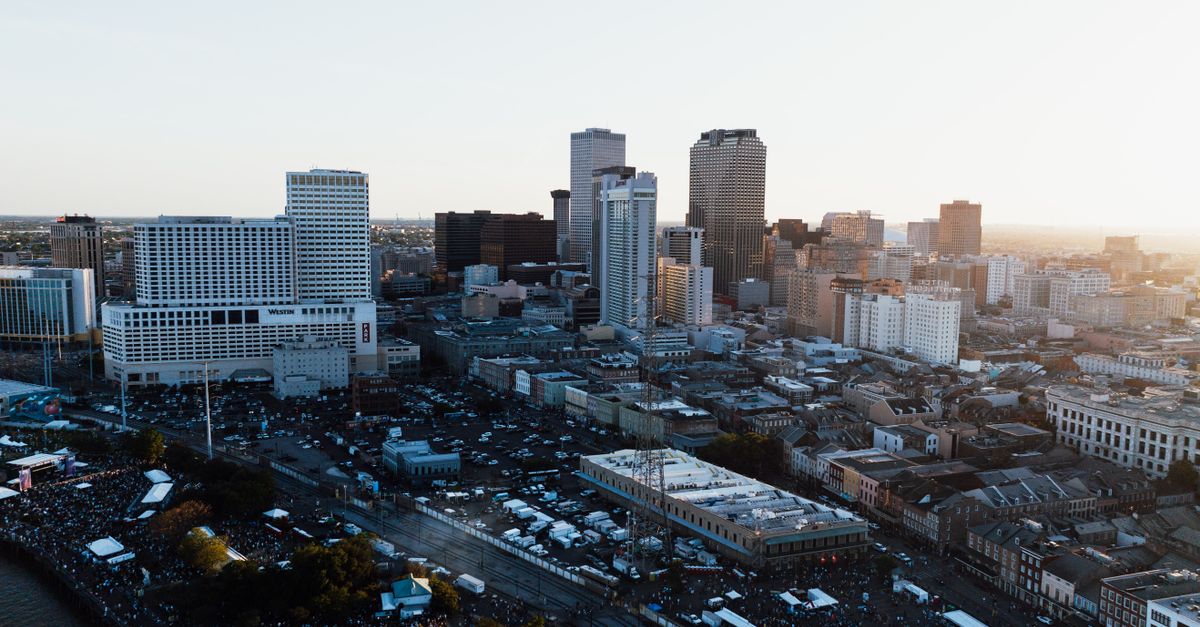
New Orleans's tourist economy channels visitors along a narrow corridor: Bourbon Street, the French Quarter, Café Du Monde, a cemetery tour, maybe a jazz club on Frenchmen Street. These represent the surface of a city with one of the richest cultural accumulations in North America — a place where West African, French, Spanish, Caribbean, and Indigenous cultures merged into something genuinely unique. The neighborhoods beyond the Quarter are where that culture actually lives: Tremé (the oldest Black neighborhood in America), the Bywater, the Marigny, the Seventh Ward. These neighborhoods are accessible, welcoming, and completely ignored by most standard itineraries.
This guide is for travelers who want to understand why New Orleans is extraordinary, not just see its performance of itself. You'll find second line parades in residential streets, Creole cooking at the restaurants where the chefs eat, music venues where the crowd is local, and landscape experiences that reveal the city's relationship to water, below-sea-level geography, and ecology. New Orleans rewards people who pay attention and show up without an agenda.
The Tremé and Marigny neighborhoods are both walkable from the French Quarter. The Bywater and Seventh Ward require a short ride. NOLA's transit system is colorful (the historic streetcars are real and functional) but unreliable for timing — build flexibility into plans, or budget $8–12 for Lyft rides between neighborhoods.

1. The Tremé Neighborhood and Congo Square
Tremé, directly north of the French Quarter, is the oldest African American neighborhood in the United States, and the cultural origination point for jazz, the second line parade tradition, and much of New Orleans's distinctive food and religious syncretism. Congo Square, within Louis Armstrong Park on North Rampart Street, is where enslaved Africans were permitted to gather on Sunday afternoons to maintain their musical and cultural traditions — the only such space in North America during the slavery era. Those gatherings were the genesis of the music that became jazz. Standing there knowing this changes how you hear every note played in the city.
The Backstreet Cultural Museum on Henriette Delille Street, housed in a former funeral home, documents the traditions of Mardi Gras Indian cultures, second line parades, and jazz funerals through an extraordinary collection of handmade costumes, photographs, and oral histories. It's run by Sylvester Francis, who has been collecting since the 1980s, and is one of the most essential cultural institutions in the city.
Walk north from the French Quarter on Rampart Street to enter the Tremé. Louis Armstrong Park is at 701 N Rampart Street. The Backstreet Cultural Museum is at 1116 St Claude Avenue. Open Tuesday–Saturday 10am–5pm; admission $10. Second line parades happen in the Tremé on Sunday afternoons from October through June — follow local social media for schedules.
Backstreet Museum: $10 adults. Congo Square park: free. Budget $25–40 for a morning in the Tremé including museum admission, coffee at Café Beignet on Burgundy Street, and a walk through the residential streets noting the Mardi Gras Indian murals and shotgun house architecture.
2. Frenchmen Street's Live Music Ecosystem
Everyone knows to go to Frenchmen Street instead of Bourbon Street for jazz, but many visitors treat it as a scaled-down tourist version of the same thing. It's not — Frenchmen Street's clubs (Spotted Cat, d.b.a., Snug Harbor, Preservation Hall is nearby but Frenchmen is the street) host working musicians from New Orleans's actual jazz, funk, and brass band scenes. The Spotted Cat is a narrow bar where a band plays from 2pm seven days a week; there's no cover, but tip the band and buy a drink. On Sunday afternoons, a brass band frequently plays in the street outside, and the crowd that gathers is predominantly local.
The Marigny neighborhood surrounding Frenchmen Street is one of New Orleans's most intact 19th-century residential landscapes — Creole cottages and shotgun houses with their distinctive colors and textures line the cross streets. Walk a block off Frenchmen in any direction and you're in a genuine neighborhood, not an entertainment district.
Walk from the French Quarter east on Esplanade Avenue into the Marigny, then south one block to Frenchmen Street. The strip runs from Chartres Street to Washington Square. Best before 10pm for elbow room; after midnight for the most serious musicianship. Dress for heat and bring cash for tips.
Most venues: no cover or $10–15 cover after 9pm. Drinks: $5–8. Budget $40–60 for a full evening including two or three venue stops with drinks. The Marigny is excellent for dinner before the music: Adolfo's upstairs at Frenchmen and Chartres serves Italian Creole food at $20–30 per person.
3. Bywater's Artist Community
The Bywater neighborhood, downriver from the Marigny, developed as an artists' community in the 1990s and 2000s when its affordable shotgun houses attracted painters, musicians, and writers priced out of Faubourg Marigny. The neighborhood has gentrified but retains a distinctly creative energy: enormous folk art installations in yards, gallery storefronts, community gardens that have been elaborately decorated, and a concentration of independent businesses along Magazine Street and St Claude Avenue. The Studio in the Woods nearby offers artist residencies; the New Orleans Jazz and Heritage Foundation has a presence in the neighborhood.
The Bywater suffered significant flood damage from Hurricane Katrina in 2005 and the subsequent rebuilding has mixed original residents' returns with new investment and new residents. The resulting neighborhood has a complicated social history that the visual energy of the streets doesn't fully reveal.
Take a Lyft or bus along St Claude Avenue from the Marigny. The neighborhood is centered around Dauphine Street, Burgundy Street, and Magazine Street between Elysian Fields and Alabo Street. Walk the residential blocks off St Claude for the most interesting architecture and folk art installations.
Free to explore. Budget $20–30 for lunch at Satsuma Café (brunch until 3pm, $12–18) or pizza at Pizza Delicious (nicknamed "Pizza D," a New York-style slice shop at $3–4/slice). The Saturday farmers market at the Crescent Park entrance is an excellent food stop ($5–15 for prepared foods and produce).
4. A Jazz Funeral or Second Line Parade
The second line parade — a tradition of New Orleans's Social Aid and Pleasure Clubs, where communities march through neighborhoods behind a brass band, "second-lining" with improvised dance — is the most authentic expression of the city's musical culture that you can witness as a visitor. Unlike French Quarter jazz shows, second lines happen in residential neighborhoods, are organized by and for community members, and are free to join. The season runs October through June, with several parades on Sundays. The Social Aid and Pleasure Club Task Force website publishes the schedule; following local Instagram accounts (@nolasocialclub) gives real-time location updates.
The tradition originated in Black New Orleans social organizations that provided mutual aid, funeral services, and community support — a survival mechanism during segregation and poverty. The joy of a second line is inseparable from the history of suffering it developed in response to. Join respectfully, follow the crowd's lead, and tip the musicians.
Check the schedule at sapcta.org or follow local social media. Second lines typically start around noon or 1pm on Sundays in various Tremé, Seventh Ward, or Central City neighborhoods. Meet at the published starting point — the brass band is audible from a block away.
Free to join; tip the musicians ($5–20 appreciated). The parade route typically ends at a bar or community center where there's a party — follow the crowd. Bring comfortable walking shoes and dress for movement. Water is essential in warm months.
5. City Park's Botanical Garden and Sculpture Garden
City Park in Mid-City is one of the great urban parks in the American South — 1,300 acres with ancient live oaks draped in Spanish moss, a botanical garden, a sculpture garden, a children's amusement park, and the New Orleans Museum of Art. The Botanical Garden ($6 admission) contains restored WPA-era garden structures from the 1930s that are some of the finest examples of New Deal public artistry in the region. The adjacent Sydney and Walda Besthoff Sculpture Garden (free) displays 90 major sculptures in a woodland setting of live oaks and lagoons — it's the finest outdoor sculpture collection in the Gulf South, and it's free.
City Park was severely damaged by Hurricane Katrina — the lagoons were flooded for months, trees were toppled, and the infrastructure was destroyed. The restoration, funded by private donations and federal disaster relief, took nearly a decade and is still ongoing. What has been restored is extraordinary.
Take the City Park Avenue bus from Canal Street or drive/Lyft to the main park entrance at Collins Diboll Circle. The park is enormous — consider renting a bike at the park entrance (approximately $15/hour) to cover the grounds efficiently. The Botanical Garden and NOMA are adjacent; both require separate admission ($6 and $15 respectively).
Sculpture Garden: free. Botanical Garden: $6. NOMA: $15 adults. Budget a full half-day for park exploration. Café du Monde in City Park (a secondary location) serves beignets without the French Quarter wait; a coffee and beignet order is $7–10.
6. The Garden District's Side Streets
The Garden District — the Greek Revival and Italianate mansions on Magazine Street and the surrounding blocks — is on most visitor itineraries. What's not on the itinerary is walking the residential streets one or two blocks off the main tour route: Chestnut Street, Coliseum Street, and Camp Street between First and Fourth contain some of the finest 19th-century American domestic architecture outside of Newport or Savannah, maintained with the obsessive care that wealth and climate require. The scale of these houses, the layers of original detailing, and the mature landscape of live oaks make for a walk that is less a garden tour than an architectural immersion.
Lafayette Cemetery No. 1, at Washington Avenue and Coliseum Street, is the Garden District's historic cemetery — above-ground tombs in the New Orleans tradition, family mausoleums from the 1830s onward, and the atmosphere that makes New Orleans cemetery tourism meaningful when it's done outside the French Quarter's more commercial context. Self-guided visits are free; tours run from the cemetery entrance.
Take the St Charles streetcar from Canal Street to Washington Avenue ($1.25). Walk the surrounding grid for an hour. Lafayette Cemetery No. 1 is at the corner of Washington and Coliseum — free self-guided entry. Magazine Street parallel to the cemetery has some of the best antique shops and independent boutiques in the city.
Streetcar $1.25 each way. Lafayette Cemetery: free (tour guides charge $10–20). Magazine Street antique browsing: free to look. Brunch or lunch along Magazine Street runs $15–25 per person. Commander's Palace at Washington and Coliseum is the Garden District's grand restaurant ($50–80 per person) — its turtle soup and bread pudding are legitimate New Orleans classics.
7. Café Du Monde's Secret Sibling: Morning Call
Café Du Monde is famous and legitimately good. Morning Call — opened 1870, the oldest continuously operating coffee stand in New Orleans, now located in City Park's Pavilion of the Two Sisters — serves identical beignets (fried dough covered in powdered sugar) and café au lait (chicory coffee with hot milk) for slightly less money and with essentially no wait. The setting inside City Park is also more pleasant than the French Quarter's tourist crush. If you want the beignet experience without the performance of it, Morning Call in City Park is the answer.
The chicory coffee tradition in New Orleans dates to the Civil War era, when coffee became scarce and chicory root was added as a substitute that eventually became a distinctive characteristic of the city's coffee culture. The combination with hot milk in café au lait form is the classic preparation — rich, slightly bitter, and ideal with the sweet powdered sugar of the beignets.
Located in the Pavilion of the Two Sisters in City Park — take the Canal streetcar to City Park Avenue, walk into the park. Open 24 hours. A beignet order (three pieces) and café au lait runs about $8–10 total.
Budget $8–12 per person. Open 24 hours — excellent for early-morning or late-night visits after the French Quarter crowd has thinned. The City Park setting, especially in the early morning with mist on the lagoons, is significantly more atmospheric than Café Du Monde.
8. Mardi Gras Indian Super Sunday
The Mardi Gras Indians are Black New Orleans cultural organizations whose members spend the entire year hand-sewing elaborate beaded and feathered suits of extraordinary artistic quality, wearing them for a handful of public appearances each year. Super Sunday — the Sunday nearest St Joseph's Day in March — is the primary public gathering, when multiple tribes in full regalia meet in the Tremé and Seventh Ward streets, singing and dancing in a tradition that blends West African, Native American, and New Orleans Creole cultural elements into something unlike anything else in American culture. This is not a show — it's a living tradition. Attendance is open; respectful distance and no flash photography.
The Mardi Gras Indian tradition has roots in the 1880s and developed as an expression of solidarity between Black New Orleans communities and the Native American communities who sheltered escaped enslaved people in the surrounding wetlands. The suits — which can take 1,500 hours to create and incorporate thousands of individually sewn beads — are destroyed each year and remade from scratch for the next appearance.
Super Sunday dates vary by year — follow @NOLA_Indians on social media or check nola.com for schedules. The gathering typically begins in the Tremé in the early afternoon and moves through surrounding streets. Dress appropriately for standing outdoors in March weather.
Free. Tip musicians who play. Do not photograph participants close-up or without awareness that they may decline. Budget nothing except transit and respect. This is one of the most extraordinary cultural experiences available to a visitor in any American city.

9. Bayou St John and the Mid-City Waterfront
Bayou St John runs from Lake Pontchartrain into the heart of Mid-City, a remnant of the natural waterway system that shaped the city's geography. Today its banks are a greenway — Bayou St John Greenway — where locals run, bike, kayak, and gather for informal Sunday gatherings that are among the most genuinely communal experiences available in New Orleans. The bayou passes the 1834 Pitot House (historic Creole plantation home, tours available), the Esplanade Avenue bridge where community events happen, and eventually connects to City Park's lagoon system. The surrounding Mid-City neighborhood is one of New Orleans's most intact residential landscapes.
Bayou St John was the original canoe route used by Indigenous people and later French settlers to reach the Mississippi River without sailing around the peninsula — the reason New Orleans was founded where it was. The bayou's history is inseparable from the city's founding logic.
Take the Canal streetcar to the Bayou St John stop, or take a Lyft to Esplanade Avenue and the bayou. Walk north along the bayou toward the lake, or south toward City Park. The greenway is excellent for morning runs and weekend afternoon walking. The Pitot House at 1440 Moss Street offers tours Wednesday–Saturday 10am–3pm ($10).
Greenway: free. Pitot House: $10. Weekend picnics on the bayou banks are a local tradition — bring food from the nearby Fair Grinds coffee shop on Ponce de Leon Street ($4–8 for coffee and pastries) or the Robert Fresh Market supermarket on Esplanade.
10. The Warehouse Arts District on Magazine Street
The Warehouse Arts District in Central City — anchored by the Contemporary Arts Center at Camp and Howard Streets and extending along Magazine Street and Julia Street toward the Convention Center — is New Orleans's contemporary visual arts infrastructure. The Ogden Museum of Southern Art (on Camp Street, $13.50 admission) has the finest collection of Southern art in the world; the CAC's programming spans visual art, performance, and music. On the first Saturday evening of each month, the Arts District opens its galleries for a free event called Julia Street's Art Walk, where over a dozen galleries hold simultaneous openings. The district is walkable in 45 minutes and is less than 10 minutes by Lyft from the French Quarter.
Julia Street between Camp and Magazine Streets is sometimes called the gallery street of New Orleans, with commercial galleries representing Louisiana artists alongside those showing national and international work. The art here is serious and the prices are, by major-city standards, remarkably accessible.
Walk or Lyft to the intersection of Julia and Camp Streets. The CAC is at 900 Camp Street, the Ogden at 925 Camp Street. First Saturday Art Walk runs 6–9pm. The district is convenient to the Garden District via Magazine Street, making a combined afternoon-into-evening itinerary easy to construct.
CAC admission varies by exhibition ($8–15). Ogden Museum: $13.50. Art Walk galleries: free. Budget $30–50 for dinner in the district: Herbsaint on St Charles Avenue ($30–45), or picnicking from the Central Grocery (the original muffaletta, $15–18 half-sandwich) if combining with the nearby French Quarter.