
Mykonos is Europe's most famous party island — a brand as much as a place, with a well-deserved reputation for world-class DJs, luxury beach clubs, and the kind of glamorous hedonism that functions as an aspirational global export. But the island beneath the Nammos umbrellas and the Cavo Paradiso lineup is a fascinating place with deep history, extraordinary natural beauty, a serious culinary tradition rooted in the Cycladic agricultural and fishing economy, and several neighbourhoods and sites where the brand dissolves and the actual place reasserts itself.
The island has been inhabited continuously since the Bronze Age and served for centuries as the administrative centre of the surrounding Cyclades. Delos, the sacred island of Apollo 5km to the southwest, was the spiritual and economic centre of the ancient Aegean world, and Mykonos was its support community — a role it has resumed in a different register as the support community for luxury Aegean tourism. Understanding Mykonos requires understanding this dual identity.
Mykonos is expensive even by Aegean island standards. Budget €120–200 per day if you participate in any beach club or premium restaurant experience. For travellers who avoid the premium tier, €70–100 per day is achievable with local restaurants, public beaches, and town accommodation. The euro is used. The strategies in this guide focus on experiencing the island well without automatically paying the Nammos premium.
1. Delos — The Sacred Island
Five kilometres southwest of Mykonos, accessible by regular ferry, lies one of the most important archaeological sites in the ancient Mediterranean world. Delos was the birthplace of Apollo and Artemis according to Greek mythology, and became the religious centre of the Aegean world — a sacred island where no one was permitted to be born or die, where the great sanctuary of Apollo drew pilgrims from across the Hellenic world, and where, at its commercial peak in the 2nd century BC, it was one of the largest free-trade ports in the Mediterranean, handling a significant portion of the slave trade.
The ruins of Delos are extraordinary in their extent and their preservation — the Sacred Quarter with Apollo's sanctuary and the famous Terrace of the Lions (original 7th-century BC marble lions, now in the site museum, with replicas on the terrace), the Hellenistic residential quarters with magnificent floor mosaics still in situ, the ancient theatre, the House of Dionysus (mosaic of the god riding a tiger, one of the finest in the ancient world), and the entire grid of a Hellenistic commercial city of 20,000–30,000 people.
Ferries to Delos depart from Mykonos town (Old Port) approximately every 30 minutes in summer, less frequently in winter. Journey 30 minutes, round trip €20. The archaeological site is open Tuesday to Sunday 8am to 3pm. Admission €12. Closed Monday. Allow 4 hours for the full site. Take water and sun protection — there is no shade on the island except the small café. The site museum is excellent and included in the admission.
The experience of Delos in the late morning, when the site has been open for a few hours and the tour groups have spread out across the vast ruins, is of walking through a complete ancient city in near-solitude — the silence broken only by the Meltemi wind and the sound of the sea. The Terrace of the Lions, facing the sacred lake (now dry), is the most famous set piece, but the domestic residential quarters, with their elaborate mosaics still on original floors in collapsed houses, are the most affecting.
2. Little Venice at Dawn
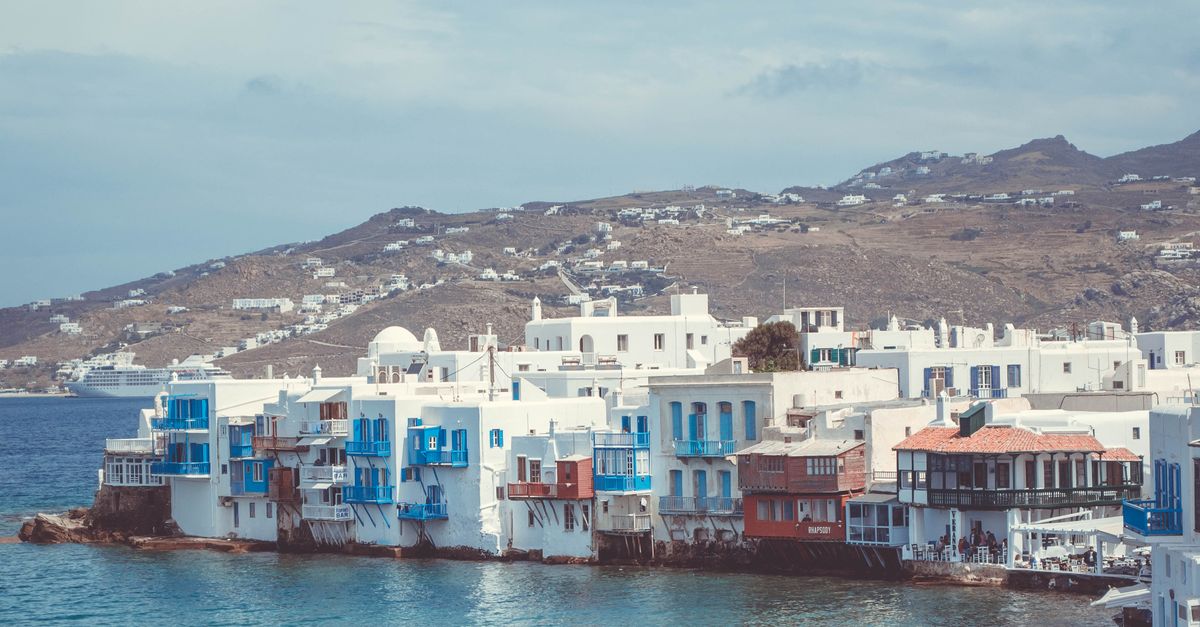
The district of Mykonos Chora known as Little Venice — the row of 18th-century sea captain's houses built directly on the sea wall, with their balconies overhanging the Aegean — is one of the most photographed locations in all of Greece, and for good reason: it is genuinely beautiful. But the photograph in your mind — a perfect composition of colourful balconies against blue water — is only available before 8am or after 10pm. During the tourist day, Little Venice is a solid mass of camera phones.
At 6am, Little Venice is inhabited by fishermen returning from the night's work, the café owners setting up their terraces, and the occasional photographer who knows what they're doing. The light is different — lower, warmer, more horizontal. The reflections in the water are steadier before the Meltemi wind picks up. The scene has the quality of a place being itself rather than performing for an audience.
Little Venice is in the centre of Mykonos Chora, at the northwest end of the town. Walk from any hotel in the town along the waterfront — the district is immediately recognizable from its overhanging balconies. Admission is free; the cafés charge €3–4 for coffee. The best viewpoint is from the small jetty at the northern end of the district, or from the water if you're taking a boat tour. Evening is the second-best time — the sunset catches the balconies orange.
The Boni Mill above Little Venice is one of the few remaining working windmills on the island — it was restored in the 1980s and occasionally demonstrates traditional grain milling. Climb to the windmill level for a view that encompasses Little Venice, the harbour, and the island's interior. Free access always; demonstration days vary by season. The windmill terrace is one of the quietest spots in the tourist centre of Mykonos.
3. Agios Stefanos and Agios Sostis — The Quiet North
While the world's attention focuses on the party beaches of the south coast — Paradise, Super Paradise, Elia — the northern shore of Mykonos offers a completely different island: quieter, more windswept, less developed, and with a character that reflects the fishing village culture rather than the beach club economy. Agios Stefanos beach, just north of the town, is primarily used by local families and the guests of the small hotels that line it. Agios Sostis, at the island's northern tip, has no road access — it can only be reached on foot or by boat — and consequently remains one of the most beautiful and unspoilt beaches in the Cyclades.
Agios Stefanos beach is a 10-minute walk or 5-minute taxi from Mykonos town and has clear, calm water (the north is sheltered from the Meltemi wind that makes the south coast beaches windy in summer), several small tavernas serving fresh fish at non-paradise prices, and a clientele that skews older, European, and less brand-conscious than the south. The view back to Mykonos town from the beach is excellent.
Agios Sostis requires 30 minutes of walking on a rough path from the nearest road, which is its primary recommendation as a destination. The beach is a beautiful horseshoe of white sand with clear turquoise water and three large rocks in the sea for diving from. No facilities whatsoever — bring everything you need. The walk from the nearest bus stop (Ftelia beach road end) takes 30 minutes over a hill. Worth every step for the experience of a Mykonos beach without a single beach club in sight.
The Fokos beach, on the northeast coast, is similarly non-commercialised — accessible by a rough paved road that most rental car companies advise against using, which is precisely why it remains quiet. A single traditional taverna (Taverna Fokos) operates at the beach in summer, serving the fish caught by the owner's own boat that morning. Arriving for lunch and discovering the menu (written on a chalkboard, reflecting the morning's catch) is one of the most authentic Mykonos experiences available. Budget €20–30 for a full fish meal.
4. Chora's Real Neighbourhood
The famous labyrinthine lanes of Mykonos Chora were designed — according to popular legend — to confuse pirates. They were more likely the natural result of building closely around a central harbour in a small community over several centuries. The tourist lanes are well known, lined with jewellery shops and fashion boutiques. But Chora has two or three residential layers beyond the tourist centre where the lanes are lined with actual houses, actual cats, actual laundry, and actual Mykoniots going about their actual morning.
The residential neighbourhood of Alefkandra (directly behind Little Venice) is the quietest part of Chora — narrow lanes where the ground is pebbled with the traditional Cycladic mosaic patterns (volakia), houses are painted in the traditional deep blue shutters and ochre trim, and the occasional small Orthodox church provides a space of complete silence in a noisy town. Walk any lane heading away from the water and uphill to find this Mykonos.
The neighbourhood around the Orthodox Cathedral (Panagia Paraportiani) in the western part of Chora is similarly residential — the famous Paraportiani church complex (five chapels in one whitewashed mass, one of the most photographed buildings in Greece) is surrounded by residential lanes that most visitors don't enter. Walk past the church and continue uphill through the lanes toward the windmills for the most atmospheric route through the old town.
The morning market along the waterfront near the Old Port (before 9am) is where the actual daily commerce of Mykonos happens — fishermen selling the morning's catch from boats, vegetable vendors setting up their stalls, local bakeries putting out their first breads and pastries. A freshly baked koulouri (sesame bread ring) costs €0.50. The morning bustle is entirely separate from the tourist day that begins at 10am and is one of the more genuine Mykonos experiences available.
5. Ano Mera — The Only Village
Ano Mera, 8km east of Mykonos town in the centre of the island, is the only settlement on Mykonos other than Chora — a traditional Cycladic village with a central square dominated by a remarkable 16th-century monastery (Panagia Tourliani) and surrounded by the island's remaining agricultural land. The village has a kafeneion that has been serving the local population since the 1950s, several family-run tavernas, and a character of unperformed dailiness that is as refreshing after Chora's relentless tourism as a dip in the sea.
The monastery of Panagia Tourliani, founded in 1542 by monks from Paros, has an extraordinary baroque marble fountain in its courtyard and a church interior of remarkable richness — carved wooden iconostasis, gold-leaf icons, embroidered vestments, and a collection of religious objects from the monastery's 400-year history. The monks maintain an embroidery workshop where traditional liturgical embroidery is produced; the small shop sells examples of this work.
Take bus from Mykonos town to Ano Mera — journey 20 minutes, €2. Buses run approximately every 30 minutes in summer. The monastery is open to visitors during morning hours (9am to noon) — admission by donation, dress modestly. The village square tavernas serve traditional Greek food at prices 30–40% below Mykonos town — a full meal with wine costs €15–20. The kafeneion on the square serves the best Greek coffee on the island and is open from 7am.
The surrounding agricultural landscape of Ano Mera is excellent for walking — the island's interior is granite hills, dry stone walls, windmills on ridges, and small chapels in fields, entirely different from the coastal beach club landscape. Walking trails connect Ano Mera with the north coast beaches (Ftelia, Agios Sostis) through landscape that has not changed significantly in a century. Bring a map (available at the tourist office in Mykonos town) and water.
6. Ftelia Beach — The Windsurfer's Paradise
Ftelia beach on the northern coast, a 20-minute drive or 40-minute bus ride from Mykonos town, is the best beach on the island for windsurfing and kitesurfing — the consistent Meltemi wind that makes the south coast beaches challenging for swimming creates perfect conditions for wind sports. The beach itself is long, sandy, and almost entirely free of the beach club development that dominates the famous south coast beaches.
The windsurfing school at Ftelia offers equipment rental (€25–35/hour) and lessons for beginners and improvers. The beach has one taverna serving simple food and cold drinks. The Meltemi wind typically starts around noon and builds through the afternoon, which means the morning (before noon) is calm enough for comfortable swimming, and the afternoon is the prime time for wind sports.
Take bus from Mykonos town toward Ano Mera and ask the driver for Ftelia beach — the road drops to the beach from the main road, a five-minute walk. The beach itself is free. Parking is available for those with rental cars. The water is clean and clear; the Meltemi makes afternoon swimming rough for non-swimmers. The beach's north-facing aspect means it gets full sun until late afternoon.
Walking south from Ftelia along the northern coast path leads to a series of small, unnamed coves that are accessible only on foot and have clear, still water (protected from the wind by the rocky headlands). These coves are used by local residents and the guests of the few accommodation properties along this coast — getting to them requires 30–45 minutes of walking from Ftelia but rewards with near-complete solitude even in peak season.
7. The Agricultural Museum
The Agricultural Museum in the old flour mill at Boni, above Mykonos Chora, preserves and displays the traditional tools, equipment, and domestic objects of the Mykonian agricultural economy — the centuries before tourism transformed the island. It is a small museum in a single room, entirely free to visit, and it contains more genuine information about what Mykonos actually was and how its people actually lived than any amount of beach club visiting could provide.
The collection includes traditional farming tools, fishing equipment, weaving looms and their products (Mykonos was famous for its woven textiles), olive press equipment, and the domestic objects of a subsistence economy that produced almost everything locally — cheese from island goats, fish from local waters, bread from locally grown grain. The contrast with the current luxury economy is self-evident and deliberately presented.
The museum is at the Boni windmill complex, above Little Venice in the western part of Chora — walk up from the windmills on the main tourist path. Open irregular hours in summer (typically 10am to 2pm) — check with the tourist office for current schedule. Entry is free. The windmill itself is occasionally in operation during demonstrations. The view from the windmill terrace is one of the best in Chora.
The Aegean Maritime Museum, in the town centre at Enoplon Dynameon 10, complements the agricultural museum with an excellent collection of maritime charts, navigational instruments, ship models, and documents relating to Mykonos's long history as a maritime community. The island has been at the centre of Aegean trade for 3,000 years and the maritime heritage is the foundation on which everything else, including the current tourist economy, is built. Admission €4. Open Tuesday to Sunday 10am to 1pm and 6–9pm.
8. Sunset at the Windmills — Away from the Crowd
The seven windmills at Kato Mili, above Little Venice, are Santorini's second most photographed backdrop (after the Little Venice houses themselves). The official windmill sunset viewpoint is well-signposted and consistently crowded. The alternative: walk behind the windmills on the path heading north toward the Boni mill and then continue north on the ridge path toward the Gyzi mansion, finding a viewpoint on the open hillside that looks back at the windmills with the sunset behind them rather than looking from the windmills toward the sunset.
This reverse angle — the windmills as the subject rather than the viewpoint — is rarer and arguably more beautiful. The windmills lit from behind by the setting sun, with the white Chora below and the Aegean beyond, is a composition that most tourists never discover because they're standing in front of the windmills facing west with everyone else. The path to the north side of the windmills takes 15 minutes from the main Chora waterfront.
The sunset from the Armenistis lighthouse at the island's northern tip — a 30-minute drive or 90-minute walk from Chora — is the least crowded sunset viewpoint on Mykonos and arguably the most spectacular, facing the open sea between Mykonos and the neighbouring islands of Tinos and Syros. Access is free; the lighthouse road is paved to the lighthouse base. Bring a picnic and a bottle of local wine.
The local Mykonian wine, while not as celebrated as Santorini's volcanic varieties, has its own character — produced from small vineyards in the island's interior, it is a dry, minerally white that pairs perfectly with the island's fish and cheese. The best local wine is available by the glass at the tavernas of Ano Mera and the northern coast, where it costs €3–4 per glass versus €8–15 at the Chora tourist restaurants.

9. The Mykonian Cheese Tradition
Mykonos has a genuine artisan food culture that exists almost entirely beneath the consciousness of the luxury beach club economy — a tradition of local cheese making, butchering, and preserving that reflects the island's long history as a self-sufficient pastoral community. The local cheeses — tyrovolia (fresh cheese), kopanisti (spicy fermented cheese), chloro (young soft cheese) — are produced by several remaining local dairy farms and sold at the town market and a few specific shops.
The Mykonos town market (Mavrogenous Square area, mornings) sells local dairy products directly from producers who drive in from the island's interior farms. Kopanisti, the island's most distinctive cheese — a pungent, spreadable fermented cheese with a sharpness that resembles a Greek blue cheese — is found here at €8–12 per 200g, compared to €20–30 for the same quantity in the tourist delicatessens of the main streets.
The island's salted pork sausages (loukaniko Mykonou) are another local speciality that rarely appears on tourist restaurant menus because they require advance preparation and cooking. Look for them at the morning market or at the local butcher on the main road heading toward the airport — the shop has been run by the same family for 60 years and makes its sausages to a recipe that pre-dates the island's transformation into a luxury destination.
Bread baking in Mykonos follows the Cycladic tradition of the kouloura — a large, dense ring bread baked in a wood-fired oven that lasts several days without going stale. The best bakery in Mykonos (debated passionately by locals) is considered by most to be the one on the small lane behind the Paraportiani church, open from 6am and selling loaves for €2–3. The first hour of baking, when the bread is still warm, is the essential experience.
10. Beyond Paradise — The East Coast
The east coast of Mykonos — facing toward the Anatolian coast rather than the Aegean — is the island's least developed and least visited shore. Kalafati beach, on the southeastern coast, has one established hotel (Aphrodite Beach Hotel) and a handful of tavernas, clear water, and an atmosphere of 1980s Greek island tourism that feels like a time capsule in the context of the current luxury economy. It is also the base for diving and snorkeling excursions to the underwater archaeology of the Delos channel.
The channel between Mykonos and Delos is one of the richest areas for underwater archaeology in the Mediterranean — centuries of maritime trade passing between the sacred island and the rest of the Aegean left behind anchors, amphorae, and cargo debris that is protected but can be observed on guided dives. The diving school at Kalafati operates guided dives in the area (€50–70 per dive for certified divers, including equipment). The marine life is also excellent — the protected waters around Delos support populations of grouper, sea bream, and octopus that are larger and less wary than on the more trafficked coasts.
Take bus from Mykonos town to Kalafati — journey 25 minutes, €2.20. The beach has free public access and is pleasant for swimming with calmer water than the north. The tavernas serve fish at realistic prices — €18–25 for a whole grilled fish. The small-boat harbour at the south end of the beach has local fishermen who sometimes offer informal boat trips to the nearby uninhabited islands in the morning hours, at prices negotiated directly (typically €15–20 per person for a 2-hour trip).
The uninhabited island of Dragonisi, visible from Kalafati and accessible by private boat or organised tour, has extraordinary sea caves formed in the volcanic rock that can be entered by small boat — the caves have air pockets and internal chambers illuminated by the turquoise light filtering through the underwater entrance. The caves are a nesting site for monk seals, and sightings of the Mediterranean monk seal (one of the most endangered marine mammals in the world) occur occasionally. Day trip boats from Mykonos Old Port visit Dragonisi as part of caldera cruises — ask specifically at the port for operators who include the caves.


