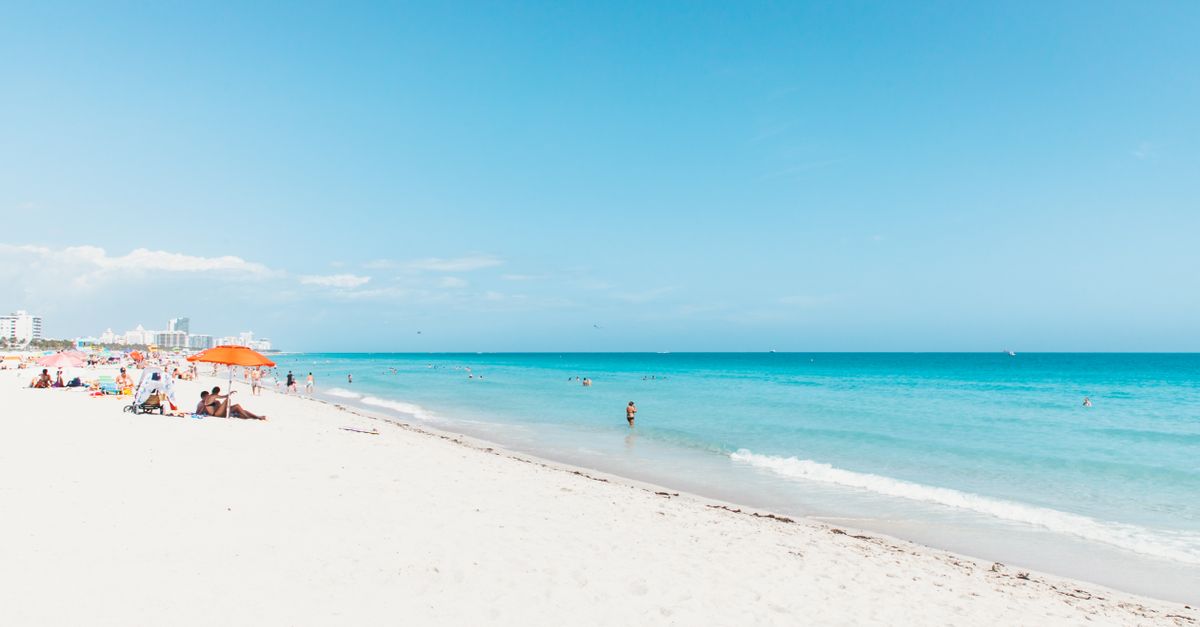
Miami's reputation is built on South Beach, Art Deco hotels, and nightclub culture — which is all real, but it accounts for maybe 10% of a city that is genuinely one of the most culturally complex in North America. The Miami that locals inhabit runs from Little Haiti's street life to Coconut Grove's waterfront parks to Coral Gables' Mediterranean architecture to Overtown's jazz history. These neighborhoods aren't hidden, but they're systematically ignored by tourism infrastructure that profits from keeping visitors on the beach.
This guide is for travelers who want to understand Miami rather than just experience it. You'll find markets, murals, parks, and restaurants that serve the city's actual population: Cuban Americans, Haitian Americans, Colombian immigrants, longtime Miamians of all backgrounds who built this city long before luxury condos arrived. Two to three gems per day will give you a Miami that feels genuinely earned.
Miami moves fast but rewards the patient. The neighborhoods here are separated by driving distances that feel intimidating at first, but most clusters are walkable once you're in them. Rent a car or use Lyft between neighborhoods, then walk when you arrive.

1. Little Haiti's Caribbean Marketplace
The Caribbean Marketplace on NE 2nd Avenue in Little Haiti was designed in 1990 to resemble the Iron Market in Port-au-Prince, Haiti's historic market hall. It sits in the heart of a neighborhood that is one of Miami's most culturally distinct and most frequently overlooked by tourists: Little Haiti runs from 54th Street to 85th Street along NE 2nd Avenue, and within that corridor you'll find Haitian bakeries, botanicas selling ritual herbs, Creole restaurants serving griot (fried pork) and rice, and murals covering entire building facades.
Little Haiti developed organically beginning in the 1970s as Haitian refugees settled in what was then a declining neighborhood, building an economy and community that has endured despite significant gentrification pressure. The neighborhood's identity is fiercely maintained by longtime residents.
Drive or take the 10 bus north from downtown to NE 54th Street and 2nd Avenue. Walk south along NE 2nd Avenue through the commercial heart of the neighborhood. Spend time at the Tap Tap Restaurant (NE 2nd Ave) for Haitian food and extraordinary interior murals, and at the Little Haiti Cultural Complex for community programming.
Meals at Haitian restaurants typically $12–18. The Caribbean Marketplace vendors sell crafts, produce, and Haitian goods. Best visited on Saturday mornings when activity is highest. Treat the neighborhood respectfully — this is a working community, not a cultural display.
2. Overtown's Historic Black Miami
Overtown was Miami's only neighborhood where Black residents were permitted to live during segregation, and it became, improbably, one of the great jazz and entertainment districts in the American South. Ella Fitzgerald, Nat King Cole, and Louis Armstrong performed at the Lyric Theatre on NW 2nd Avenue when they couldn't stay in Miami Beach hotels. That theatre has been restored and still hosts performances; the surrounding Folklife Village market operates on weekend mornings with local vendors, food, and live music.
The construction of I-95 directly through Overtown in the 1960s destroyed much of the neighborhood's physical fabric — a pattern repeated across Black American neighborhoods. What survived, including the Lyric Theatre and the D.A. Dorsey House, is the foundation of a serious preservation and revitalization effort.
Located just northwest of downtown Miami — a 10-minute Uber or 15-minute walk from downtown hotels. The Lyric Theatre is at 819 NW 2nd Avenue; check their schedule online for performances. The Folklife Village Market operates Saturday mornings around NW 2nd Avenue and 8th Street.
Lyric Theatre event tickets typically $15–40. Market browsing is free; budget $10–15 for food and drinks from vendors. Combine with a visit to the Black Archives History and Research Foundation of South Florida for historical context ($5 suggested donation).
3. Coconut Grove's Kampong Garden
Most Miami visitors who make it to Coconut Grove spend their time at CocoWalk or along the waterfront parks. The Kampong — the former estate of David Fairchild, the botanist who introduced dozens of tropical plants to the United States — sits quietly a few blocks away, largely unknown. The 9-acre garden on Brickell Avenue features tropical trees and plants of extraordinary diversity: cacao, mango varieties collected from around the world, palms, cycads, and flowering trees that create a canopy unlike anything else in the city.
Fairchild's collecting expeditions in the late 19th and early 20th centuries brought plants from Southeast Asia, Africa, and the Pacific to American agriculture. The Kampong was his personal garden, and its mature specimens represent over a century of growth in Miami's ideal tropical climate.
Located at 4013 Douglas Road in Coconut Grove — short Uber from CocoWalk or a 20-minute walk from the main commercial area. Tours are offered by the National Tropical Botanical Garden, which now manages the property. Reservation required in advance.
Tours approximately $10–15 per person. Advance booking essential — visit ntbg.org for the Kampong schedule. Combine with a meal at GreenStreet Café on Main Highway in the Grove ($18–30) and a walk along the waterfront to Peacock Park.
4. The Design District's Hidden Courtyards
Miami's Design District has been heavily developed into a luxury retail destination, but within that development the architects created a series of courtyards, rooftop spaces, and alley passages that are extraordinary for outdoor public art and architecture. The Palm Court at NE 39th Street features a monumental mosaic installation by Urs Fischer; the surrounding buildings are covered in commissioned artworks by John Baldessari, Daniel Buren, and others. This is world-class public art in a context most visitors walk past without looking up.
The Design District's transformation from furniture showrooms to art-integrated luxury retail happened in the 2000s and 2010s, driven by developer Craig Robins and a series of curatorial relationships with major international artists. The public art program was a genuine commitment, not a decoration strategy.
Located between NE 38th and 42nd Streets, N Miami Avenue and NE 2nd Avenue. Most accessible by Uber — about 10 minutes from South Beach or Wynwood. The Palm Court and surrounding passages are free to walk through regardless of retail access.
Free to explore. Budget nothing unless you want to visit the Institute of Contemporary Art Miami (ICA Miami), which is free admission and located at the edge of the district on NE 41st Street — one of the best free art museums in Florida.
5. Virginia Key Beach and its Civil Rights History
Virginia Key Beach — accessible by a short causeway from the Rickenbacker Causeway — was the only public beach in Miami where Black residents were permitted during segregation, established in 1945 after a "wade-in" protest by civil rights activists. The beach was closed in 1982 and sat abandoned for decades before community activism reopened it as a historic park. Today it's a quiet, beautiful beach with historic markers, a restored vintage carousel, and a fraction of the crowds at South Beach or Crandon Park.
The historic mini-train and carousel have been restored by community volunteers and operate on weekends. The park's Historic Beach Restoration Project has documented oral histories of Miami's Black beach culture that are available at the park's visitor center.
Drive or bike across the Rickenbacker Causeway — parking at the beach entrance costs $6–8. Cyclists access via the Rickenbacker Causeway bike path, one of Miami's most scenic rides. Open daily; weekday visits offer near-solitude on a genuinely beautiful beach.
Park entrance $6–8 per vehicle. Bike rental nearby in the Bayside area for $15–25/day. The beach has a small snack bar on weekends. Combine with a kayak rental from the Virginia Key Outdoor Center on the north side of the island ($30–45/hour).
6. Little Havana's Calle Ocho Beyond the Tourist Stretch
The tourist infrastructure on Calle Ocho (SW 8th Street) concentrates between 12th and 17th Avenues: Maximo Gomez Park (Domino Park), Versailles restaurant, the Walk of Fame stars. Walk west from 17th Avenue toward 27th Avenue and the neighborhood becomes primarily residential and commercial in ways that feel genuinely Cuban-American rather than performed. Botanicas, private social clubs, bakeries selling Cuban pastries, and small restaurants with handwritten menus serve the actual community that still lives here.
Little Havana's population has diversified significantly — large Nicaraguan, Colombian, and Venezuelan communities now share the neighborhood with Cuban Americans — but the Cuban cultural markers remain dominant. The neighborhood's identity is a living thing, not a museum exhibit.
Take the 8 Metrobus or an Uber to Calle Ocho around 20th Avenue. Walk west, stop for cafe con leche ($2) at any of the small coffee windows (ventanitas), and follow your curiosity. The Tower Theater at 1508 SW 8th is a community cinema worth checking for programming.
Budget $15–25 for a full Cuban lunch (Cuban sandwich, cafe con leche, pastelito) spread across multiple stops. Avoid Versailles unless you genuinely want the experience — equivalent food at half the price exists throughout the neighborhood.
7. Coral Gables' Underground Biltmore Pool
The Biltmore Hotel in Coral Gables is famous for its architecture and history, but the largest hotel pool in the continental United States — which sits in its landscaped grounds — is open for day use by non-guests on certain days for a day fee. The pool was built in 1926 and was used as a military hospital in World War II; Johnny Weissmuller trained here before becoming Tarzan. It's an extraordinary piece of Miami history that most tourists never visit because the Biltmore's address (in a quiet residential neighborhood of Coral Gables) doesn't appear on standard Miami itineraries.
Coral Gables itself deserves more attention than it gets: George Merrick's planned city from the 1920s features Mediterranean Revival architecture of genuine quality, canals, and the Venetian Pool — another swimming hole carved from a former coral rock quarry, fed by artesian springs, and listed on the National Register of Historic Places.
Drive or Uber to Coral Gables — about 30 minutes from South Beach. The Biltmore is at 1200 Anastasia Avenue. The Venetian Pool is at 2701 De Soto Boulevard — open Tuesday through Sunday, admission $15 for adults. Day use at the Biltmore pool varies by season; call ahead.
Venetian Pool: $15 adults. Biltmore pool day fee: $30–50, varying by season. Combine with lunch at the Biltmore's Sunday brunch or at one of the restaurants along Miracle Mile in downtown Coral Gables ($20–40 per person).
8. Wynwood Beyond the Walls
Wynwood Walls is the famous outdoor mural park, well-marketed and genuinely impressive. But the surrounding neighborhood grid — particularly NW 24th, 25th, and 26th Streets between N Miami Avenue and NW 5th Avenue — is covered in equally significant murals on buildings that are not curated, not ticketed, and not named. Walking these blocks is a different experience from the Walls: more improvisational, more urban, more likely to include works by emerging artists you haven't heard of alongside work by internationally recognized names.
Wynwood's transformation from a warehouse district to an art destination happened rapidly in the early 2010s, driven initially by the Art Basel Miami Beach fair and by property developer Tony Goldman's vision. The neighborhood has since become expensive and heavily commercialized, but the street art ethic persists in the blocks beyond the main commercial corridor.
The Wynwood Walls are at NW 2nd Avenue and 26th Street. From there, walk north and west into the surrounding blocks. The intersection of NW 25th Street and 2nd Avenue, and the stretch of NW 23rd Street west of 2nd Avenue, have consistently high concentrations of significant work.
Wynwood Walls admission: $12. Surrounding street murals: free. Budget $20–30 for drinks at one of the many bars and restaurants in the neighborhood. Coyo Taco and Kyu restaurant are both excellent (mains $15–28).
9. The Ancient Spanish Monastery
In North Miami Beach, in a quiet neighborhood at 16711 West Dixie Highway, stands a 12th-century Cistercian monastery that was built in Segovia, Spain, disassembled stone by stone in 1925 by William Randolph Hearst, shipped to New York, and eventually reassembled in Florida in the 1950s. It is, without exaggeration, one of the strangest historical objects in the Western Hemisphere — an authentic medieval building transplanted to subtropical Florida. The cloisters, the chapel, and the surrounding gardens are beautiful and genuinely old.
Hearst bought the monastery as a piece of his collection but never reassembled it; the crates sat in a New York warehouse for decades before the stones were sorted, matched, and gradually reconstructed in their current location. The story of its reconstruction is as interesting as the building itself.
Drive or Uber north to North Miami Beach — about 30 minutes from Downtown Miami. The monastery is at 16711 W Dixie Hwy. Open Monday through Saturday 10am–4:30pm, Sunday 11am–4:30pm. Admission around $10–12 for adults.
Admission approximately $10–12 adults. The on-site gift shop sells local honey and religious items. Combine with a visit to Oleta River State Park nearby for kayaking and paddleboarding in Biscayne Bay ($6 entry, kayak rentals $30/hour).
10. Matheson Hammock Park's Atoll Pool
South of Coconut Grove on Old Cutler Road, Matheson Hammock is a Miami-Dade county park that most Miami visitors never visit despite containing one of the region's most photogenic swimming spots: the atoll pool, a manmade tidal pool that flushes naturally with Biscayne Bay water. It looks, in photographs, like a Caribbean lagoon — shallow, clear, warm, surrounded by tropical plantings and a view across the bay. On weekdays, you'll share it with a handful of families and local regulars.
The park's surrounding mangrove and hardwood hammock ecosystem is one of the best preserved near Miami. Walking the nature trails through the hammock gives genuine exposure to South Florida's native ecology — rare enough in a region that has been so thoroughly developed.
Drive south on Old Cutler Road from Coconut Grove — about 15 minutes. The park entrance fee is $7 per vehicle. The atoll pool is a short walk from the parking area. A marina, boat ramp, and small restaurant are also on site.
Entry $7 per vehicle. Park open sunrise to sunset. Weekdays are dramatically less crowded than weekends. Bring snorkeling gear — the tidal pool has small fish and good water clarity on calm days. The marina restaurant serves casual seafood for $12–20 per person.