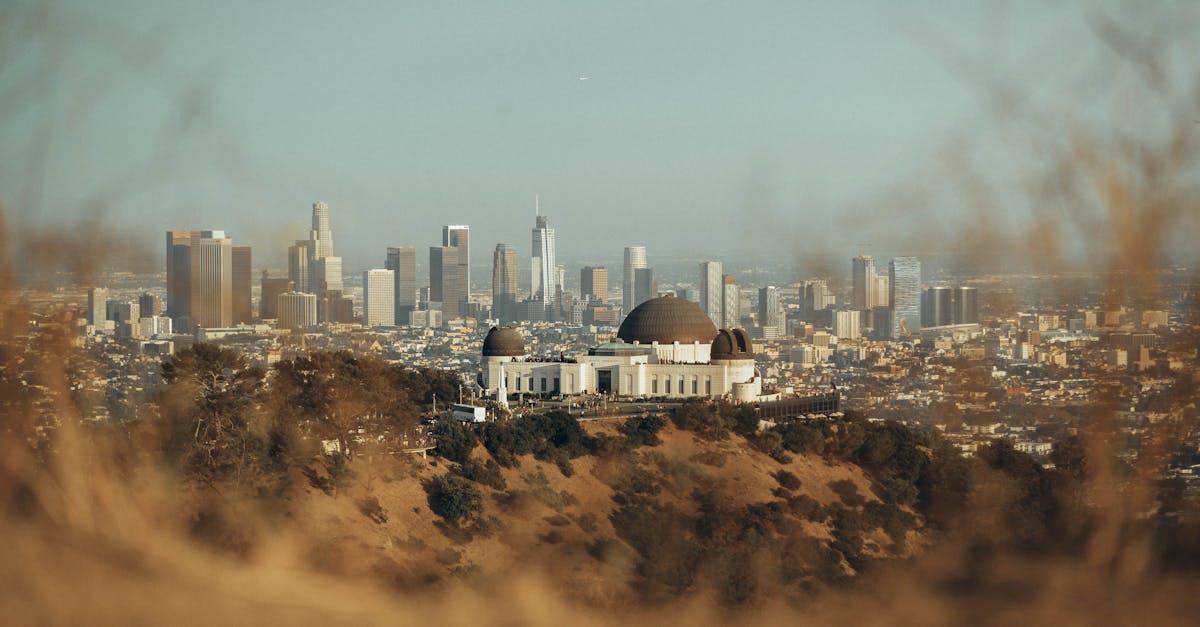
Los Angeles is the most misunderstood major city in America — a place that most people think they understand from film, television, and reputation before they arrive, and which turns out to be something far more complex, diverse, and interesting than any of its representations suggest. The city is not one city but a collection of dozens of distinct communities spread across a vast metropolitan area of 13 million people, each with its own character, food culture, architecture, and social dynamic.
The tourist infrastructure of Los Angeles — Hollywood Boulevard, the Walk of Fame, Universal Studios, the Griffith Observatory — tells perhaps 5% of what the city actually is. The remaining 95% is in the neighborhoods: the Mexican-American culture of East Los Angeles and Boyle Heights, the Korean enclave of Koreatown, the Japanese-American legacy of Little Tokyo and Sawtelle, the Ethiopian restaurants of Fairfax, the Vietnamese neighborhood of Westminster (technically Orange County but accessible from LA), and the extraordinary cultural institutions that exist in a city that has been reinventing itself since the California Gold Rush.
Los Angeles is expensive for accommodation (budget $100–180/night for a decent room) but moderate for food and entertainment — an excellent meal costs $15–30, a museum admission $15–25, public transit $1.75 per journey. The car remains the primary transport in most of LA, but Metro and bus lines serve many of the neighborhoods in this guide. Budget $150–250/day including accommodation. The US dollar is used throughout.

1. Boyle Heights — East LA's Soul
Boyle Heights, east of downtown across the Los Angeles River, is the historic center of Mexican-American culture in Los Angeles — a neighborhood that has been home to successive immigrant communities (Japanese-American before the war, Jewish before that) and has been continuously Mexican-American since the 1940s. The neighborhood is the cultural capital of Chicano Los Angeles, home to extraordinary murals, the best tacos in the city, and a community cultural life that exists entirely outside the tourist economy.
Mariachi Plaza (Boyle Avenue and 1st Street) is the social center of Mexican-American Boyle Heights — a plaza where mariachi musicians in full traditional costume gather from morning through evening, available for hire but also simply present, creating an atmosphere of living musical tradition in a corner of Los Angeles that the tourist buses never reach. The adjacent Cielito Lindo restaurant (established 1934, in the same family) serves the original taquitos dorados that the restaurant invented — fried rolled tacos with guacamole and salsa — for $3–4 each.
Drive, ride share, or take the Metro Gold Line to Mariachi Plaza station — direct from downtown Union Station in 10 minutes. The neighborhood is free to explore; the food is very affordable (tacos $3–5 each at any of the dozens of excellent taquerias on 1st Street and Cesar Chavez Avenue). The Mercado La Paloma indoor market at 3655 S Grand Avenue in South Central is an extraordinary cultural institution — a diverse food hall in a repurposed warehouse serving the entire diversity of LA's immigrant food cultures under one roof.
The murals of Boyle Heights are some of the most significant public art works in Los Angeles — the tradition of Chicano muralism (extending from the Mexican muralist movement of Diego Rivera, David Siqueiros, and José Clemente Orozco) has produced extraordinary public works throughout the neighborhood. The Self Help Graphics & Art organization at 1300 E 1st Street has been at the center of Chicano art in LA since 1970 and welcomes visitors to its open studio events and gallery. Check selfhelpgraphics.com for current programming.
2. The Getty Center — More Than One Museum
The Getty Center above Brentwood is primarily known for its European old masters collection (one of the finest in the American West) and for its Richard Meier architecture. What is less known is the extraordinary collection of illuminated manuscripts, the photography collection, and the decorative arts holdings that together make the Getty one of the most comprehensive cultural institutions in the United States — and it is entirely free to visit (parking costs $20, but arriving by MTA bus 761 from UCLA or Sepulveda Metro station avoids this).
The illuminated manuscripts collection is one of the finest in the Americas — including extraordinary examples of Flemish and Italian manuscript illumination from the 13th–16th centuries that stand alongside the best in European cathedral collections. These materials are rotated on display in the Getty Research Institute and the museum galleries; check the current exhibition schedule at getty.edu. The decorative arts galleries on the lower floor contain complete period room reconstructions from 18th-century France that are among the finest in any American museum.
The Getty Center is at 1200 Getty Center Drive, Los Angeles. Free admission, $20 parking. Open Tuesday to Friday and Sunday 10am to 5:30pm, Saturday 10am to 9pm. Arrive by bus 761 from Westwood/UCLA (5 minutes) for free transportation to the hilltop tram. The hilltop gardens, designed by Robert Irwin in a central garden canyon that changes with each season, are one of the finest contemporary garden designs in California and entirely free to enjoy without entering the museum.
The Getty Villa in Pacific Palisades (a different institution in the same foundation) is the more hidden Getty experience — a recreation of a first-century Roman villa housing the antiquities collection that J. Paul Getty assembled over 50 years. The collection of Greek, Roman, and Etruscan art is remarkable, and the villa building itself (modeled on the Villa dei Papiri in Herculaneum) creates an immersive ancient Mediterranean atmosphere that is unlike any other museum experience in Southern California. Free admission, timed entry tickets required at gettymuseum.org. Take bus 734 or 534 from Santa Monica.
3. Grand Central Market — Downtown's Food Hall
Grand Central Market, in a 1917 Beaux-Arts building in the heart of downtown Los Angeles, has been the city's primary indoor food market for over a century and recently became one of the finest food halls in the United States — a mix of century-old stalls (the Mexican vendors who have been selling pupusas and carnitas since before World War II) and newer vendors representing LA's current food culture (natural wine, Japanese katsu, vegan Filipino) coexisting in a space of extraordinary social diversity.
The market is at 317 S Broadway, directly across from the Bradbury Building in downtown. Open daily 8am to 9pm. Free to enter. The stalls range from the historic egg and cheese vendor (still there, still selling to the downtown restaurant trade from 6am) to the now-famous Eggslut (egg sandwiches, always a queue) to the Valeria's pupusa stall (the best pupusas in downtown, TRY the Loroco y queso) to the Ana Maria's Mexican breakfast stall that has been serving the same chile verde since 1962. Budget $12–18 for a full meal at any stall.
The surrounding downtown Los Angeles neighborhood is one of the most architecturally extraordinary in the United States — the Broadway Historic Theater District (12 surviving movie palaces from the 1920s on a single block), the Spring Street Financial District (Chicago-style commercial buildings from the 1920s-30s in better condition than almost any comparable American city block), and the Bradbury Building (1893, the most extraordinary Victorian commercial building in the western United States, visible from the market) together constitute a concentrated architectural experience rarely available outside New York.
The Angel's Flight funicular (built 1901, current version restored) from Grand Central Market to Bunker Hill connects the old downtown market to the contemporary downtown — the Disney Concert Hall (one of Frank Gehry's greatest buildings, free to enter the lobby and gardens), the Broad Museum (free with timed entry, excellent contemporary collection), and MOCA (Museum of Contemporary Art, $18 adult). The funicular costs $1 per ride and operates daily 6:45am to 10pm. The Bunker Hill quarter is the most architecturally interesting part of contemporary LA.
4. Watts Towers — The Outsider Art Monument
The Watts Towers, in the Watts neighborhood of South Los Angeles, are the most extraordinary work of outsider art in the United States and one of the great works of 20th-century folk architecture in the world — 17 interconnected towers reaching up to 30 metres, built over 33 years (1921–1954) by Italian immigrant tile setter Simon Rodia using steel pipes, wire mesh, cement, and an estimated 70,000 pieces of found material: sea shells, broken glass, pottery shards, and tile fragments. Rodia built them alone, without power tools, and then simply left when they were done.
The towers are a UNESCO World Heritage nominee and a California Historical Landmark. The surrounding Watts Towers Arts Center hosts community arts programming and the annual Watts Towers Jazz Festival (September) — one of the most important free jazz events in Southern California. The combination of the towers and the jazz festival makes the September visit the most complete experience of both the art and the community context in which it exists.
Take the Metro Blue Line from downtown to the 103rd Street/Watts Towers station — 30 minutes, $1.75. The towers are at 1727 E 107th Street, a 5-minute walk from the station. Admission to the grounds is $7 for adults, guided tours run on weekends ($12, 1 hour). The towers are lit at night and visible from outside the fence at any hour. The surrounding neighborhood is in an area of Los Angeles with high poverty statistics; show normal urban awareness but the towers attract respectful visitors from across the city and internationally throughout the week.
The Watts neighborhood has a specific historical significance in 20th-century American history — the 1965 Watts Uprising (widely called the Watts Riots at the time) was a 6-day revolt against police brutality and systemic discrimination that killed 34 people and resulted in $40 million in property damage. The context for understanding the towers and the neighborhood is significantly richer with some knowledge of this history. The California African American Museum at Exposition Park (free, 30 minutes from Watts by transit) provides the best contextual framework.
5. Koreatown — The 24-Hour City
Koreatown, the dense urban neighborhood 3 miles west of downtown, is the most interesting neighborhood in Los Angeles for a concentrated food and cultural experience — a 24-hour, high-density urban neighborhood with the best Korean barbecue outside Seoul, extraordinary karaoke culture, the finest Korean spa (jjimjilbang) outside Korea, and a community energy that operates at full intensity from 6am to 4am without pause. Koreatown is where LA feels most like a global city.
Korean barbecue in Koreatown: the neighborhood has over 100 restaurants, from the famous (Soowon Galbi, Park's BBQ) to the local favorites that no tourist publication has discovered. The standard Korean BBQ experience — grilling short rib (galbi) or pork belly (samgyupsal) on a table grill, wrapping in lettuce leaves with fermented soybean paste (doenjang), garlic, and chili — costs $25–45 per person including the dozen side dishes (banchan) that arrive automatically. Always ask about the "chef's choice" special at smaller restaurants — frequently the best value.
Wi Spa at 2700 Wilshire Blvd, open 24 hours, is the finest Korean spa (jjimjilbang) in North America — a massive multi-floor complex with gender-segregated hot baths, cold plunges, jade rooms, salt rooms, and communal mixed-gender heated rooms with mats for sleeping. Day admission $35. The experience runs from 2 hours (a focused spa visit) to 12 hours (a full overnight stay during which thousands of Koreans and increasingly diverse Angelenos sleep on the heated floors). Bring a change of clothes and a towel; everything else is provided.
The street life of Koreatown along Wilshire Blvd, Western Ave, and 6th Street includes some of the finest Korean grocery stores in the United States (H Mart at Vermont Ave is the most comprehensive), Korean street food vendors (tteokbokki — spicy rice cakes — at $5 per portion), and the extraordinary nocturnal energy of the neighborhood's karaoke establishments (norebang), where private rooms cost $15–25/hour and are open until 4am. Koreatown is the best argument for Los Angeles's status as one of the world's great cities.
6. Griffith Park Trails — The Hidden Hikes
Griffith Park, the 4,217-acre urban wilderness directly above Hollywood and Los Feliz, is best known for the Griffith Observatory (whose exterior famously appeared in Rebel Without a Cause) and the tourist trail to the "Hollywood" sign. Less known are the park's 50 miles of hiking trails through oak woodland and chaparral that give views of the entire LA basin, the San Gabriel Mountains, and the Pacific Ocean — accessible free of charge from multiple trailheads and hiked primarily by neighborhood residents and serious LA hikers.
The Old Zoo trail (from the Old Zoo parking area in the eastern park) explores the ruins of the original LA Zoo — the concrete enclosures, grottoes, and cages left from the 1920s zoo are now covered in graffiti and colonized by vegetation, creating an extraordinary urban ruin of unusual atmosphere. The 1.5-hour circuit is entirely free, mostly flat, and visited primarily by local dog-walkers and the occasional urban archaeology enthusiast. The ruins include some remarkable original painted frescos on the concrete walls, now partially legible beneath the graffiti.
Take Metro Red Line to Vermont/Sunset station, then bus DASH Griffith to the park, or drive to any of the multiple trailheads. The Fern Dell entrance (4730 Crystal Springs Dr) is the most atmospheric starting point — a shaded fern-lined path along a seasonal stream before climbing to the oak woodland above. The Charlie Turner Trail from the Griffith Observatory parking lot to the summit of Mount Hollywood (1,625 feet) takes 90 minutes return and gives the best view of the full LA basin, from the Pacific to the San Bernardino Mountains.
The Griffith Park Merry-Go-Round (1926, fully restored original horses, $3 per ride, Sunday afternoons) is the most charming anachronism in Los Angeles — the same carousel that Walt Disney's daughters rode while their father sat watching and conceived the idea of a family theme park that eventually became Disneyland. The merry-go-round operates on weekends and holidays, $3 per ride, and is attended entirely by local families who regard it as a heritage institution rather than a tourist attraction.
7. Echo Park and Silverlake — The Creative Neighborhoods
Echo Park and Silver Lake, directly northwest of downtown, are the historic center of LA's creative class — the neighborhoods where the music scene (the LA punk and indie tradition), visual art, independent film, and the literary culture of the city have concentrated since the 1970s. Both neighborhoods have gentrified significantly but retain creative energy, particularly in the independent galleries, record shops, bookstores, and small-venue music culture that continues to define their character.
Echo Park Lake, recently restored after a 2021 controversy over the displacement of a homeless encampment, is one of the finest public spaces in Los Angeles — a natural lake with pedal boats, walking paths, and lotus flowers that bloom in extraordinary quantities in summer (June-July), creating a visual spectacle that photographers from across the city converge on. The Saturday morning market around the lake (8am-1pm) has some of the best artisan food producers in the city.
Silver Lake Reservoir — the actual reservoir after which the neighborhood is named — has a 2.2-mile walking and cycling path around its perimeter that is one of the best urban walks in LA and almost entirely populated by neighborhood residents rather than visitors. The views of the downtown skyline from the eastern bank are excellent and the path passes through several of Silver Lake's most architecturally interesting streets. Free access, available dawn to dusk.
The Sunset Strip section through Silver Lake and Echo Park (different from the West Hollywood Sunset Strip) has several of the best independent music venues in LA — the Echoplex and Echo (adjacent venues at 1822 W Sunset Blvd) book emerging and established acts in an intimate setting for $10–20 per ticket. The independent record shops on Sunset Blvd in Silver Lake (Vacation Vinyl, Origami Vinyl) are the best in the city for used vinyl and independent releases. Budget $20–40 for a full evening of music in this area.
8. Olvera Street and Chinatown — Historic Downtown
Olvera Street, the oldest street in Los Angeles, preserves the original Mexican pueblo settlement of 1781 as a historic district of restaurants, craft stalls, and festivals in the heart of downtown. It is genuinely touristy but also genuinely historical — the Avila Adobe (1818) is the oldest surviving building in Los Angeles, and the connection to the city's pre-American history is more visceral here than anywhere else in the downtown area.
The adjacent Chinatown (New Chinatown, established 1938 after the original was destroyed by Union Station construction) has experienced a remarkable cultural renaissance over the past decade — galleries, independent boutiques, and excellent Chinese-American restaurants coexisting with the traditional herbal medicine shops, Buddhist temples, and elderly residents who have been in the neighborhood for 50+ years. The Saturday morning dim sum at Yang Chow (819 N Broadway) has been unchanged since 1977 and is the best value meal in downtown LA ($3–5 per dim sum plate).
Walk from Union Station (Metro hub for 4 lines) north on Alameda to Olvera Street, then west 2 blocks to Chinatown along Alpine Street. The entire circuit is 20 minutes walking. The Plaza at Olvera Street has free performances on weekends, particularly during the Día de los Muertos celebrations in early November — one of the most beautiful and most emotionally affecting public celebrations in Los Angeles. The combination of Olvera Street, Chinatown, and the adjacent Bunker Hill cultural district constitutes the densest cultural itinerary in the city's downtown area.
The Los Angeles State Historic Park, adjacent to Chinatown, is one of the newest large parks in the city — 32 acres of grassland along the LA River that has become the primary outdoor event space for the downtown neighborhood. Free concerts, farmers' markets, and community events are programmed throughout the year. The LA River path (currently being developed as a continuous recreational corridor) runs adjacent to the park and gives a completely different perspective on the city's urban geography from the more familiar street level.

9. The Arts District — Industrial Creative
The Arts District, southeast of downtown along the Los Angeles River, is the most concentrated zone of creative industry in Los Angeles — a former warehouse district that has become home to studios, galleries, restaurants, and the city's craft brewing and distilling industry in repurposed industrial buildings. The street art that covers every available wall surface is one of the finest concentrations of commissioned mural art in the United States.
The murals of the Arts District range from large-scale commissioned works by internationally recognized street artists to building-sized commercial murals to neighborhood community art. The 1.5-mile walking tour of the Arts District starting from the 7th Street Metro Center station and following Mateo, Traction, Rose, and 4th Streets passes over 40 significant murals in a concentrated geographic area. Free; best photographed in morning light (east-facing walls) or afternoon (west-facing).
The craft beer scene concentrated in the Arts District and the adjacent Boyle Heights/Eastside area includes some of the finest brewery taprooms in Southern California: Angel City Brewery (taproom open daily, the largest brewery in the district, in a 1902 warehouse), Boomtown Brewery (excellent IPAs, roof access), and the new Homage Brewing in Pomona (weekend trips from LA, the most celebrated craft brewer in the region). Pints $7–9, tastings flights $14–18 for 4 beers.
The ROW DTLA complex at 777 S Alameda is the most ambitious repurposed industrial complex in Los Angeles — former warehouse and truck terminal buildings converted into a curated retail, restaurant, and office development of striking quality. The Smorgasburg food market on Sunday mornings and the rotating art installations throughout the complex make it worth visiting beyond simple restaurant visits. The free outdoor art programming in the ROW DTLA courtyards is consistently excellent and reflects the gallery culture of the Arts District at its most accessible.
10. Malibu Canyons — Beyond the Beach
Malibu is known for its beach — the 21-mile stretch of Pacific Coast Highway frontage with celebrity residences, surf culture, and the extraordinary Nobu Malibu restaurant. Less known is the Malibu canyon country immediately behind the beach — a series of state park and national recreation area lands in the Santa Monica Mountains that contain some of the finest hiking in Southern California, waterfalls, native oak woodland, and an extraordinary Mediterranean ecosystem that blooms in February with wildflowers visible nowhere else in the world.
Malibu Creek State Park (Mulholland Highway entrance, 20 minutes from Pacific Coast Highway) has 8,000 acres of the Santa Monica Mountains including a swimming hole that is one of the best in Southern California — a natural pool formed by Malibu Creek, accessible by a 3-mile round-trip trail. The park also contains the location where the TV series MASH was filmed (the original sets are still partially visible), a rock climbing area, and excellent birding throughout the riparian corridor. Day use fee $10 per vehicle; free with California State Parks annual pass ($125).
Escondido Falls in the Escondido Canyon area of Malibu — accessible from a trailhead on PCH — is the finest waterfall in the Santa Monica Mountains and one of the most beautiful natural features within 30 miles of downtown Los Angeles. The 4-mile round trip hike through coastal sage scrub and riparian forest reaches a 150-foot waterfall that flows year-round from underground springs. Free parking on PCH (arrive early on weekends). The trailhead is at 27000 Pacific Coast Highway.
Leo Carrillo State Beach, 35 miles up PCH from Santa Monica, is the finest all-around beach in the greater Los Angeles area — large enough to never feel crowded, with sea caves accessible at low tide, excellent surfing at the northern break, and a state campground that puts visitors directly on the beach for $35/night. The adjacent Nicholas Flat trail through the state park to the hilltop gives panoramic views of the Channel Islands and the Santa Monica Mountains. Day use $15 per vehicle. The combination of beach, caves, and trail makes Leo Carrillo a full day destination rather than a quick beach stop.