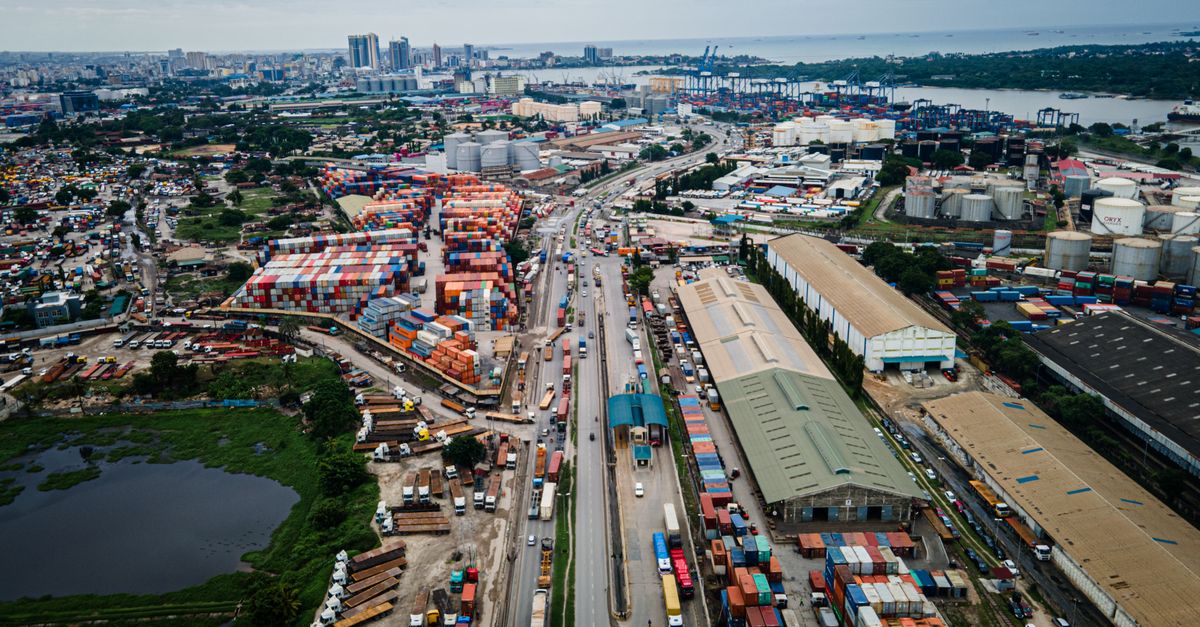
Lagos is Africa's largest city — a metropolis of 15–20 million people (no census has accurately captured it) that is simultaneously the continent's commercial capital, its cultural powerhouse, and the most energetically chaotic urban environment most visitors will ever experience. Afrobeats, Nollywood, Africa's most valuable stock exchange, the world's longest road traffic jams, and some of the most creative entrepreneurship on the planet all coexist in this impossible, extraordinary city on the Bight of Benin.
The city's reputation for intensity deters many visitors who then miss one of the most vivid human experiences available anywhere in Africa. Lagos is not a city to approach passively — it demands engagement, flexibility, and a tolerance for sensory overload. In return, it offers an encounter with contemporary African life at its most creative, most ambitious, and most alive. The art, the music, the food, and the sheer human energy of Lagos are unlike anything else on the continent.
Nigeria uses the naira (NGN). The currency has experienced significant fluctuation; at time of writing approximately NGN 1,500–1,600 per USD. This makes Lagos surprisingly affordable: a yellow danfo (minibus) ride costs NGN 50–200; a plate of pounded yam and egusi soup at a local bukateria (informal restaurant) costs NGN 800–1,500 ($0.50–1 USD); even upscale restaurant meals rarely exceed NGN 15,000–25,000 ($10–16 USD) per person.
1. Lekki Conservation Centre Canopy Walk
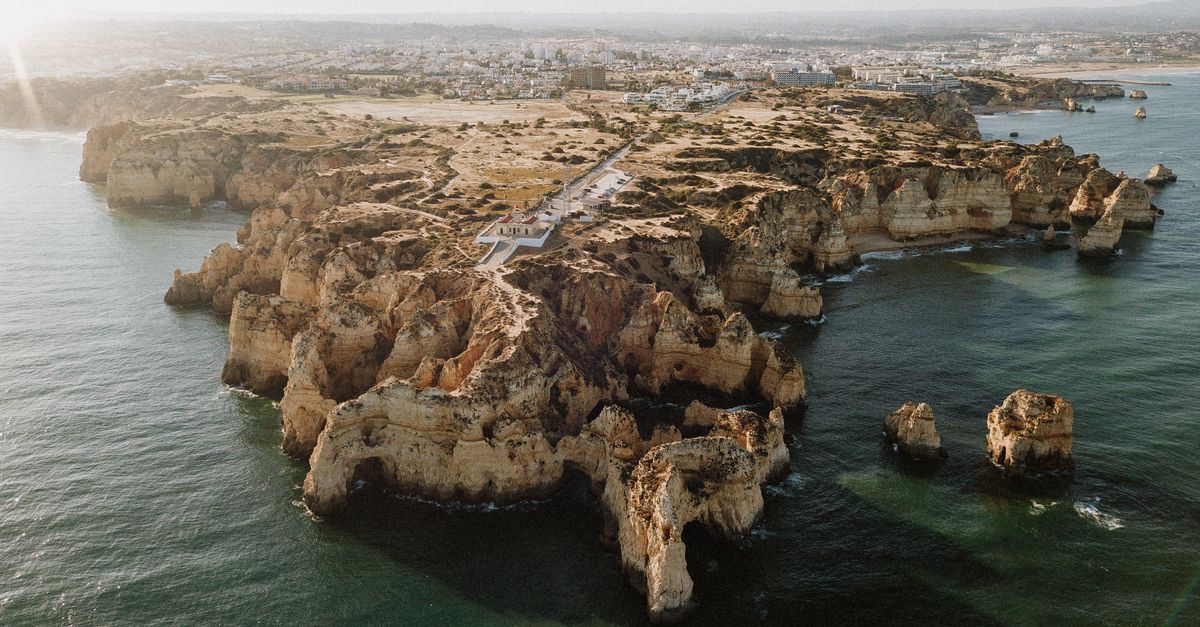
Within the sprawling eastern suburb of Lekki, squeezed between the Atlantic beach and the Lekki Lagoon, the Lekki Conservation Centre preserves 78 hectares of mangrove swamp, savanna, and coastal forest as a wildlife refuge within one of the world's most densely populated urban environments. The centre's canopy walkway — 401 metres long and suspended 22 metres above the mangrove canopy — is Nigeria's longest canopy walkway and one of West Africa's finest wildlife viewing platforms.
The wildlife in LCC is genuinely impressive given the urban context: green mambas, Nile monitor lizards, vervet monkeys, crocodiles in the swamp, and an extraordinary concentration of birds including the African fish eagle, purple swamphen, and the remarkable pied kingfisher. The mangrove ecosystem — the same species of red and white mangrove that lines tropical coastlines worldwide — plays a critical role in protecting Lagos's coastline from erosion and flooding.
The centre is at Km 19 Lekki-Epe Expressway, accessible by taxi from Victoria Island for NGN 3,000–4,000 ($2–2.70 USD) or by danfo to Lekki Phase 1 and a short connecting taxi. Entry costs NGN 2,000 ($1.30 USD) for Nigerians, NGN 5,000 ($3.30 USD) for foreign visitors. Open daily from 8 a.m. to 5 p.m. The canopy walk is most dramatic in the early morning when mist rises from the mangroves and birdsong is at its peak. Bring insect repellent and closed-toed shoes.
The centre's guided nature walks (NGN 3,000 additional) are led by naturalists who can identify birds and explain the ecology of the coastal forest ecosystem. The walk includes a boat trip through the mangrove channels to see crocodiles — genuinely exciting given the animals' size (up to 3 metres) and proximity. The combination of canopy walk and mangrove boat trip takes 3 hours and is one of Lagos's best half-day experiences.
2. Nike Art Gallery in Lekki
Nike Art Gallery in Lekki — founded by the artist and entrepreneur Chief Nike Davies-Okundaye — is the largest privately owned art gallery in West Africa: five floors of a mansion containing over 8,000 works of Nigerian art spanning traditional Yoruba textiles, bronze sculpture, photography, and contemporary painting. The gallery doubles as an art school and craft cooperative, employing over 100 artists and craftspeople who work on-site and sell through the gallery.
Chief Nike herself — when present — is a force of nature: an artist, activist, and entrepreneur who has been collecting, producing, and promoting Nigerian traditional arts since the 1970s. Her tie-and-dye adire textiles (a Yoruba tradition of resist-dyeing cotton using cassava starch and indigo) are internationally collected and the gallery's textile section alone justifies a visit. The contemporary painting section contains work by established and emerging Nigerian artists at prices far below gallery equivalents in London or New York.
The gallery is at 2 Elegushi Road, Lekki Phase 1. Entry is free; gallery-run workshops in adire and batik techniques cost NGN 3,000–5,000 ($2–3.30 USD) and run on weekend mornings. Art prices range from NGN 5,000 for small works to NGN 5,000,000+ for major pieces by senior artists. The gallery ships internationally. Open daily from 10 a.m. to 8 p.m. Take a taxi from Victoria Island for NGN 2,500 or an Uber for significantly less.
Chief Nike's commitment to grassroots art education means that the gallery also functions as a community centre in ways that purely commercial galleries do not. The courtyard regularly hosts live music, communal cooking, and craft demonstrations that draw neighbourhood residents alongside gallery visitors. The building's architectural informality — rooms added gradually as the collection grew — gives it an energy that no purpose-built gallery can replicate.
3. Terra Kulture Arts Centre
Terra Kulture on Victoria Island is Lagos's most important multidisciplinary arts centre — combining a theatre, gallery, restaurant, craft shop, and language school in a compound dedicated to the preservation and contemporary evolution of Nigerian and African cultural traditions. Founded in 2003 by Bolanle Austen-Peters, it has become the cultural anchor of Victoria Island's professional class and the venue where Lagos's literary, theatrical, and visual arts communities converge.
The theatre programme at Terra Kulture — which includes stage adaptations of Chinua Achebe's novels, original Yoruba-language drama, contemporary Nigerian plays, and dance performances — is the best theatrical programming in Nigeria. Tickets cost NGN 3,000–8,000 ($2–5 USD), making this one of the most affordable quality theatre experiences anywhere in the world. The programming schedule is available on the Terra Kulture website; weekend evening performances are the most reliably scheduled.
The restaurant at Terra Kulture serves a refined version of traditional Nigerian cuisine — amala and gbegiri, jollof rice of the highest quality, moi moi, and the full range of Nigerian protein options in a setting of architectural beauty. A three-course meal costs NGN 8,000–15,000 ($5–10 USD). The on-site craft gallery sells Nigerian textiles, bronze sculptures, and contemporary art at curated prices. The language school offers Yoruba and Igbo lessons — a valuable practical addition for visitors planning extended time in Nigeria.
Terra Kulture is at 1376 Tiamiyu Savage Street, Victoria Island. Open Tuesday to Sunday, 10 a.m. to 10 p.m. Accessible by taxi from Eko Atlantic or Bar Beach for NGN 1,000–1,500. The Sunday afternoon programming — which typically combines a live music performance with a Nigerian food market in the compound — is one of the most enjoyable weekly events in Lagos for cultural visitors. The atmosphere is intellectual, convivial, and distinctly Nigerian in a way that the international hotels on VI cannot replicate.
4. Balogun Market's Fabric Section
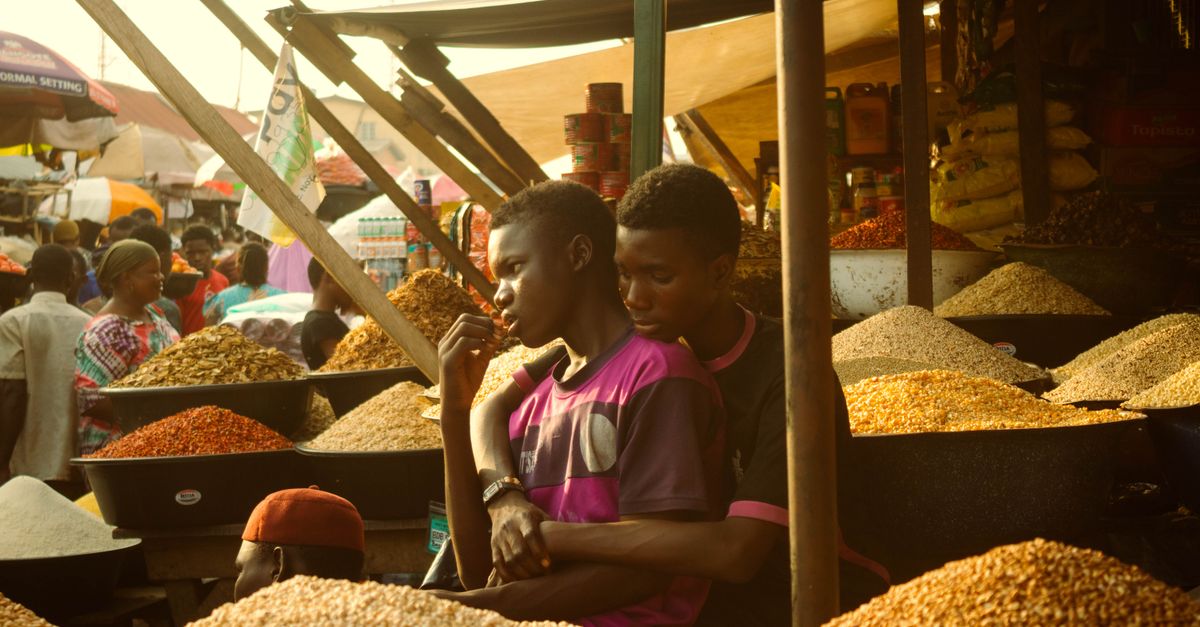
Lagos Island's Balogun Market is the largest and most chaotic commercial market in West Africa — a sprawling, multi-layered trading environment that processes an estimated NGN 20 billion in goods per week. Like Makola in Accra, its reputation for crowding and hustle deters visitors who then miss one of the continent's most extraordinary commercial spectacles. The fabric section alone — covering several city blocks with stalls selling imported Dutch wax print (Vlisco), locally woven aso-oke, lace, and the full range of Nigerian festival fabrics — is a textile museum of living commerce.
Nigerian fabric culture is extraordinarily rich: the aso-ebi tradition (wearing matching outfits to weddings, funerals, and celebrations) drives enormous fabric consumption, and the Balogun market is where Lagos's tailors, Iya-Oge (event stylists), and individual buyers source their material. The Dutch wax print fabrics sold here are the same quality as those sold in fashion boutiques in Paris for five times the price: a 6-yard bolt of genuine Vlisco costs NGN 25,000–45,000 ($16–30 USD) at Balogun versus €80–120 in European boutiques.
Balogun Market is on Lagos Island, accessible by boat from the CMS (Church Missionary Society) waterfront for NGN 100 or by the Eko Bridge road for NGN 500–800 by taxi. The market operates from 7 a.m. to 6 p.m. daily except Sunday. Hire a market guide at the entrance for NGN 1,000–2,000 — essential for navigating the fabric section's bewildering layout and for ensuring you reach the genuine wholesale pricing rather than the tourist markup applied to unaccompanied visitors. The guide will also negotiate on your behalf, which is worth more than the fee.
The market's food section — accessed from the interior alleys — sells the most popular Lagos street food at absolute minimum prices: suya (spiced beef skewers grilled over charcoal) for NGN 500–800, moin moin wrapped in banana leaves for NGN 100–200, and the sweet akara (black-eyed pea fritters) that are Lagos's essential breakfast food for NGN 50–100 each. Eating in the market is both safe and delicious; the stall operators cook for the 20,000 traders who work here every day and quality standards are maintained by customer familiarity rather than health inspectors.
5. Oshodi Market and Street Art
Oshodi — on the mainland, 15 km north of Lagos Island — was for decades the symbol of Lagos's chaotic street trading: a market-souk hybrid that occupied every surface of the Oshodi-Apapa Expressway interchange and became internationally notorious for pickpocketing and general menace. The Lagos State government cleared the market in 2008 as part of a broader urban renewal initiative, and what emerged from the clearance — gradually, unpredictably — was one of Africa's most interesting street art districts.
The concrete pillars of the Oshodi overpass infrastructure have been systematically painted by Nigerian graffiti artists who have used the scale and accessibility of the structures to create murals of extraordinary ambition — portraits of Nigerian heroes (Fela Kuti, Wole Soyinka, Funmilayo Ransome-Kuti), abstract compositions in Yoruba geometric tradition, and social commentary addressing Lagos's housing crisis, traffic chaos, and political accountability. The work changes constantly; new pieces appear over old ones in an evolving cityscape of concrete and colour.
Oshodi is accessible by danfo from Lagos Island (NGN 100) or by Lagos Rail Mass Transit from the central station (NGN 100–150). The street art is most concentrated under the overpass on the Expressway's eastern side. Visit on a weekday morning; the area is active with market commerce and the murals are most visible before the day's traffic obscures them with exhaust haze. Photography is welcomed by the artists — they maintain Instagram accounts and appreciate documentation.
The Oshodi area also has one of Lagos's most active bukateria cultures: informal eating houses (shacks, really) serving traditional Lagos food at absolute rock-bottom prices. Eba with egusi soup costs NGN 600–800; amala and ewedu (jute leaf soup) with gbegiri (bean soup) is NGN 700–1,000. These are the flavours that Lagosians grew up on and that the international restaurant scene in VI and Lekki has spent a decade trying to refine for wealthier palates. At a bukateria, they are simply lunch.
6. Freedom Park on Lagos Island
In the heart of Lagos Island, on the site of the former Broad Street Prison — where colonial authorities imprisoned Nigerian independence activists including Herbert Macaulay and early NCNC agitators — Freedom Park opened in 2010 as a public cultural space and living memorial to Nigeria's independence struggle. The 8,000 sqm park preserves the prison's original cell blocks as monument spaces while adding performance stages, art galleries, a restaurant, and gardens that have transformed the site into one of Lagos Island's most pleasant public spaces.
The Heritage Centre in the converted prison building contains permanent exhibitions on Nigerian colonial history, the independence movement, and the lives of political prisoners held here. Photographs, documents, and personal objects from the prison era contextualise the park's transformation from site of oppression to site of freedom with appropriate gravity. The exhibition design is among the best in Nigeria.
Freedom Park hosts regular live music events — Jazz in the Park (every last Sunday of the month, 4–9 p.m., free entry) is the most established, featuring some of Lagos's finest jazz musicians in an outdoor setting of real beauty. The park's outdoor stage also hosts theatre performances, film screenings, and poetry nights throughout the year. Check the park's social media for the current monthly programme. The restaurant serves good Nigerian food at moderate prices (NGN 3,000–6,000 per person).
Freedom Park is at 1 Hospital Road, Lagos Island, accessible from the CMS waterfront in 10 minutes on foot. Entry to the park is NGN 500 ($0.33 USD); entry to the Heritage Centre is included. Open Tuesday to Sunday, 10 a.m. to 10 p.m. The park is surrounded by some of Lagos Island's finest surviving colonial architecture: the Supreme Court building (1926), the Central Bank (1964), and the Law School — all within a 5-minute walk and forming a coherent architectural narrative from colonial to independence-era Lagos.
7. Mushin and Alaba Music Electronics Markets
Alaba International Market in the Ojo area of Lagos mainland is the largest electronics wholesale market in West Africa — a vast collection of warehouses and open stalls processing an estimated $2 billion in electronics annually, selling everything from Chinese-manufactured smartphones to second-hand European electronics to locally assembled audio equipment. It is also the epicentre of Nigeria's music production equipment trade: the mixing desks, monitors, and software that power Afrobeats studios across West Africa filter through Alaba.
For music technology enthusiasts, Alaba is extraordinary: genuine professional audio equipment at prices 40–60% below retail, alongside Chinese-manufactured alternatives of varying quality, in a setting where every trader is simultaneously salesman, installer, and technical adviser. Navigating the quality hierarchy requires knowledge; bring a technically literate Nigerian friend or connect with one of the professional studio engineers who shop here regularly for the best guidance.
Alaba is on the Lagos-Badagry Expressway, approximately 25 km from Lagos Island. Danfos from Mile 2 bus terminal cost NGN 200–300; the journey takes 45–60 minutes depending on traffic. The market is open Monday to Saturday from 8 a.m. to 6 p.m. For visitors without specific electronics purchasing intentions, the market is still fascinating as an object lesson in informal African commerce — the logistics of moving a million units of consumer electronics through an entirely informal distribution system with no fixed prices, no manufacturer warranties, and no inventory management beyond the memory of individual traders.
Mushin, on the mainland 8 km north of Lagos Island, is the spiritual home of Afrobeats: the neighbourhood where Fela Kuti grew up, where jùjú music (the predecessor to Afrobeats) was developed by King Sunny Ade and his contemporaries, and where the Lagos street culture that defines contemporary Nigerian popular music originated. The neighbourhood's music venues — unpretentious open-air bars with corrugated iron roofs and powerful sound systems — are where the next generation of Afrobeats artists develops and performs. Ask any Lagos music journalist for the current Mushin venue recommendations; they change faster than any publication can keep up.
8. Lagos Biennial at Various Venues
The Lagos Biennial — held in even-numbered years across multiple venues throughout the city — has become one of the most significant contemporary art events in Africa, positioning Lagos alongside Dakar and Johannesburg in the continent's art world. The biennial commissions Nigerian and international artists to respond to Lagos specifically, and the resulting works — installed in everything from the National Museum to abandoned industrial facilities to public squares — engage with the city's chaos, creativity, and contradictions in ways that conventional museum displays cannot.
Between biennials, Lagos's permanent contemporary art scene is concentrated in the Victoria Island and Lekki areas. Rele Gallery on Lawal Ajao Street, VI, represents some of Nigeria's most internationally recognised contemporary artists and holds regular exhibitions open to the public. Tafeta Gallery in Ikoyi is the most commercially serious gallery in Nigeria, with prices and quality consistent with upper-tier international gallery standards. Both are free to visit and maintain walk-in hours.
The Thought Pyramid Art Centre in Abuja (a 50-minute flight from Lagos) is the national capital's equivalent, but Lagos remains the centre of Nigerian contemporary art. The work being produced here — engaging with Yoruba cosmology, Nigerian colonial history, gender politics, and the specific experience of contemporary Lagos urbanity — is among the most important art being made anywhere in Africa today. A day of gallery-hopping in VI and Ikoyi costs nothing in admission fees and provides a genuinely sophisticated cultural encounter with contemporary Nigeria.
Several Lagos artists open their studios on the first Saturday of each month as part of the informal Lagos Open Studios initiative. Studios are concentrated in Yaba (the traditional artist quarter of the mainland) and Surulere. Check the Lagos Art Network social media for current participating artists and addresses. Studio visits provide the most direct encounter with the creative process and the opportunity to purchase directly from artists at significantly lower prices than gallery markup.
9. Elegushi Beach and the Lagos Social Scene
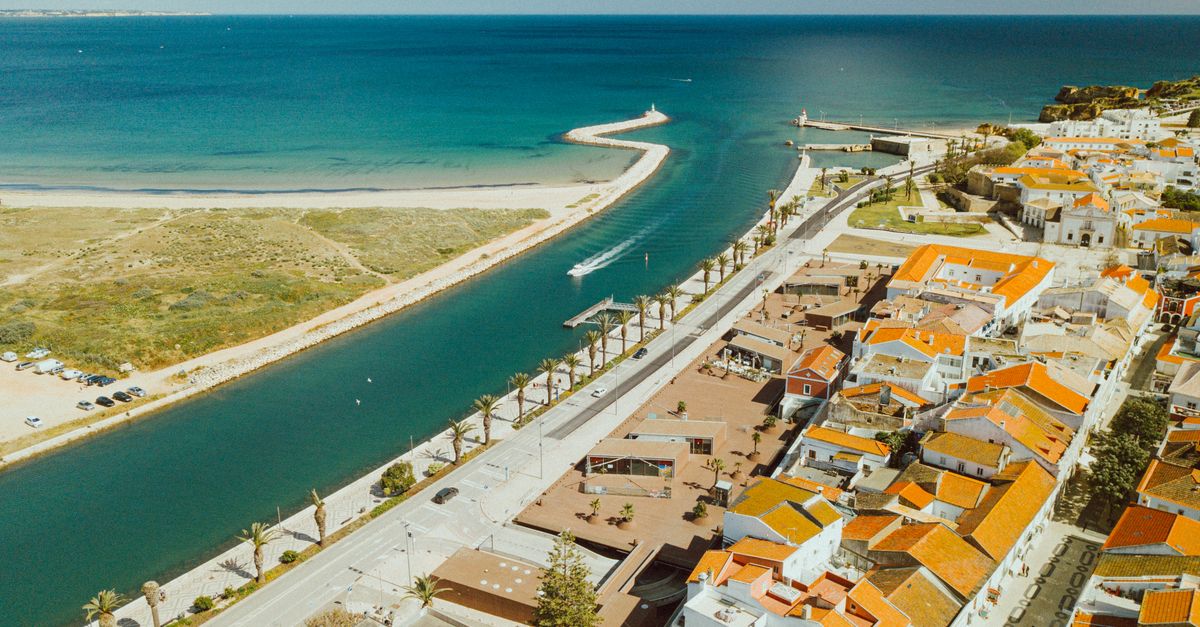
Elegushi Beach (also known as Oba Elegushi Beach or Lekki Beach) on the Atlantic coast 15 km east of Victoria Island is Lagos's most socially vibrant public beach — a long strand of fine Atlantic sand where weekends bring an extraordinary cross-section of Lagos society: families from Surulere and Mushin arriving by danfo with coolers of suya and drinks; wealthy Lekki residents pulling up in Range Rovers; the music industry (always identifiable by entourage); and a growing contingent of beach volleyball players who have colonised the northern end with a year-round competitive scene.
The beach's sound system — multiple competing sound rigs at different points along the strand — plays Afrobeats, Amapiano, and highlife at volumes that make conversation within a 20-metre radius impossible. This is not a beach for quiet contemplation; it is a beach for dancing, eating, and participating in one of Africa's most energetic urban social rituals. The Sunday beach scene in particular is one of the most alive experiences Lagos offers.
Entry to the public beach section costs NGN 1,000–2,000 ($0.65–1.30 USD) at weekends. The beach bars — the best is the Lekki Beach Resort Bar, directly on the sand — sell Heineken and Star beer for NGN 800–1,200, suya for NGN 1,500–3,000, and whole fried tilapia with fried plantain for NGN 2,000–3,000. A full day at the beach — entry, food, and several beers — costs under NGN 10,000 ($6.50 USD). Accessible by Uber from Victoria Island for NGN 2,000–3,000.
The adjacent Oniru Private Beach estate has several private beach clubs — Chill Bar, 0' Place, and La Campagne Tropicana — where the entertainment industry crowd congregates on Friday evenings. Cover charges range from NGN 5,000–15,000 ($3–10 USD) depending on the event. The music programming at these clubs frequently includes live Afrobeats artists who are household names across Africa performing in settings of 300–500 people — a concert experience that any European or American promoter would charge ten times more for.
10. Fela Kuti's Shrine at New Afrika Shrine
The New Afrika Shrine in Ikeja — maintained by Fela Kuti's son Femi Kuti and now operated as a performance venue and museum dedicated to the Afrobeat pioneer — is the most important cultural site in Nigeria for international music pilgrims. Fela Anikulapo-Kuti (1938–1997) was simultaneously one of the 20th century's great musicians, a revolutionary political activist, an opponent of Nigerian military dictatorship, and the creator of Afrobeat — the original (not to be confused with Afrobeats) music that influenced everything from James Brown to Daft Punk to contemporary African popular music.
The original Shrine was burned down by the Nigerian military in 1977; the New Afrika Shrine opened in the same Ikeja neighbourhood in 2000 and continues Fela's tradition of Tuesday and Saturday night "concerts" (more accurately described as communal musical events that blur the distinction between performance and participation). Femi Kuti and his band Egypt 80 perform regularly; guest performances by major Afrobeats and afro-soul artists are frequent.
The Shrine opens at 8 p.m. on performance nights. Entry costs NGN 3,000–5,000 ($2–3.30 USD) depending on whether international artists are performing. The compound includes the museum (free with entry), bar, food vendors selling jollof rice and suya, and a section dedicated to Fela's political writings and artwork. Photography is welcomed and encouraged. The performances typically start late (Nigerian time) at 10–11 p.m. and continue until 3–4 a.m.
Ikeja is 15 km north of Victoria Island by road — 30–45 minutes without traffic, 90+ minutes during go-slow. Take an Uber or pre-arranged taxi from VI to the Shrine for NGN 3,000–5,000. The return journey after midnight requires a pre-booked return ride; do not attempt to find transport at 2 a.m. on the street in Ikeja. The experience — the music, the energy, the political engagement with Fela's legacy by a Nigerian audience that is still living the political context his music described — is one of the most powerful concert experiences available anywhere in Africa.