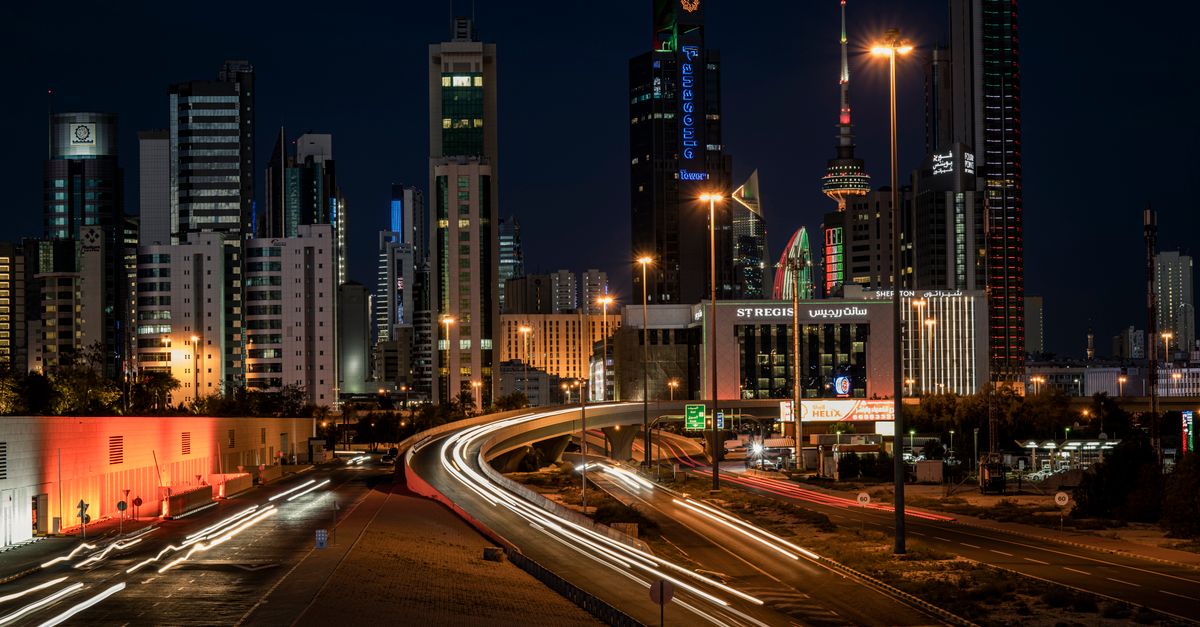
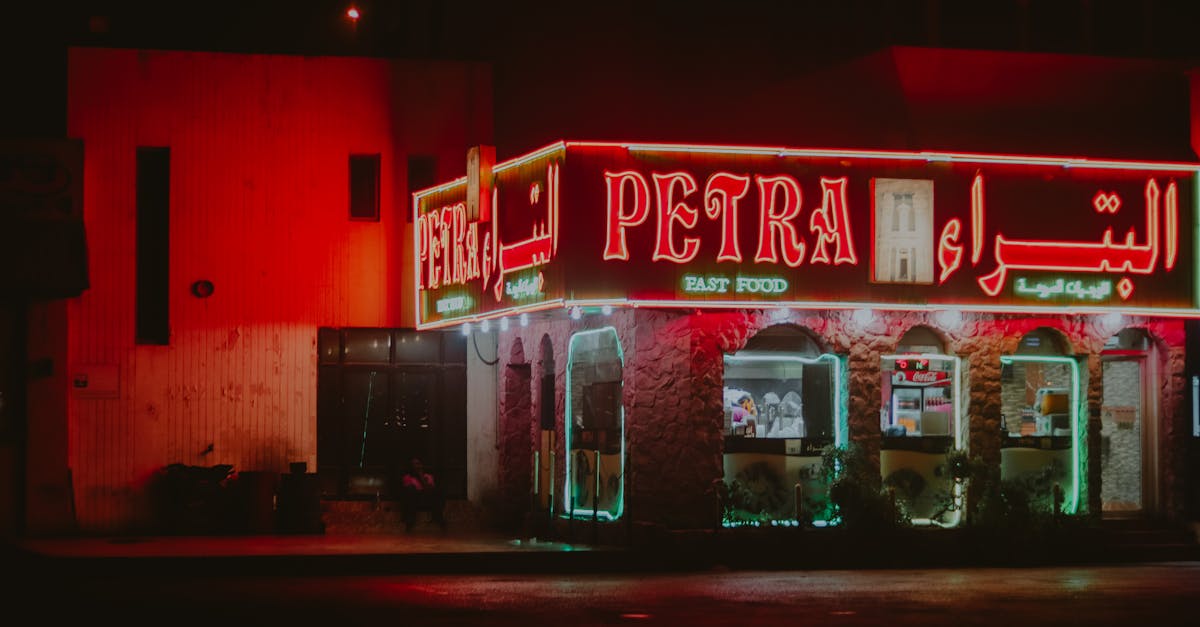
Kuwait City is the Gulf's most underestimated destination — a city that sits in the shadow of Dubai's glamour and Bahrain's social liberalism but has quietly developed one of the region's most vibrant contemporary art scenes, the most ambitious museum infrastructure in the Gulf (the Sheikh Abdullah Al Salem Cultural Centre is the world's largest museum complex), and a food culture that blends traditional Bedouin, Persian, Indian, and Lebanese influences into something entirely distinctive.
Kuwait was one of the wealthiest societies on earth in the 1970s oil boom years, and the infrastructure of that wealth — the water towers, the highway system, the National Museum — was largely destroyed in the Iraqi invasion and occupation of 1990–1991. The rebuilding since has been uneven: some extraordinary new architecture (the National Assembly building by Jørn Utzon, designer of the Sydney Opera House) alongside the blander commercial development that oil wealth tends to produce. But beneath the gloss, Kuwait City has a genuinely Arab cultural character that is more authentic and less tourist-performed than the Emirates equivalents.
Kuwait uses the Kuwaiti dinar (KWD) — at approximately 3.25 USD per dinar, the world's highest-valued currency unit. This makes Kuwait superficially expensive, but the actual cost of living is moderate: a restaurant meal costs KWD 5–15 ($16–49 USD); a taxi trip KWD 2–5 ($6.50–16 USD); the local food market produces KWD 1 ($3.25 USD) can feed a generous meal. Kuwait is entirely card-payment compatible and has sophisticated banking infrastructure.

1. Sheikh Abdullah Al Salem Cultural Centre
Opened in 2018, the Sheikh Abdullah Al Salem Cultural Centre is the world's largest museum complex — 22 buildings covering 160,000 m² across a 200-hectare site that houses the Science Museum, Natural History Museum, Space Museum, Arabian History Museum, Fine Arts Museum, and Innovation Center, alongside theatres, event spaces, and formal gardens. The scale alone is extraordinary; the quality of the individual museums is genuinely competitive with their international equivalents in London and Paris.
The Natural History Museum within the complex is the finest in the Middle East: the whale skeleton collection (including a complete blue whale skeleton of 29 metres), the Arabian marine life dioramas, and the extraordinary collection of Arabian Peninsula flora and fauna specimens provide the most comprehensive encounter with Gulf natural history available anywhere in the region. The building's architecture — designed by Ralph Appelbaum Associates, who designed the National Holocaust Museum in Washington — is of museum design's highest standard.
The Cultural Centre is in the Al-Nuzha district, accessible by taxi from central Kuwait (KWD 3–4, 20 minutes) or by Kuwait Metro (under construction; check current status). Admission to all museums combined is KWD 15 ($49 USD) per adult — expensive by absolute measure but exceptional value for the scale and quality of what the combined complex offers. Allow a full day; the complex is large enough that a single day visit requires prioritisation between its different museums. Book tickets online through the Cultural Centre website to avoid queues.
The Fine Arts Museum within the Cultural Centre houses the finest collection of Kuwaiti and Gulf contemporary art in the region — works by artists like Sami Mohammed (Kuwait's most internationally recognised sculptor, whose bronze figures of Bedouin life are in collections worldwide), Sultan al-Gassemi, and the women artists of the Kuwait Women's Art Association whose work engages with the cultural transformation of Gulf society from the pre-oil era to the present. The museum's permanent collection is complemented by a rotating programme of regional and international exhibitions.
2. Kuwait's Heritage Bait Al Othman Museum
Bait Al Othman Museum in the Hawalli district is Kuwait's finest domestic heritage museum — a restored traditional Kuwaiti merchant house that documents the pre-oil life of Kuwait through extraordinary collections of household objects, photographs, maritime equipment, pearl-diving tools, and the material culture of the trading society that existed before petroleum transformed everything. The contrast between the lives documented here and the contemporary Kuwait City visible from the museum's windows is one of the most dramatic cultural dislocations in the Gulf.
Kuwait before oil (i.e., before 1938 when petroleum was commercially extracted) was a trading city of perhaps 75,000 people whose economy was based almost entirely on pearl diving and maritime trade. The pearl divers' equipment in the museum — the nose clips (fatan), the ear plugs, the weighted descent ropes, the mesh bags for collecting oysters, the protective clothing — tells the story of an industry that required extraordinary physical courage and produced the wealth that funded Kuwait's first modernisation. The pearl-era photographs of Kuwaiti men in diving gear are among the most striking historical images in the Gulf.
The museum is in Hawalli on Abdullah Al-Mubarak Street. Admission is free; the museum is open Sunday to Thursday 8 a.m. to 1 p.m. A guided tour (available in Arabic and English from the museum staff) enhances the visit significantly by explaining the social context of the objects on display — the pearl merchant's house organisation (separate male and female reception areas, the roof terrace used for sleeping in summer, the basement kitchen and storage) and the trading economy that sustained pre-oil Kuwait. Photography is freely permitted throughout.
Adjacent to the Bait Al Othman, the traditional Mubarakiya Souq — Kuwait's oldest surviving market — preserves several blocks of the original covered suq with spice sellers, gold traders, and the traditional Kuwaiti sweet shops (halwa makers, date merchants, the bakers of khabees — a saffron and date sweetmeat). The Mubarakiya is Kuwait's most authentic traditional market experience; prices are local rather than tourist-oriented, and the gold suq in particular offers traditional Kuwaiti jewellery designs (heavy gold bracelets and earrings in the Bedouin style) at very competitive weights-based prices.
3. The National Assembly Building
Kuwait's National Assembly building, completed in 1985 and designed by the Danish architect Jørn Utzon (who also designed the Sydney Opera House, the Bagsværd Church, and the Parc de la Villette cultural centre), is one of the finest examples of 20th-century public architecture in the world. The building — a vast tent-like concrete canopy covering a parliamentary assembly hall, offices, and public spaces — synthesises the traditional Bedouin tent form with modernist structural engineering in a way that is simultaneously culturally specific and universally accessible as architecture.
The National Assembly is an active legislature in one of the Gulf's most politically contested democratic systems — Kuwait's parliament (the Majlis al-Umma) has been suspended and reinstated multiple times since its establishment in 1963, and the relationship between the elected parliament and the ruling Al Sabah family is one of the most interesting political dynamics in the Gulf. Visiting the building's public areas — the main entrance atrium and the publicly accessible lobby — provides a concrete encounter with the ambition and contradictions of Gulf democratic experiment.
The building is on Arabian Gulf Street in the Al-Mirqab district of central Kuwait City. The public areas are accessible during working hours (Sunday to Thursday 7 a.m. to 2 p.m.). Guided tours of the interior are available by advance booking through the National Assembly's public affairs office; the full interior includes the assembly hall, the committee rooms, and the parliamentary library. Exterior photography is freely permitted; the view of the canopy roofline from the Gulf Street is the finest perspective on the building's structural ambition.
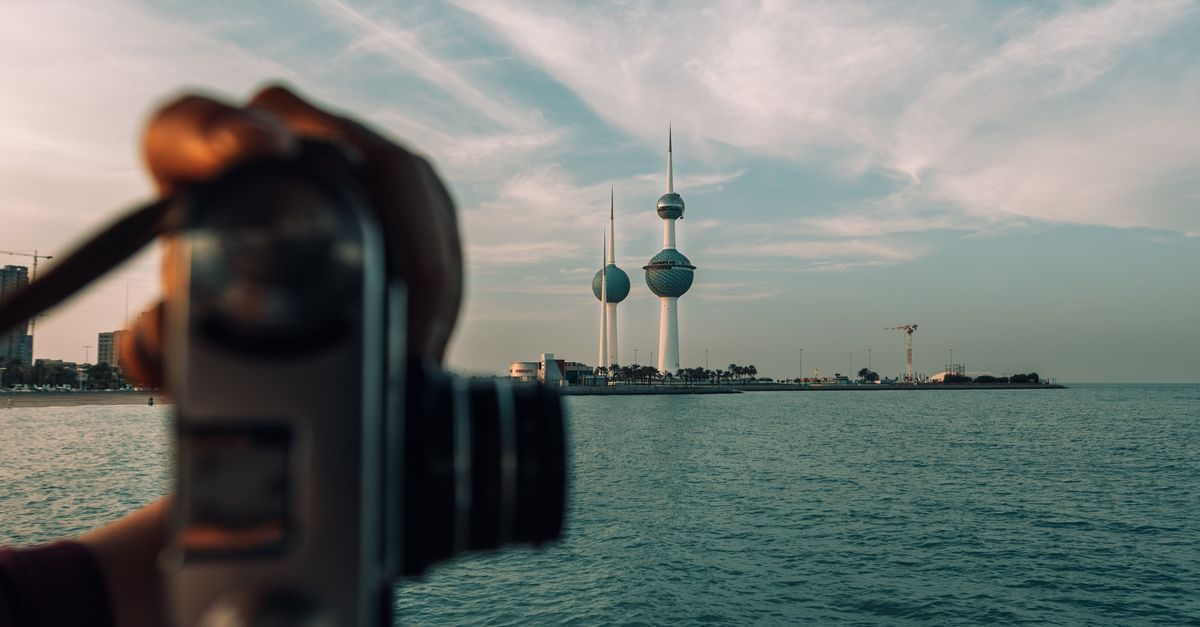
The building sits adjacent to the Kuwait Towers — the iconic tripod water-tower structures that became the symbol of Kuwait's post-oil ambition when completed in 1977. The towers are open for observation deck visits (KWD 3 per person) and the revolving restaurant provides panoramic views of the Kuwait City coastline and the Arabian Gulf. The towers were damaged during the Iraqi occupation and their restoration after liberation in 1991 was one of Kuwait's first symbolic acts of national recovery. The towers at sunset — their globes turning gold against the Gulf horizon — are one of Kuwait City's defining images.
4. Sadu House Weaving Centre
Sadu weaving — the traditional Bedouin textile art of the Arabian Peninsula, using woollen thread to create geometric patterns on a ground-loom — is one of the Gulf's most endangered traditional crafts. The Sadu House in the Bayan district of Kuwait City is the primary institution preserving the craft: a government-funded centre where master Sadu weavers (almost exclusively women of Bedouin heritage) teach, practice, and document the weaving tradition that historically produced the tent panels, camel decoration, and domestic textiles that defined Bedouin material culture.
The Sadu patterns — geometric, bilaterally symmetrical, using the natural colours of undyed camel and goat wool alongside plant-dyed colour bands — encode cultural information: tribal identification, protective symbols, and status markers are all embedded in the choice and arrangement of patterns. A woman weaving a tent panel was simultaneously creating a functional textile and communicating complex social information in a coded language fully legible only to those who knew the tradition. The Sadu House's library of pattern documentation preserves this cultural vocabulary for future generations.
The Sadu House is open Sunday to Thursday 8 a.m. to 1 p.m. Entry is free; the weavers welcome visitors and will explain both the weaving technique and the pattern symbolism to interested observers. Workshops are available by advance arrangement (KWD 20–30 per person for a 2-hour session) and provide a practical introduction to the ground-loom technique. Finished Sadu textiles — cushion covers, camel bags, and decorative wall hangings — are available for purchase at prices that reflect the significant labour investment. A small cushion cover costs KWD 15–25 ($49–81 USD); a large camel bag or tent panel KWD 100–300 ($325–975 USD).
The Sadu craft connects to the broader Bedouin heritage of Kuwait — a heritage that the oil era largely displaced within two generations as nomadic Bedouin populations settled in Kuwait City and abandoned the tent-dwelling pastoral economy that had characterised their lives for centuries. The Kuwait City of 2024 is an extraordinary overlay of this nomadic heritage with 21st-century urban infrastructure; nowhere is this overlap more accessible and more poignant than at the Sadu House, where the weaver's loom is set up beneath fluorescent lights in an air-conditioned gallery within sight of the Gulf motorway.
5. Kuwait Scientific Center and Aquarium
The Kuwait Scientific Center on the Gulf Road corniche is one of the finest science education institutions in the Middle East — a substantial IMAX theatre, interactive science museum, and aquarium housed in an architectural complex completed in 2000 that has aged into one of Kuwait City's most visitor-friendly public attractions. The aquarium in particular — the largest in the Middle East at the time of its construction — contains Gulf-endemic marine species including the Arabian spotted eagle ray, the banded sea snake, and the Gulf pearl oyster in its natural reef habitat recreation.
The Gulf ecosystems represented in the aquarium provide the clearest introduction to the marine environment that defines Kuwait's geography and history: the Arabian Gulf's extraordinary shallow-water productivity (the Gulf averages only 35 metres depth), its hypersaline chemistry, and its extraordinary biodiversity are all documented in a format that is genuinely educational rather than merely spectacular. The pearl oyster display — showing the complete pearl formation process from initial irritant to finished gem — connects directly to the traditional economy that built Kuwait before oil.
The Scientific Center is on Arabian Gulf Street near the Kuwait Towers. Entry to the aquarium and science museum costs KWD 7 ($23 USD) per adult; IMAX films cost additional KWD 5 ($16 USD). Open daily from 9 a.m. to 10 p.m. The complex also includes a dhow harbour restoration project, displaying several traditional Kuwaiti wooden vessels in the marina adjacent to the science centre building. The dhows — ranging from the small shuwa to the large baghala trading vessel — are the same vessel types that connected Kuwait's pre-oil economy to the Persian Gulf's maritime trade network.
The corniche walk from the Scientific Center north to the Kuwait Towers (1.5 km) and then to the Marina Crescent (a further 2 km) provides the finest pedestrian experience of Kuwait City's seafront. The corniche is at its most active in the cooler months (November–March) when evening temperatures drop to 15–22°C and the entire social range of Kuwait City converges on the seafront. Food trucks selling traditional Kuwaiti street food — margoog (meat and vegetable stew with thin bread), chicken ghanam, and fresh fruit smoothies — set up along the corniche from 4 p.m. onward.
6. Mubarakiya Souq's Spice Section
The Souq Al-Mubarakiya — the historic market established in the 19th century in Kuwait City's Al-Qibla district — contains the Gulf's most comprehensive collection of traditional spice merchants outside of the major Yemeni markets. The spice section (Souq al-Attarine) occupies a section of the covered market where the mingling of cardamom, dried rose buds, loomi (dried lime), saffron, frankincense, and oud creates a sensory environment of extraordinary richness. Kuwait's position as a historically significant Gulf trading port is reflected in the extraordinary variety of spices available here from East Africa, India, and the Arabian Peninsula.
The loomi (dried black lime) deserves specific attention: this uniquely Gulf ingredient — made by boiling fresh limes in salt water and then sun-drying them until they turn black and hollow — is used in every traditional Gulf dish from machboos rice to grilled fish and gives the Gulf cuisine its distinctive sour, slightly bitter undertone. The loomi in the Mubarakiya are dried in traditional fashion (dark brown-black, extremely dry, with the concentrated sour taste of a dozen fresh limes in a single small fruit) rather than the paler, less intensely flavoured versions sold in Western specialty stores. A bag of 20 loomi costs KWD 0.5 ($1.60 USD).
The Mubarakiya market's gold souq, adjacent to the spice section, is one of the Gulf's finest for traditional Kuwaiti gold jewellery: heavy 21-carat gold bracelets in the Bedouin style, goldwork earrings with suspended pendants in the traditional Arabian peninsula format, and the distinctive Kuwaiti gold-work that uses coral and pearl inlay alongside the metal. Prices are set by gold weight plus a making charge; the making charges in Kuwait are among the lowest in the Gulf, making the market competitive for quality pieces. A plain 21-carat gold bracelet costs KWD 80–150 ($260–487 USD) depending on weight.
The halwa section of Mubarakiya is Kuwait's contribution to Gulf confectionery: thick, gelatinous sweets made from sugar, ghee, saffron, and rose water, flavoured with cardamom and sometimes pistachio, in a rich amber block that is simultaneously intensely sweet and deeply aromatic. The Bahraini version of halwa (available across the Gulf) is similar; the Kuwaiti version uses slightly more ghee and less sugar, producing a richer, less cloying sweetness. A kilogram costs KWD 5–8 ($16–26 USD) from the Mubarakiya halwa specialists who have been producing to the same recipe for several generations.
7. Al-Shaheed Park and Memorial
Al-Shaheed Park — Kuwait City's largest urban park, opened in 2015 on a 200,000 m² site between the diplomatic district and the seafront — commemorates the Kuwaiti martyrs of the Iraqi occupation (1990–1991) while functioning as an extraordinary piece of urban landscape design. The park's underground museum (the Memorial Square Museum) documents the occupation and liberation through testimony, photographs, and artefacts; above ground, the landscaping creates a series of gardens, public plazas, and cultural spaces that function as Kuwait City's finest public space.
The Iraqi invasion of Kuwait on August 2, 1990 and the subsequent 7-month occupation were defining traumas for Kuwaiti national identity — approximately 600 Kuwaitis died during the occupation (many in summary executions); thousands more were imprisoned, tortured, or expelled; the systematic looting of national treasures (including significant portions of the National Museum collection) destroyed decades of heritage accumulation. The park's memorial function is served with restraint and dignity: the names of the dead are inscribed in the Memorial Square without nationalistic rhetoric, and the museum presents the events in historical context rather than as victimhood narrative.
Al-Shaheed Park is on Arabian Gulf Street, adjacent to the Scientific Center. Entry to the park is free; the Memorial Square Museum charges KWD 2 ($6.50 USD). Open daily from 6 a.m. to 11 p.m. The park's garden design — by Aecom — incorporates indigenous Kuwaiti plant species, including the arfaj (Rhanterium epapposum), Kuwait's national flower, in a botanical garden that documents the desert ecology of the Kuwaiti landscape in an accessible urban context. The evening light in the park — when the solar-powered path lights come on and the park fills with Kuwaiti families using the outdoor gym, cycling paths, and garden spaces — is the most social environment in the city.
The park's two art pavilions host temporary exhibitions of Kuwaiti and Gulf contemporary art in a setting of notable architectural quality. The pavilion buildings, by the Kuwaiti architectural firm SSH, use traditional Gulf wind-tower cooling principles in a contemporary glass structure — a synthesis that is more successfully executed here than in most Gulf architect's attempts at the same cultural reference. The pavilions are typically open Tuesday to Sunday from 10 a.m. to 10 p.m.; check the park's website for current exhibition programming.
8. Traditional Dhow Harbour at Bayan
The Bayan district contains Kuwait City's surviving traditional boat-building community — a small number of master craftsmen (nakhouda) who still build traditional Gulf dhows using the centuries-old techniques of hand-shaping and fastening that produced the vessels that connected Kuwait's pre-oil trading economy to the Persian Gulf's maritime network. The workshops are accessible to visitors and represent one of the most direct encounters with traditional Gulf material culture available in the city.
The vessels being built at the Bayan dhow yards range from small shahoof fishing boats to larger trading dhows of the baghala and boom types that were the primary long-haul trading vessels of the Gulf until the mid-20th century. The master boatbuilders (many of them the last generation to have learned their craft from grandparents who built vessels for actual trading use) work with adze, plane, and hand saw on teak timber that arrives by ship from India — the same supply chain that provided timber to Gulf boatbuilders for three thousand years.
The Bayan dhow area is on the southern coastal road beyond the diplomatic district. Visiting requires a taxi (KWD 4–5 from the city centre, 25 minutes) and some persistence in finding the workshops — there is no formal visitor infrastructure. The craftsmen are generally welcoming of interested visitors who approach respectfully; a small gift of Arabic coffee or dates is appropriate. Photography is typically welcomed. The best visiting time is the cooler months (October–March) when the craftsmen work outdoors in the day rather than in the shade of the workshop sheds.
The adjacent Al-Soor Street (Old City Wall Street) traces the course of Kuwait City's former defensive wall — a 9-kilometre earth and stone structure demolished in 1957 as the city expanded rapidly outward. Four of the original gate towers have been preserved as heritage monuments: Bab Al-Shamali (North Gate), Bab Al-Kuwait (Kuwait Gate), Bab Abd Al-Razzaq (Market Gate), and the reconstructed Bab Al-Sha'ab. Walking between the surviving tower remnants provides a sense of the pre-oil city's scale — a reminder that Kuwait was a modest trading settlement of perhaps 35,000 people within living memory.
9. Failaka Island Day Trip
Failaka Island, 20 km offshore from Kuwait City in the Arabian Gulf, is the most historically significant island in the Gulf — an archaeological site where human occupation extends from the Bronze Age Dilmun civilisation through a remarkable Greek colonial settlement established by the successors of Alexander the Great in the 3rd century BCE. The island is also the site of the entire Kuwaiti civilian population's forced evacuation by the Iraqi military in 1990 — all 4,000 residents were expelled, and the island was used as a military base during the occupation. The ghost town of the former civilian settlement, deliberately wrecked by Iraqi forces during their withdrawal in 1991, stands as a striking monument to the occupation's destruction.
The Greek settlement at Failaka — known to the Greeks as Ikaros — was established around 300 BCE by soldiers of Alexander's successors and maintained for over two centuries. The excavations (primarily conducted by a Danish archaeological team beginning in 1958) have revealed temples, civic buildings, and imported Greek pottery that demonstrate the extraordinary reach of Hellenistic culture into the heart of the Arabian Gulf. The finds are in the Kuwait National Museum; the site itself preserves the outlines of the ancient town plan in compacted earth that is navigable with the site plan available from the ferry terminal.
The ferry to Failaka Island departs from the Ras al-Salmiya marina at 8 a.m. and 10 a.m. (return ferries at 2 p.m. and 4 p.m.) for KWD 5 ($16 USD) return per person. Journey time is 45 minutes. The island has no regular accommodation; it is a day-trip destination only. The archaeological site, the ghost town, and the beach occupy 3–4 hours comfortably. The island is managed by the Kuwait National Authority for Tourism; no entry fee beyond the ferry. Visit in winter; the summer heat makes the exposed island uncomfortable.
The ghost town of Failaka is among the most haunting urban ruins in the Gulf: streets of identical concrete houses, all roofless and stripped of everything removable, arranged in a grid pattern that was once a functional community. The children's playground equipment at the island's school, rusted and skewed by 30 years of neglect, is particularly affecting. The island's lighthouse — one of the oldest operating lighthouses in the Gulf, dating to the 1940s — continues to function automatically though unmanned. The combination of Bronze Age archaeology, Hellenistic ruins, and Cold War-era ghost town in a single accessible island site is extraordinary and entirely unique to Failaka.
10. Kuwait Camel Trekking and Desert Experience
Kuwait's desert interior — the vast flat Kuwait plain that extends to the Iraqi border in the north and the Saudi border in the south — is one of the most accessible and most underappreciated desert environments in the Gulf. The Kuwait plain is primarily a gravel desert (hamada) punctuated by sand dunes in the western Mutla'a area and the extraordinary Al-Ahmadi oil field infrastructure in the south, where hundreds of oil wellheads, gas flares, and processing facilities create one of the most dramatic industrial landscapes on earth against the flat desert horizon.
The Mutla'a ridge, 30 km north of Kuwait City, is the highest point in Kuwait (at 145 metres — a modest claim on most scales but significant in this pancake-flat terrain) and provides the finest desert panorama in the country: the Kuwait plain extending in every direction to the horizon, the Gulf visible 30 km to the east, and in the evening the glow of the city's lights competing with the increasingly star-filled sky as darkness falls. The ridge is freely accessible by road; a 4WD is recommended for the off-road sections that approach the escarpment edge most closely.
Camel trekking in the Kuwaiti desert is available through several tourism operators who maintain herds of riding camels in the Jahra district near the Saudi border. A 2-hour sunset camel trek costs KWD 20–30 ($65–98 USD) per person and provides the most directly experiential encounter with the Bedouin nomadic tradition that Kuwait City's architecture and culture reference endlessly but rarely makes physically accessible. The camels' movement — the extraordinary rocking gait that distributes the rider's weight through the animal's body — is an experience that no other riding culture replicates.
The desert around the Wafra agricultural area in southern Kuwait — a region of irrigation agriculture producing tomatoes, cucumbers, and desert herbs — is also accessible as a half-day excursion and provides a completely different perspective on the Kuwaiti desert: the green of the irrigated fields contrasted with the surrounding red-sand desert, the smell of irrigation water on hot earth, and the remarkably dense bird life attracted to the water and crop insects. The agricultural area is 50 km from Kuwait City; a taxi costs KWD 15–20 ($49–65 USD) return including waiting time. The desert driving at dusk — when gazelle are occasionally sighted and the sky turns extraordinary colours over the flat horizon — is one of Kuwait's most genuinely memorable experiences.