
Kolkata is the most misunderstood major city in Asia. Its reputation — grinding poverty, colonial decay, Mother Teresa — is not fabricated, but it selects for the most difficult aspects of a city that is also the intellectual and artistic capital of the Indian subcontinent, the home of Nobel laureates and revolutionary political thought, of the finest Bengali cuisine in existence, and of an urban intellectual culture that has been producing writers, filmmakers, scientists, and painters of world importance for 200 years. The city that produced Rabindranath Tagore, Satyajit Ray, Amartya Sen, and the Indian independence movement is not a city of misery; it is a city of extraordinary density and extraordinary achievement.
This guide is for travelers willing to engage with Kolkata on its own terms rather than the terms of a poverty tourism narrative. It's for those who will eat in a Durga Puja pandal, attend a poetry recitation in a North Kolkata adda, explore the marble-floored book rooms of College Street, and find that the crumbling city around them is not failing but simply aging in a way that most of the world has forgotten how to do. Kolkata rewards patience and genuine curiosity more than almost any other city in Asia.
Ten Kolkata experiences that reveal the city's actual character — its intelligence, its food, its devotion, and its specifically Bengali way of being in the world.

1. College Street — The Book District That Never Closes
College Street in central Kolkata is the largest second-hand book market in the world — a kilometer of pavement, stalls, and shophouses given entirely to the sale of books in Bengali, English, and every other language that has been published in South Asia. The pavement booksellers have stacked their inventory on improvised wooden shelves or simply spread on sheets on the ground, and the range covers everything from colonial-era railway timetables to first editions of Bengali poetry to medical textbooks from the 1970s to current airport paperbacks. Walking the full length of College Street is an education in everything that has been read, studied, and valued in Kolkata over 200 years of intellectual life.
The specific finds that reward the dedicated browser: first editions of Tagore in the original Bengali (20–300 rupees depending on condition), pre-independence Calcutta street maps that are more accurate than anything published in the last 50 years, vintage Hindi film magazines from the 1950s–1970s (200–800 rupees for good condition), and the occasional genuinely scholarly discovery that appears when a family library is cleared after a bereavement. The booksellers on College Street are expert appraisers of their own stock — a book with a handwritten inscription from its author, a library stamp, or other provenance is always priced accordingly, and the sellers know exactly what they have.
College Street runs parallel to the Maidan's northern edge, accessible from Esplanade Metro station (Line 1, Blue Line) — 10-minute walk east, or directly at Central Metro station. Free to walk. The street is most active 9am–6pm on weekdays; some stalls open at 7am. The Coffee House at 15 Bankim Chatterjee Street (directly on College Street, first floor) has been the intellectual adda (gathering place) of Kolkata's literary community since 1942 and serves good strong coffee at ₹35–50 per cup at tables where writers, professors, and students have been debating everything important for 80 years. Sitting there with a coffee and a newly purchased book while the city moves past the windows is one of the finest pleasures available in India.
The surrounding Presidency University neighborhood has the finest concentration of colonial-era institutional buildings in Kolkata: Presidency College (now University, founded 1817), the Medical College (1835), the Calcutta University Senate House (1873), and the former Presidency Jail, now the Presidency Correctional Home. The architecture is British institutional at its most ambitious, and the buildings are still in active educational and administrative use — the largest functioning collection of colonial-era institutional architecture in the world.
2. Kumartuli — Where the Gods Are Made
Kumartuli, the potters' quarter in North Kolkata, is where the clay images of Hindu goddesses are made for the festival season — particularly the Durga Puja statues (10-foot-tall clay figures of Durga, Lakshmi, Saraswati, Ganesh, and Kartikeya) that are the center of Kolkata's greatest cultural event. The workshops in Kumartuli are active year-round: the basic clay framework is constructed, dried, and stored in the months preceding each festival, and the final painting and decoration is completed in the weeks before the specific puja season. Visiting any time of year reveals the sequential phases of image-making in different studios.
The craft knowledge concentrated in Kumartuli is extraordinary — the pratimakar (idol makers) use techniques of clay modeling that date back centuries, working from the same iconographic templates passed down through generations while incorporating contemporary design elements commissioned by specific pandals (festival organizers). The most prestigious artisans are commissioned by Kolkata's most famous pandals, and their income allows them to experiment; the neighborhood's output ranges from traditional forms to contemporary artistic interpretations that have been exhibited internationally. Walking the narrow lanes of Kumartuli and observing the sequential stages of production — framework, clay application, drying, painting — is one of the finest craft education experiences in India.
Kumartuli is in North Kolkata (Shyambazar area), accessible by the Yellow Line Metro to Shyambazar Station (5-minute walk south) or by tram from the city center (one of Kolkata's famous tramway lines, ₹7 fare). Free to walk. The workshops are most active October–November (before Durga Puja) and January–February (before Saraswati Puja). The best times to visit are weekday mornings (8–11am) when the artisans are working and photography is typically permitted with a respectful request. Local guides for the area are available through the Kolkata Heritage Tour organization (kolkataheritagetour.com).
The specific visual sequence of Kumartuli is extraordinary in the run-up to Durga Puja (September–October): hundreds of partially completed goddess figures in various stages of construction fill every studio and overflow onto the lane pavements. The combination of the physical scale of the images, the smell of wet clay and paint, and the casual devotion of the craftspeople who are simultaneously making art and making gods is one of the most specifically Kolkata experiences available anywhere in the city.
3. Durga Puja — The World's Largest Art Festival
Durga Puja is the most important cultural event in Bengal and one of the most extraordinary public art festivals in the world — a five-day period in September or October when 35,000+ pandals (temporary structures) are erected across Kolkata, each commissioned as a themed artistic installation by a neighborhood committee, decorated with thousands of volunteers and professional artists, and visited by millions of people who walk the streets continuously through the night for five days. The finest pandal constructions rival anything in professional installation art — previous themes have included reconstructions of the Khajuraho temples at full scale, underwater coral reef environments, Syrian refugee camp structures (an explicitly political pandal), and historical reconstructions of colonial-era Calcutta.
The pujas held at prominent pandals — Chhatra Sangha, Tridhara, Mohammad Ali Park, and the dozens of neighborhood committees in the North Kolkata traditional area — are also religious events, not merely artistic ones. The evening rituals (arti), when the priests perform fire offerings before the goddess image with hundreds of devotees gathered in the pandal, have the specific quality of Kolkata's blend of high seriousness and communal festivity. The music (dhak drums, shehnai, folk songs) that accompanies the pandal processions is specific to Bengal and unlike any other Indian musical tradition.
No single guide can cover the pandal circuit — the city has its own internal ranking system (the "notable pandals" change each year) and the best planning resource is the current year's pandal map published by the Kolkata Municipal Corporation in the week before the puja. Get this map from any major bookshop in the city or download it from the KMC website. The pandals are free to enter and active 24 hours from the first day of Navratri. The best time to do the pandal walk: 10pm–2am on the Ashtami (8th) night, when the crowds are intense but the devotional energy is at its highest and the festive atmosphere is complete.
If visiting outside puja season: the Collin Street neighborhood (Burrabazar area) has manufacturers of puja supplies — the wholesale suppliers of the incense, oil lamps, and decorative materials that go into every pandal and home puja in Kolkata — operating year-round. Walking through this wholesale market reveals the material culture of Bengali Hindu devotion in its most elemental commercial form.
4. Marble Palace — North Kolkata's Eccentric Masterpiece
Marble Palace, built in 1835 by Raja Rajendra Mullick Bahadur in North Kolkata's Shyambazar area, is one of the most extraordinary private houses in Asia — a neoclassical mansion with floors of marble imported from Italy, a collection of European paintings (Rubens, Murillo, Reynolds, and several attributed to other Old Masters) acquired in the 19th century and still hanging in their original positions, peacocks wandering the garden, and an eccentric accumulation of Victorian-era Venetian glasswork, Belgian mirrors, and Chinese porcelain that makes the palace less a museum than a material diary of one family's aspirational collecting over two centuries.
The mansion is still owned and maintained by the Mullick family, who live in a section of the building and have made the public rooms accessible to visitors by appointment (free permit available from the West Bengal Tourism office on J.L. Nehru Road, Monday–Friday 10am–4pm). The visit requires the permit, but it is free and the permit system actually reduces crowding rather than limiting access. The guide provided by the family is invariably a family member who can explain the specific history of individual objects — who bought the Rubens, why there are so many peacocks, what function a particular gilded salon served in the social life of 19th-century Calcutta elite.
Marble Palace is at 46 Muktaram Babu Street in Jorasanko, North Kolkata. Accessible by metro to Girish Park Station (Blue Line) and a 10-minute walk east. The permit is required to enter; available at the tourism office on the same day (arrive early, as permits are limited). Free to visit but a donation to the family's maintenance fund (₹100–200 per person) is appropriate. Best visited in the morning when the garden peacocks are active and the interior light (natural, entering through the clerestory windows) is at its best. Photography permitted without flash.
The Jorasanko area surrounding Marble Palace has the highest density of North Kolkata heritage architecture — the 19th-century zamindari (landlord) mansions, merchant houses, and religious endowment buildings that constitute the finest surviving streetscape of colonial-era Indian commercial prosperity. The Tagore House (Jorasanko Thakur Bari) at the northern end of Dwarkanath Tagore Lane is the ancestral home of the Tagore family and now a museum — entry ₹10, remarkably inexpensive for a UNESCO-acknowledged heritage site. Rabindranath Tagore was born here in 1861.
5. Hooghly River at Dawn by Boat — The Original Calcutta View
The Hooghly River, the western distributary of the Ganges that runs through Kolkata, was the reason for the city's existence — it was the navigable channel from the Bay of Bengal that allowed the British East India Company to establish their trading post in 1690 and transform it into the capital of British India. The river at dawn, seen from a small rowing boat (nauka), reveals the city's founding geography: the Howrah Bridge (1943, the world's busiest cantilever bridge, 100,000+ vehicles daily), the ghats (bathing steps) where Bengalis continue their morning ablutions and pray to the river in the direct Ganges tradition, and the outline of the colonial-era buildings on the eastern bank that made 18th-century Calcutta the richest city in Asia.
Rowing boats are available for hire from the ghats on both banks for ₹100–200 per hour (negotiate directly with the boat owners who congregate near the Babughat and Bagjola Ghat). The best session is 5:30–7:30am when the river is most active: the fishing boats returning from the night, the ferry traffic beginning, the ritual bathers at the ghats, and the morning light (flat, mist-diffused) catching the Howrah Bridge's cantilever structure in the optimal way. The river smell — tidal, slightly salty, with the Ganges's specific organic quality — is one of the definitive sensory experiences of Kolkata.
The ghats along the Strand, from Chandpal Ghat north to Nimtala Ghat, are each distinct in their character: the flower market ghat at Mullick Ghat (one of the largest wholesale flower markets in Asia, active from 4am), the Durga immersion ghat at Nimtala (where the Puja statues are returned to the river at the festival's end), and the cremation ghat at Nimtala Ghat itself (operating 24 hours, one of Kolkata's most direct encounters with the Hindu relationship to death and the sacred river). Access to the ghat area is free and the atmosphere at dawn is one of the most specific and unrepeatable experiences in India.
The Mullick Ghat flower market (open daily 4–10am) is one of the finest early morning sensory experiences in Kolkata — thousands of marigold garlands, jasmine strings, rose petals, and lotus flowers sold wholesale to vendors who supply every temple, wedding, and domestic puja in the city. The smell at 5am, when the fresh deliveries are arriving and the garland makers are at work, is extraordinary. The wholesale price for a kilogram of marigolds is ₹30–60; buying a small bundle of flowers and offering them at the Ganges ghat below is the appropriate response.
6. New Market (Hogg Market) — The Colonial Arcade
New Market (officially Sir Stuart Hogg Market), built 1874 in the British Gothic style, is one of the finest colonial-era covered markets in Asia — a vast brick-and-iron market hall with over 2,000 shops selling everything from Darjeeling tea to Chinese takeaway to wedding sarees to live chickens. The Victorian gothic clock tower at the entrance, the iron columns supporting the market roof, and the specific smell (spice, meat, fabric, and the sweet rot of overripe tropical fruit mixed with the cold blast from the fish section's ice) are the sensory signature of a building that has been continuously in commercial operation since the year Queen Victoria was declared Empress of India.
What New Market requires is time and willingness to negotiate. The prices here are genuinely competitive for almost everything sold — the spice merchants in the northwest section have the finest selection of Darjeeling and Assam tea available outside Darjeeling, at wholesale prices (₹300–800 per 100g for first-flush Darjeeling, the finest variety). The fabric section has Bengal muslin in varieties no longer produced for the tourist market. The cheese and cold cuts section (legacy of the Anglo-Indian community that was New Market's original primary customer base) is one of the only places in India where proper mature cheddar and marbled salamis are available at reasonable prices.
New Market is on Lindsay Street in central Kolkata, accessible from Esplanade Metro (Blue Line), 10-minute walk east. Entry free. Open Monday–Saturday 9am–8pm; Sunday 10am–6pm. The best time to visit is 10am–12pm on weekdays when the morning fresh deliveries have arrived but the crowds haven't peaked. The tea merchants near the main entrance will give you tasting samples if you ask — the comparison between first-flush (April) and second-flush (May–June) Darjeeling is educational and free.
Adjacent to New Market, the Nahoum's Bakery (established 1902 by a Jewish family that has maintained the business through partition, independence, and every social change since) is the most historically layered cake shop in India — still producing the plum cake, rum balls, and cinnamon rolls that it has made since the colonial era, at prices (₹30–150 per item) that have only modestly adjusted for inflation. The Jewish community of Kolkata, now diminished to a few dozen families, maintained Nahoum's as a community institution through the 20th century; the current owners consider the shop a living memorial to that community's contribution to Kolkata's identity.
7. Pareshnath Temple — The Jewelled Jain Masterpiece
The Sheetalnath Jain Temple in Maniktala, North Kolkata (commonly called Pareshnath Temple for the adjacent Pareshnath Jain Temple complex) is one of the most extraordinary religious interiors in India — a 19th-century Jain temple financed by the Sethia merchant family that covers its shrine rooms with an impossible density of colored glass, mirrors, chandeliers, and gold leaf. The effect is simultaneously dazzling and overwhelming: every surface reflects every other surface, the light multiplies infinitely, and the scale of accumulated ornament is so extreme that it crosses from decoration into something like an argument about excess, piety, and the nature of the sacred. It is unlike any other religious building in Asia and cannot be adequately described.
The temple is an active Jain religious site — the priests perform daily puja and the surrounding Jain community uses it for worship. The combination of their genuine devotional practice and the touristic wonder of non-Jain visitors creates an atmosphere of productive coexistence that is handled with great grace by the temple management. Photography is generally permitted in the outer courtyard and entry areas; the inner sanctum varies by management policy. Dress modestly, remove shoes, do not bring food or leather items inside (Jain prohibition).
Pareshnath Temple is at 4 Badridas Temple Street, Maniktala, North Kolkata. Accessible by Blue Line Metro to Shyambazar and 10-minute walk, or by tram. Entry free. Open daily 6am–12pm and 3pm–7pm. The best time for the full interior experience is in the morning session when natural light augments the artificial illumination and the devotional activity gives the space its proper context. The surrounding Maniktala market has excellent Bengali morning food — the mishti doi (sweet yogurt) from the shops on the main market road is among the finest available in the city, served in earthenware cups at ₹15–25.
The North Kolkata area around Maniktala has several other remarkable religious buildings: the Thanthania Kalibari (an 18th-century Kali temple of significant neighborhood importance), the Muktaram Babu Street's series of zamindari houses, and the concentration of ancient Shiva temples in the lanes of the Shyambazar area that are entirely unknown outside the Kolkata Bengali community. Walking these lanes in the early morning, following the temple bells and the smell of incense, leads to places that no published tourist guide has ever documented.
8. Birla Planetarium and Museum — The Science Capital's Science
Kolkata has a claim to being the scientific capital of India — it was the founding city of the Indian Association for the Cultivation of Science (1876, the oldest research institute in Asia), the birthplace of physicist C.V. Raman (who won the Nobel Prize for work done in Kolkata in 1930), and the institutional home of Satyendra Nath Bose, whose work on quantum statistics gave his name to the boson. The Birla Planetarium on J.L. Nehru Road, opened 1962, is Asia's largest planetarium and remains a functioning scientific education center of genuine quality — the sky shows cover current astronomical topics in both English and Bengali.
The adjacent Birla Industrial and Technological Museum is one of India's finest science museums — the interactive exhibits (on electricity, mechanics, textile production, and the history of Indian technology) have been regularly updated and are excellent for adults as well as the school groups that constitute most of the visitor base. The museum's collection of historical Indian scientific instruments, including reproductions of Jagadish Chandra Bose's original wireless equipment (Bose demonstrated wireless transmission before Marconi, a claim that Indian physics historians are entitled to make), is remarkable for its specificity about the scientific heritage of Kolkata itself.
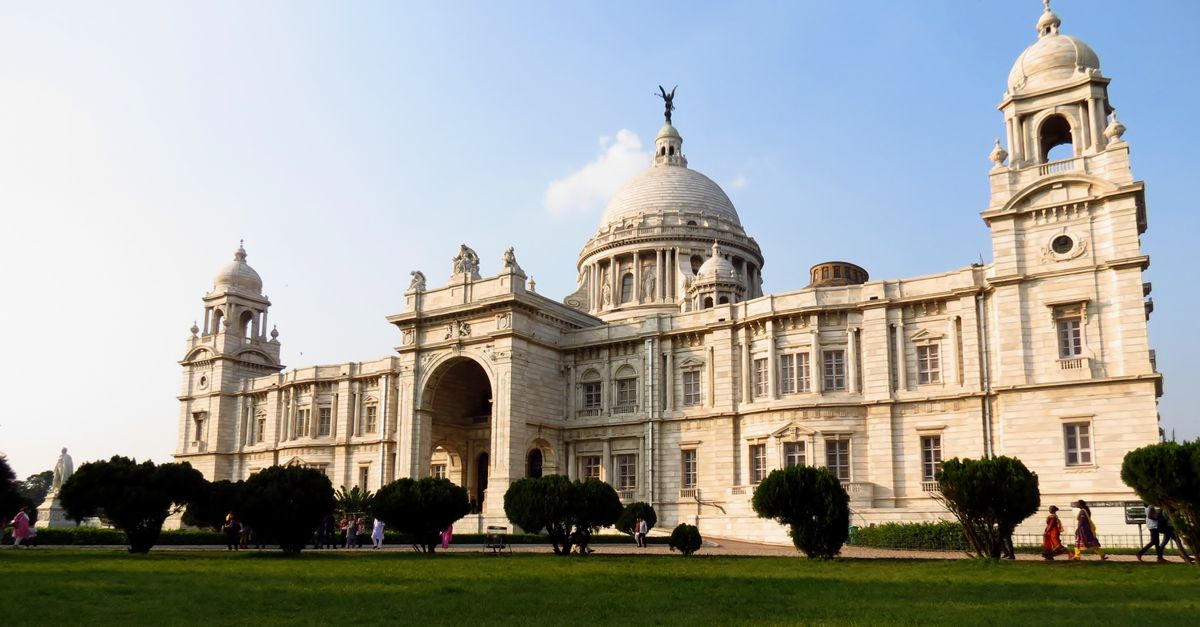
Birla Planetarium is on J.L. Nehru Road near Victoria Memorial. Sky show entry ₹80–100 for the English show (runs at specific times daily, check website). Open Tuesday–Sunday 10am–7pm. The adjacent garden area (free, continuous access) is one of Kolkata's finest public spaces — the combination of the Victorian Gothic Victoria Memorial building, the Birla Planetarium's distinctive circular form, and the maidan's open expanse create a civic landscape that is unique in its combination of imperial grandeur and post-independence democratic use.
The Indian Museum at Park Street (established 1814, the oldest in Asia) has a collection that spans archaeology, art, natural history, and anthropology and is consistently underfunded and understaffed relative to its importance. Entry ₹30 for foreigners (₹500 for tickets with special sections). The Bharhut Stupa railing (2nd century BCE Buddhist sculpture), the Gandharan Buddhist art collection, and the Egyptian mummy room (one of only three in South Asia) are the specific highlights. The museum's building is itself a masterpiece of Italian Renaissance design adapted for the Calcutta climate.
9. Kalighat Temple and Neighborhood — The Living Pilgrimage
The Kalighat Kali Temple in South Kolkata is the most intensely devotional Hindu temple in the city — the original temple that gave Calcutta its name (Kali-Ghat, the ghat of Kali) and the site of one of India's 51 Shakti Peethas, where a toe of the goddess Sati is said to have fallen. The temple receives thousands of daily devotees and is genuinely one of the most powerful religious experiences in India — not because of its architecture (the current building dates to 1809) but because of the accumulated devotional intensity of a site that has been receiving pilgrims for centuries. The goat sacrifices performed here daily (at dawn, before the general public enters) are a genuine example of the ancient temple tradition and should be approached as religious practice rather than spectacle.
The surrounding Kalighat neighborhood has developed around the pilgrimage trade in a way that reveals the economics of Indian religious life — the prasad sellers (selling devotional sweets and flowers for offering), the professional priests who conduct puja for hire, the small hotels and tea stalls serving pilgrims from across Bengal and beyond, and the folk painting tradition (Kalighat patachitra) that developed specifically to serve as souvenir and devotional art for pilgrims. The Kalighat style of painting — bold lines, flat colors, narrative scenes from Hindu mythology and satirical scenes from colonial Bengal — is one of India's most important folk art traditions and is available at reasonable prices from several shops adjacent to the temple.
Kalighat Temple is on Kalighat Road in South Kolkata. Metro: Kalighat Station (Blue Line), 5-minute walk. Temple free to enter (donation expected). Open daily 5am–10pm; most intense 5–7am and 5–7pm during the devotional peak periods. The temple is crowded but managed — allow being guided through the queue system by the temple volunteers. Photography inside the temple is restricted; outside is generally permitted. The Kalighat paintings are best purchased from the artists themselves (several have workshops on the lanes north of the temple, accessible through the market) rather than the temple-adjacent souvenir shops.
The Victoria Memorial, 1km north of Kalighat (a 15-minute walk north along the Maidan's western edge), provides the visual bookend of Kolkata's identity: the most grandiose monument to British imperial power in the subcontinent (completed 1921, built from Makrana marble, now housing the finest collection of colonial-era Indian paintings in existence) set in gardens that are used daily by Kolkata's young couples, families, and cricket-playing schoolchildren as the democratic public space that 19th-century empire never intended it to be. Entry ₹200 for foreigners; the gardens ₹20. Thursday evenings have a son et lumière show at ₹100–150 that is the finest light-and-sound production on any historical monument in India.
10. Flurys on Park Street — 100 Years of Kolkata Café Culture
Flurys on Park Street is not hidden — it's Kolkata's most famous café and has been since it opened as a Swiss patisserie in 1927. But it is consistently underrated by visitors who assume a 100-year-old café must be trading on nostalgia rather than quality. This is wrong. Flurys' current incarnation (though significantly expanded from the original) maintains a standard of pastry, sandwich, and breakfast preparation that justifies its reputation: the sausage roll (₹90) is as good as any in a British tearoom, the custard tart is the finest in India, and the breakfast thali (eggs, toast, beans, sausage, ₹250–350) is the closest approximation of an English café breakfast available in South Asia.
What makes Flurys worth including in a guide to Kolkata's genuine character is not the food (though it is excellent) but the clientele and the atmosphere. At 8am on a weekday, Flurys is full of a cross-section of Kolkata's Anglo-Indian and elite Bengali professional communities — the lawyers who have been breakfasting here for 40 years, the journalists from the nearby Ananda Bazar Patrika building, and the older Kolkata residents for whom breakfast at Flurys is a weekly ritual that connects them to a city that has changed dramatically around a few unchanged institutions. Sitting at a marble table at Flurys with The Telegraph (Kolkata's English daily) and a coffee at 8am is as specifically Kolkata an experience as attending the adda at the Indian Coffee House on College Street.
Flurys is at 18 Park Street, Central Kolkata. Accessible from Park Street Metro station (East-West Line) or a 15-minute walk from Esplanade. Open daily 7:30am–9pm. The Park Street area around Flurys has been Kolkata's English-language cultural and restaurant district since the 1950s — the Trinca's music venue (where the Indian rock music revolution of the 1960s happened), the Oxford Bookstore (the finest English-language bookshop in Kolkata), and the concentration of Kolkata's best European-influenced restaurants are all within 200 meters. A Park Street evening (dinner at any of three long-established restaurants, Trinca's music, and a nightcap at the bar of the Oberoi Grand) is the finest evening in the city for those who want their Kolkata with a specifically 1960s Calcutta sophistication.


