Istanbul straddles two continents, spans 2,600 years of continuous civilization, and operates on a budget that makes it one of the most affordable major cities in Europe — or Asia, depending on which side of the Bosphorus you're standing on. For ₺400-700 per day ($12-21 USD at current exchange rates), you can sleep in the historic Sultanahmet district within walking distance of the Hagia Sophia, eat simit and kebabs from street vendors for ₺5-60, ride ferries across the Bosphorus for the price of a bus ticket, enter some of the world's most magnificent mosques for free, and wander through neighborhoods where Byzantine, Ottoman, and modern Turkish culture layer on top of each other in every street, every building, and every conversation.
Istanbul is a city that seems like it should be expensive — it has the grandeur, the history, the scale — but the Turkish lira's decline has made it remarkably accessible for visitors carrying dollars, euros, or pounds.
The key to budget Istanbul is understanding what's free (most of the best things), what's cheap (food, transport, ferries), and what's expensive enough to plan around (museum passes, some historical sites, and the tourist-trap restaurants that cluster near major attractions).
This guide breaks down every category in detail, from hostel prices in Sultanahmet to the cost of a Bosphorus ferry ride, with strategies for keeping daily spending at ₺400-700 while experiencing everything that makes Istanbul one of the world's most extraordinary cities.

Budget Accommodation: ₺200-600 per Night
Istanbul's accommodation market is vast and competitive, with budget options concentrated in three main areas: Sultanahmet (the historic peninsula, walking distance to all major sights), Beyoğlu/Galata (the European side's bohemian quarter, great nightlife and cafés), and Kadıköy (the Asian side, cheaper and more local). Each area offers distinct advantages for budget travelers.
Hostels in Sultanahmet: ₺200-400
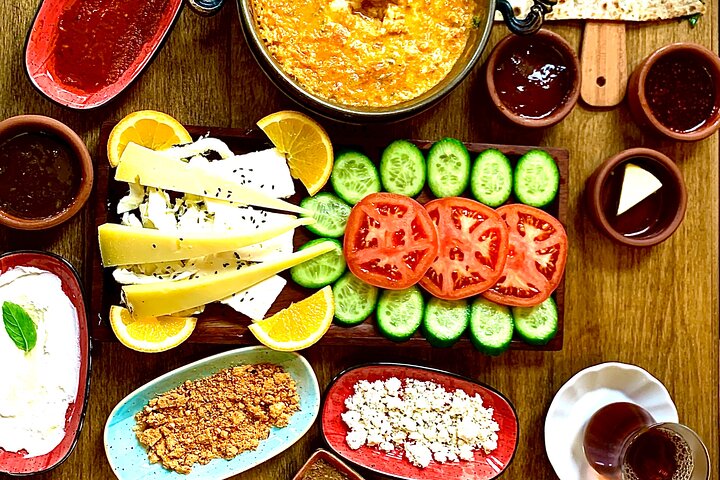
Sultanahmet has the densest concentration of budget hostels in Istanbul, many occupying renovated Ottoman-era houses with rooftop terraces offering views of the Blue Mosque, the Hagia Sophia, and the Sea of Marmara. At ₺200-300, dorm beds come with air conditioning, WiFi, lockers, and often a basic Turkish breakfast (bread, cheese, olives, tomatoes, cucumbers, and tea).
Cheers Hostel (from ₺220) has one of the best rooftop terraces in the neighborhood — sunset views of the Blue Mosque with a cold beer. Big Apple Hostel (from ₺200) is clean, social, and central.
Agora Guesthouse (from ₺250) occupies a beautiful old house with a courtyard garden. At ₺350-400, hostels like Sultan Hostel offer private rooms with shared bathrooms — a good middle ground for couples or travelers wanting privacy without hotel prices.
Guesthouses and Pensions: ₺400-600
Istanbul's pension (pansiyon) culture offers private rooms in family-run properties, often with breakfast included. In Sultanahmet, pensions from ₺400-600 provide small but clean double rooms with private bathrooms, air conditioning, and a Turkish breakfast spread that alone is worth ₺50-70 at a café.
The streets between the Hippodrome and the Sea of Marmara are particularly dense with these properties. In Beyoğlu, budget hotels near İstiklal Caddesi offer comparable rooms from ₺350-500, with the advantage of being in the center of Istanbul's nightlife and café culture.
Kadıköy: The Asian Side Bargain
Kadıköy, on Istanbul's Asian shore, offers accommodation at 20-40% below European-side prices. Hostels from ₺150-250 and private rooms from ₺300-450 put you in a neighborhood with excellent food markets, a lively bar scene, and a more authentically local atmosphere than the tourist-heavy Sultanahmet.
The trade-off is the ferry commute to the European side's main attractions — but the ferry ride itself (₺7.67 with Istanbulkart) is one of Istanbul's best experiences, crossing the Bosphorus with views of the entire city skyline.
Eating in Istanbul: Simit to Kebab (₺5-80)
Istanbul's food culture is one of the great bargains of European travel. The city's street food tradition — perfected over centuries of Ottoman culinary refinement — delivers extraordinary flavor at prices that seem almost impossible for a city of this stature.
A simit (the sesame-crusted bread ring that is Istanbul's defining street food) costs ₺5-8. A full kebab plate costs ₺40-70. A fish sandwich on the Galata Bridge costs ₺40-50.
And the quality isn't "good for the price" — it's genuinely, objectively excellent food, made by vendors and small restaurants whose recipes and techniques have been refined over generations.
Street Food Essentials
Simit (₺5-8) is the bread ring encrusted with sesame seeds that is eaten at every hour of day — for breakfast with cheese and tea, as a mid-morning snack, or torn apart and shared while walking. Simit vendors are on every corner, and the rings are baked fresh throughout the day.
Balık ekmek (fish sandwich, ₺40-50) is grilled mackerel in a crusty bread roll with lettuce, onion, and a squeeze of lemon — the iconic version is sold from boats at the Eminönü end of the Galata Bridge, where fishermen grill and assemble the sandwiches on rocking vessels while ferries pass behind them. Döner kebab in a wrap (dürüm) or bread (ekmek arası) costs ₺30-60 depending on size and location — the spinning vertical rotisserie is a constant presence on Istanbul streets.
Lahmacun (₺20-35) is a thin, crispy Turkish pizza topped with minced meat, herbs, and spices, rolled up with lettuce, parsley, and a squeeze of lemon. Kumpir (₺40-60) is a giant baked potato split and filled with butter, cheese, and your choice of a dozen toppings — a meal in itself, popular at the Ortaköy market area.
Midye dolma (stuffed mussels, ₺5-10 each) are sold from pushcarts — mussels filled with spiced rice, eaten from the half-shell with a squeeze of lemon. They're addictive and cheap. Kokoreç (₺30-50) is seasoned lamb intestines chopped on a griddle and served in bread — an acquired taste that locals swear by, especially after a night out.
Islak hamburger (wet burger, ₺15-25) from Taksim Square's famous late-night stalls are steamed, garlicky burgers that are inexplicably delicious at 2 AM.
Sit-Down Meals on a Budget
Lokantas (traditional Turkish cafeteria-style restaurants) are the budget traveler's best friend for sit-down meals. You point at pre-prepared dishes behind a glass counter — stews, grilled meats, vegetables in olive oil, rice, and salads — and your plate is assembled in front of you.
A generous portion of two dishes with rice and bread costs ₺40-70. Lokantas are everywhere in Istanbul, identified by the steam trays of prepared food visible from the street. They're fast, filling, and excellent.
The lokantas around the Spice Bazaar, in Fatih, and in Kadıköy serve the most authentic food at the best prices.
Turkish breakfast (kahvaltı) at a café typically costs ₺80-150 and is an enormous spread: multiple cheeses, olives, tomatoes, cucumbers, honey, kaymak (clotted cream), eggs, simit, bread, butter, jam, and unlimited çay (tea). It's designed for sharing and lingering, and it can replace both breakfast and lunch if you eat slowly enough.
For budget travelers, the breakfast included at most hostels and pensions covers this spread — take advantage of it and eat lightly at lunch.

Free Things to Do in Istanbul
Istanbul's greatest experiences are largely free — the city's mosques, neighborhoods, waterfront walks, and daily spectacles of urban life cost nothing to experience. The paid attractions (Hagia Sophia, Topkapi Palace, Basilica Cistern) are worth their admission, but you could spend a week in Istanbul doing only free things and leave feeling you'd experienced the city's essence.
Free Mosques
Every mosque in Istanbul is free to enter, and the city's imperial mosques are among the most beautiful religious buildings in the world. The Sultan Ahmed Mosque (Blue Mosque) — named for the 20,000+ blue İznik tiles that cover its interior — is free and open to visitors outside prayer times (five times daily, approximately 20-30 minutes each).
The interior is vast, luminous, and profoundly beautiful, with cascading domes, stained glass windows, and a carpet that covers the entire floor. Süleymaniye Mosque, built by the architect Sinan for Sultan Süleyman the Magnificent in the 1550s, is arguably more impressive than the Blue Mosque — its proportions are considered perfect, its hilltop location offers panoramic views of the Golden Horn, and its surrounding complex (with a garden courtyard containing Süleyman's tomb) is one of the most serene spaces in Istanbul.
Rüstem Pasha Mosque, hidden above a busy market street near the Spice Bazaar, has the finest İznik tilework of any mosque in Istanbul — exquisite floral and geometric patterns that cover every surface from floor to dome. All free, all open to respectful visitors.
Neighborhood Walks
Balat is Istanbul's most photogenic neighborhood — a formerly Jewish and Greek quarter on the Golden Horn with steep cobblestone streets, colorful row houses, Byzantine churches, synagogues, and a growing café scene. The streets of Balat are Instagram-famous for their candy-colored facades, but the neighborhood's real charm lies in its layers of history — Greek Orthodox churches with Byzantine mosaics, the Iron Church (Sveti Stefan, prefabricated from cast iron in Vienna and shipped here), and the Chora Church (Kariye Mosque) with some of the finest Byzantine mosaics and frescoes in existence.
Walking through Balat is free and absorbing — allow 2-3 hours to explore the lanes, photograph the houses, and stop at one of the neighborhood's excellent small cafés.
Grand Bazaar window shopping — the Grand Bazaar (Kapalı Çarşı) is one of the world's oldest and largest covered markets, with over 4,000 shops across 61 covered streets. Entry is free, and even if you don't buy anything, the architecture (vaulted stone ceilings, Ottoman fountains), the sensory overload (gold, carpets, ceramics, spices, leather, lanterns), and the theater of Turkish bargaining make it an experience worth several hours.
Walk through slowly, resist the shopkeepers' opening gambits, and study the patterns of the carpets, the calligraphy of the signs, and the geometry of the ceiling — the Grand Bazaar is a museum as much as a marketplace.
Bosphorus Public Ferry
The Bosphorus is Istanbul's defining geographic feature — the strait that separates Europe from Asia and connects the Black Sea to the Sea of Marmara. Tourist Bosphorus cruises cost ₺100-300, but the public ferry from Eminönü to Kadıköy or Üsküdar costs just ₺7.67 with an Istanbulkart and provides essentially the same views: the Maiden's Tower, Dolmabahçe Palace, the old city skyline, the Asian shore, and the constant ballet of ships, ferries, and fishing boats that use the strait.
For the full Bosphorus experience, take the İDO commuter ferry to Anadolu Kavağı (₺20-30 with Istanbulkart) — a 90-minute journey up the Bosphorus past palaces, fortresses, waterfront mansions (yalıs), and the castle at the ferry's terminus.
Parks and Picnics
Gülhane Park at the edge of Sultanahmet is a peaceful green space with rose gardens, a view terrace overlooking the Bosphorus, and a café with cheap çay. Emirgan Park on the Bosphorus shore has tulip gardens and Ottoman pavilions.
Both are free. Istanbul's park culture revolves around picnics — buy bread, cheese, olives, and fruit from a local bakkal (corner shop) for ₺30-50 and spread out on the grass. It's what Istanbulites do every weekend, and it's one of the most pleasant ways to spend an afternoon.
Transport: Istanbulkart and ₺7.67 Rides
Istanbul's public transport system — metro, tram, bus, ferry, and funicular — runs on a single rechargeable card called the Istanbulkart, and it transforms the city from an expensive taxi destination into a budget-friendly network where virtually every journey costs ₺7.67 or less.
Getting an Istanbulkart
Buy an Istanbulkart at any Metro station kiosk, airport arrival hall, or from the yellow vending machines at major stops. The card costs ₺70 (which includes ₺40 of credit) and is rechargeable at vending machines and kiosks throughout the city.
Each ride costs ₺7.67, with discounted transfers within two hours. One Istanbulkart can be shared between multiple travelers — tap it for each person at the turnstile. Over even a short visit, the savings compared to buying individual tickets are substantial.
Key Transport Lines for Tourists
The T1 tram is the most useful tourist line, running from Kabataş (near Dolmabahçe Palace) through Sultanahmet (Blue Mosque, Hagia Sophia), past the Grand Bazaar, and across the Golden Horn to Eminönü (Spice Bazaar, Galata Bridge). The M2 metro connects Taksim Square to the Yeni Kapı transport hub and onward.
The F1 funicular connects Kabataş (tram terminus) to Taksim Square in 2 minutes. Ferries from Eminönü and Karaköy cross the Bosphorus to Kadıköy and Üsküdar on the Asian side — all on the same ₺7.67 Istanbulkart fare.
Walking Distances
Istanbul's main tourist attractions on the historic peninsula are all walkable from each other. From the Blue Mosque to the Grand Bazaar is 15 minutes on foot. From Sultanahmet to the Galata Bridge is 20 minutes.
From the Galata Tower to Taksim Square is 15 minutes uphill. Budget travelers who are comfortable walking 10-15 km per day can cover most of the European side's attractions without using transport at all — saving the Istanbulkart for ferry crossings and longer journeys.
Money-Saving Strategies
1. Eat Away from Sultanahmet
The restaurants immediately surrounding the Blue Mosque and Hagia Sophia charge 50-100% more than identical meals served 10 minutes' walk away. Walk toward the Grand Bazaar area, into Fatih, or across the Galata Bridge to Karaköy for local prices.
The fish restaurants under the Galata Bridge are touristy and overpriced — the fish sandwich boats at the Eminönü end are cheaper and more authentic.
2. Drink Çay, Not Coffee
Turkish tea (çay) costs ₺5-15 at most cafés and tea houses. Turkish coffee costs ₺30-50. International coffee (latte, cappuccino) at Istanbul's growing café scene costs ₺50-100.
Over a day of sightseeing with 3-4 hot drink stops, the difference between çay and café coffee is ₺100-200 per day. Embrace the çay habit — it's what Istanbulites drink all day, every day, and the ritual of the tulip-shaped glass, the sugar cube, and the saucer is part of the Istanbul experience.
3. Use the Museum Pass for Major Sights
If you plan to visit the Topkapi Palace (₺750), the Hagia Sophia (free for worship, exhibitions may charge), Istanbul Archaeological Museums (₺200), and other paid sites, the Museum Pass Istanbul offers significant savings — check current pricing and included attractions, as the program is updated regularly. For travelers on a tight budget who want to limit paid attractions to 1-2 sites, buying individual tickets for just your top priorities is more economical.
4. Cross to the Asian Side
Kadıköy and Üsküdar on the Asian side offer food, drink, and shopping at 20-40% below European-side tourist area prices. The Kadıköy fish market, the Çiya restaurant (one of Istanbul's most celebrated, with prices far below its reputation), and the Moda neighborhood's waterfront cafés all offer authentic Istanbul experiences without the Sultanahmet markup.
The ferry ride over is part of the experience — ₺7.67 for a Bosphorus crossing with full city views.
Daily Budget Breakdown
| Category | Shoestring (₺400/day) | Budget (₺550/day) | Comfortable (₺700/day) |
|---|---|---|---|
| Accommodation | ₺200 (hostel dorm) | ₺350 (guesthouse shared bath) | ₺500 (pension private room) |
| Breakfast | ₺10 (simit + çay) | ₺0 (included in pension) | ₺0 (included in pension) |
| Lunch | ₺40 (lokanta plate) | ₺50 (lokanta two dishes) | ₺60 (kebab plate) |
| Dinner | ₺40 (döner dürüm) | ₺50 (lahmacun + ayran) | ₺70 (restaurant meal) |
| Snacks/Drinks | ₺15 (çay x2 + simit) | ₺25 (çay + midye dolma) | ₺40 (coffee + baklava) |
| Transport | ₺15 (2 Istanbulkart rides) | ₺25 (3 rides + ferry) | ₺35 (4 rides + ferry) |
| Activities | ₺0 (free mosques + walks) | ₺50 (one paid site) | ₺100 (museum + activity) |
| Daily Total | ₺320-420 | ₺450-575 | ₺605-805 |

When to Visit Istanbul on a Budget
Istanbul's climate and tourist seasons create clear windows for budget optimization. April brings the famous Istanbul Tulip Festival — millions of tulips bloom in parks across the city, all free to view — with moderate weather and pre-summer prices.
October offers warm weather (18-22°C), autumn light, and post-summer price drops. Winter (December-February) is the cheapest season, with hostel prices at their lowest and the major sights significantly less crowded.
Winter Istanbul has a moody, atmospheric quality — fog on the Bosphorus, rain on the cobblestones, warm çay in steamed-up tea houses — that many visitors prefer to the summer heat and crowds.
Istanbul during Ramadan (dates shift annually with the Islamic calendar) is a fascinating time to visit — the city's energy shifts, the iftar (breaking of fast) meals are communal and celebratory, and many mosques host special events and free iftar meals for visitors. After Ramadan, the Eid al-Fitr celebration brings three days of festivity.
Neither period significantly affects prices for tourists, but they add cultural depth to the visit.
Istanbul at ₺400-700 per day delivers an experience that many cities cannot match at five times the budget: imperial mosques that took entire Ottoman dynasties to complete, a food culture refined over six centuries, a public transport system that includes crossing between continents by ferry, and neighborhoods where every lane holds a story spanning from Byzantium to the republic. The free Istanbul — the mosques, the neighborhood walks, the Bosphorus ferries, the park picnics, the tea house conversations — is not a diminished version of the real thing.
It is the real thing. The paid attractions are the supplement, not the foundation.
Istanbul Food Guide: Kebabs, Street Food, and Beyond Istanbul 5-Day Itinerary: Two Continents, One City Istanbul Hidden Gems: Beyond the Tourist Trail