
Hoi An is Vietnam's most-visited small town and, to its enormous credit, remains genuinely beautiful despite the visitor numbers. The UNESCO-protected Ancient Town is a well-preserved 15th–19th century trading port with a layered Chinese, Japanese, Dutch, and Vietnamese architectural heritage that is legitimately one of the finest historic townscapes in Asia. Most visitors understand this and the town is loved rather than merely visited. The problem is that the loving has become very specific: the lantern-lit evening along the Thu Bon River, the tailor shops, the bánh mì from one particular bakery. These are all worthwhile. But Hoi An is also surrounded by a countryside, a coastline, and a surrounding district that most visitors never access.
This guide is for the traveler who wants to extend beyond the Ancient Town into the landscape it sits within — the agricultural villages, the river islands, the offshore archipelago, and the cooking traditions that predate the current tourism economy by several centuries. Hoi An's food is rightly celebrated, but the food of the surrounding villages, cooked in forms that haven't changed for generations and served without the Hoi An price premium, is what the food tourism aspires to but rarely achieves.
These ten places represent the Hoi An area at its least curated and most rewarding — mostly accessible by bicycle, mostly free, and mostly completely empty of tour groups.
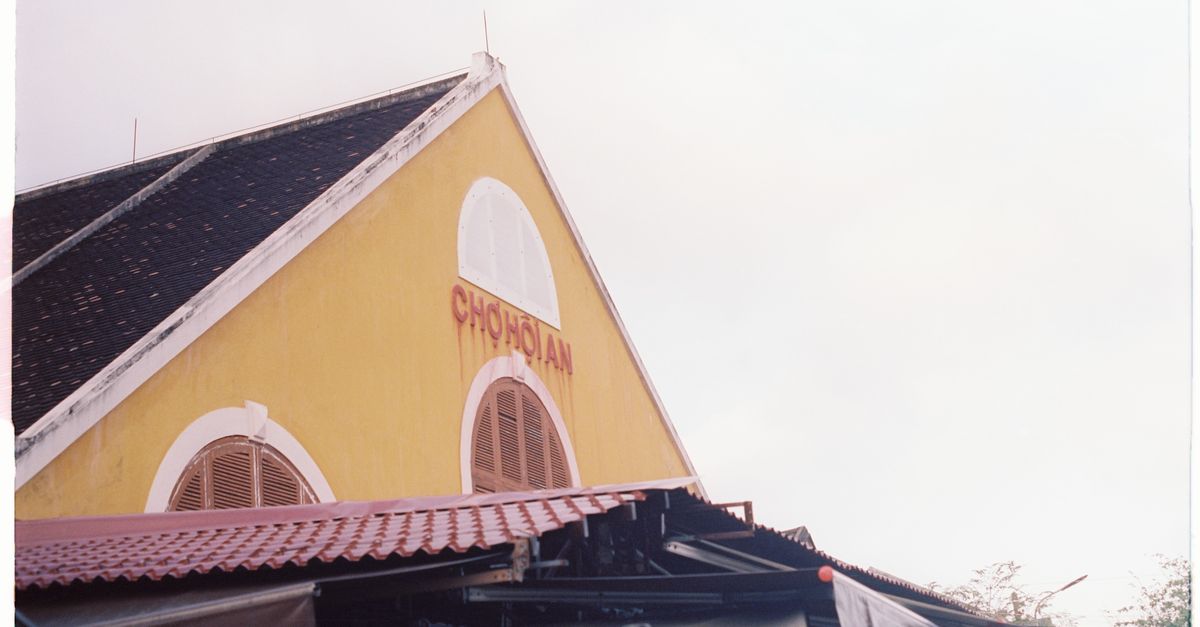
1. The Ancient Town at 5:30am — Before the Tourist Economy Wakes
Hoi An's Ancient Town is genuinely one of the world's finest heritage townscapes, and the best time to be in it is the hour before breakfast, when the tourism economy hasn't yet activated. At 5:30am, the shophouse shutters are still down, the lanterns from the previous evening are still swaying in the river breeze, and the town belongs to the market sellers who set up along Tran Phu Street, the monks doing their morning rounds, and the small number of residents doing their morning exercises on the riverside. The light at this hour — soft, diffused, with the Thu Bon River mist still covering the water — is the light that makes Hoi An's traditional architecture look like what it is: genuinely old, genuinely beautiful, genuinely significant.
Walk the full circuit of the heritage zone before 7am: east along Bach Dang Street by the river, north through the Japanese Bridge (the icon of Hoi An, crossing the Hoai River tributary in the western part of the old town), east through the Chinese assembly hall district, south through the fabric and tailoring lanes, and back to the river. This 2km walk takes 45 minutes at a contemplative pace and will show you Hoi An as it looked when it was a working port city rather than a heritage attraction. The detail work on the shophouse facades — carved wooden screens, tile patterns, pottery urns in doorways — is extraordinary when seen without tour group traffic and café tables in the way.
The Ancient Town entry ticket (80,000 VND, required from 7:30am) is not enforced before 7:30am — arriving before that time gives a free 90-minute window. The ticket is required to enter specific attractions (the houses, assembly halls, museums) but not to walk the streets. The Japanese Covered Bridge has been closed for restoration since 2022 — check current status at the Hoi An World Heritage Management Center on the main street. The restoration is expected to complete by mid-2026.
The street food available before 7am in the Ancient Town area is the genuine local breakfast: cao lau (the thick noodles that are the Hoi An signature dish, made from water drawn from specific local wells and ash-soaked rice flour in a recipe unchanged for centuries) at the market stalls near the central market on Tran Phu, cost 20,000–30,000 VND. The women who sell cao lau at these early stalls have been doing so for decades and their version is better than anything served in a restaurant.
2. Tra Que Vegetable Village — The Kitchen Garden of Hoi An
Tra Que village, 3km north of the Ancient Town, has been supplying Hoi An's restaurants and markets with fresh vegetables for over 400 years. The village sits on a triangle of land between the Tra Que stream and a tributary of the Thu Bon River, and its sandy soil — fertilized with seaweed from the river, a technique unique to this village — produces a quality of herbs and salad vegetables that is noticeably superior to produce from other sources. The specific varieties grown here: Vietnamese coriander (rau ram), fish mint (diep ca), and a bitter herb called rau muong that has no exact English equivalent, are central to the flavor profile of Hoi An cuisine and cannot be substituted.
The village runs excellent cooking classes (200,000–350,000 VND per person) that begin with a walk through the vegetable gardens, include a lesson in the fertilization and planting techniques, and proceed to a cooking demonstration and meal using the morning's harvest. This is one of the best introductions to Vietnamese cooking available anywhere in the country — not because of the instruction (which is competent but not exceptional) but because the ingredients are at a quality level that makes the final dishes demonstrably better than what you'll cook at home. The white rose dumplings (banh bao vac) class is the most recommended.
Tra Que is 3km north of Hoi An's Ancient Town, accessible by bicycle (20 minutes on flat roads, map available from any Hoi An guesthouse) or by motorbike. Cooking classes require advance booking at any of the village's registered operators. The village fields are open for free walking any time from 6am — the morning light (6:30–8am) on the vegetable fields, with the farmers working the rows and the stream reflecting the sky, is one of the finest agricultural landscapes in coastal Vietnam. No admission fee for the walk; fee only for cooking class participation.
The cycling route from the Ancient Town to Tra Que passes through several other villages with their own craft traditions — the pottery village of Thanh Ha (terracotta production since the 15th century) is 1km west of the Ancient Town and worth a detour. Potters here produce everything from kitchen tiles to architectural ornaments using clay from the Thu Bon River, fired in wood kilns that have operated continuously for five centuries.
3. Cua Dai Beach Before the Chairs Arrive
Cua Dai Beach, 5km east of Hoi An, has been significantly eroded by rising sea levels and lost much of its famous frontage. The beach that remains is narrower than it was, but in the early morning it retains a quality that the afternoon tourist-chair version doesn't. At 5:30am, when the fishing boats return to the estuary at the north end of the beach, the activity is concentrated and genuine: the weighing of catch, the rapid market exchange between boat crews and fish traders, the basket boats being landed through the surf by single paddlers using a technique of controlled rotation that takes years to master. This is one of the finest fishing landing scenes on the central Vietnamese coast.
The round basket boats (thuyền thúng) used by Hoi An's fishermen are one of the most ingenious watercraft adaptations in maritime history — originally developed (according to legend) to confuse French colonial tax authorities by not being technically "boats" under the applicable regulations. They are propelled by a figure-eight rowing motion that creates rotation rather than forward motion in inexperienced hands; local fishermen control them through a combination of paddle angle and body lean that takes years to develop. Watching them land through breaking surf, spinning 360 degrees and somehow arriving on the beach upright, is an experience that photographs don't capture.
Cua Dai Beach is 5km east of the Ancient Town, accessible by bicycle (30 minutes, flat) or Grab. The beach itself is free. The fishing landing area at the north end of the beach is most active 5–7am. The beach chairs set up from 8am at 50,000–80,000 VND/day and include umbrella use. The restaurants on the beach road serve the freshest seafood available in the Hoi An area — better than in the Ancient Town itself, at lower prices. Grilled tiger prawns (tom nuong) at 150,000–250,000 VND per portion, grilled in garlic and butter on the beach, are an evening institution.
The beach at An Bang, 3km north of Cua Dai, is less eroded and has a more active community of smaller-scale restaurants and beach bars that cater to a mix of local Vietnamese and international visitors. The Sunday afternoon beach party culture at An Bang (several bars run music events) is a legitimate social event that gives the beach a character beyond the pure resort template. Outside of weekends, An Bang is quiet and its seafood restaurants are among the best value in the Hoi An coastal area.
4. Kim Bong Carpentry Village — Where the Ancient Town Was Made
Kim Bong village, on the south bank of the Thu Bon River directly across from Hoi An's Ancient Town, has been producing the furniture, wooden fittings, and architectural elements for Hoi An's buildings since the 15th century. The same wooden joinery techniques used to construct the Ancient Town's heritage houses — mortise and tenon joints, no nails, wood chosen for its tolerance of the river humidity — are still practiced here by craftspeople whose family lineages in the trade extend back generations. Kim Bong is where the Ancient Town comes from, and it continues to supply the restoration work that keeps those buildings standing.
The carpentry studios are open to visitors (free to enter and observe) and the craftspeople are generally willing to demonstrate specific techniques if approached with genuine interest. The most remarkable thing to watch is the production of the window screens and decorative door panels — complex geometric patterns assembled from hundreds of individually cut pieces of wood without a single nail, purely through precision fitting. A skilled craftsperson completes one panel in approximately two weeks; the same panel in the Ancient Town's heritage houses has been in place for 200 years without movement or warping.
Kim Bong is reached by a short ferry from the boat landing near the Central Market on Bach Dang Street in the Ancient Town (15,000 VND for the 5-minute crossing). Alternatively, cycle the longer bridge route (6km each way). The village is free to explore. The craft workshops are most active 7am–4pm on weekdays. The boat ferry operates continuously from 6am–6pm. Combine with a riverside lunch at one of the open-air restaurants on Kim Bong's main lane (bun bo Hue and fresh spring rolls, 40,000–80,000 VND for a full meal) and a walk back through the village's traditional houses before taking the ferry return.
Kim Bong also has a traditional boat building area at the western end of the village — the wooden fishing boats of the Thu Bon River are built and repaired here using techniques that have not fundamentally changed in centuries. The boatyard, typically with one or two vessels in various stages of construction, is free to observe from the bank and provides a vivid explanation of the wooden construction principles that also produced the Ancient Town's buildings.
5. Hoi An Roastery — Central Vietnam's Coffee Culture
Coffee in Vietnam is extraordinary — the country is the world's second-largest coffee producer, with a robusta-heavy tradition of dark-roasted, condensed-milk-sweetened brews that has a completely different character from the lighter roasts favored elsewhere. Da Nang and Hoi An sit within the geographic range of influence of Central Highland producers who supply some of the finest robusta in the country. The Hoi An Roastery (a Vietnamese-owned specialty roaster with several locations around the Ancient Town area) represents the newer generation of Vietnamese coffee culture — sourcing from single highland farms, roasting in-house, and serving in both traditional filter form and modern espresso preparations.
The specific Hoi An coffee ritual worth experiencing: ca phe trung (egg coffee), which originated in Hanoi but has been adapted throughout Vietnam into a version using Vietnamese coffee, sweetened condensed milk, and a whipped egg yolk foam. At the Hoi An Roastery's original location on Nguyen Thi Minh Khai Street, the version uses locally roasted Arabica from the Di Linh plateau — a combination that produces a rich, complex cup that takes 20 minutes to drink properly and should not be consumed while standing. The price: 45,000–55,000 VND, in an ancient Chinese merchant's shophouse that has been converted with intelligence rather than overdesign.
The Hoi An Roastery is on Nguyen Thi Minh Khai Street in the Ancient Town adjacent area. Open daily 7am–9pm. Other locations near the Ancient Town entrance. The morning is the ideal time for Vietnamese coffee culture — the sit-and-observe quality of coffee shops is at its best when the day hasn't yet become urgent. For the most authentic version of Hoi An's local coffee culture, the small kiosks along Nguyen Hue Street (the local market road outside the Ancient Town) serve ca phe den (black coffee) through Vietnamese drip filters for 12,000–18,000 VND, sitting at plastic stools that are the correct height for contemplation.
The central Vietnamese coffee culture extends to the afternoon ca phe bac xiu (iced milk coffee) ritual — sitting at a roadside table, drinking from a tall glass of strong coffee over ice and watching the Hoi An street life. The best locations for this are the small shops on Phan Chau Trinh Street east of the Ancient Town, where the tables are outside on the pavement and the afternoon traffic provides the entertainment.
6. Cam Kim Island — The Quieter River Island
Hoi An sits between several islands in the Thu Bon River delta, and almost no visitors explore any of them. Cam Kim Island, immediately south of the Ancient Town across the river, has a traditional life that is decades removed from the tourism economy of the town it faces. The island has weaving workshops, rice fields, small temples, and a village culture where motorcycles are still outnumbered by bicycles and water buffalo. A day spent cycling the island's 30km perimeter and exploring its villages provides more genuine encounter with central Vietnamese rural life than any Hoi An cooking class.
The Cam Kim ferry departs from the boat dock at the east end of the Ancient Town (Bach Dang Street near the market) for 15,000 VND and takes 5 minutes. On the island, the entire road network is flat and cycleable — a bicycle can be taken on the ferry. The main circuit of the island takes about 2.5 hours at a relaxed pace, passing through Ban Thoung weaving village (silk and cotton weaving using traditional looms, active in the mornings), several small communal temples, and the east-facing fishing beach where boats are repaired on the sand. The rice fields in the island's interior peak in color June–July (transplanting, vivid green) and October–November (harvest, golden).
The island has no restaurants or tourist infrastructure — bring water and a basic snack. The small shops in the main village sell water, instant noodles, and cold drinks. The ferry returns to Hoi An Ancient Town dock continuously until 5pm. The island's only "sight" in the conventional sense is the My Hiep communal house (dinh) in the main village — an 18th-century structure where the village's founders are venerated and where the spring and autumn festival rituals take place. The interior woodcarving is comparable to anything in the Ancient Town at considerably lower visitor density.
Combine Cam Kim with a stop at the floating fishing village on the Thu Bon River, visible from the Ancient Town's Bach Dang Street. Several boat operators run river tours past the floating houses (200,000–350,000 VND for a 2-hour tour, negotiable). The floating community's life — children doing homework on boats, women washing clothes in the river, men repairing nets — has continued in this exact location for generations and is as photogenic as anything in the Ancient Town itself.

7. Cham Islands (Cu Lao Cham) — The Genuine Snorkeling Destination
The Cham Islands (Cu Lao Cham), 18km offshore from Hoi An, are a UNESCO Biosphere Reserve with some of the best coral reefs on Vietnam's central coast. The islands are reachable by speedboat (30 minutes, 150,000 VND each way) or by the slower passenger boats (1.5 hours) that operate from Cua Dai Beach. Most visitors come on day tours from Hoi An that include snorkeling — these tours are adequate but the best way to experience the islands is to stay overnight, when the day-trippers leave, the snorkeling is done at dawn, and the island's fishing community has its evening meal on the front steps.
Hon Lao, the main island, has a small village of about 3,000 residents whose primary occupations are fishing and, increasingly, managing the tourism that the snorkeling has brought. The reefs off the south coast of Hon Lao are the richest in the archipelago, with hard coral coverage that has recovered significantly since the marine protected area designation in 2003. Green sea turtles nest on the beaches of the outer islands (Hon Kho and Hon Tai) and are sometimes encountered while snorkeling near these beaches from May to October. Staying overnight on Hon Lao and kayaking to the outer islands for morning turtle watching is one of central Vietnam's finest wildlife experiences.
Speedboats from Cua Dai Beach run when weather permits — the islands are inaccessible from approximately November to February when northeast swells make the crossing dangerous. The summer months (May–September) are best for snorkeling visibility (8–15 meters) and turtle activity. Overnight accommodation in the village is in basic guesthouses (200,000–500,000 VND/night) whose owners are fishermen whose wives run the rooms. Booking through the Cham Island Tourism Center in Hoi An (located near the central market) ensures you reach legitimate local operators. Full-day snorkeling tours from Hoi An: 500,000–800,000 VND including equipment and lunch.
The bird's nest soup industry has operated from the sea caves of Cu Lao Cham for centuries — the swiftlet nests (from cave swiftlets whose nests are made from solidified saliva) collected here are sold to Chinese and Vietnamese restaurants as a luxury ingredient. The nest collection, now strictly regulated under the biosphere reserve management, happens twice a year (April and August) and the collectors use bamboo poles to reach nests in the cave ceilings. Several of the caves are accessible to guided snorkeling tours on the south coast — the combination of coral reef and dramatic sea cave architecture is the finest diving/snorkeling environment in the Hoi An region.
8. Phuoc Kien Assembly Hall at Prayer Time
The Phuoc Kien Assembly Hall on Tran Phu Street is Hoi An's most visited assembly hall — built by the Fujian (Hokkien) Chinese community in 1697 to honor Thien Hau (the Goddess of the Sea) and to serve as their community welfare organization. Every guidebook mentions it. What no guidebook mentions is the prayer assembly that takes place on the 1st and 15th days of each lunar month, when the hall fills with Hoi An's Chinese-descent community (still a substantial and active community despite generations of Vietnamese assimilation) for collective worship. The incense smoke, the chanting, the large spiral incense coils hanging from the ceiling and slowly burning, and the formal presentation of offerings to Thien Hau's image create an atmosphere that transforms the hall from heritage attraction to functioning religious space.
The statue of Thien Hau in the main hall is worth sustained attention at any time — the figure, flanked by the deities of Fair Weather and Beneficial Wind (companions who help her watch over sailors), is dressed in new robes every few years by community donation. The ceremonial objects surrounding her include model ships donated by merchant families whose prayers she answered during dangerous sea crossings, and the accumulation of these objects over 325 years of continuous use gives the hall a material richness that no museum can replicate. The genealogical tablets on the back wall record the names of Hokkien immigrants and their descendants going back to the community's establishment.
Phuoc Kien Assembly Hall is at 46 Tran Phu Street in the Ancient Town. Entry included with the general Ancient Town ticket (80,000 VND). Open daily 7:30am–5pm. The lunar calendar 1st and 15th prayer gatherings are not publicized for tourists — ask at any Hoi An guesthouse for the next date. Photography is acceptable at normal visiting times; discretion is appropriate during active prayer. The hall's rear garden (often closed to tourists, open during prayer days) has a fine collection of stone sculpture including a 300-year-old fishing village scene carved in bas-relief that is one of the most detailed representations of early Hoi An life surviving anywhere.
The street food along Tran Phu Street immediately east of the assembly hall has a cluster of banh mi stalls (the Hoi An version of the baguette sandwich uses a specific airier bread and a distinctive local pate) that are among the finest in town. The Phuong banh mi stall at No. 2B Phan Chau Trinh is the one that gets international attention, but the stall at the corner of Tran Phu and Hoang Van Thu is less visited and equally good at 20,000–35,000 VND per sandwich.
9. Afternoon River Rowing — The Thu Bon at Low Speed
The Thu Bon River, which gave Hoi An its existence as a trading port, is best experienced from the water. The tourist boat tours are uniformly similar — 1-hour circuits of the river, departing from Bach Dang Street, focusing on the lantern-lit evening reflection of the Ancient Town. These are fine but passive. The better experience is to rent a small rowing boat from the south dock (near the flower market) with a guide who knows the river, and spend 2 hours exploring the Thu Bon's smaller branches — the channels through the water hyacinth and reed beds that lead to the floating fish farms, the sand banks where birds congregate at low tide, and the fishing families who have their whole life organized around a floating platform 300 meters from the Ancient Town's tourist restaurants.
The river is most atmospheric in the late afternoon (4–6pm) when the light turns gold and the fishing activity peaks. Several individual boat owners (identifiable by their weathered wooden rowing boats tied at the south dock) will do private 2-hour tours for 200,000–300,000 VND for the boat. These are not tours with English commentary — they are river rides with a local person navigating by knowledge of the currents and the tide. The communication happens through pointing, smiling, and the shared experience of watching a kingfisher drop from a riverside branch into the river in front of you.
The monthly Full Moon Festival (14th and 15th of the lunar calendar) transforms the Thu Bon river evening into one of Southeast Asia's finest spectacles: the Ancient Town turns off its electric lights and is lit entirely by lanterns, the river is covered with floating paper lanterns released by visitors and locals together, and the reflection of thousands of lanterns on the dark water is genuinely beautiful without any overstatement. Boat rides during the Full Moon Festival are 300,000–500,000 VND due to demand — book through your guesthouse the day before, or arrive at the dock at 5pm before the surge.
The south bank of the Thu Bon, across from the Ancient Town, has a strip of restaurants and cafés that are about 30% cheaper than their equivalents in the Ancient Town and have the same river view. Crossing the foot bridge (free) to reach them takes 5 minutes from the central Ancient Town and saves significant money over multiple meals.
10. Moc Bai Market — The Real Morning Market
Hoi An's Central Market (Cho Hoi An) is mentioned in guidebooks and has been adapted for tourism — selected vendors are positioned toward the visitor entrance, English prices are on some stalls, and the photo opportunities are orchestrated. Moc Bai market, 3km south of the Ancient Town on Nguyen Truong To Street, has none of this accommodation. It is a genuine neighborhood market that supplies several surrounding villages and the south end of Hoi An's residential areas with fresh produce, and it operates from 5–10am before packing up for the day. The scale is modest — perhaps 100 vendors — but the quality and specificity of the produce is remarkable.
The morning vendors at Moc Bai sell directly from their farms — the woman with the rau thom (fragrant herb) bundle has grown them in her garden 2km away; the fisherman with the squid net-caught them from the estuary the night before. The central Vietnamese specialty vegetables not available in standard markets: rau muong (water spinach), bap chuoi (banana flower), ca phuoc (a cucumber variety used in central Vietnamese cooking), and the extraordinary range of wild herbs that inform Hoi An's distinctive cuisine are all here in their fresh, unwashed, perfectly imperfect form.
Moc Bai Market is accessible by bicycle from the Ancient Town (3km, 15 minutes south on the road toward My Son). Free to walk through. Active 5–10am; mostly packed up by 10:30am. The breakfast stalls around the market perimeter serve the working vendor's breakfast — banh mi op la (fried egg sandwich) at 15,000 VND and ca phe den (black coffee through a drip filter) at 10,000 VND. Sitting at the plastic tables of this street-food row, eating a breakfast of ten thousand-dong quality while watching the morning market operate around you, is the most honestly Hoi An experience in this guide — and possibly the cheapest.


