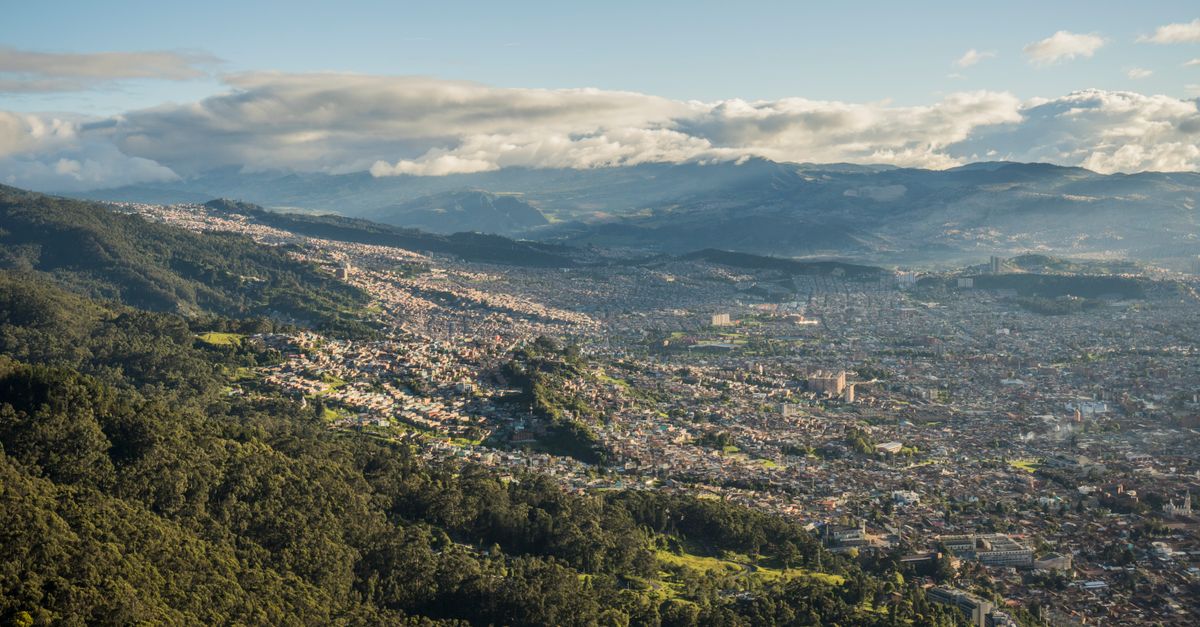
Bogotá at 2,600 meters altitude has an atmosphere — literally and culturally — that is unlike any other Latin American capital. The persistent Andean cloud cover produces a quality of light that is simultaneously dramatic and melancholy; the city's 8 million people move with a Bogotano energy that is more New York than Medellín's party culture; and the cultural infrastructure — the Gold Museum, the Botero Museum, the world's largest number of public libraries per capita — reflects a city that has taken cultural investment seriously in response to decades of violence. The hidden Bogotá is not hard to find; it's the city itself once you leave the Zona Rosa hotel strip.
This guide is for travelers who want the Bogotá beyond the Candelaria colonial quarter — the Sunday Ciclovía that closes 120 kilometers of roads to cars, the fresh juice bars of the Mercado de Paloquemao, the contemporary art scene in Chapinero Alto, the emerald market in the financial district, and the free walking culture of an Andean city where even the wealthy walk everywhere because the altitude makes them think about their bodies. These experiences are cheap, accessible, and consistently ignored by the tourism industry that benefits from keeping visitors in Zona Rosa restaurants.
Bogotá's TransMilenio bus rapid transit is extensive but requires orientation — buy a TullaVa card (COP 5,500) at any TransMilenio station and load trips (COP 2,950 per ride). Taxis are abundant and cheap (COP 8,000–20,000 between most points of interest); InDriver and Cabify are both cheaper than taxis for mid-range trips. The Sunday Ciclovía (see below) means no cars from 7am–2pm on the Ciclovía route — plan accordingly.

1. The Sunday Ciclovía
Every Sunday from 7am to 2pm, Bogotá closes 120 kilometers of its major streets to motor vehicles and opens them to cyclists, skaters, joggers, and pedestrians in the world's largest recurring street event. The Ciclovía was established in 1974 and has been continuous ever since — it's one of the most significant urban experiments in the history of cities and has inspired similar programs in dozens of cities globally. On Ciclovía Sundays, the 7th de Agosto corridor, the Calle 26, the Autopista Norte, and the Carrera Séptima are transformed into a continuous 120-kilometer circuit of human-powered recreation. Bicycle rental stations and food vendors appear along the route. The energy is extraordinary.
The Ciclovía's origins are political as much as recreational — it was established by mayor-elect Augusto Uribe Barrera as part of a vision of democratizing the city's streets for non-motorized users. Its persistence and growth reflects Bogotá's consistent investment in public space quality across successive administrations of different political orientations.
No preparation required — simply go outside on any Sunday morning with comfortable shoes or a rented bicycle. Ciclovía bicycle rental stands appear throughout the route (COP 8,000–15,000/hour). The most scenic sections run through La Candelaria, the Parque Nacional Enrique Olaya Herrera, and the Usaquén neighborhood. The Mercado de Usaquén (Sunday antique and craft fair) operates simultaneously — combine the two.
Ciclovía: free to participate. Bike rental: COP 8,000–15,000/hour. Budget COP 30,000–60,000 for a full Sunday morning including bike rental, a juice from a street vendor (COP 3,000–5,000), and breakfast at one of the Ciclovía-adjacent cafés.
2. Mercado de Paloquemao's Tropical Fruit
Mercado de Paloquemao — the wholesale produce market in the western part of the city center — is the most concentrated display of Colombia's extraordinary tropical biodiversity available to visitors without traveling outside Bogotá. The fruit section alone contains species that most visitors have never encountered: uchuva (Colombian physalis, a golden berry with a tartness that is addictive), lulo (a nightshade fruit whose juice is chartreuse and acidic), mamoncillo (a green lychee-like fruit eaten by biting through the skin), pitahaya (Colombian yellow dragon fruit, sweeter than the red Asian variety), and dozens of others. The juice bars adjacent to the market blend these fruits to order (COP 3,000–5,000 per large cup) — an experience that will recalibrate anyone's understanding of what "fresh juice" means.
Colombia is one of the world's most biodiverse countries, and its tropical and Andean produce reflects that biodiversity in ways that markets in the capital city rarely display. Paloquemao's wholesale function brings regional produce from Colombia's coast, Amazon, Andes, and Llanos into one space — an accidental museum of the country's agricultural heritage.
Take the TransMilenio to the Paloquemao station. The market is open daily from 5am to 1pm; Saturday and Sunday mornings have the best flower market alongside the produce (the flower hall is one of the most extraordinary single-room commercial experiences in Colombia). Arrive before 8am for the best selection and least crowded environment.
Budget COP 20,000–40,000 for a morning of fruit tasting, juice buying, and produce shopping. A breakfast of fresh juice, pan de queso (cheese bread), and a bowl of changua (Andean milk soup with eggs, a Colombian breakfast classic) from the market food stalls runs COP 8,000–15,000 total. Bring a bag — the produce prices are well below supermarket rates.
3. Cerro de Monserrate at Dawn
Monserrate — the 3,152-meter peak that overlooks Bogotá from the east — is one of the city's iconic landmarks and is visited by tourists via cable car or funicular from the base station in La Candelaria. The hidden version is the dawn hiking trail: a stone-paved path rising 560 meters from the base, passing through cloud forest, arriving at the summit church well before the tourist facilities open. The hike takes about 90 minutes at altitude pace; the reward is a view over the entire city as the morning mist burns off and the light hits the Andean plateau. On weekday mornings, the trail is used almost entirely by Bogotano pilgrims and fitness walkers — no tourist infrastructure, just the steep path and the city below.
Monserrate's pilgrimage tradition dates to the 17th century — the El Señor Caído (the Fallen Christ) statue at the summit chapel has been the object of Bogotano Catholic devotion for over 300 years. The mix of fitness walkers and religious pilgrims on the morning trail creates an atmosphere that is simultaneously athletic and contemplative.
The trail base is at the base station on Calle 26 at Carrera 3, accessible by taxi (COP 8,000–12,000 from La Candelaria). Trail opens at 5am Monday–Friday, 4am Saturday–Sunday. Hiking is free; the cable car costs COP 22,000 round-trip if you want to descend mechanically after the hike. Bring layers — the summit is significantly colder than the city center.
Hiking: free. Cable car descent: COP 22,000. The summit has a restaurant and café (expensive by Bogotá standards but the views justify a coffee at COP 8,000–12,000). Budget COP 30,000–50,000 for the full experience including a post-hike breakfast in La Candelaria (changua or calentado, COP 8,000–15,000).
4. Chapinero's Emerald Market
On the streets around Avenida Jiménez and Calle 12 in central Bogotá — specifically in the glass-walled arcade of the Edificio Murillo Toro — Colombia's emerald trade conducts its daily business in extraordinary public view. Dealers buy and sell emeralds on the street, at café tables, and in the arcade's storefronts, handling stones worth thousands of dollars with the casual familiarity of produce vendors. The quality of stones available ranges from industrial to investment grade; the interaction of middlemen, dealers, and occasional tourists creates a market atmosphere unlike anything else in South America. You don't need to buy to visit — the spectacle is worth seeing.
Colombia produces approximately 70–90% of the world's emerald supply, and Bogotá is the primary trading hub for the rough and cut stone market. The emerald trade has historically been associated with violence — the "emerald wars" of the 1960s–1990s between competing mining families — but the current market operates as a regulated commercial exchange, though one with its own complex social codes.
The emerald market cluster is centered on Avenida Jiménez between Carreras 5 and 7 — particularly the Edificio Murillo Toro arcade and the surrounding sidewalk dealers. Open Monday–Friday daytime hours. If you want to buy, bring an expert or purchase only from established dealers inside the building. For viewing, simply walk the arcade and observe.
Free to visit and observe. If buying: certified stones with documentation are significantly more valuable than uncertified stones, regardless of what street dealers claim. A reputable jeweler's shop in the Edificio Murillo Toro or the Centro Comercial Emerald Trade will provide proper documentation. Budget whatever you're comfortable spending on jewelry — loose stones range from COP 50,000 to COP 500,000+ per carat.
5. La Candelaria's Free Museums
La Candelaria, Bogotá's colonial historic center, contains a concentration of excellent free or cheap museums that most tourists skip after seeing the Gold Museum. The Museo Botero (Casa Luis López de Mesa, Calle 11 No. 4-41) houses Fernando Botero's personal collection — 123 of his own works and 85 international works including Picasso, Dalí, Monet, and Renoir — in a colonial building, free admission, open Tuesday–Sunday. The Museo de Arte Colonial next door (admission COP 4,000) has one of the finest collections of colonial-era religious art in the Andes. The Casa de la Moneda (Mint Museum, free) documents Colombia's monetary history in the original 1620 royal mint building. All three are within a 5-minute walk of each other.
Bogotá's museum density is extraordinary relative to other Latin American capitals, and the city's investment in cultural institutions over the past two decades has produced genuine quality at these free or very low-cost venues. The Botero donation alone — a billionaire artist giving his personal collection and building to the city for free public access — is one of the most significant acts of cultural philanthropy in Latin American history.
All three museums are on Calle 11 between Carreras 4 and 6 in La Candelaria. Take any taxi or TransMilenio to La Candelaria (Calle 10 or 11 TransMilenio stops). Open Tuesday–Sunday; specific hours vary. The Gold Museum (Museo del Oro) on Calle 16 at Carrera 5 charges COP 15,000 adults and is worth the admission.
Botero Museum: free. Casa de la Moneda: free. Museo de Arte Colonial: COP 4,000. Gold Museum: COP 15,000. Budget half a day in La Candelaria for this museum cluster, with lunch at one of the tiendas on Calle 10 for a calentado or ajiaco (COP 8,000–15,000).
6. Usaquén's Sunday Antique and Craft Fair
Usaquén — a former colonial town that was absorbed into Bogotá's northern expansion in the 20th century — has maintained its village character in the streets around the Plaza de Usaquén: a central square with an 18th-century church, Sunday markets, and a commercial strip of restaurants and cafés that feels entirely different from Bogotá's central density. The Sunday Mercado de las Pulgas (flea/antique market) fills the surrounding streets with vendors selling antique Colombian furniture, vintage photography, colonial art, books, crafts, and the usual flea market miscellany — but at a quality level that reflects Bogotá's sophisticated collector culture. The simultaneous Ciclovía (see above) passes through the neighborhood.
Usaquén's identity as Bogotá's most pleasant upscale neighborhood — wealthy but human-scaled, with old buildings and street trees — makes it the preferred social territory for Bogotá's professional class on weekends. The Sunday market and café culture are the primary social institutions.
Take the TransMilenio to the Alcalá or Calle 127 station and walk north and east toward the historic town center, or take a taxi directly to Plaza de Usaquén. Sunday market runs 9am–3pm. The surrounding restaurant and café strip is open from breakfast through late evening.
Market browsing: free. Budget COP 50,000–200,000 for antique purchases if you find something worth buying. Brunch at one of the Usaquén restaurants: COP 25,000–50,000 per person. The Andrés D.C. restaurant at the adjacent Centro Comercial Andino is Colombia's most famous restaurant (reservations essential, COP 80,000–150,000 per person for the full experience).
7. Parque Nacional Enrique Olaya Herrera
Parque Nacional, as locals call it, is Bogotá's oldest public park — a 20-hectare green space on the edge of La Candelaria and Chapinero that has served as the city's central public commons since the 1930s. Unlike Parque de la 93 or the Zona Rosa parks that cater to the upper-middle class, Parque Nacional is genuinely public in the democratic sense: families from every social stratum use the park, the outdoor spaces host free aerobics classes and informal sports, and the informal food vendors around the perimeter sell completos (hot dogs with all the Colombian toppings), obleas (wafer cookies with caramel and cheese), and chontaduros (palm fruit, a traditional Andean snack). It's the most honest expression of Bogotá's public culture.
The park also contains the Museo de Arte Moderno de Bogotá (MAMBO) on Calle 24 at Carrera 6, which has been the city's primary modern art museum since 1962. Admission is COP 10,000–15,000 and the collection includes key works of Colombian 20th-century art that are not available elsewhere.
The park is centered on Calle 36 between Carrera 5 and Carrera 7 — walking distance from La Candelaria or a short taxi ride from Chapinero. Open daily from dawn to 10pm. MAMBO is open Tuesday–Sunday 10am–5pm.
Park entry: free. MAMBO: COP 10,000–15,000. Street food in the park: COP 2,000–8,000 per item. Budget COP 30,000–50,000 for a park afternoon including museum admission and street food. The Ciclovía route passes adjacent to the park on Sundays.
8. Andrés Carne de Res in Chía
Andrés Carne de Res — a restaurant that has operated in the municipality of Chía, 30 kilometers north of Bogotá, since 1982 — is one of the world's most extraordinary restaurant experiences: 15 rooms, 1,000+ covers, an accumulation of 40 years of Colombian kitsch decoration that has achieved a visual density approaching installation art, live music from 9pm, and a menu of Colombian classics (arepas, chuzos, bandeja paisa in individual plates) that is genuinely good despite the scale. It's not a hidden gem exactly — the waiting list on weekends is notorious — but it is one of the most Colombian experiences available anywhere, and Tuesday through Thursday visits require no reservation and are dramatically less crowded than weekends.
Andrés Carne de Res was founded by Andrés Jaramillo as a small roadside grill and evolved organically over four decades into its current form. The decoration — accumulated objects covering every surface in 15 rooms — is not designed; it accumulated. The result is more honest than any designed restaurant aesthetic.
Take a taxi or Uber from Bogotá to Chía (COP 30,000–50,000 from the north of the city, 30–45 minutes). The address is Calle 3 No. 11A-56, Chía. Open Tuesday–Sunday; weekday visits (Tuesday–Thursday) are recommended. Live music typically starts at 9pm on weekends.
Budget COP 80,000–150,000 per person including food and drinks. The chuzo (skewered grilled meat, COP 15,000–25,000 per stick) and the arepas (COP 5,000–12,000) are the best value options. Reservations essential on weekends; book at andrescarnederes.com weeks in advance for Friday and Saturday nights.

9. Zona Rosa's Craft Beer Bars
Colombia's craft beer revolution has produced some of its most interesting results in Bogotá's Chapinero neighborhood, specifically in the cluster of bars around Calle 69 and Carrera 5 where breweries like Bogotá Beer Company (one of South America's pioneers), Chelarte, and 3 Cordilleras Bogotá taproom serve Colombian-produced craft ales that represent a genuinely new tradition in a country previously dominated by Bavaria's industrial lagers. A self-guided bar crawl from the Parque de la 93 area south through Chapinero Alto takes in 4–5 excellent craft beer venues with the neighborhood's independent restaurant culture between them.
Colombia's craft beer scene is less than 20 years old but has accelerated dramatically, driven by a middle class with disposable income and exposure to international beer culture. Bogotá's altitude produces beers with slightly different characteristics than sea-level equivalents — fermentation at 2,600 meters requires adjustments that some brewers have turned into distinctive style elements.
Start at the Parque de la 93 area and walk south along Carrera 13 and Carrera 11 through Chapinero. The bar cluster is concentrated between Calles 55 and 72. Best visited Thursday through Saturday evenings from 6pm onward. Carrera 13 in Chapinero has the highest concentration of quality options.
Craft beer: COP 12,000–22,000 per pint. Budget COP 80,000–150,000 for a 4-stop crawl with a drink at each venue. The surrounding Chapinero neighborhood has excellent small restaurants and food trucks (COP 20,000–40,000 per person) for absorbing the drinks. Chapinero is also Bogotá's LGBTQ+ neighborhood — bars in the Chapinero Alto area are welcoming and diverse.
10. The Candelaria's Street Food Circuit
Bogotá's street food tradition is centered in La Candelaria and the surrounding markets, and navigating it is one of the most rewarding cheap food experiences in South America. The sequence: start with a tinto (small black coffee, COP 1,000–2,000) from a thermos vendor on Calle 11 or 12, add a buñuelo or pan de bono (cheese bread, COP 1,000–2,000 each), continue to an empanada stand for a crispy corn empanada with ají sauce (COP 1,500–3,000), finish at a chontaduro vendor near Parque Nacional for the palm fruit with salt, lemon, and honey (COP 3,000–5,000). This circuit costs under COP 15,000 total and demonstrates more about Colombian food culture than any restaurant meal at five times the price.
Colombian street food economics reflect a society where significant portions of the population eat their main meals from street vendors — the quality and variety of Colombian street food are therefore higher than in countries where street eating is supplementary rather than primary. Learning to eat from vendors in Bogotá opens access to the city's daily food culture in a way that restaurant visits cannot replicate.
No specific address — walk the streets of La Candelaria and the surrounding market area between Calles 7 and 14, Carreras 3 and 10. The vendors are concentrated near the Plaza de Bolívar and on the streets leading to Paloquemao. Best times are 7–9am (breakfast vendors) and 12–2pm (lunch empanadas and full plates).
Budget COP 10,000–20,000 for a complete street food breakfast or light lunch. For a heavier plate meal (bandeja corriente with rice, beans, protein, and salad), the tiendas on the back streets of La Candelaria charge COP 8,000–15,000 — among the best-value complete meals in South America.